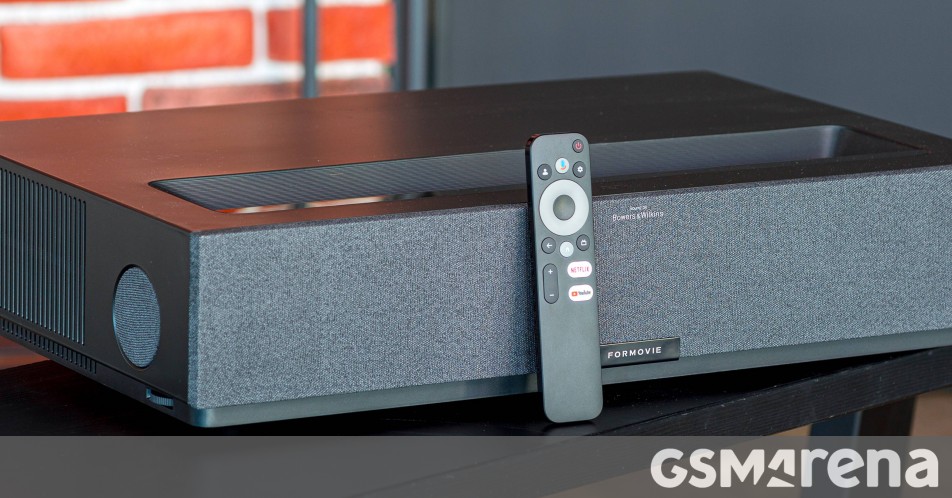
Formovie Theater Premium review: the ultra-short-throw that out-specs Samsung and LG
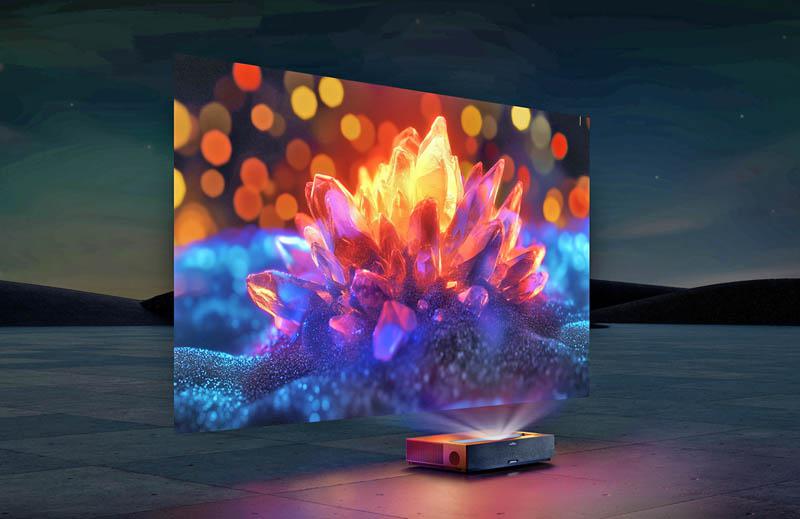
A 150-inch picture from a box that sits 40cm off the wall, thrown by a triple-laser engine claiming 107% of the BT.2020 colour space — and it undercuts the big-brand laser TVs it’s built to embarrass. That’s the pitch of the Formovie Theater Premium, and when GSMArena reviewed it on 11 November 2024, the spec sheet did most of the talking. The interesting bit, for anyone shopping in the UK, is what those numbers ask you to give up to get them.
This is the sequel to the original Formovie Theater, the 2022 ultra-short-throw that quietly became the enthusiast’s default when a Samsung or an LG felt like paying for a badge. The Premium isn’t a redesign so much as a sharpening — more light, a tighter throw, the same fundamentally clever light engine turned up. Whether that’s worth it depends almost entirely on where you’re trying to buy one.
What actually changed since 2022 (ultra-short-throw)
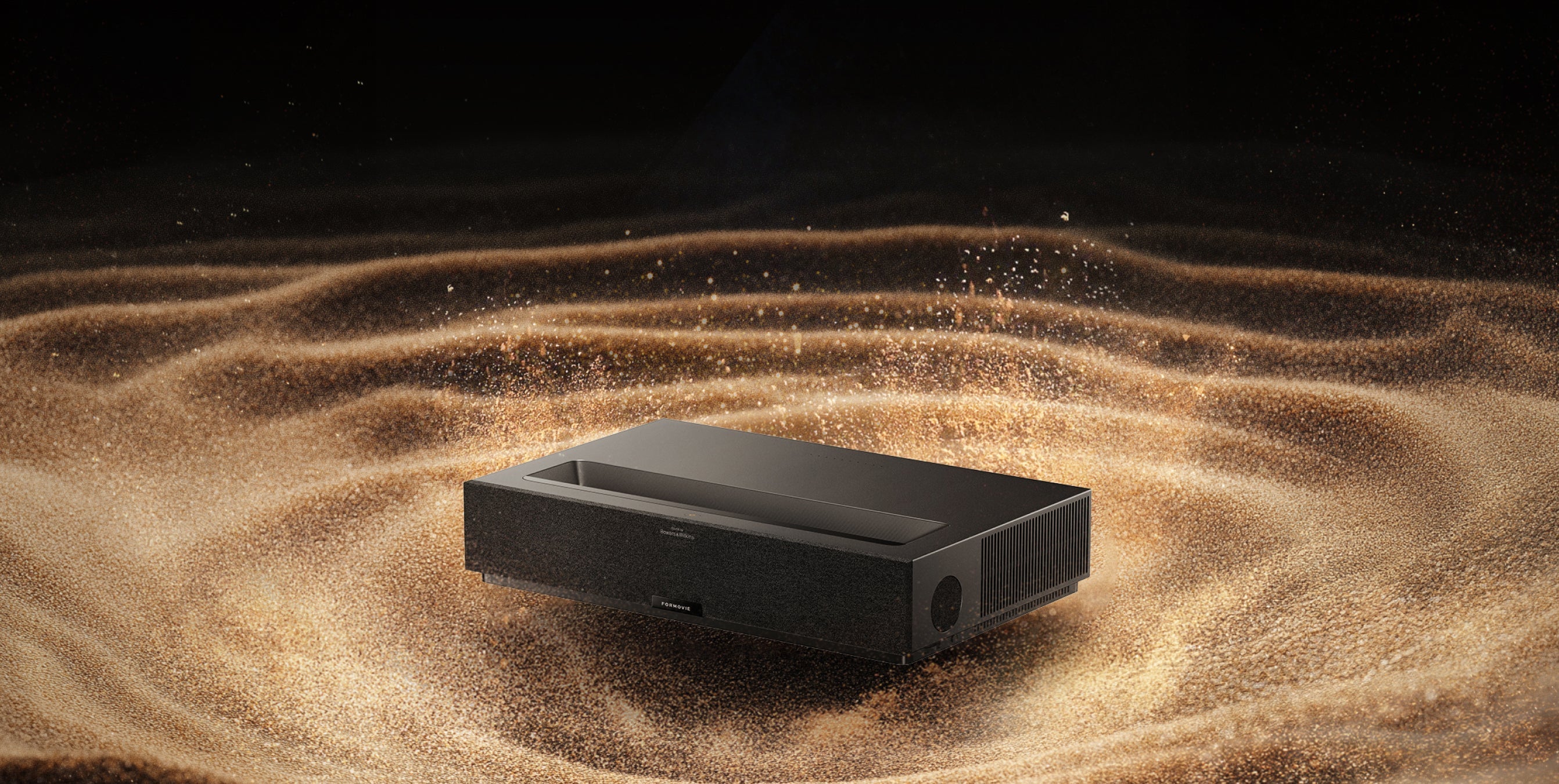
Two numbers do the heavy lifting. Brightness climbs to 2,200 ISO lumens, up from 1,800 on the original, and the throw ratio tightens from 0.23:1 to 0.21:1. On paper those look like rounding errors. In a living room they aren’t.
The extra 400-odd lumens is the difference between a UST you have to draw the curtains for and one you can actually live with in a room that has windows — the perennial weakness of projection against a proper OLED. It won’t beat a television at high noon, and no honest review should pretend otherwise, but 2,200 ISO lumens paired with an ambient-light-rejecting screen is the point at which a laser TV stops being a “movie night only” purchase. That, more than resolution, is what wins this category. Just budget for the screen while you’re at it: an ambient-light-rejecting UST screen is a separate purchase, routinely several hundred pounds and up, and the Premium’s headline brightness is largely wasted throwing light at ordinary matt paint.
The throw ratio is the actual headline
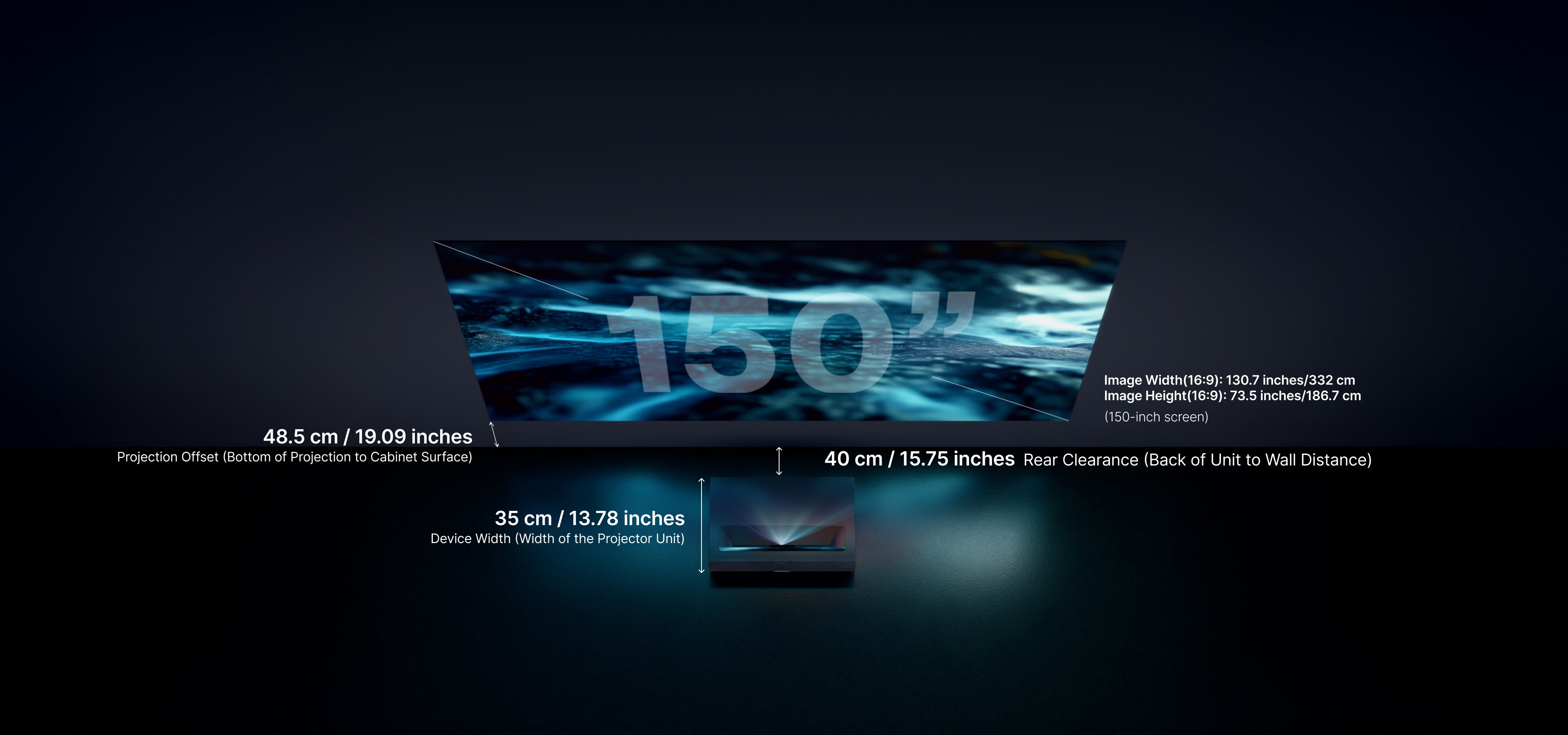
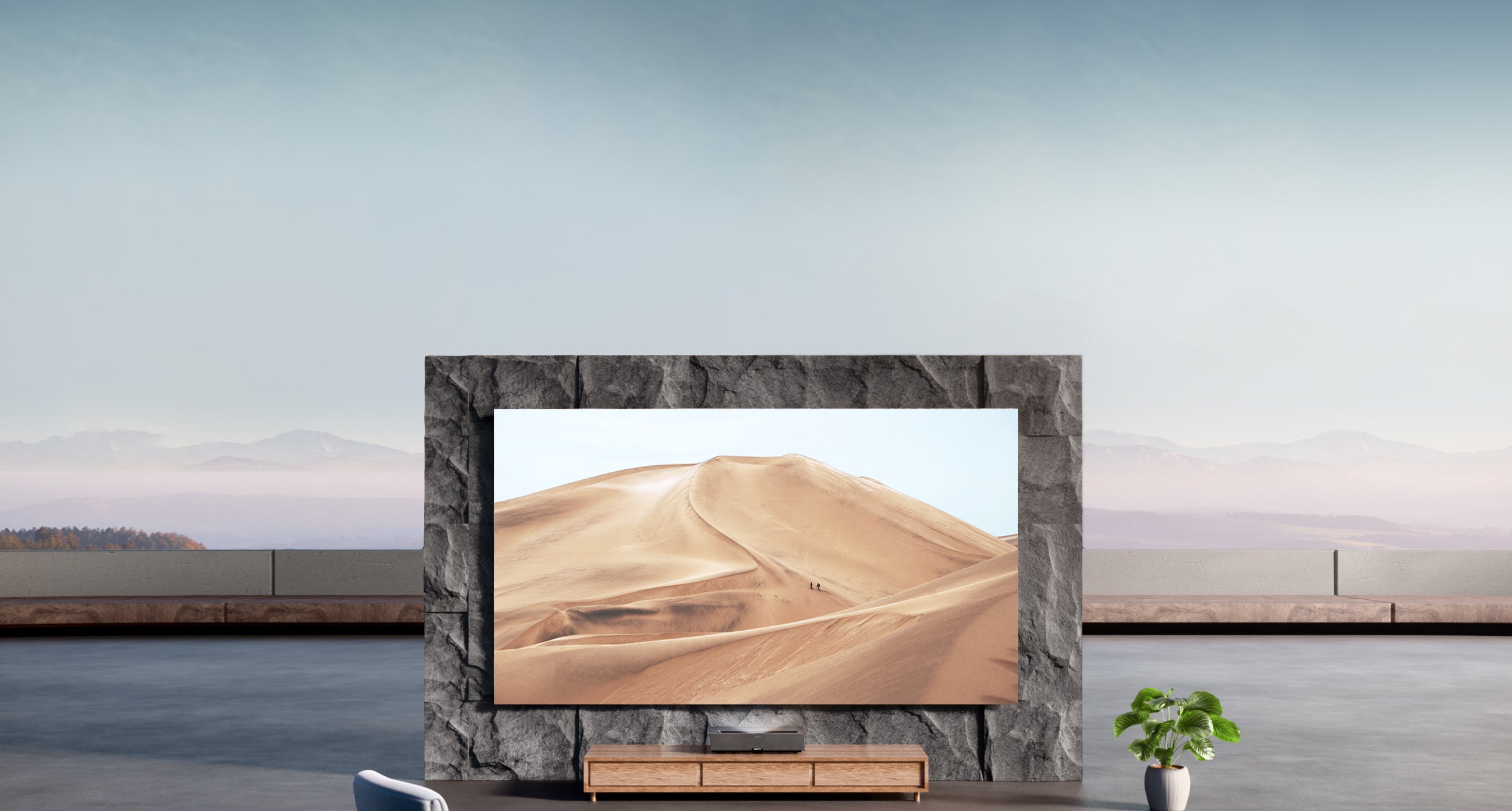
Here’s the spec I’d put front and centre: 0.21:1 lets the Premium paint a 150-inch image from just 15.75 inches — 40cm — off the wall, as ProjectorCentral detailed at launch. That’s the whole promise of ultra-short-throw made concrete. No ceiling mount, no cabling run across the room, no bracket drilled into the plaster. The unit sits on the media cabinet where a soundbar would, and a wall’s worth of picture appears above it.
It scales from 80 to 150 inches, but the sweet spot is at the top of that range. Buy a UST for a 65-inch image and you’ve spent laser-TV money to do a job a normal television does better and for less. The Premium earns its keep at 120 inches and up, where no flat panel you can realistically hang on a wall competes on price per diagonal inch.
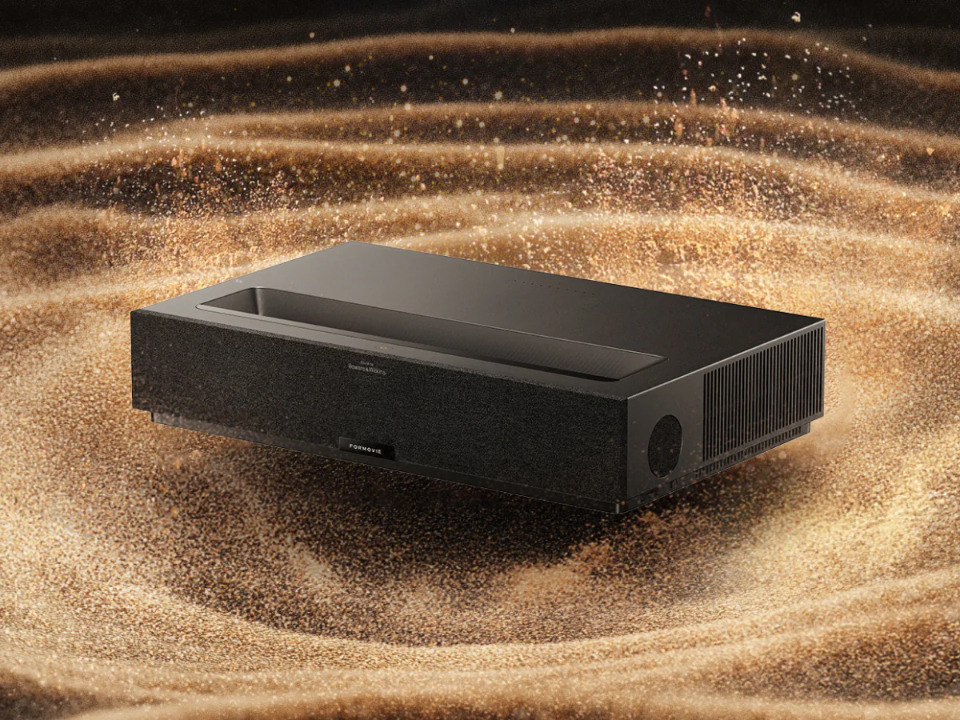
The spec sheet reads like a flagship. The problem was never the projector — it’s whether Britain can actually get its hands on one.
Colour and light: the triple-laser engine
Underneath sits an ALPD 4.0 RGB+ triple-laser DLP setup, using a 0.47-inch DMD chip to pixel-shift its way to 4K UHD, with a claimed 107% coverage of the BT.2020 colour space. Triple-laser matters because it’s how you reach a gamut that wide without the rainbow fringing and colour-brightness penalty that dog single-laser and lamp designs. New Atlas found the picture genuinely convincing in its review.

The one figure I’d temper your expectations on is the 3,000:1 full-on/full-off contrast. That’s a projector number, not a television number, and it’s the honest ceiling of the technology — a UST throwing light at a wall will never deliver the inky, pixel-level black of an OLED. What ambient-light-rejecting screens and that triple-laser gamut buy you instead is a picture that reads as rich and saturated in a real, lived-in room, which is a different and, for a big-screen living space, arguably more useful thing. If your priority is reference-grade black levels in a blacked-out cinema room, a projector isn’t the tool; if it’s a wall-sized, colour-accurate image for everyday viewing, this is precisely the tool.
Where it actually beats Samsung and LG — and where it doesn’t
When I say it out-specs the household names, I mean on the published numbers, so let me be specific about who those household names are. In ultra-short-throw laser TVs the two big-brand benchmarks are Samsung’s The Premiere line and LG’s CineBeam — the projectors most people cross-shop once they’ve decided a wall-sized image beats a 77-inch panel. Both are accomplished, both carry the reassurance of a high-street badge and a proper UK service network, and both have historically asked more money for a triple-laser image than Formovie does. That price gap is the entire reason the original Theater built a cult following.
The Formovie’s case rests on three figures I can stand behind because they sit on the published spec sheet: 2,200 ISO lumens, 107% of BT.2020 and that 0.21:1 throw. A triple-laser engine reaching a gamut that wide is exactly the part that lets a smaller maker go toe-to-toe with Samsung and LG on colour rather than trailing them, and the brighter, tighter-throwing chassis narrows the gap on the two things — usable brightness and installation flexibility — where the big two used to lead. What Samsung and LG still hold is the unglamorous, decisive stuff: a phone number that rings in Britain, a warranty you can invoke without filling in a customs form, and a demo unit in a shop you can actually go and stand in front of. That, as it turns out, is the gap this whole review keeps circling back to.
The price — and the British asterisk
Globally the Premium launched at an MSRP of €3,500 (and $3,500 in the US), briefly cut to €2,999 during a Black Friday sale on 11–12 November 2024, as Notebookcheck reported. Against Samsung’s and LG’s premium laser TVs, that is aggressive for the specification you’re getting — the whole reason the original Theater built a cult following in the first place.
The British asterisk is a big one. UK retailer Personal Projector lists the Formovie Theater Premium Triple Laser TV at £2,400 — a genuinely tempting number against that €3,500 RRP — but marks it as “Unavailable”. So the UK sticker price, if stock ever lands, looks like the best value in the category. Right now it’s a price tag on an empty shelf. You can browse the full specification on Formovie’s European store, but converting that into a unit shipped to a British address — with a UK plug, UK warranty and a returns route — is the part the spec sheet doesn’t cover.
So would I buy one?
If you can find one in stock at anything near £2,400, I don’t think there’s a more sensible way to get a colour-accurate, genuinely usable 120-to-150-inch picture into a normal living room. The brightness bump and the 0.21:1 throw fix the two things that make most people give up on projection, and the triple-laser engine is the real deal. On the numbers, it out-specs the household names — and it does it for less money.
But I wouldn’t hand over a penny for a pre-order or a grey import chasing that headline UK price. “Unavailable” is doing a lot of work in that Personal Projector listing, and a laser TV is exactly the sort of high-ticket kit where you want a UK warranty and a returns address you can actually reach — the one area where Samsung and LG still quietly justify their premium. What would change my mind is simple: confirmed British stock, sold by a retailer who’ll answer the phone when a triple-laser module needs looking at. Until that lands, admire the spec sheet — just keep your card in your pocket.
How we test
Buyer action
Where to buy or check next
Use this as the final check before ordering a phone, changing network or trusting a headline monthly price.








Reader discussion
Leave a comment
Comments are moderated. Keep it useful, accurate, and on topic.