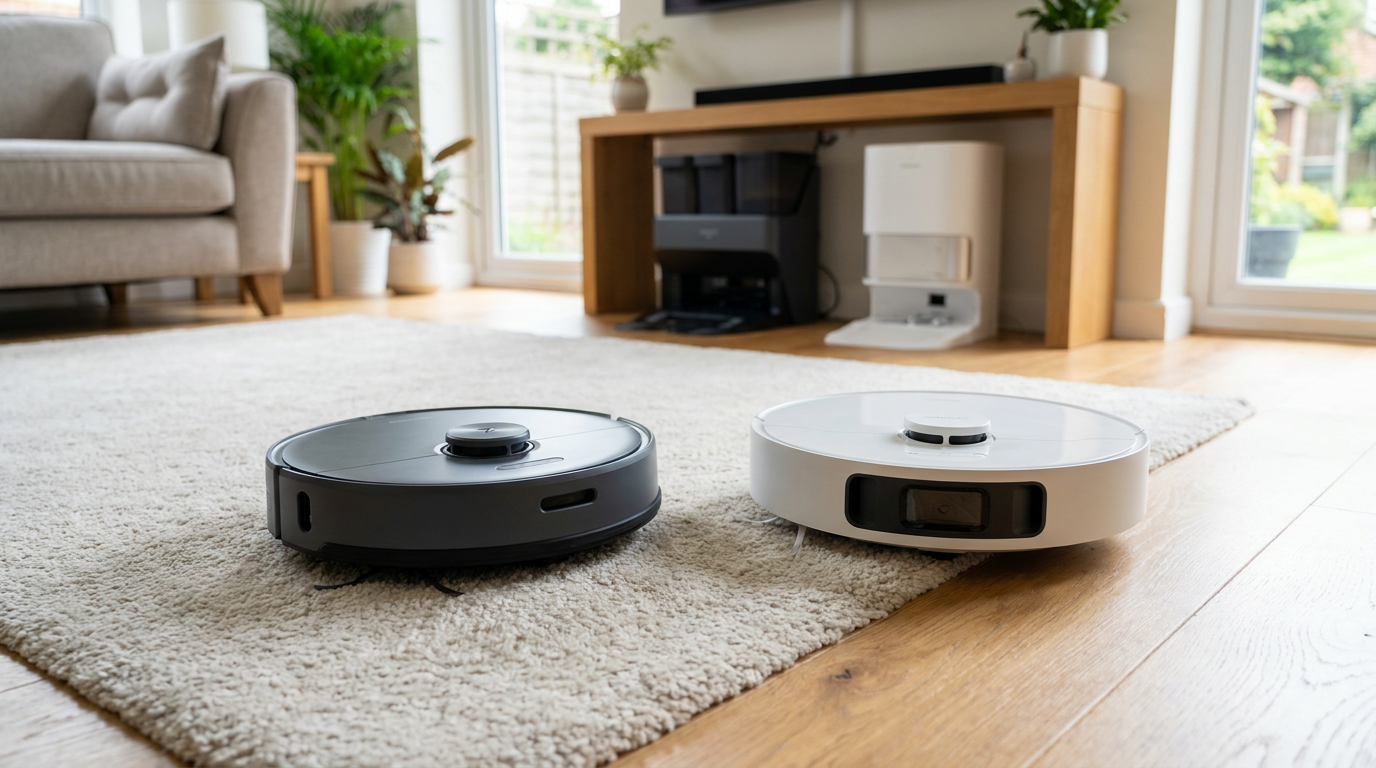
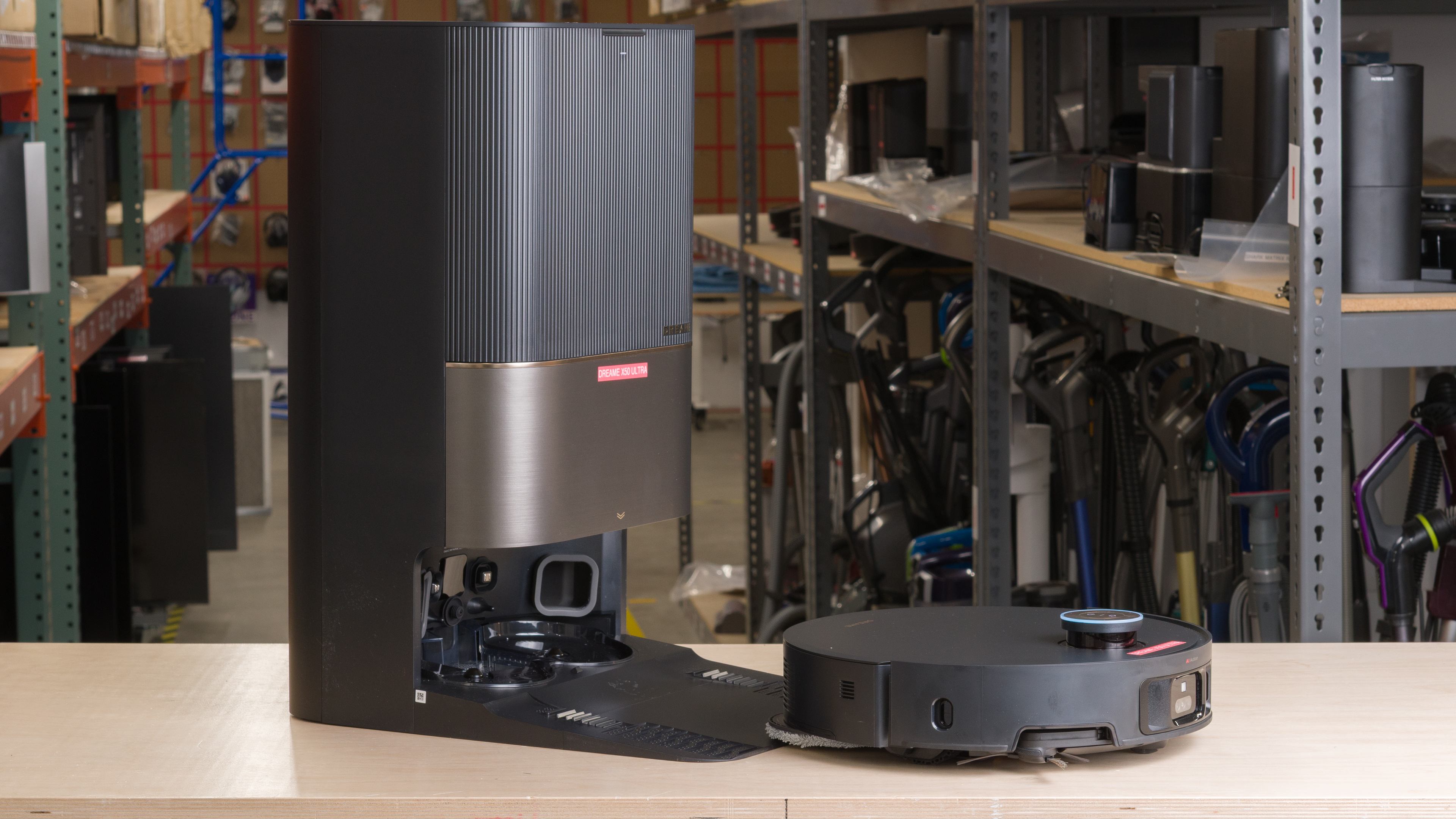
Three hundred pounds. That is the gap that decides this fight, and Roborock is on the wrong side of it. Both machines are top of the 2025 flagship class — the Saros Z70 broke cover at CES in January 2025 — and RTINGS’s side-by-side comparison lines them up spec for spec. The closer I look at where each one actually wins, the harder it is to justify the Saros Z70’s premium for most UK homes. The Roborock lands at around £1,500; the Dreame X50 Ultra sits near £1,200. For that extra £300 you are buying a slightly bigger headline number and a party trick. You are not buying the better robot for a British house.
Let me be specific about why, because “it’s cheaper” is not an argument I’d ever lead with on this site. The Dreame is not the value pick because it’s the budget option — there is no budget option at £1,200. It’s the pick because it does the unglamorous jobs better. Here is the short version before I show my working.
| Spec that decides it | Roborock Saros Z70 | Dreame X50 Ultra | Who wins |
|---|---|---|---|
| Typical UK price | ~£1,500 | ~£1,200 | Dreame (£300 less) |
| Max suction | 22,000 Pa | 20,000 Pa | Roborock (marginal) |
| Battery runtime | 220 min | 180 min | Roborock |
| Threshold clearance | 4cm (AdaptiLift) | 6cm (ProLeap) | Dreame |
| Signature feature | Retractable arm | — | Roborock (novelty) |
| Best for a typical UK home | Large, flat, open-plan only | Terraces, semis, period conversions | Dreame |
The numbers that flatter Roborock — and why they don’t matter much
Roborock’s marketing leans on suction. The Saros Z70 claims 22,000 Pa against the Dreame’s 20,000 Pa, and on a spec sheet that 10% advantage looks like the deciding factor. It isn’t. The honest truth about robot vacuums is that anything north of roughly 8,000 Pa pulls embedded grit out of a medium-pile rug perfectly well; the difference between 20,000 and 22,000 Pa on a typical UK carpet is the kind of thing you measure in a lab and never feel in a living room. Both of these robots will clear Cheerios, cat litter and the fine grey dust that settles on hard floors without you thinking about it. Suction is the number that sells robots and the number that matters least once two machines are both this far past the point of diminishing returns.
Battery tells a similar story. The Roborock’s 220-minute runtime beats the Dreame’s 180 minutes, and if you live in a sprawling five-bedroom place with acres of open-plan ground floor, that 40-minute cushion is genuinely useful — fewer mid-clean returns to the dock to recharge. But here’s the thing about the average UK home: it’s a two- or three-bed terrace or semi, and either robot maps and finishes the whole downstairs on a single charge with time to spare. The longer battery is a real Roborock win. It’s just a win that most readers of this site will never actually cash in.
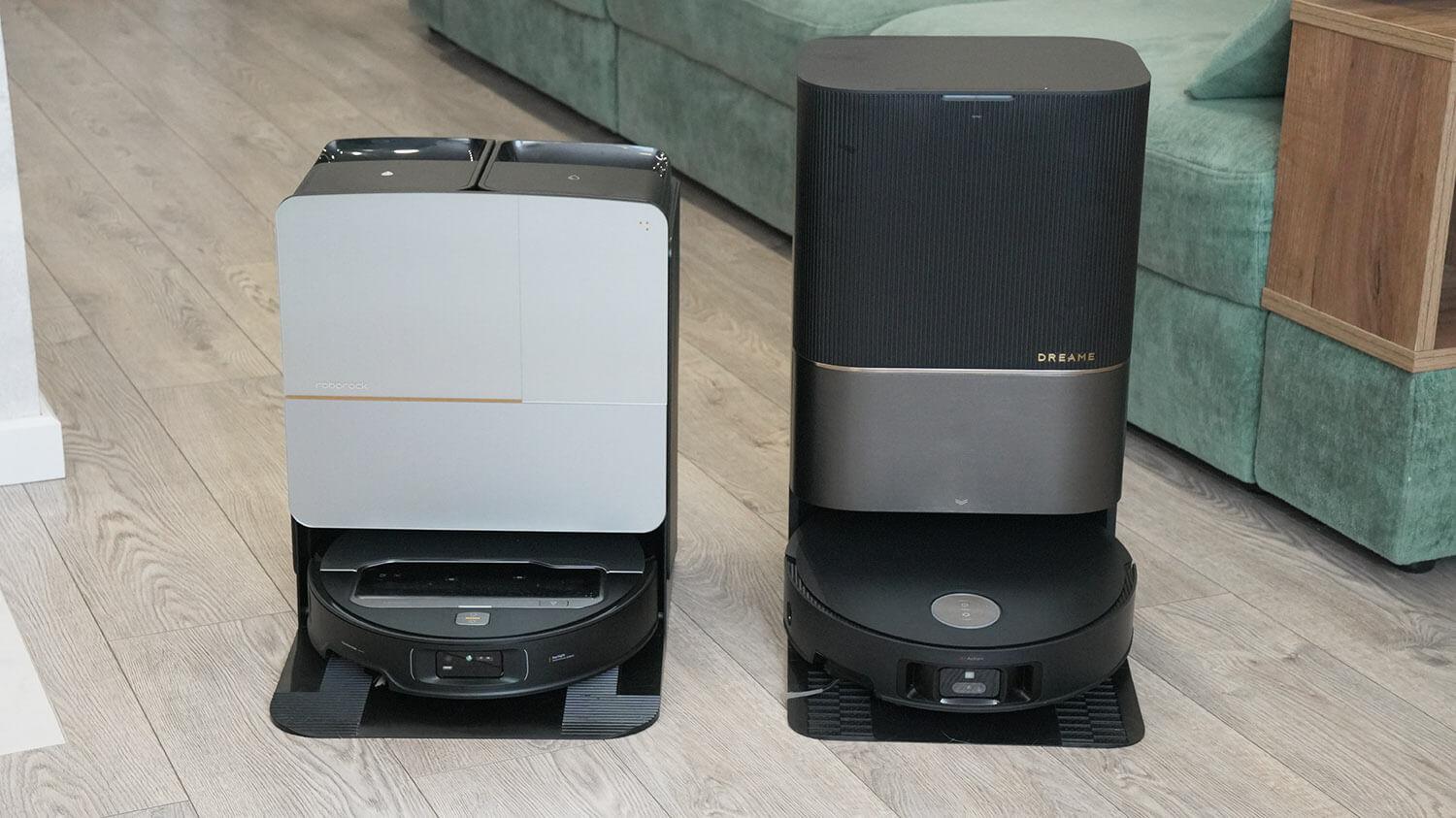
The Roborock wins the spec sheet. The Dreame wins the staircase, the doorway and the receipt — and those are the three places a robot vacuum actually lives or dies in a British house.
Thresholds: the one number that genuinely changes daily life
This is where the comparison stops being academic. UK homes are full of lips, bars and transitions — the brass strip between the kitchen tiles and the hall carpet, the raised threshold into a Victorian bay, the step up into a converted loft room. A robot that gets beached on a doorway is a robot you spend your evenings rescuing, and no amount of suction fixes a machine stranded on its back at the kitchen door.
The Dreame X50 Ultra clears up to 6cm with its ProLeap system. The Roborock Saros Z70, with its AdaptiLift mechanism, manages up to 4cm. Two centimetres does not sound like much until you map it onto your own floors. A 4cm reach handles most modern thresholds. A 6cm reach handles the awkward Edwardian and converted ones too — the exact older housing stock so many of us live in. For a single-level flat with flush flooring, the difference is irrelevant. For a period property with character (read: uneven floors everywhere), it’s the spec I’d weight most heavily, and it goes to the cheaper machine. Walk your own ground floor with a tape measure before you spend a penny on either; that one measurement tells you more than every suction figure combined.
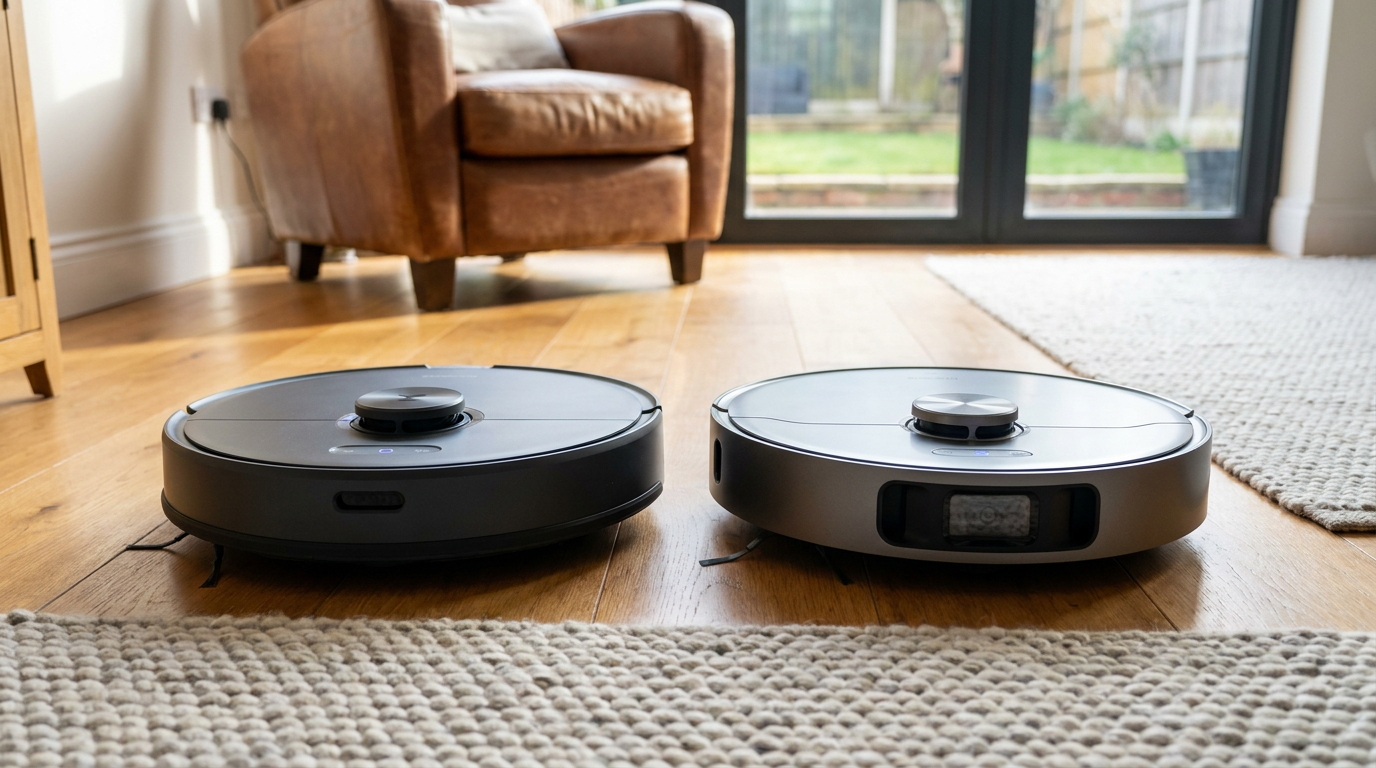
So what is the £300 actually buying?
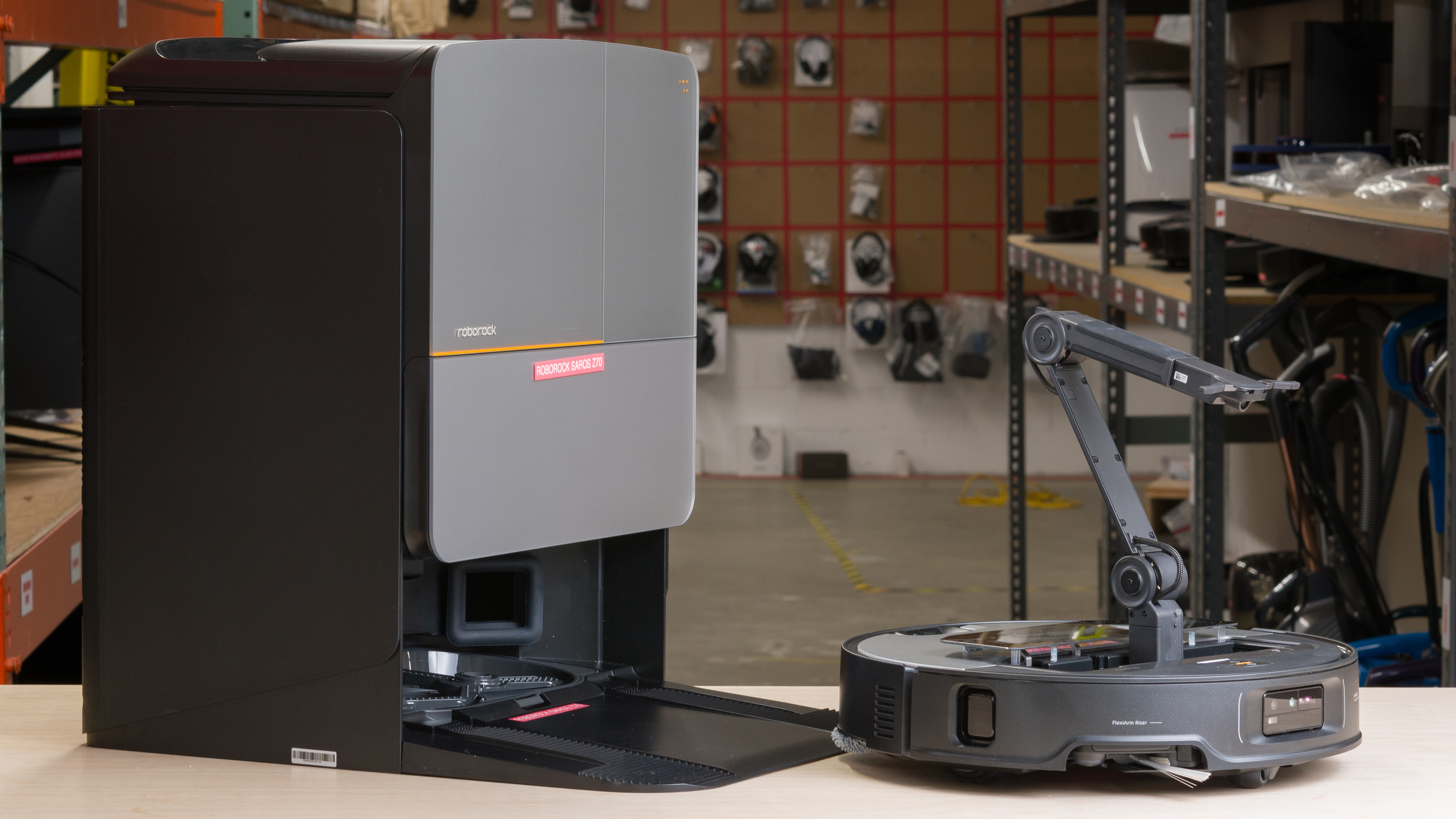
The Saros Z70’s signature flourish is its retractable arm — the feature Roborock built the launch around when the robot broke cover at CES 2025. It’s clever engineering and it photographs beautifully. In practice it nudges a stray sock or a slipper out of the cleaning path. I won’t pretend that’s worthless; clutter-clearing is the perennial weakness of every robot vacuum, and Roborock is the first to take a real swing at it. But it is a first-generation party trick, not a reason to spend an extra £300, and it does nothing to change the fact that you still tidy the big stuff yourself before a clean.
Strip that arm away and you are left comparing two very similar premium robots where the Dreame matches or beats the Roborock on the fundamentals — threshold clearance, price — and concedes only the marginal suction figure and the longer battery. That is why the reviews keep landing where they do. The consensus, from outlets like Yours, which rates the X50 Ultra as a complete package, consistently puts the Dreame ahead on value — not because it’s cheap, but because it delivers the flagship experience for less and gives up almost nothing that matters day to day.
And here is where I’d actually put that £300, because spare money never sits still in my house: into a proper cordless stick vacuum for the stairs. No robot on the market climbs a staircase, and stairs are the dirtiest, most-trodden surface in a typical UK terrace. Buy the Dreame, keep the difference, and spend it on the one job the robot physically cannot do — that is a far better use of £300 than a folding arm that flicks a sock across the carpet.
The bits that cost you after you’ve bought it
A £1,200–£1,500 robot is not a one-off spend, and this is the part the spec sheets bury. Both machines arrive with the same kind of all-in-one base — a self-emptying dust bag, clean and dirty water tanks, and a tray that washes and dries the mop pads so you’re not wringing out a filthy cloth by hand. That dock is most of why these cost what they do, and it’s the right place to spend: the auto-empty bag is the difference between emptying a robot once a fortnight and emptying it daily. But it also means an ongoing tab. Replacement dust bags, mop pads, side brushes and filters are consumables on both, and across a couple of years that quietly adds to the headline price on either machine — so the £300 you save up front on the Dreame isn’t eaten back later by some hidden Roborock saving. It isn’t. Running costs track each other closely enough that the purchase price stays the deciding number, which is exactly why I keep coming back to it.
On availability, neither of these is an obscure import any more. You’ll find both stocked through the usual UK channels — the manufacturers’ own British storefronts, Amazon UK and the bigger electricals retailers — which matters for a machine this expensive, because a UK-supplied unit is the one that comes with a proper domestic warranty and a returns route if the dock plays up. I’d buy from a seller with a clear UK warranty and skip the grey-import listing that shaves £40 off, whichever robot you land on. On a four-figure appliance, a missing warranty is a false economy that can cost you the whole machine.
Who should buy the Roborock anyway
I’m not writing the Saros Z70 off. There is a clear buyer for it. If you have a large, modern, open-plan home with flush flooring throughout — the threshold gap is moot, so the AdaptiLift ceiling never bites — and you want the longest single-charge runtime on the market plus the novelty of the arm, the Roborock is a legitimately excellent robot and the extra £300 stops looking absurd. Early adopters who want the most ambitious hardware of the 2025 class will enjoy it. It is a genuine flagship; it is simply a flagship optimised for a home that isn’t the typical British one.
Where I come down
For the overwhelming majority of UK homes — the terraces, the semis, the period conversions with a brass strip in every doorway — I’d put the Dreame X50 Ultra in the basket and keep the £300. It clears the thresholds that actually trip robots up in our housing stock, it cleans to a standard you won’t be able to distinguish from the Roborock’s, and it does it for less money than the machine it’s beating. The only thing that would move me to the Saros Z70 is a big, flat, open floorplan where the longer battery earns its keep and the threshold ceiling never matters — or a genuine, lasting need for that retractable arm, which I’d want to see proven over a second generation before I paid for it. Buy the robot that fits your floors, not the one that wins the spec sheet. In Britain, those are usually two different machines.
How we compare
Buyer action
Where to buy or check next
Use this as the final check before ordering a phone, changing network or trusting a headline monthly price.






Reader discussion
Leave a comment
Comments are moderated. Keep it useful, accurate, and on topic.