Asus ROG Zephyrus G16 (2026) review: the slim creator-gamer for UK buyers
Asus ROG Zephyrus G16 (2026) review: the slim, colour-accurate RTX 5080 laptop UK creators keep mistaking for a pure gaming machine, and which config to buy.
Asus ROG Zephyrus G16 (2026) review: the slim creator-gamer for UK buyers
Asus ROG Zephyrus G16 (2026) review: the slim, colour-accurate RTX 5080 laptop UK creators keep mistaking for a pure gaming machine, and which config to buy.
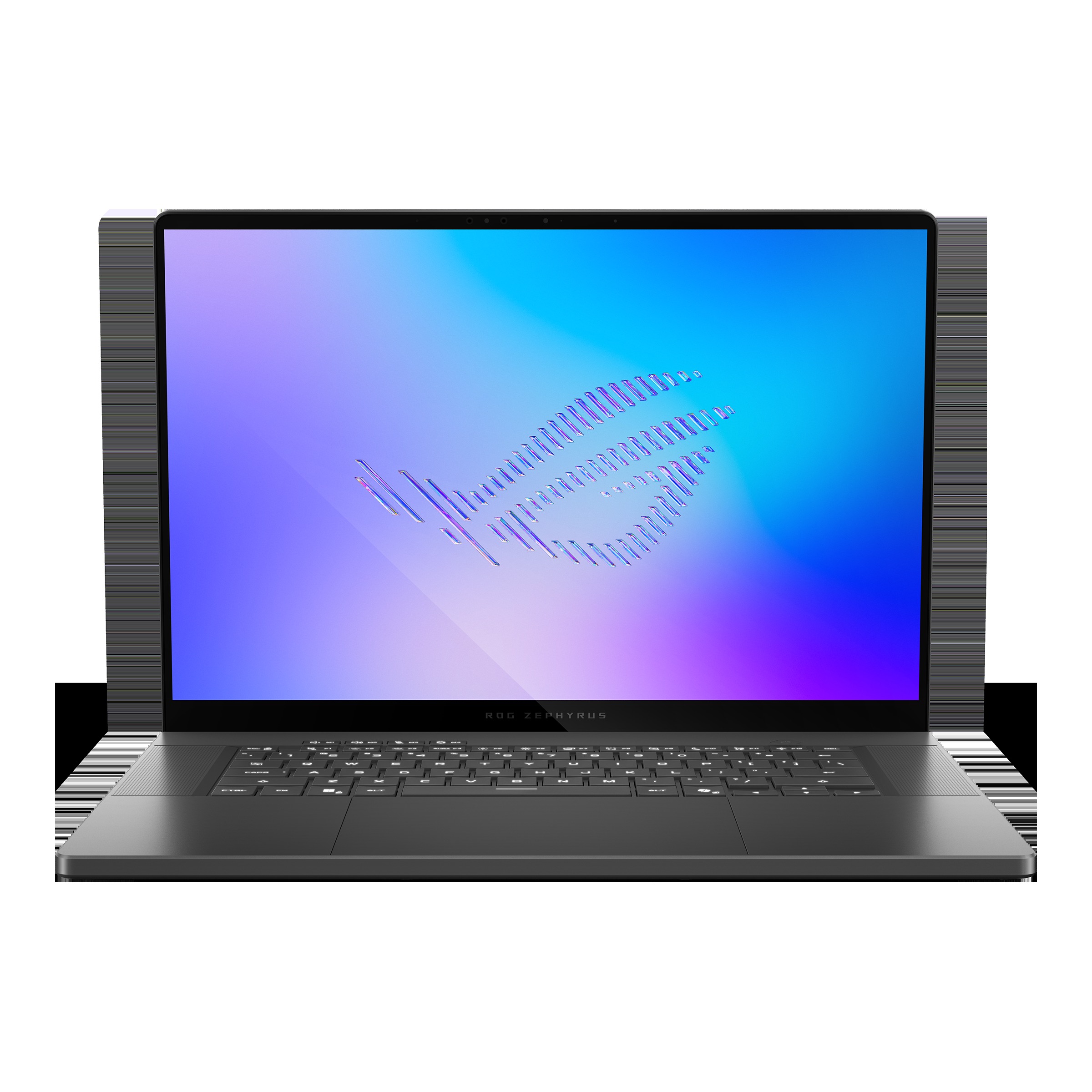
The Asus ROG Zephyrus G16 (2026) packs a desktop-class RTX 5080 that can pull up to 160 watts into a chassis that weighs about 1.85kg, and after working through Asus’s own spec sheet and Ultrabookreview’s detailed GU606 review published on 9 June 2026, I think this is the laptop most UK creators keep mistaking for a pure gaming machine. It is not. It is a slim, colour-accurate workstation that happens to run games very well, and that distinction changes which version you should actually buy.
This is my third review of the day, and where I spent the morning on a retro mirrorless body and an Apple display, this one is about a tool you carry to a shoot and then edit on the train home. So I am judging it the way a photographer or video editor would: panel accuracy first, portability second, frame rates a close third.
UK pricing confirmed: RTX 5070 Ti config (GU606AR) from £3,299; RTX 5080 config (GU606AW) £3,899. Asus has not published a UK RTX 5090 price for this model.
Up to 64GB LPDDR5x (8533MHz), up to 2TB NVMe, 90Wh battery with 0 to 50% in roughly 30 minutes, Wi-Fi 7.
Asus cites around 100% DCI-P3 coverage and factory calibration on the Nebula panel, which is the figure that matters for paid colour work.
A genuine refresh, not a sticker swap
It is worth being clear that the 2026 model is a real new generation rather than last year’s GU605 with a fresh badge. The jump to Intel’s Panther Lake Core Ultra 9 386H changes the platform, and the memory moves to LPDDR5x at 8533MHz in dual-channel. You can configure up to 64GB of it, which for me is the line in the sand for serious 4K timelines and layered Photoshop work. Storage runs to 2TB of NVMe, and connectivity finally lands on Wi-Fi 7.
The figure that surprised me was the power headroom. In Manual mode the RTX 5080 here can run up to around 160W, which is closer to what you would expect from a thicker 18-inch desktop-replacement than a 1.85kg slim laptop. That matters less for gaming bragging rights and more for anyone running GPU-accelerated exports or AI denoise passes, where sustained wattage is the difference between a coffee break and a quick glance at your phone. If you have been weighing up the Razer Blade 16 (2026) for the same reasons, the Zephyrus undercuts it on weight while staying in the same performance neighbourhood.
The panel is the reason a creator should care
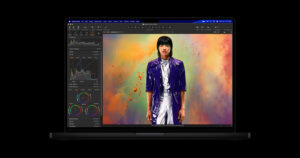
Asus markets the 16-inch 16:10 240Hz screen as a ROG Nebula display, and on its own product page it cites roughly 100% DCI-P3 coverage with factory calibration and a low Delta E. I want to be precise here: those are Asus’s own claimed figures, and the exact panel technology and peak nits are described in Asus’s marketing rather than independently confirmed by me, so I am attributing them to the brand rather than asserting them as tested fact. What I can say is that a calibrated wide-gamut panel at this size is exactly what you want for grading and retouching, and a high refresh rate is a pleasant bonus rather than the point.
If colour fidelity is the whole job, a laptop screen is still a compromise against a desk setup, and I would happily pair this with one of the 4K OLED creator monitors I compared recently for finishing work. But for a panel you carry to a location and trust for a first edit, this one earns its place. Photographers leaning Apple should still cross-shop the MacBook Pro 14 M5 Pro, which trades raw GPU grunt for battery life and silence.
The Zephyrus G16 is the rare gaming laptop I would recommend to someone who never plays games, purely on the strength of its panel and its weight.
Image: Asus
Portability that actually survives a working day
At roughly 1.85kg the Zephyrus is not the lightest 16-inch laptop, but it is genuinely portable for something carrying this much GPU. The 90Wh battery with fast charge gets you to 50% in around half an hour, which is the kind of spec that decides whether you can top up between meetings or are tethered to a wall. For context on how Asus thinks about this slim-but-mighty balance, its own showcase walks through the chassis and lighting design.
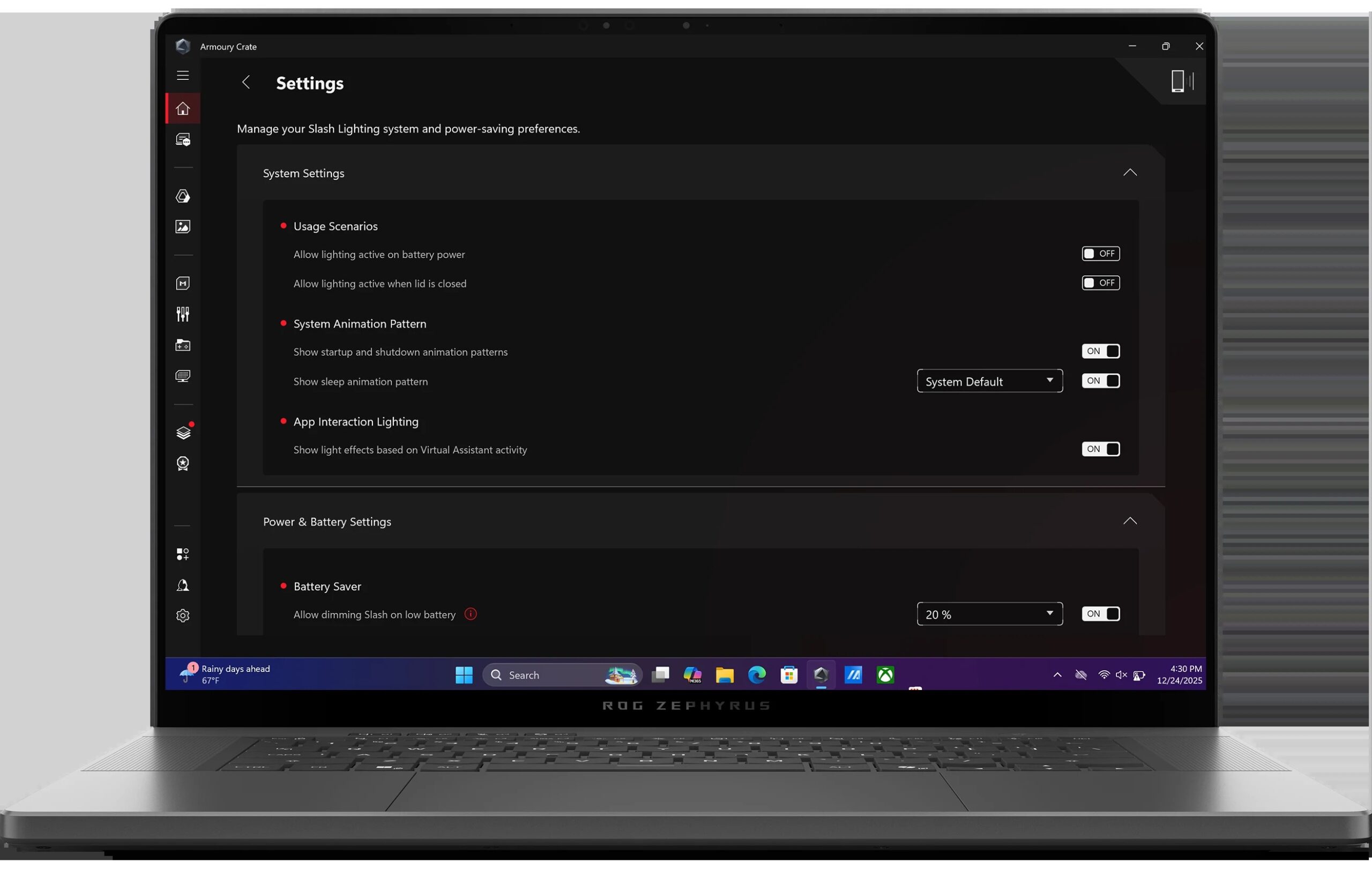
Software-side, Armoury Crate is where you switch power modes, and it is worth living in if you buy this machine: the gap between Silent and Manual modes is significant for both fan noise and sustained export speed. If your work is more about Arm efficiency than peak wattage, it is also worth reading my take on whether Snapdragon X2 Elite machines are ready for UK video editors before you commit to an x86 powerhouse like this.
The two UK configs, side by side
Spec
GU606AR (RTX 5070 Ti)
GU606AW (RTX 5080)
UK price
From £3,299
£3,899
GPU
RTX 5070 Ti
RTX 5080 (up to ~160W Manual)
CPU
Core Ultra 9 386H
Core Ultra 9 386H
Display
16-inch 16:10 240Hz Nebula
16-inch 16:10 240Hz Nebula
Memory / storage
Up to 64GB LPDDR5x / up to 2TB
Up to 64GB LPDDR5x / up to 2TB
Best for
Most creators (value pick)
Heavy 3D and AI workloads
The pricing question is where I get opinionated. The RTX 5070 Ti config at £3,299 is the one I would point most creators towards, because the panel, CPU, memory ceiling and chassis are identical across the range, and the GPU difference only earns its keep if you are doing heavy 3D rendering or large AI workloads day in, day out. Step up to the £3,899 RTX 5080 only if that describes you. Asus has not published a UK RTX 5090 price for this model, so I will not guess at one, and frankly for most photo and video editors the 5090 would be money spent on headroom you rarely touch.
Against the wider field, this sits in interesting company. The Asus ProArt P16 (2026) is the more overtly creator-focused sibling if you want studio calibration certification, while the Framework Laptop 16 wins on repairability if that is your priority over outright polish. And if your workload is AMD-curious, the HP ZBook Ultra G1a is the Ryzen AI Max alternative I keep coming back to.
Where I land on the Zephyrus G16
I came to this expecting a gaming laptop and left convinced it is one of the better portable creator machines you can buy in the UK right now, provided you buy the right config. The 5070 Ti version at £3,299 is the smart pick: you keep the calibrated Nebula panel, the 64GB memory ceiling and the slim 1.85kg chassis, and you spend the saving on storage or a calibrated desktop display. The 5080 at £3,899 is for the minority doing sustained 3D and AI work who will actually feel that 160W. Either way, if colour-accurate work matters to you, this is a machine to take seriously rather than dismiss as a gamer’s toy.
We use cookies to make this site work, measure how it is used, and (with your consent) personalise advertising. Strictly necessary cookies always run. Analytics and advertising cookies run only if you accept. See our Cookie Policy and Privacy Policy.
MobileTechWorld Ltd — Companies House registration 16224011. Independent UK technology publisher since 2009.








Reader discussion
Leave a comment
Comments are moderated. Keep it useful, accurate, and on topic.