
Here is the figure that should anchor any 3D-printing decision you make this year: roughly £440 to live with an FDM printer through its first twelve months, against roughly £750 for resin. That £300-plus gap, laid out in 3DPrinting.com’s 2026 cost breakdown, isn’t the price on the box — it’s what the machine quietly costs you once the wash station, the resin, the gloves and the curing kit are all sitting on the bench. And it is the single most useful number for cutting through the “which should I buy” noise, because the up-front prices are now almost identical.
That is the part that catches people out. As of June 2026, a capable FDM machine like the Bambu A1 Mini lands at about £169, while resin starts at £160 for an Anycubic Photon Mono 4 and climbs to around £245 for an Elegoo Mars 4 Ultra, per the UK pricing tracked by 3D Printer Advice. Look only at the shelf edge and resin appears to have closed the gap. It hasn’t. The gap simply moved downstream, into everything you have to buy to make resin usable.
| Factor | FDM (filament) | Resin (MSLA) |
|---|---|---|
| Entry machine & price | Bambu A1 Mini, ~£169 | Anycubic Photon Mono 4, ~£160 (Elegoo Mars 4 Ultra ~£245) |
| First-year cost of ownership | ~£440 | ~£750 |
| Detail / resolution | ~0.4mm nozzle — visible layer lines | 14–22 micron XY — layer lines invisible to the eye |
| Build volume | 220–300mm a side | 120–150mm a side |
| Material cost | £15–25 per kg (PLA/PETG) | £25–50 per litre, plus IPA £6–8/litre and gloves £6–8/month |
| Post-processing | None with PLA — peel and go | Wash in IPA + UV cure, ~20 min every print |
| Flat-friendly? | Yes with PLA — minimal fumes | No — irritant resin, needs gloves and ventilation |
| Winner | Most first buyers: size, cost, simplicity | Detail-critical minis and models only |
What resin actually buys you (Resin vs FDM)
Detail. That’s the whole pitch, and it is not marketing. Resin printers resolve down to an XY resolution of 14–22 microns, fine enough that the layer lines are, for practical purposes, invisible to the naked eye. If you are printing 28mm tabletop miniatures, dental-style models, jewellery masters or anything where a fingernail-sized face needs to read as a face, nothing FDM does at this price comes close.
FDM, by contrast, is limited by its nozzle — typically around 0.4mm — and you will see the layer lines. You can sand them, fill them, prime over them, but they are there. For a dragon the size of a thumb, that is the difference between a display piece and a blob.
Resin doesn’t win on detail by a margin — it wins by a category. The honest question isn’t whether it looks better. It’s whether the things you want to make are small enough to need it.
So if your honest answer to “what will I print” is “minis, busts, and small high-detail props”, the conversation is basically over. Buy resin, and budget properly for the rest of the kit rather than pretending the £160 machine is the whole spend.
Where FDM still wins outright
Size and simplicity. A typical resin build volume sits around 120–150mm on a side; FDM commonly gives you 220–300mm, which is the difference between printing a helmet visor in pieces and printing a bracket, a planter, a replacement knob or a cosplay panel in one go. Functional parts — the stuff you actually screw into something — live in FDM territory.
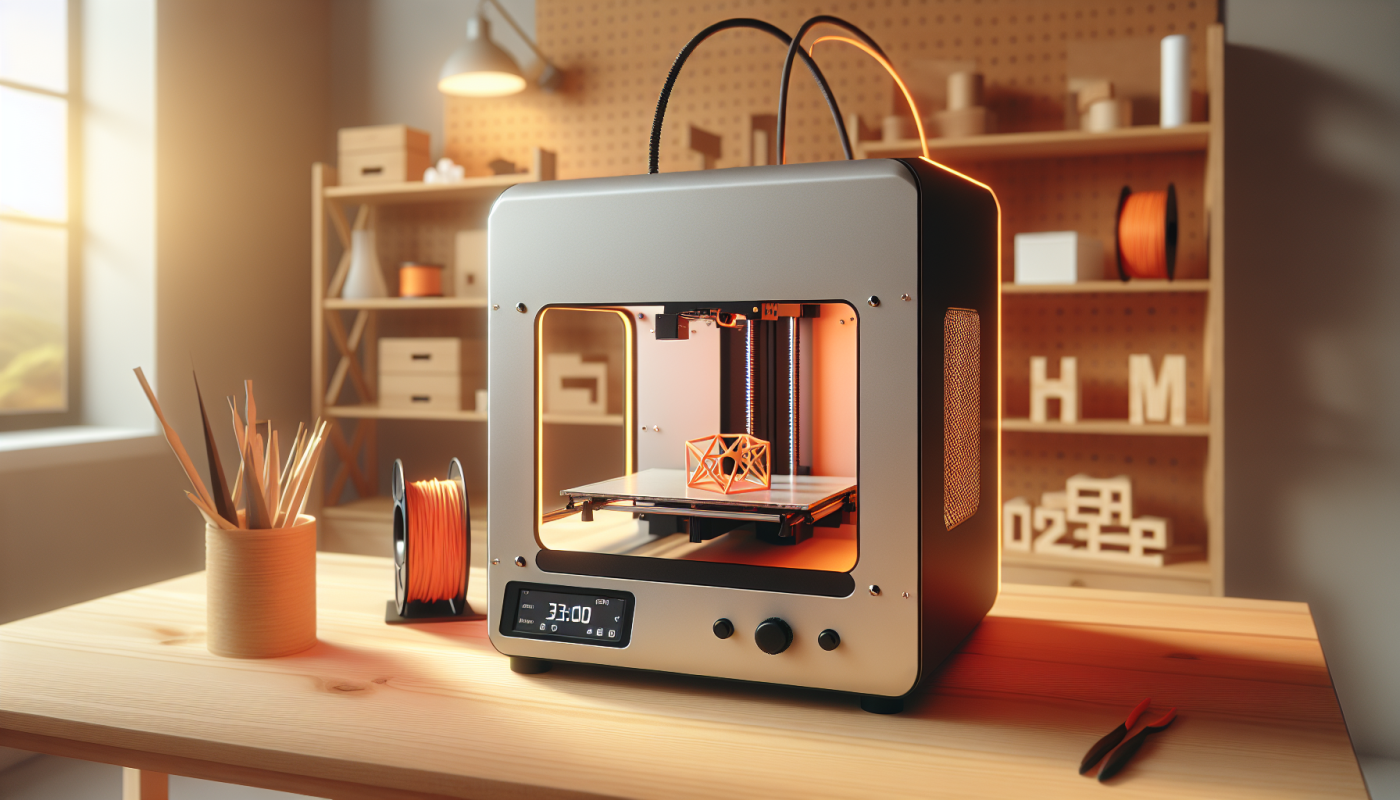
Then there is the friction of ownership. An FDM machine running PLA asks almost nothing of you beyond a flat surface and a spool. Resin asks for a workflow: every print comes off the plate wet, gets washed in IPA, then cured under UV before it is safe to handle, as Filamino’s 2026 rundown sets out. That is twenty minutes of post-processing on a good day, with chemicals, every single time.
The running costs nobody quotes you
This is where the £300 gap actually comes from, and it is worth being granular. Filament is cheap and getting cheaper: £15–25 per kilo for decent PLA or PETG, and a kilo goes a long way. Resin is £25–50 per litre for standard formulas — already pricier per print — but the litre on the invoice isn’t the end of it.
Factor in the consumables that resin alone demands: roughly £6–8 a month in nitrile gloves, and another £6–8 per litre of isopropyl alcohol to wash prints, both flagged in the same 3D Printer Advice UK guide. None of those line items appears on the product page. All of them recur. Stack twelve months of that on top of a wash-and-cure station and the resin itself, and you arrive at that ~£750 first-year figure while FDM sits near ~£440.
There is a quieter cost on top of the gloves and the IPA: resin has a shelf life. A part-used bottle left in a cold spare room degrades over months, so the litre you bought for one weekend’s printing isn’t guaranteed to still be good the next time the urge strikes — a tax that simply doesn’t exist on a sealed spool of PLA, which will sit in a cupboard for a year and print fine. If you print in bursts rather than steadily, that pushes the real-world resin maths further from the headline number, not closer to it.
On sourcing, the UK position is straightforward: Amazon UK carries the entry-level printers and standard resins you’ll want to start with, while 3DJake is the place to go once you graduate to specialist resins — tough, flexible, or water-washable formulas that change the maths again.
The safety reality in a UK flat
I’ll be blunt, because this is the bit that quietly decides the question for a lot of people. Uncured resin is an irritant and a sensitiser; the workflow is non-negotiable. You need nitrile gloves, you need ventilation, and you need somewhere the fumes and the IPA aren’t sharing air with your sofa. 3DPrinting.com is clear that resin demands washing, UV curing, gloves and airflow as a baseline — not as a nice-to-have.
FDM running PLA has minimal safety overhead — it is genuinely flat-friendly, which is why it remains the default first machine for most people. (ABS and ASA filaments do want ventilation too, so that advantage is specifically a PLA story.) If you live in a one-bed flat with no garage, no spare room and no extractor, resin isn’t a hobby, it’s a logistics problem.
The premium move: buy for your shelf, not your ambition
Here’s where I land, and I’ll plant a flag. Most people buying their first printer overestimate how much fine detail they actually need and underestimate how much they’ll resent the resin workflow by week three. The aspirational pick is not the machine that prints the prettiest dragon — it’s the one you’ll still be using in a year.
If you are a tabletop gamer, a model-maker, or anyone whose output is small and detail-critical, buy resin with your eyes open: budget the full ~£750, set up a proper ventilated corner, and treat the wash-and-cure station as part of the printer, not an extra. Done right, the results are in a class FDM can’t touch, and the Anycubic Photon Mono 4 Ultra review at Gadgets UK is a fair read on what the modern entry-resin experience is really like.
For everyone else — and that is most of you — FDM is the printer I’d actually put in a home. It is cheaper to feed, it prints the larger, functional things people genuinely reach for, and it doesn’t turn a spare-room hobby into a chemistry routine. The thing that would change my mind is a single sentence: “I only want to print miniatures, and I have somewhere ventilated to do it.” If you can say that honestly, go resin. If you can’t, the £169 machine isn’t the compromise — it’s the right answer.
How we compare
Buyer action
Where to buy or check next
Use this as the final check before ordering a phone, changing network or trusting a headline monthly price.










Reader discussion
Leave a comment
Comments are moderated. Keep it useful, accurate, and on topic.