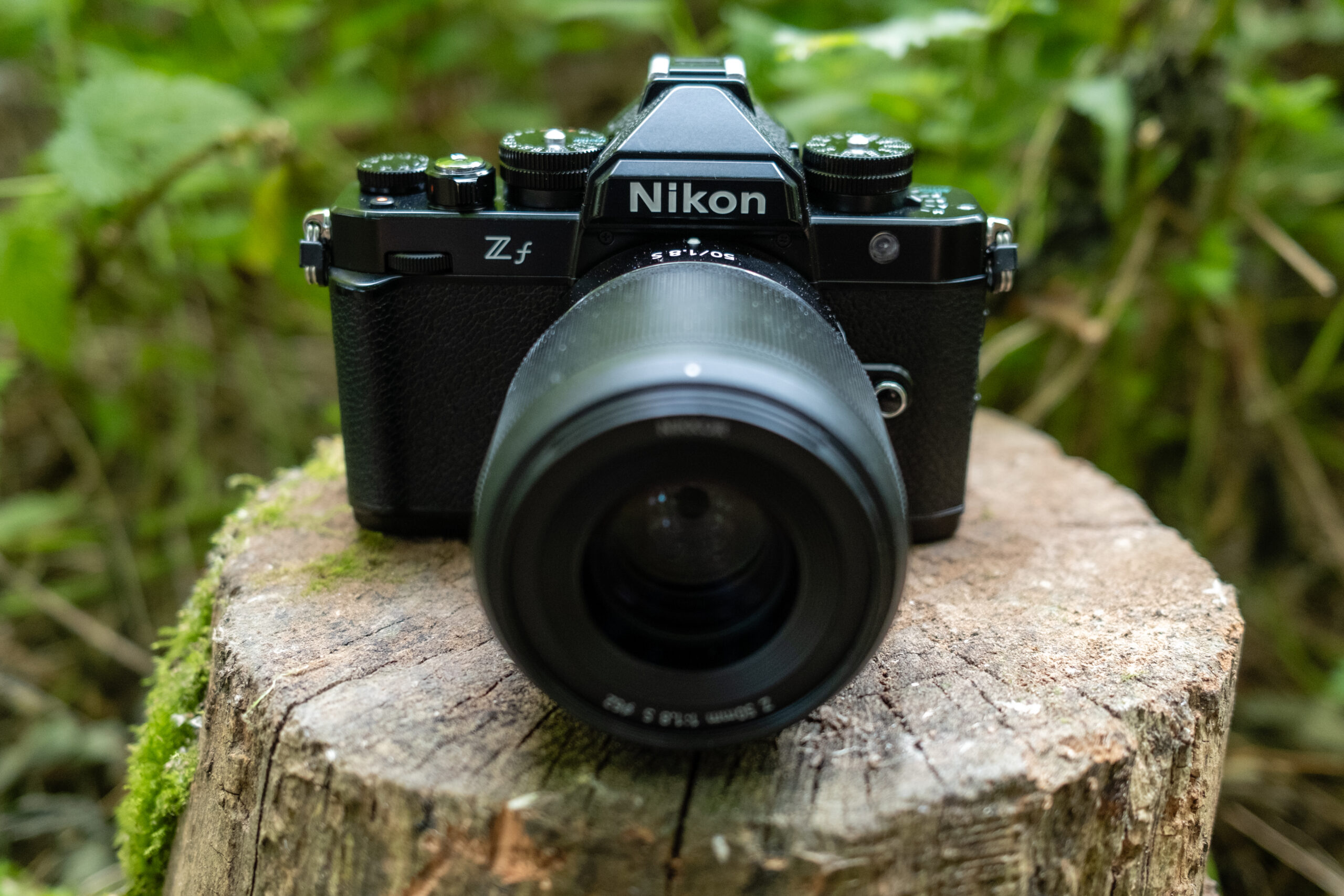
Nikon Zf review: the retro full-frame that still charms creators
A full-frame Nikon with brass-effect dials and a body styled like a 1980s FM2, going for as little as £2,149 at launch — that is the number Trusted Reviews quoted on 25 January 2024, and it is the figure that reframes the whole Zf argument. This was never meant to be the cheap way into full-frame Nikon. Yet a little over a year after launch, that is more or less what it had quietly become — and three years on, with the camera now a mature fixture rather than a novelty, the case for it is more interesting still.
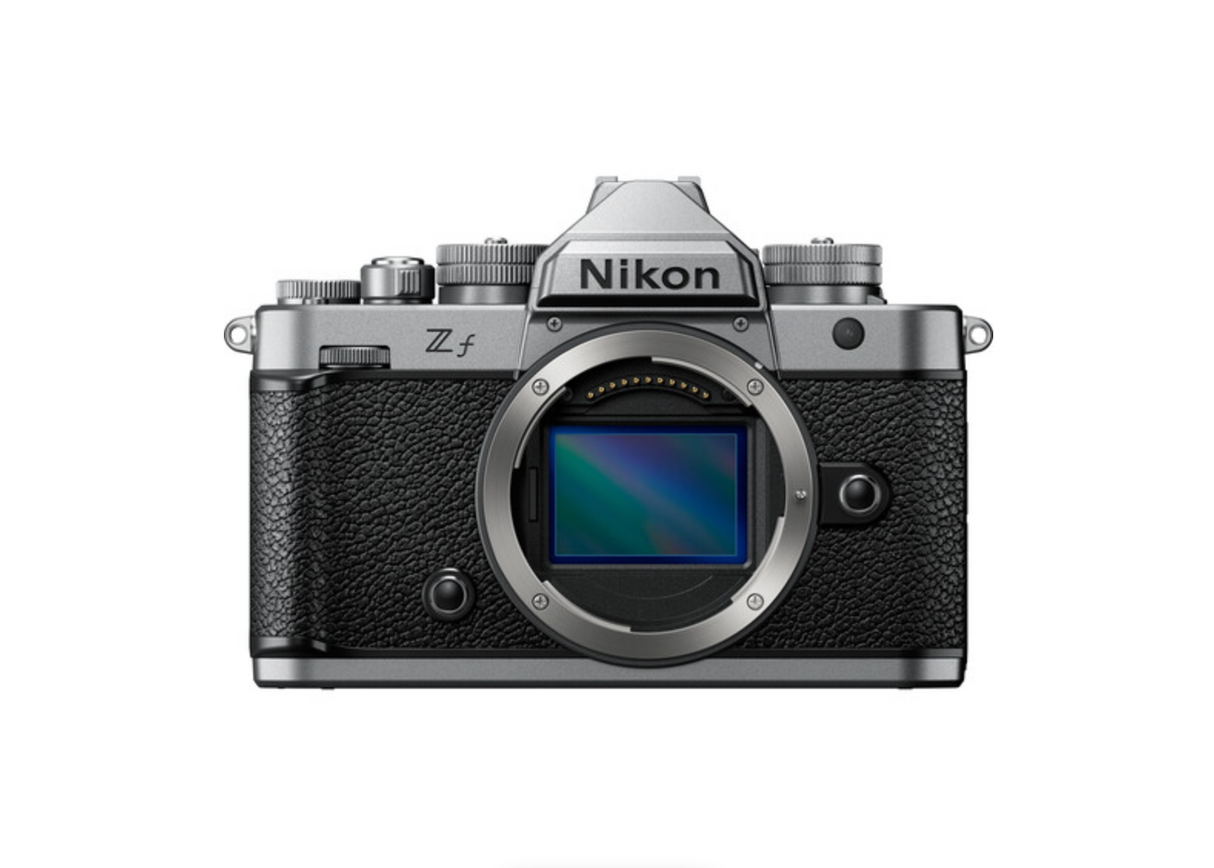
Nikon announced the Zf on 20 September 2023, and the pitch was unapologetic: take the full-frame guts of a modern Z-series camera and wrap them in the analogue clothes of the company’s film heyday. Dedicated shutter-speed and ISO dials. A magnesium-alloy body with the heft to match the look. It is heritage cosplay, yes — but heritage cosplay with a genuinely modern sensor underneath, and that combination is exactly why it still charms the kind of creator who could buy almost anything.
The price has done something interesting
When the Zf reached the UK in October 2023, the body alone was £2,299. That is the number to anchor on, because everything since has drifted downward in a way that flatters buyers who waited. By late January 2024, Amateur Photographer’s review (24 January 2024) still listed it at £2,299 body-only, while Trusted Reviews, a day later, had it at £2,149. Within four months of release, then, the Zf had already shed a chunk of its asking price without any drama or fanfare.
For a camera pitched on nostalgia, that quiet softening matters more than it sounds. Retro-styled bodies tend to hold their price stubbornly — the look is half the product, and the look does not depreciate. The fact that the Zf moved at all suggests Nikon was pricing for volume rather than treating it as a collector’s trinket. A word of honesty, though: those are 2023–24 figures, and the Zf is now approaching three years old. If you are weighing one up in 2026, treat the launch and early-2024 numbers as the start of the trajectory, not the end of it — check the live price on the Nikon Store and the usual UK retailers, because the only figure that should decide this purchase is today’s.
Which kit you buy changes the maths
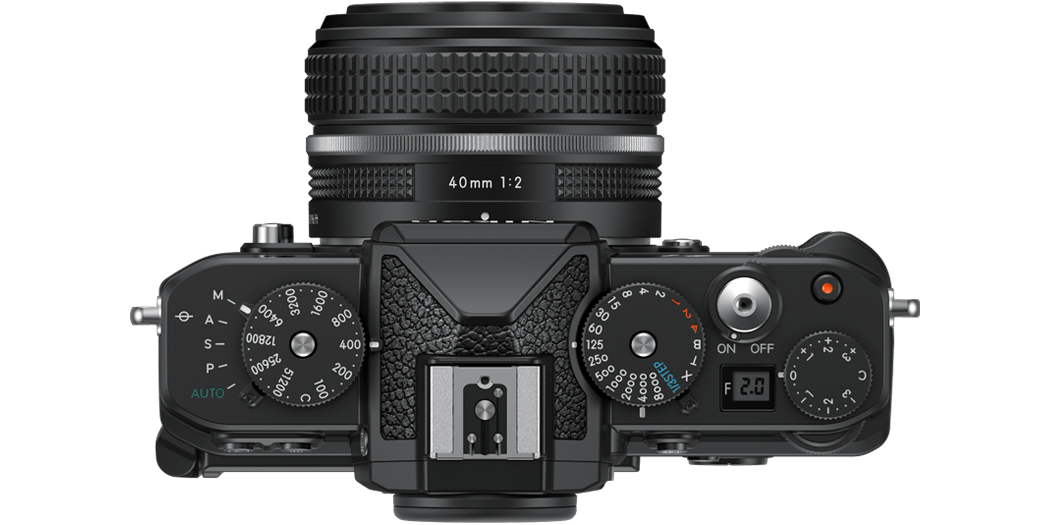
This is where I would slow down, because the bundle you choose tells you what kind of photographer you actually are. At UK launch the options were £2,299 body-only, £2,519 with the Z 40mm f/2 SE, and £2,849 with the Z 24–70mm f/4 S. By Amateur Photographer’s January 2024 numbers the picture had shifted again: £2,349 with the 40mm f/2 SE and £2,749 with the 24–70mm f/4 S.
Look at that 40mm SE bundle. At launch the lens added £220 over the body; by January it was adding just £50. The Special Edition 40mm is the lens that matches the camera’s whole aesthetic — silver ring, vintage script, the works — and at a £50 premium it is close to a no-brainer for anyone buying the Zf for the romance of it. That is the kit I would steer most people towards, assuming the same gap survives at whatever today’s price turns out to be.
The 40mm SE is the lens the Zf was designed around — and when the bundle premium fell to £50, the romantic choice became the rational one too.
The 24–70mm f/4 S is the grown-up choice: a proper standard zoom, more versatile, far better suited to someone who wants the Zf to be a genuine all-rounder rather than a single-prime street companion. It commands the premium it always did. Neither is wrong. But the gap between them is the gap between buying a camera you will pose with and buying one you will work with.
What’s actually under the retro shell
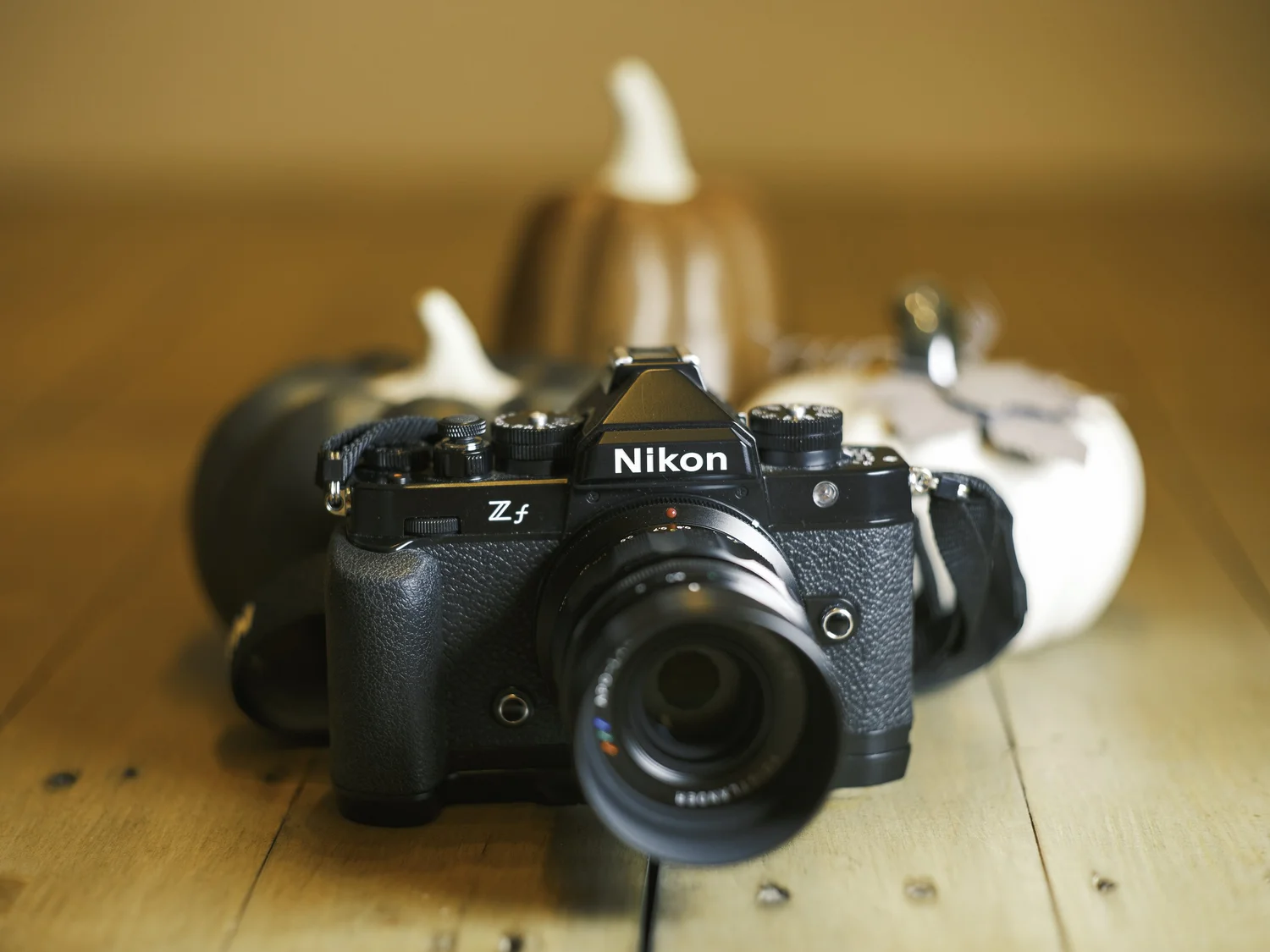
It would be easy to write the Zf off as a costume, so it is worth being concrete about what is doing the work. Per Nikon’s UK product page, the dials sit on top of a 24.5-megapixel back-illuminated full-frame sensor paired with the EXPEED 7 processor — the same generation of brain Nikon put in the flagship Z8 and Z9. That single decision is why the Zf punches so far above its retro billing: it inherits the same subject-detection autofocus, recognising people, dogs, cats, birds, cars, motorbikes, bicycles, trains and aircraft, rather than the slower system you might expect at this price.
Stabilisation is the other genuine headline. Nikon rates the in-body image stabilisation at up to eight stops, and at launch claimed the best CIPA figure of any camera then on sale, helped by a focus-point VR mode that concentrates the correction around your active AF point rather than the centre of the frame. For a camera you will want to shoot slowly and deliberately — handheld, in low evening light, no tripod — that is exactly the spec that turns the romance into usable frames. There is also a properly dedicated black-and-white position on the stills/video selector: flick to it and you get a real monochrome mode rather than a buried menu setting, which is a thoughtful nod to the film shooters this thing is courting.
It is not all flattery. The Zf has one genuinely mean streak: a single full-size SD card slot paired with a microSD slot, which feels stingy on a body costing north of £2,000, and the grip is shallower than a Z6-series camera, so larger lenses can feel front-heavy. The 3.2-inch vari-angle touchscreen and the EXPEED-7 video chops are welcome, but you buy the Zf knowing it asks for a particular kind of patience. That is the trade you are signing up for.
Six colours, and what that really signals
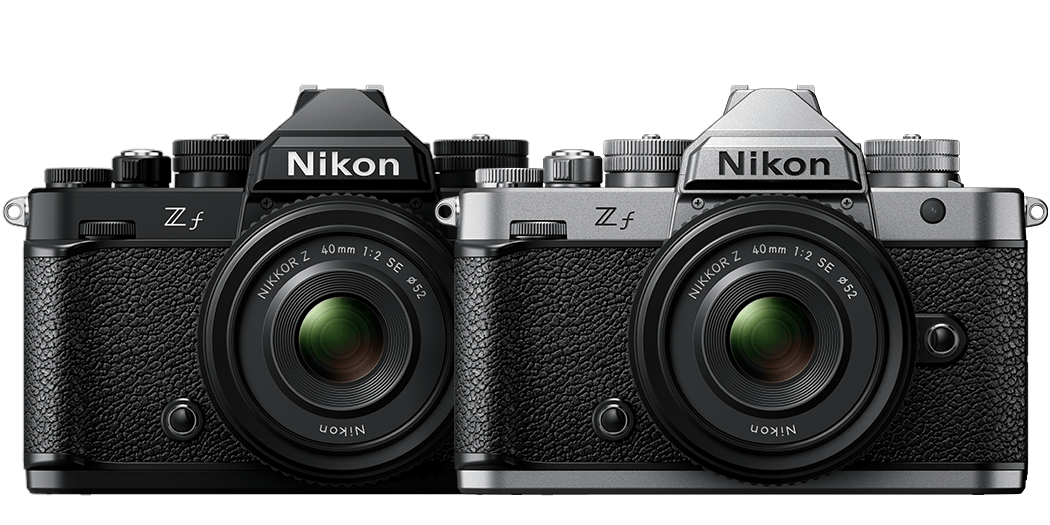
The Zf shipped in black, but the more telling detail is on Nikon’s own UK product page, which at launch offered six “Premium Exterior” colour options through the Nikon Store alongside the standard finish. These are finishes you choose with the same part of your brain that chooses a watch strap rather than a shutter count.
I find this genuinely clever positioning. Premium does not have to mean the most expensive sensor in the room; it can mean treating the camera as an object you have a relationship with. That is the Selfridges-counter logic, and it is precisely the logic that separates the Zf from the sea of identical black mirrorless bodies. You are not buying specifications. You are buying something you will want to leave out on the table.
Where the charm wears thin
I will not pretend the romance is free of friction. A camera built around physical dials asks you to commit to a way of shooting — deliberate, slower, hands-on — and that is wonderful right up until you are trying to grab a fast-moving moment and find yourself fighting the very controls that looked so lovely in the shop. The heft that gives the body its reassuring quality is also heft you carry all day. This is a camera with a strong opinion about how you should photograph, and not everyone shares it.
There is also the timing question. The Zf began shipping in Japan on 27 October 2023 with the UK following in the same window, so anyone buying in 2026 is buying a camera with real road behind it. That is not a flaw — mature products are often the ones worth owning, and a three-year-old body running EXPEED 7 has had every quirk documented by now. But it does mean you should buy on a sharp current price, not on launch-day excitement.
Who should actually click buy
If you want a full-frame Nikon that makes you fall back in love with the act of taking pictures — the click of a real dial, eight stops of stabilisation steadying a handheld evening frame, a body in a colour nobody else has — the Zf still earns its place, and the 40mm SE bundle is the version I would put in the basket. If you want a fast, fuss-free workhorse that gets out of your way, your money is better spent on a more conventional Z body; the dials will charm you for a week and then quietly annoy you.
What would change my mind on the cautious side? A genuinely sharp body-only deal — south of that £2,149 mark Trusted Reviews logged — tips the Zf from indulgence to something close to sensible, and three years on a deal like that is well within reach if you watch the Nikon Store and the UK retailers. Until you find it, the Zf remains a camera you buy with your heart, validated just enough by your head. For a tier of creator who can afford to choose on feel, that is no bad place for a camera to sit.
How we test
Buyer action
Where to buy or check next
Use this as the final check before ordering a phone, changing network or trusting a headline monthly price.



Reader discussion
Leave a comment
Comments are moderated. Keep it useful, accurate, and on topic.