Samsung S95F review: has QD-OLED finally pulled ahead of LG’s OLED in 2026?
For two generations Samsung’s flagship QD-OLED has been the brighter, punchier panel that still lost the war on its own home turf — the dark room — to LG’s WRGB OLED and its Dolby Vision trump card. The S95F is the year Samsung stops apologising. On What Hi-Fi’s testing it hits 2,220 nits across 1–10% windows in Filmmaker Mode and climbs to roughly 4,059–4,075 nits on those tiny 1–2% specular highlights in Standard Mode. That is a 30–40% jump over last year’s S95D, and it changes the conversation completely.
So has QD-OLED finally pulled ahead of LG’s OLED in 2026? My honest answer: in the room most of us actually watch in, yes — and it’s not as close as the spec sheet implies.
The brightness gap is real, but it isn’t the headline (QD-OLED)
Let me get the obvious caveat out of the way, because it matters. The LG G5 still wins the pure peak-brightness contest, reaching around 2,350 nits on small HDR highlights — slightly ahead of the S95F, as CNET found. If you do all your serious viewing in a blacked-out cinema room, that extra headroom plus LG’s Dolby Vision support genuinely gives the G5 the edge on the most demanding HDR mastering.
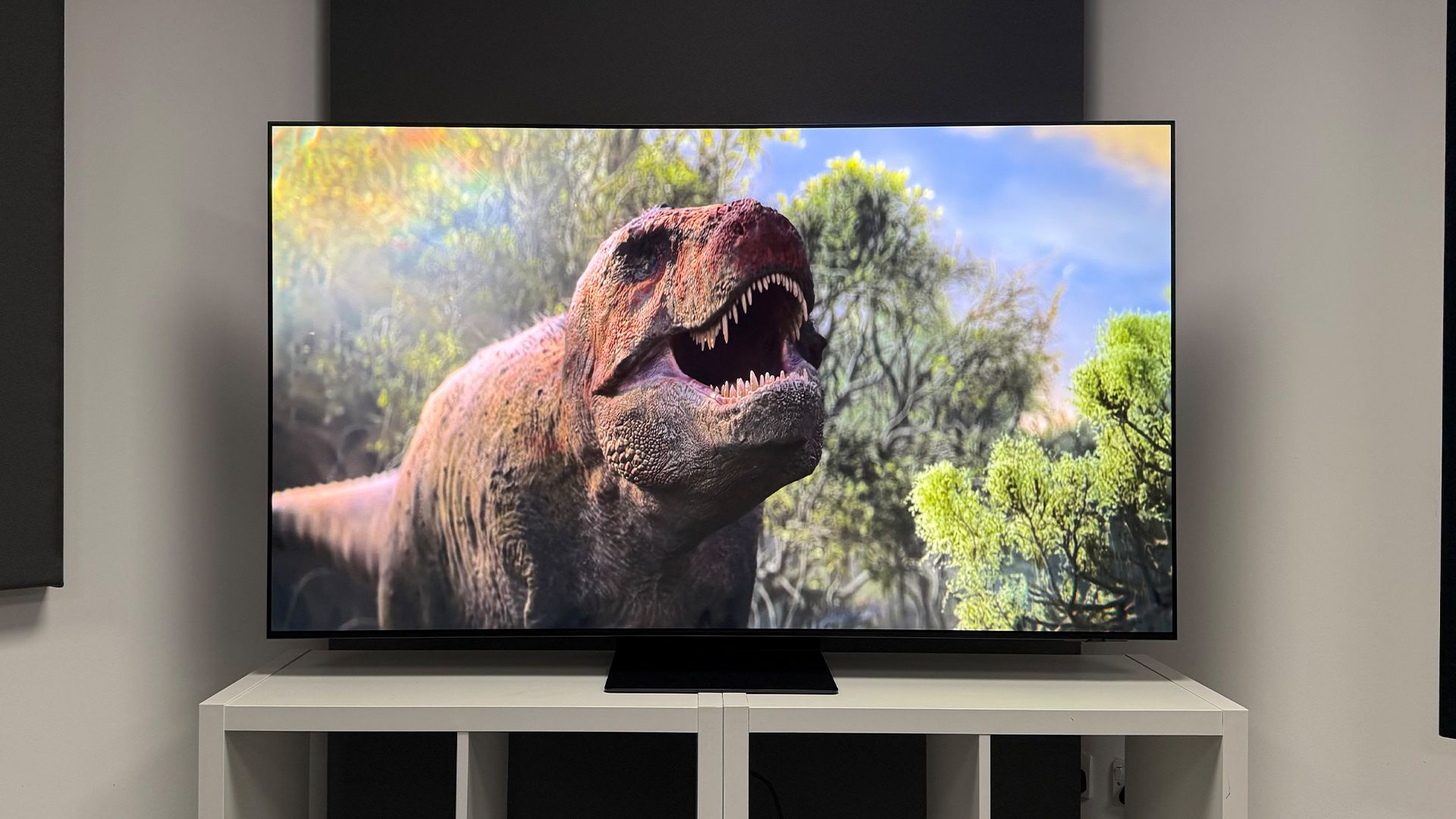
But here’s where I part company with the “specs decide it” crowd. Almost nobody in Britain watches a 65-inch flagship in a sealed home cinema. We watch in living rooms with a bay window, a lamp, a kitchen spilling light across the open-plan floor. And that is precisely the environment the S95F was built to dominate. The number that should sway you isn’t the 4,075-nit party trick on a 2% window — it’s the 2,220 nits the panel holds across a real 1–10% scene, because that is the brightness you actually see when a film fills the frame rather than a single torch-beam highlight.
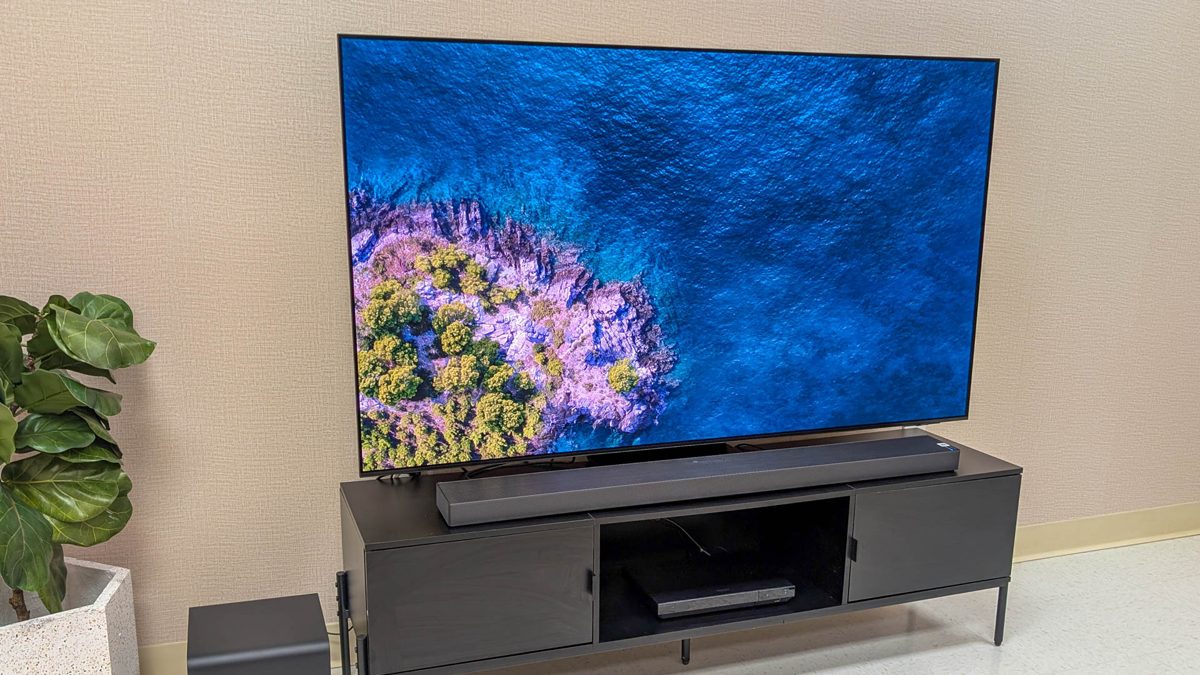
Image: What Hi-Fi
Here is how the two flagships line up on the figures the reviews actually measured, rather than the marketing headline:
Spec (65-inch)
Samsung S95F
LG G5
Edge
Panel technology
QD-OLED
WRGB (W-OLED)
Taste
Peak brightness (1–2% highlight)
~4,075 nits
~2,350 nits
S95F
Anti-glare coating
Reworked matte, class-leading
Standard glossy
S95F
Dolby Vision HDR
No (HDR10+)
Yes
G5
Price (65-inch)
~£2,699 now (£3,399 launch)
£3,399
S95F
Best for
Bright rooms, gaming, value
Dark-room cinema, Dolby Vision
—
The anti-glare coating is the actual winner
The single most consequential upgrade isn’t the nit count — it’s the glass. Samsung’s reworked anti-glare coating is, on the evidence of every review I trust, a step beyond what LG and the rest of the OLED field are doing. Expert Reviews and What Hi-Fi both single it out: reflections that would smear across a G5 in a bright room are knocked back to near-invisibility on the S95F. CNET went as far as putting “superior anti-glare” in its headline — the kind of detail a spec table never captures, because it only shows up when the sun is actually on the screen.
Peak nits win arguments on a forum; a matte panel that refuses to throw your own front window back at you wins the actual Saturday-afternoon film. That’s the trade I’d take every time.
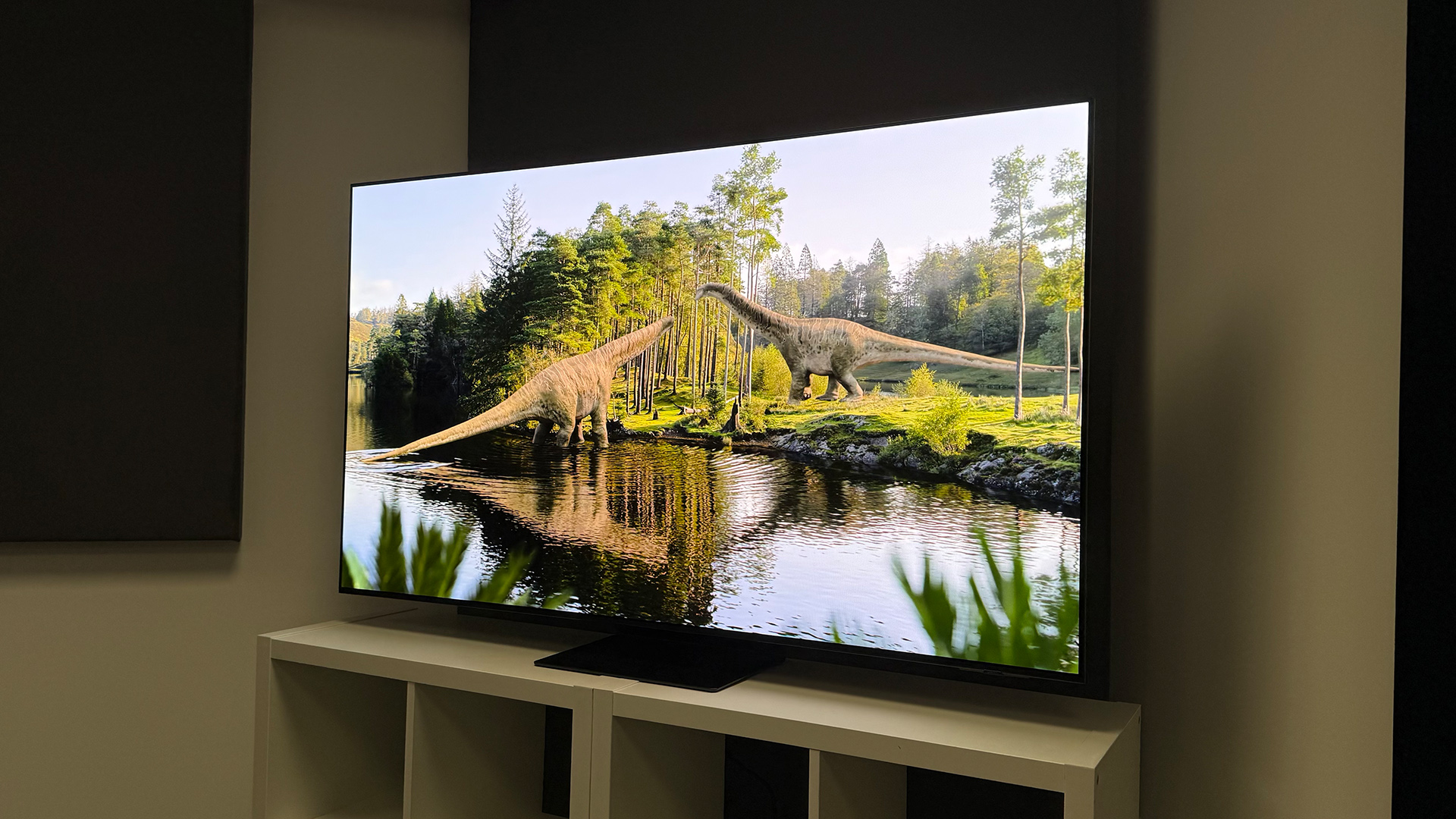
Image: Expert Reviews
Pair that coating with QD-OLED’s already-vivid colour volume and the higher full-field brightness, and you get a telly that looks spectacular at 3pm with the curtains open — the exact moment most OLEDs quietly give up. This is where the S95F doesn’t just match the G5; it walks past it.
It’s worth being honest about the one cosmetic cost: that same matte finish very slightly softens the inkiness of pure black in a fully darkened room, which is the sliver of ground the dark-room purist will cling to. In daylight, you will never notice it; at midnight with the lights off, a keen eye might. For me that is a fair swap, because the daylit hours are the ones a family television actually earns its keep in — and it’s the trade Expert Reviews and What Hi-Fi both land on too.
Gamers get the full deck
If you’ve got a PS5 Pro or a serious gaming PC, the S95F leaves nothing on the table. PCMag and Expert Reviews confirm 4K at up to 165Hz, plus VRR, ALLM and AMD FreeSync Premium Pro across the range. Combine that with QD-OLED’s instantaneous response and the anti-glare panel, and this is one of the most complete gaming displays you can buy at the size — bright, fast, and reflection-free even with a window behind your desk.
Samsung’s Tizen interface still routes all four HDMI 2.1 ports through the slim One Connect box rather than the panel, which is genuinely useful if you wall-mount: every cable and console lives off to the side instead of bristling out of the back of the screen. The Game Bar overlay surfaces refresh rate, VRR status and input lag at a tap, and the measured lag in Game Mode sits low enough that no console player will feel it. If you’re the household running a PlayStation, a Series X and a PC into the same set, the four full-bandwidth ports mean none of them is fighting for the good socket — a small thing that quietly matters over years of ownership.
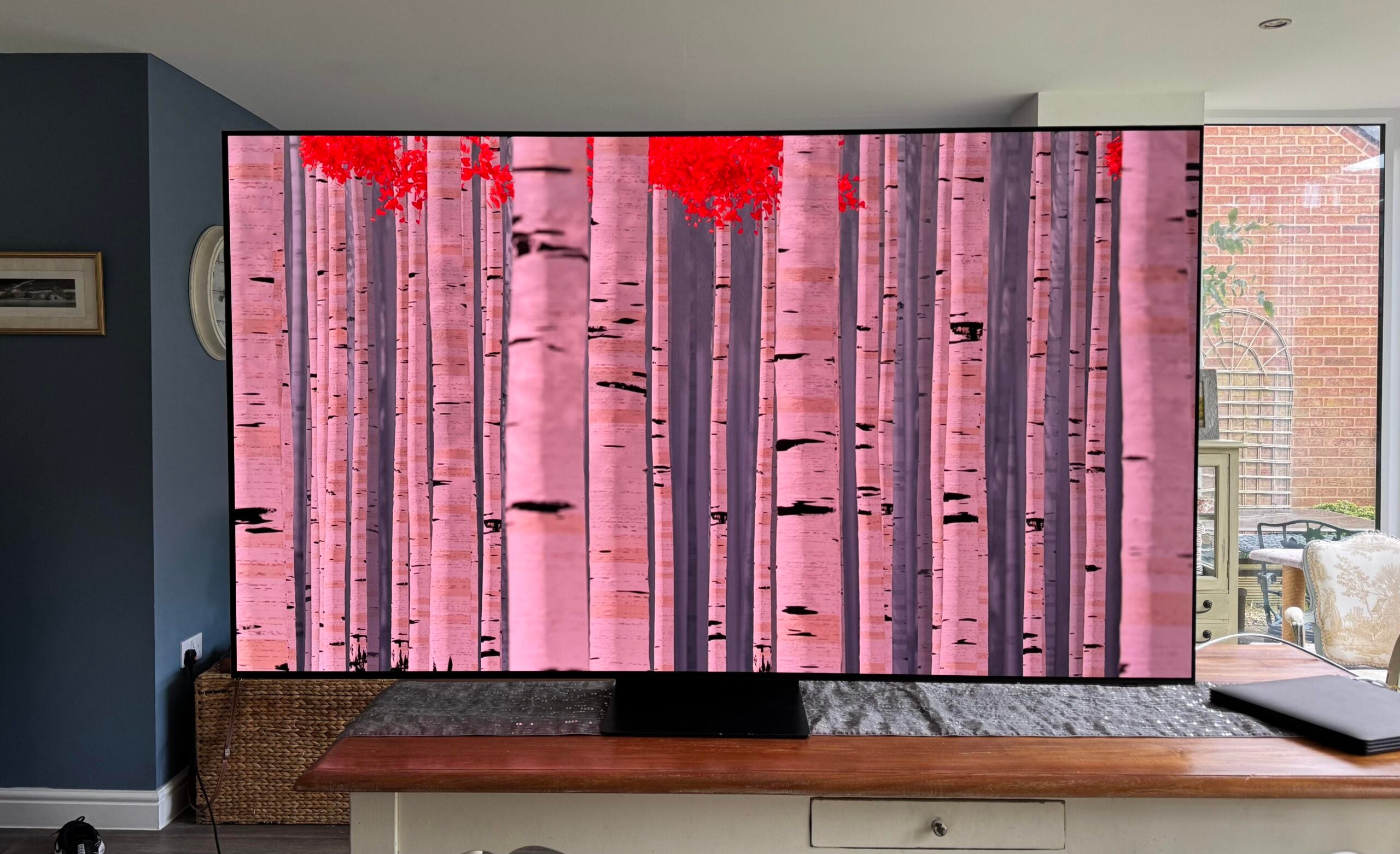
Image: Trusted Reviews
The one panel detail buyers must know
A genuine word of warning, because it’s easy to miss. The QD-OLED panel that earns all this praise sits in the 55, 65 and 77-inch models. The 83-inch S95F uses LG’s W-OLED (WRGB) panel instead — a different technology entirely. So if you’re shopping at the very top of the size range, you are not buying the QD-OLED TV the reviews are describing. At 83 inches the QD-OLED-versus-WRGB debate is moot, because you’re getting WRGB regardless. Buy the 65 or 77 if the panel tech is the reason you’re here. It’s the 65-inch that hits the sweet spot for most British living rooms — large enough to carry a typical 2.5–3m viewing distance, small enough not to swallow a terraced front room.
The price has done something interesting
The S95F launched in the UK at £3,399 for the 65-inch — line-for-line the same as the LG G5, per Trusted Reviews and What Hi-Fi. At identical money, the choice came down to taste: G5 for the dark-room purist, S95F for everyone with daylight in the room.
But prices have since slid to around £2,699 for the 65-inch during the review period, and Samsung’s flagships discount fastest through Currys, John Lewis and Samsung UK’s own store, where the bundled five-year guarantee on registration is worth factoring into the sum. That £700 swing is what tips a close call into a clear one. When the brighter, better-coated, fully gaming-specced panel also undercuts its rival by several hundred pounds, the “it depends on your room” hedge starts to look like fence-sitting. This isn’t a cheap television and I won’t pretend otherwise — it’s premium kit — but at £2,699 it’s premium kit doing more for less than the obvious alternative. If you can stretch, the 77-inch keeps the QD-OLED panel and tends to see the same percentage discounts, which makes it the size I’d cover if your room and budget allow.
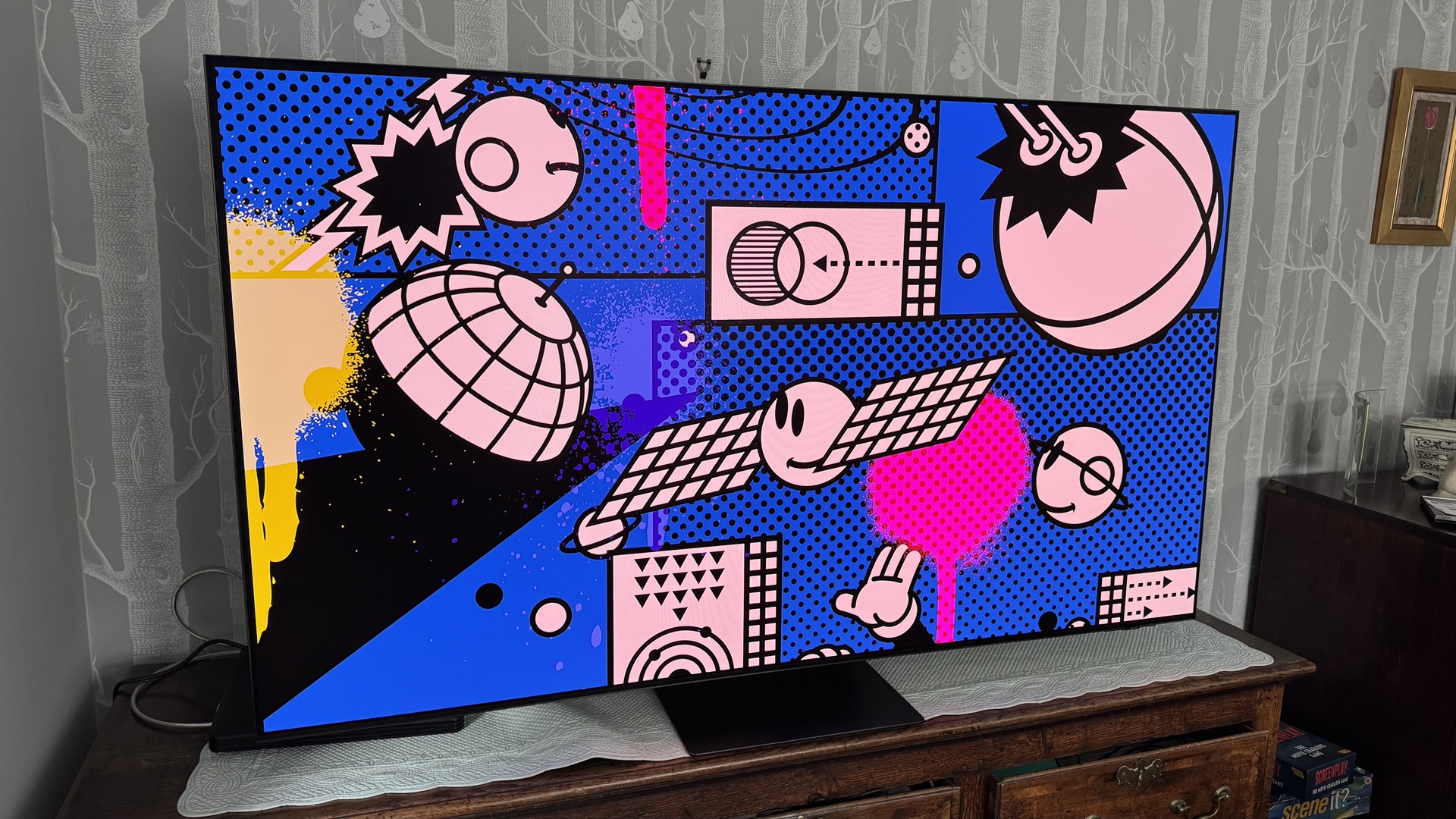
Image: What Hi-Fi
Who I’d send to the S95F — and who I wouldn’t
If you watch in any room that sees real daylight, if you game, or if you simply want the most striking image at a sensible flagship price, the S95F is the one I’d put on your wall — especially now it’s drifted to £2,699. The anti-glare glass alone justifies it for most British living rooms, and the One Connect box makes it the tidier wall-mount of the two.
The G5 keeps two buyers: the dark-room cinephile chasing every last nit on tiny highlights, and anyone who refuses to live without Dolby Vision. Those are real reasons, but they’re niche ones. For the way most of us actually watch, Samsung has done the thing it’s been threatening to do for three years — it’s made QD-OLED the panel to beat. What would change my mind is simple: if LG matches that anti-glare coating next round, we’re back to a coin toss. Until then, the coin has landed.
We use cookies to make this site work, measure how it is used, and (with your consent) personalise advertising. Strictly necessary cookies always run. Analytics and advertising cookies run only if you accept. See our Cookie Policy and Privacy Policy.
MobileTechWorld Ltd — Companies House registration 16224011. Independent UK technology publisher since 2009.












Reader discussion
Leave a comment
Comments are moderated. Keep it useful, accurate, and on topic.