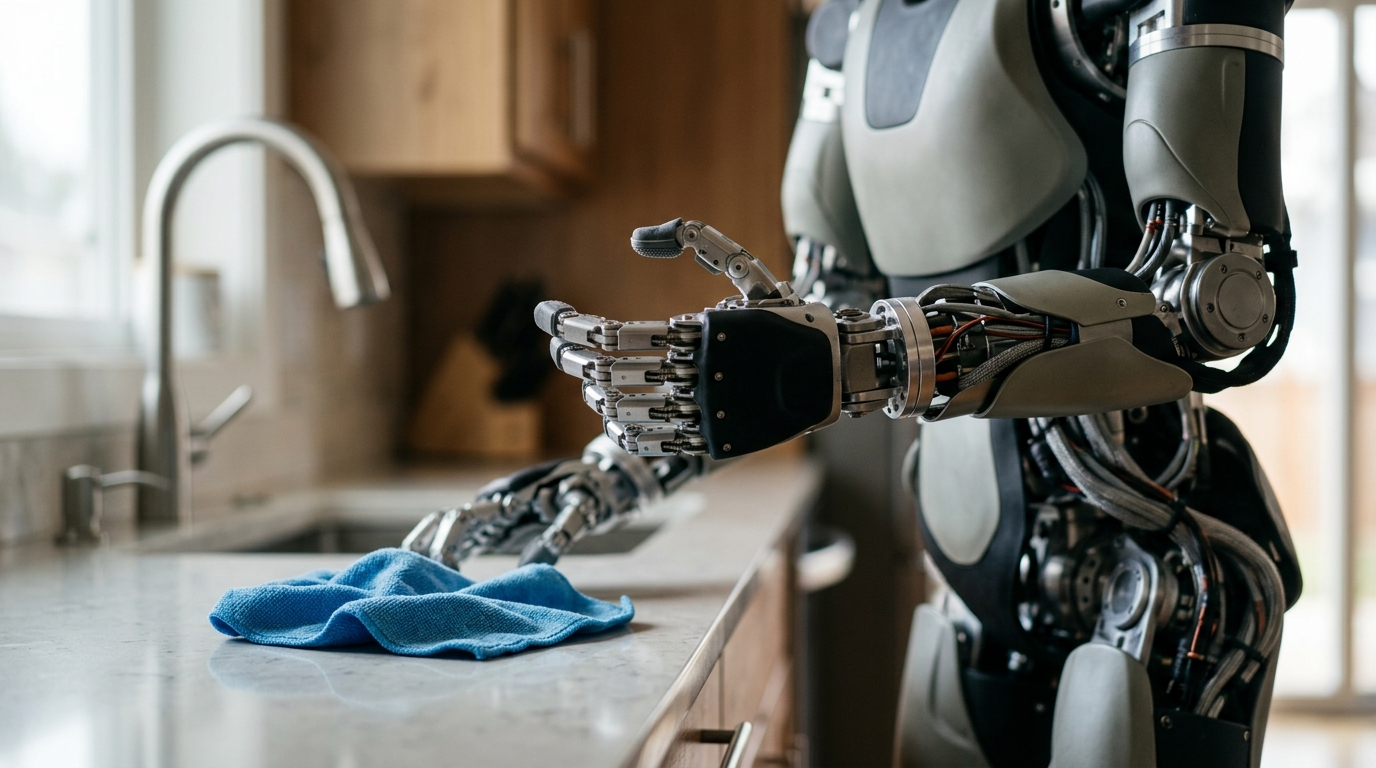
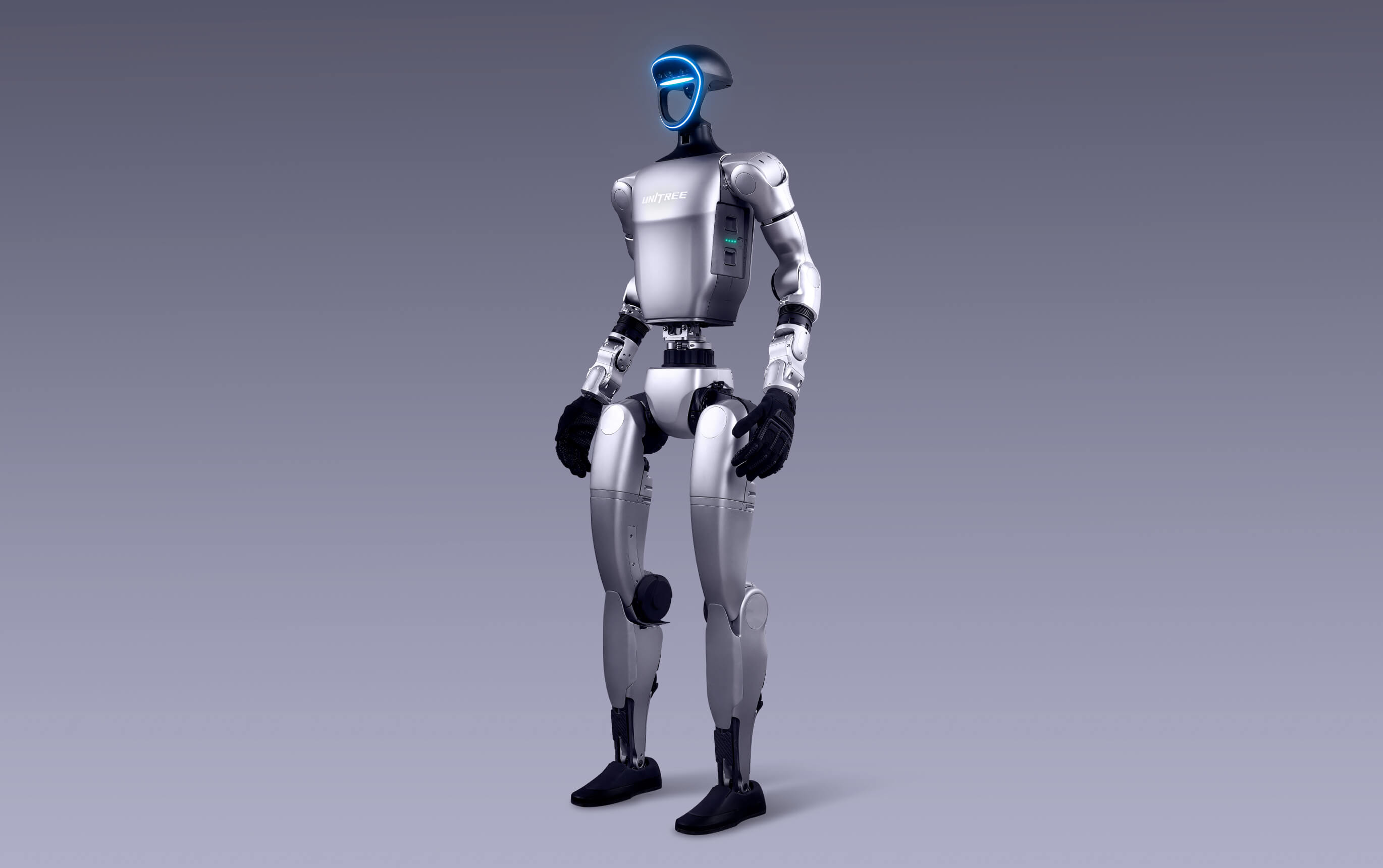
Every tech keynote in 2026 features the same sizzle reel: a humanoid robot folding towels, pouring coffee, or gently placing dishes in a dishwasher. This humanoid robots home development matters. Tesla promises Optimus for under $30,000 (around £24,000). China has opened a 10,000-unit humanoid robot factory. Figure AI keeps posting slick demos of its machines chatting with humans while tidying kitchens. The message is clear: your AI butler is around the corner, and it will make human housekeepers obsolete. Except it will not. Not this decade, and probably not most of the next one either.
The Humanoid Robots Home Hype Machine Is Running Overtime — the humanoid robots at home angle
The sheer volume of announcements is staggering. Tesla has Optimus Gen 3 production starting at Fremont and Elon Musk has declared the robot will ship to consumers by the end of 2027 at a price between $20,000 (around £16,000) and $30,000 (around £24,000). In Guangdong, Leju Robotics and Dongfang have just opened a factory capable of pumping out 10,000 humanoid robots a year. Figure AI, having hit a post-money valuation of roughly £31 (about $39) billion in its 2025 Series C and raised around £2 (about $1.9) billion in total funding, demonstrated a robot that can hold a conversation, identify objects and execute multi-step kitchen tasks. Boston Dynamics and Google DeepMind published research showing robots learning new physical skills through large language model reasoning. On paper, the consumer humanoid robot revolution looks imminent.
Behind the Curtain: Teleoperation and Carefully Staged Demos — the humanoid robots at home angle
But look behind the carefully edited footage and the picture changes dramatically. MIT Technology Review published a damning investigation in February 2026 revealing that several high-profile humanoid robot demos relied on hidden human operators controlling the machines remotely, a practice known as teleoperation. What audiences saw as autonomous decision-making was, in many cases, a human puppeteer behind a screen deciding where to reach, how hard to grip, and when to step forward. Even 1X’s NEO, due to ship into homes this year, relies on a teleoperator from Palo Alto for any task the robot cannot finish on its own.
This is not to say the technology is fake. It is not. These machines genuinely walk, genuinely grasp, and genuinely process visual information. But the gap between a robot performing a rehearsed task in a controlled environment and one independently navigating your actual home is enormous. That gap is where the hype lives, and it is far wider than any press release would have you believe.
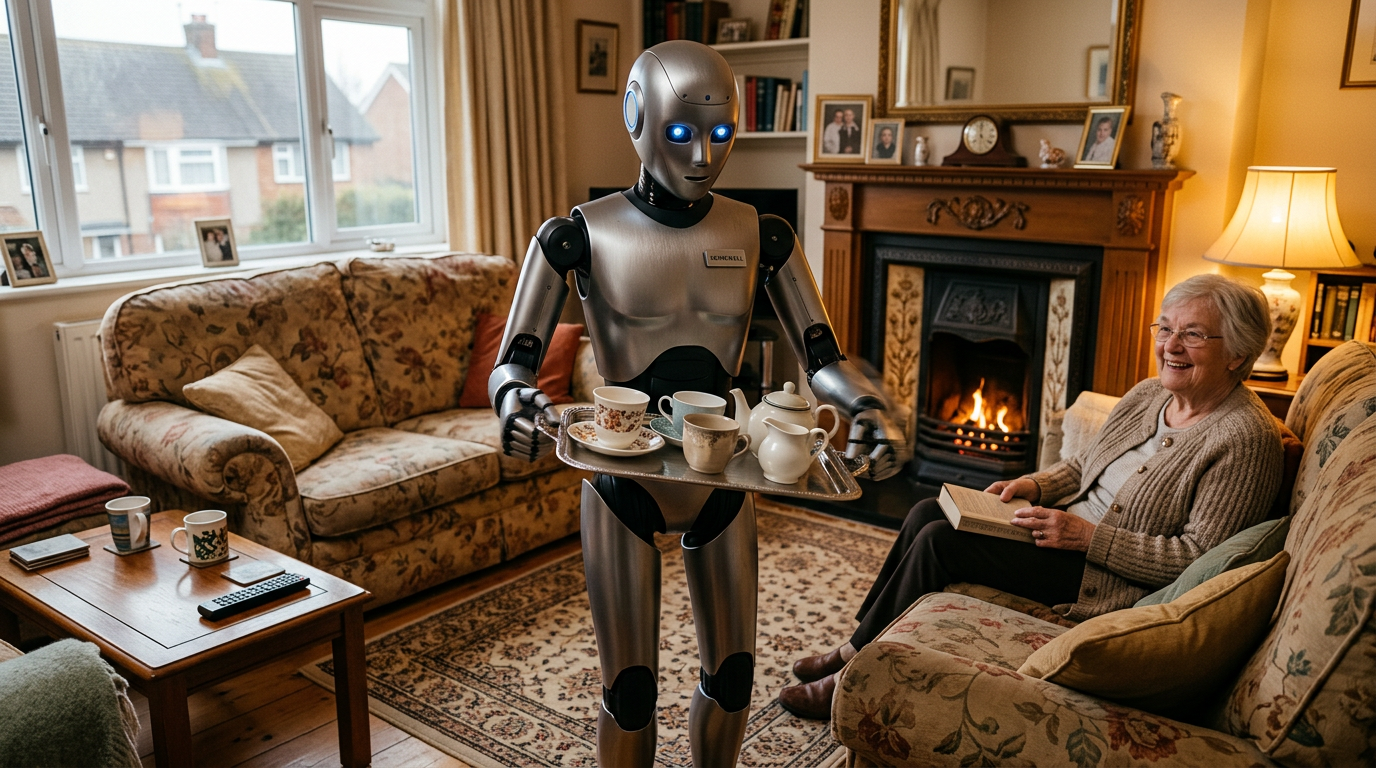
Battery Life, Navigation and the Chaos of Real Homes
Consider the practical constraints. Most humanoid robots today operate on battery packs that deliver between two and four hours of active use. That is not two to four hours of heavy cleaning. That is two to four hours of walking, balancing, processing sensor data, and occasionally picking something up. Vacuuming an average three-bedroom house takes a human cleaner roughly 40 minutes. A humanoid robot attempting the same task would burn through half its battery just navigating between rooms, assuming it did not trip over a shoe, a dog, or a child’s toy first.
Factory floors are flat, predictable, and mapped in advance. Warehouses have standardised shelving, consistent lighting, and clear pathways. Your home has none of these things. A Wednesday evening living room features cushions on the floor, a half-eaten dinner on the coffee table, a cat sleeping in a doorway, and a toddler who has rearranged the furniture for the third time that day. Autonomous navigation in this kind of environment requires not just sophisticated SLAM (simultaneous localisation and mapping) algorithms but genuine real-time adaptability to random, unpredictable clutter. We are years away from solving this reliably, and no amount of venture capital changes the physics and software complexity involved.
The Cost Equation That Nobody Wants to Talk About
Then there is the money. Tesla’s optimistic $20,000 to $30,000 (around £24,000) price point for Optimus assumes manufacturing scale that does not yet exist and margins that would make the Cybertruck’s early losses look modest. Even if that price holds, consider what you are actually buying. A machine that can, at best, perform a handful of basic household tasks slowly and imperfectly, tasks it will need software updates to learn over months or years.
Compare that to a professional cleaner in the United Kingdom, who costs roughly twelve pounds per hour and arrives ready to clean your entire house from top to bottom in three hours. That is thirty-six pounds for a spotless home. At fifty-two weekly sessions a year, you are looking at under two thousand pounds annually for a service that actually works. A $25,000 (around £20,000) robot that can sort of fold laundry and occasionally mop a small section of floor is not competing on value. It is competing on novelty, and novelty wears off the first time it knocks over a vase.
Where Humanoid Robots Will Actually Succeed First
None of this means humanoid robots are doomed. Quite the opposite. They are going to transform specific industries far sooner than they transform homes. Amazon is already testing humanoid robots in its fulfilment centres, where the environment is controlled, tasks are repetitive, and the cost savings from replacing human labour are substantial. BMW, Mercedes, and Hyundai are piloting humanoid robots on production lines. Hospital logistics, where robots move supplies along fixed corridors with minimal obstacle variation, is another early winner.
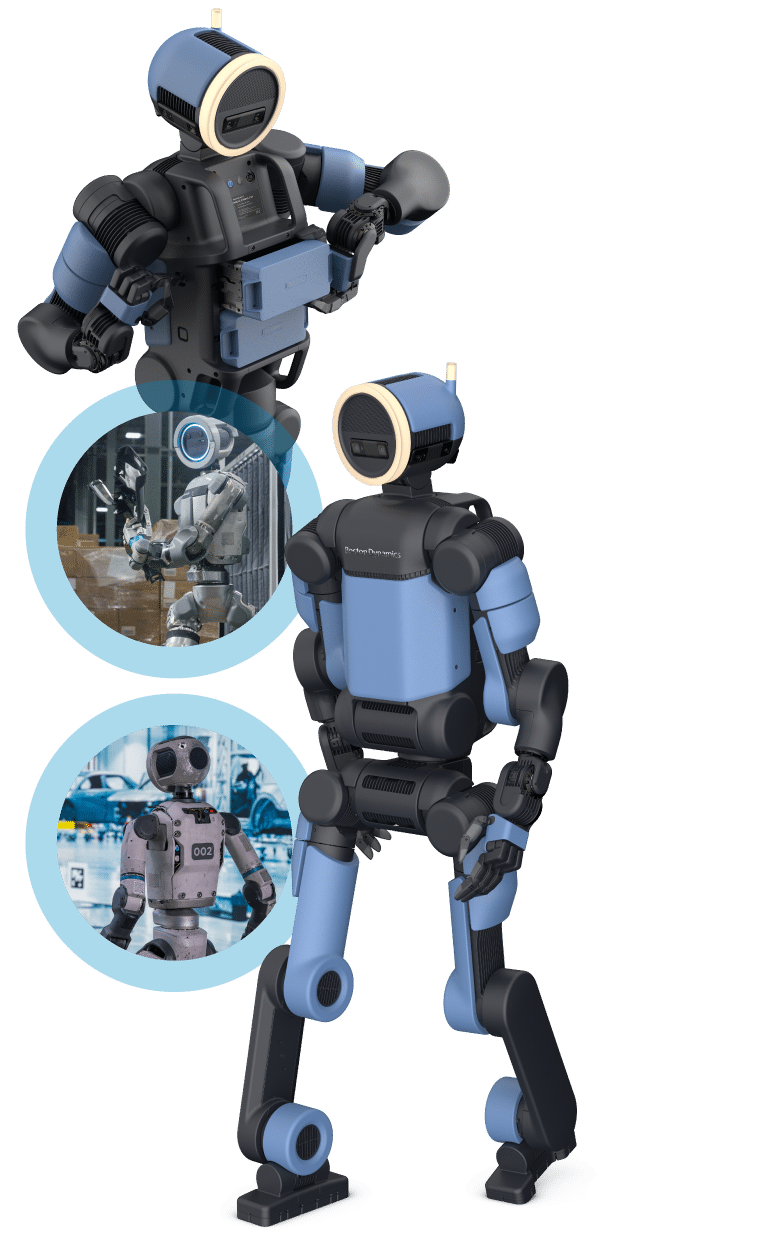
These are environments designed for machines: flat floors, consistent layouts, predictable tasks, and round-the-clock operation that justifies the capital outlay. A $30,000 (around £24,000) robot running two shifts in a warehouse pays for itself within months. The same robot standing in your kitchen, confused by a misplaced chopping board, does not.
The realistic deployment timeline looks something like this. Factory and warehouse deployment will accelerate through 2026 to 2028, with major manufacturers scaling humanoid workforces into the thousands. Hospital and institutional use cases follow from 2028 to 2030. Limited, heavily supervised home use for specific tasks like security patrols or elderly assistance might emerge around 2030 to 2032. A genuinely useful, autonomous home robot that can replace a human cleaner? That is a 2035 conversation at the earliest, and even that assumes breakthroughs in battery density, dexterous manipulation, and real-world navigation that have not yet occurred.
The Verdict: Real Technology, Grossly Oversold Timeline
Let me be direct. The underlying technology powering humanoid robots is genuinely impressive and improving rapidly. Large language models giving robots the ability to reason about physical tasks is a legitimate breakthrough. The hardware is getting lighter, cheaper, and more capable every year. I am not arguing that humanoid robots in homes will never happen. They will. For more, see our Ai coverage. You might also read AI Scribes Are Making Your Doctor Visits More Expensive and Nobody Wants to Fix It.
What I am arguing is that the consumer timeline being sold by Tesla, Figure, and a dozen Chinese manufacturers is fantasy. It is designed to attract investment, inflate valuations, and generate headlines. The people telling you that a $25,000 (around £20,000) robot will be cleaning your house by 2028 are the same people who told you full self-driving was six months away in 2021. The technology is real. The timeline is not. Your cleaner’s job is safe for a long while yet.
Related reading on MTW
Buyer action
Where to buy or check next
Use this as the final check before ordering a phone, changing network or trusting a headline monthly price.








Reader discussion
Leave a comment
Comments are moderated. Keep it useful, accurate, and on topic.