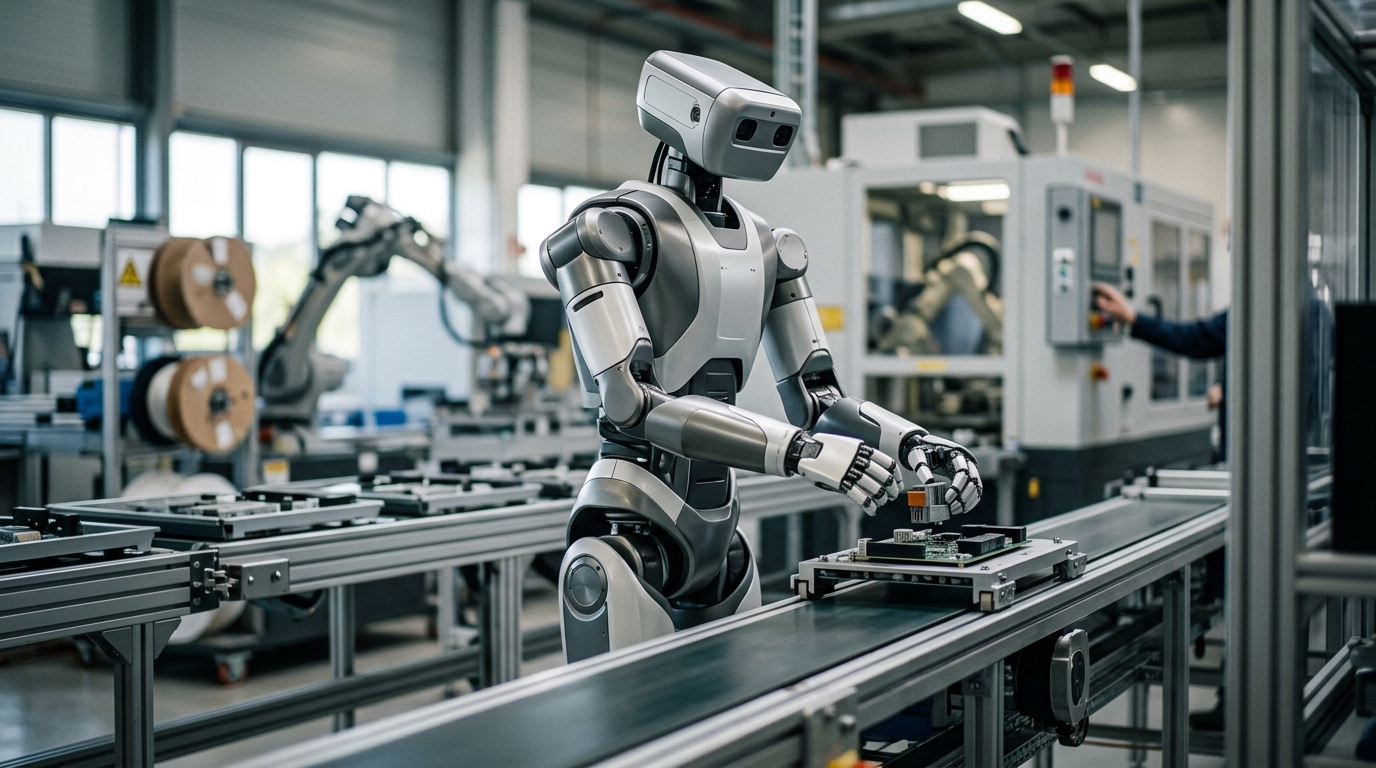
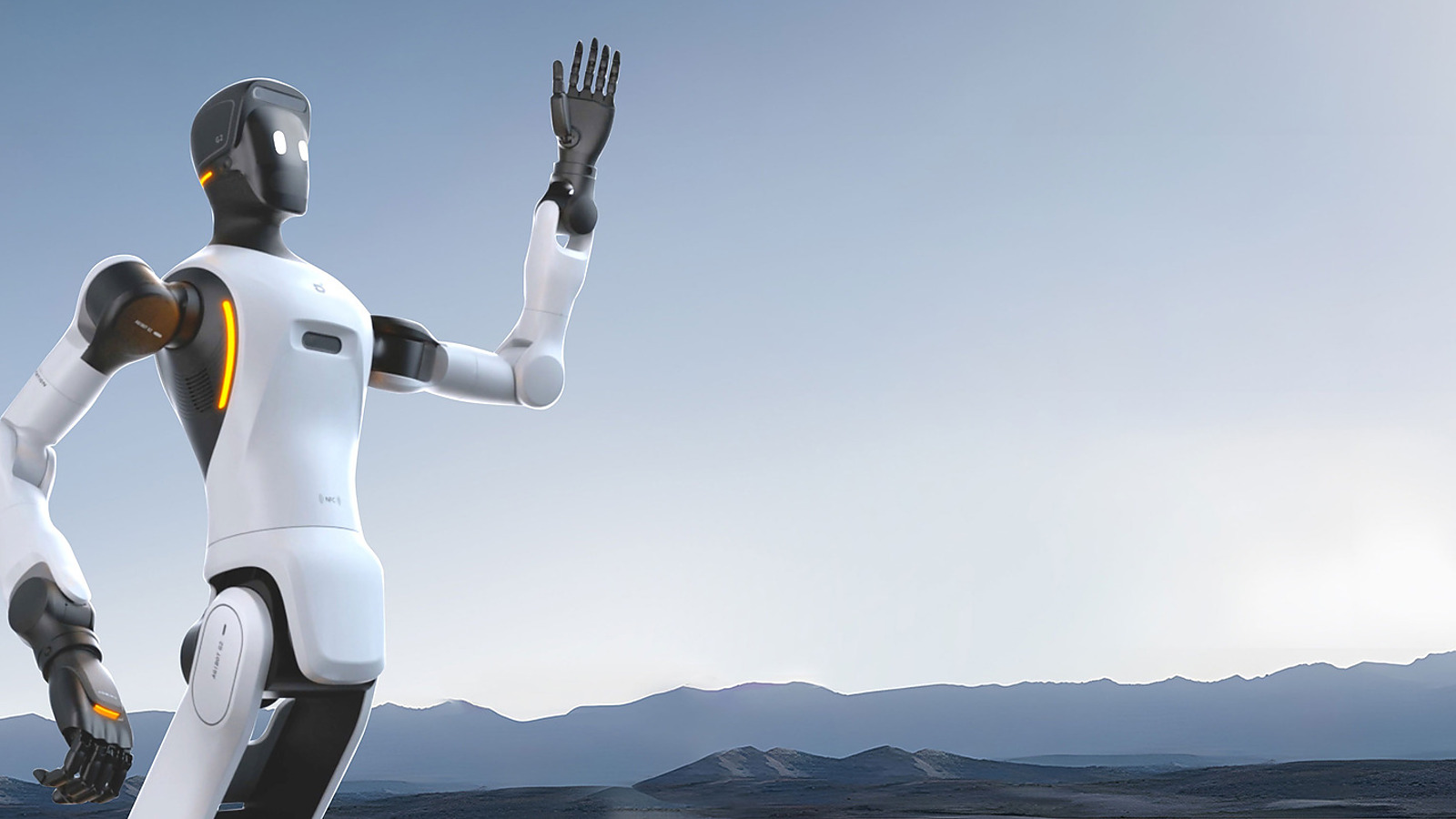
AGIBOT G2 is the rare humanoid robot launch written for a procurement committee rather than an investor video. The April 15 release positions AGIBOT G2 around uptime, gripper precision, field-replaceable joints and the kind of operator hand-off cues that real factory lines actually need.
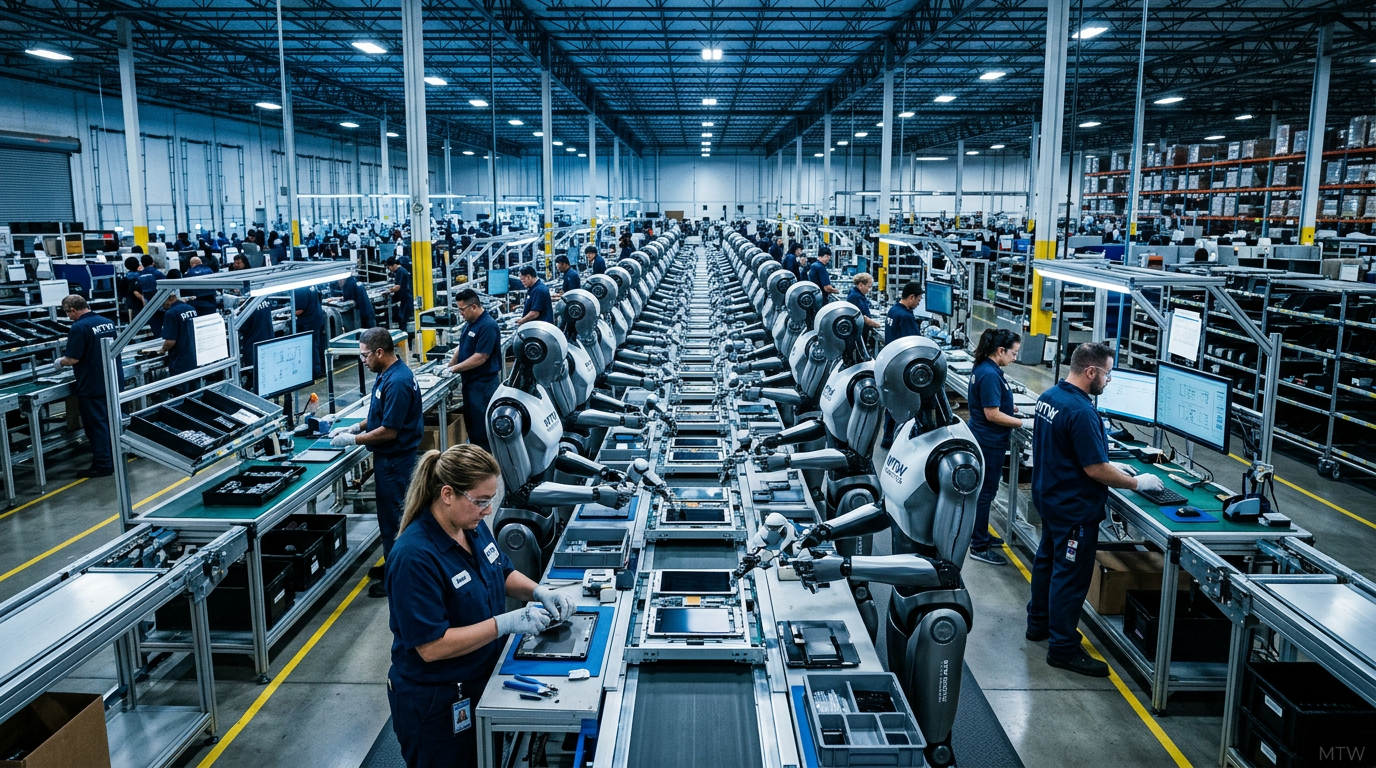
- Shanghai-based AgiBot deployed four G2 humanoid robots on Longcheer Technologys consumer-electronics tablet production line; an eight-hour live-streamed shift took place on 14 April 2026.
- G2 is an industrial-grade wheeled humanoid with force-controlled dual arms (sub-0.5 N accuracy), omnidirectional mobility and a 5 kg rated payload.
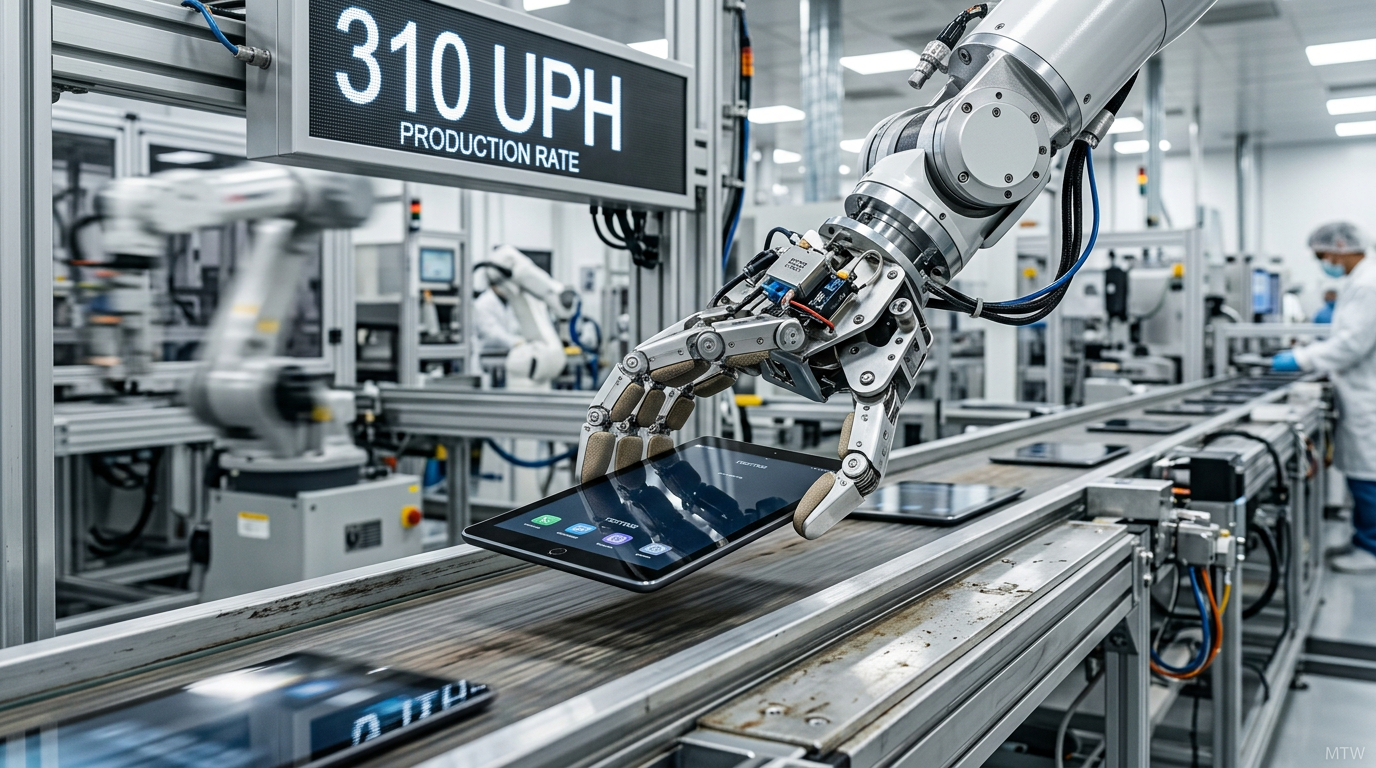
- AgiBot reports throughput of around 310 units per hour, integration of the line in 36 hours and approximately 3,000 units per shift; the plan is 100 robots by Q3 2026.
- Why it matters: this is the most credible live deployment of embodied AI in consumer-electronics manufacturing – a template UK and EU contract manufacturers should study before the 2027 capacity cycle.
The G2 is not trying to look like a sci-fi protagonist. It looks like a robot you will not mind seeing covered in a thin film of engine oil in a Shenzhen assembly plant six months from now. That is actually the point. The more seriously a humanoid launch takes its own industrial credibility, the less likely it is to make headlines but the more likely it is to make money.
Why AGIBOT G2 is factory first, consumer never
AGIBOT is explicit that G2 is not going into homes. Good. The consumer humanoid timeline remains vaporous, and any company pretending otherwise is burning reputation. The factory-first pitch is realistic: repetitive manipulation tasks, tool-assisted assembly, and kitting work that human operators already do in body postures that injure them within years. If G2 can do one of those reliably for 8 hours a shift, it is a purchase order, not a press release.
Gripper design is the part that will win the sale
Humanoid hype tends to focus on the head and the walking gait. Industrial buyers look at the gripper first. AGIBOT’s G2 has a refined dual-arm gripper with tactile sensing calibrated for workpieces in the 50 g to 3 kg band. That is the meat of SMT and light-assembly work. The company is also shipping a small library of trained manipulation policies for common components, which is how you turn a robot from a toy into a capital expense.
The human-in-the-loop story is growing up
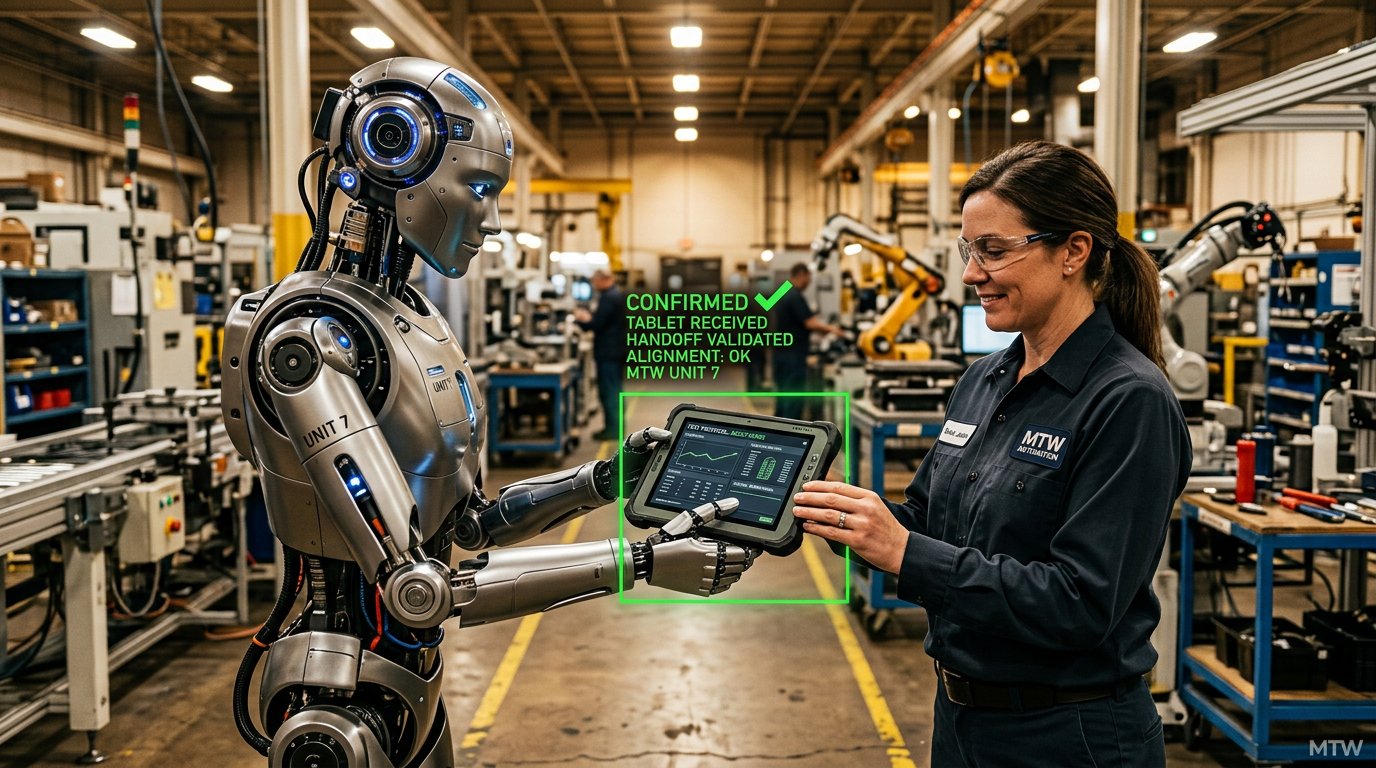
Industrial humanoids succeed or fail on how easily they hand off to and from human workers. G2’s handoff protocol, audible status cues and visible indicators are not glamorous but they are the correct ergonomics. Operators on a line need to know at a glance when a robot is busy, when it is ready to receive a part, and when it is in fault. AGIBOT has clearly watched enough Volkswagen, BYD and Foxconn lines to understand that.
Serviceability is the hidden weapon
The G2 is designed for field-replaceable joints, modular arm ends and a service SLA rather than a bring-it-back-to-the-factory repair model. That detail is boring. It is also how humanoid robots stop being financial liabilities. An operator who can swap an actuator in 20 minutes on a live line is the difference between a profitable programme and a demo-only stunt.
Where AGIBOT still has to prove itself
Long-horizon behaviour policies and graceful recovery from unexpected states remain the industry’s soft underbelly. G2’s demo suite is the right shape, but factories do not care about demos. They care about six-month reliability numbers in Celsius extremes, with variable parts input and operator behaviour that does not match the training distribution. If AGIBOT’s second half of 2026 is full of line-level reliability case studies, this launch will look prophetic. If it is full of revised firmware release notes, it will look like the rest of the category.
| Dimension | Hype-era humanoid | AGIBOT G2 |
|---|---|---|
| Primary target | Investor videos | Factory procurement |
| Gripper | Novelty | Workpiece-calibrated |
| Recovery | Demo-reset | Graceful, operator-visible |
| Service model | Return to OEM | Field-swappable modules |
Verdict
AGIBOT’s G2 is not the humanoid robot that wins the internet. It is the humanoid robot that wins a procurement committee. That is a more important story in 2026 than any dance video. The next twelve months will decide whether AGIBOT can deliver reliability to match the pitch. On April 15, the pitch itself is the most credible the industry has heard.
Related reading on MTW
Buyer action
Where to buy or check next
Use this as the final check before ordering a phone, changing network or trusting a headline monthly price.





Reader discussion
Leave a comment
Comments are moderated. Keep it useful, accurate, and on topic.