
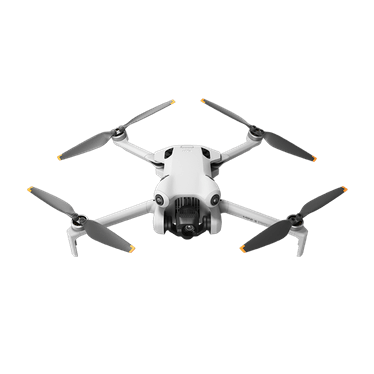
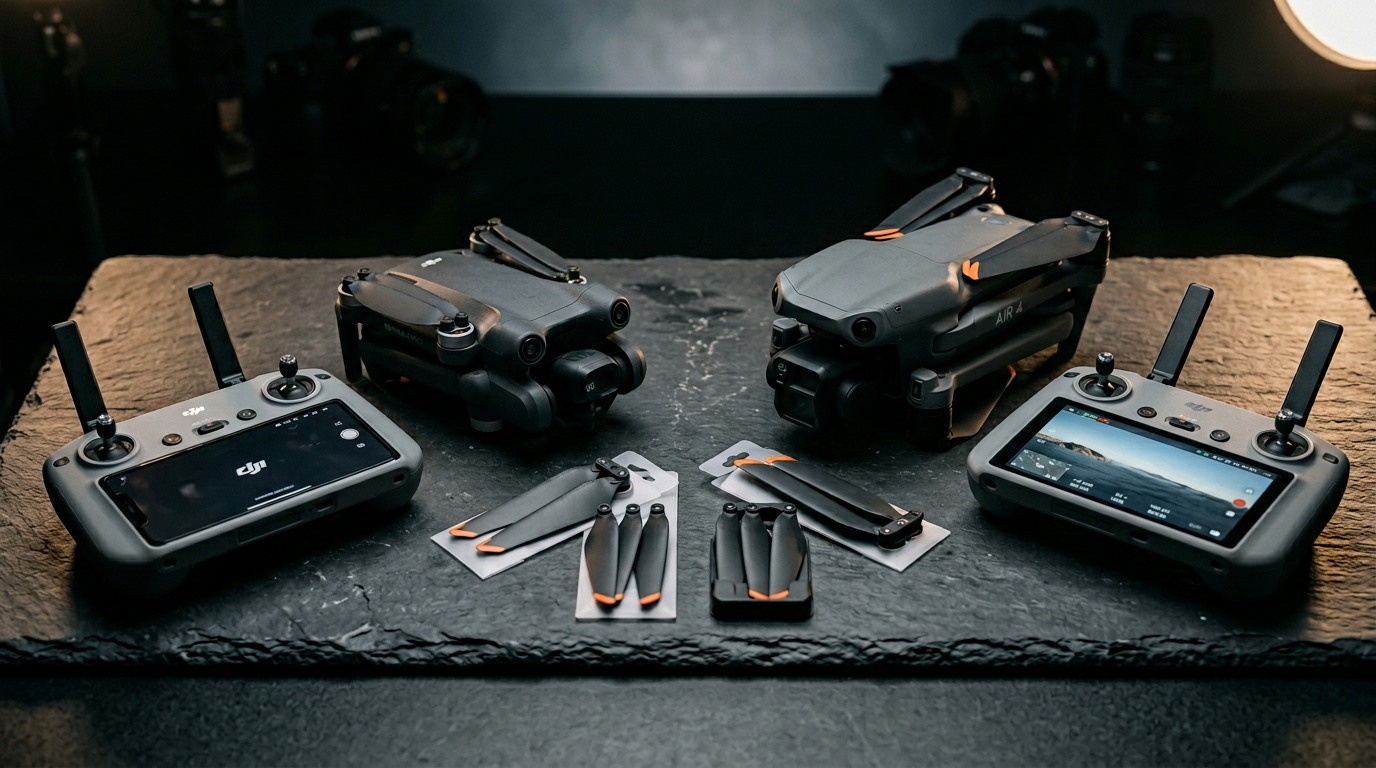
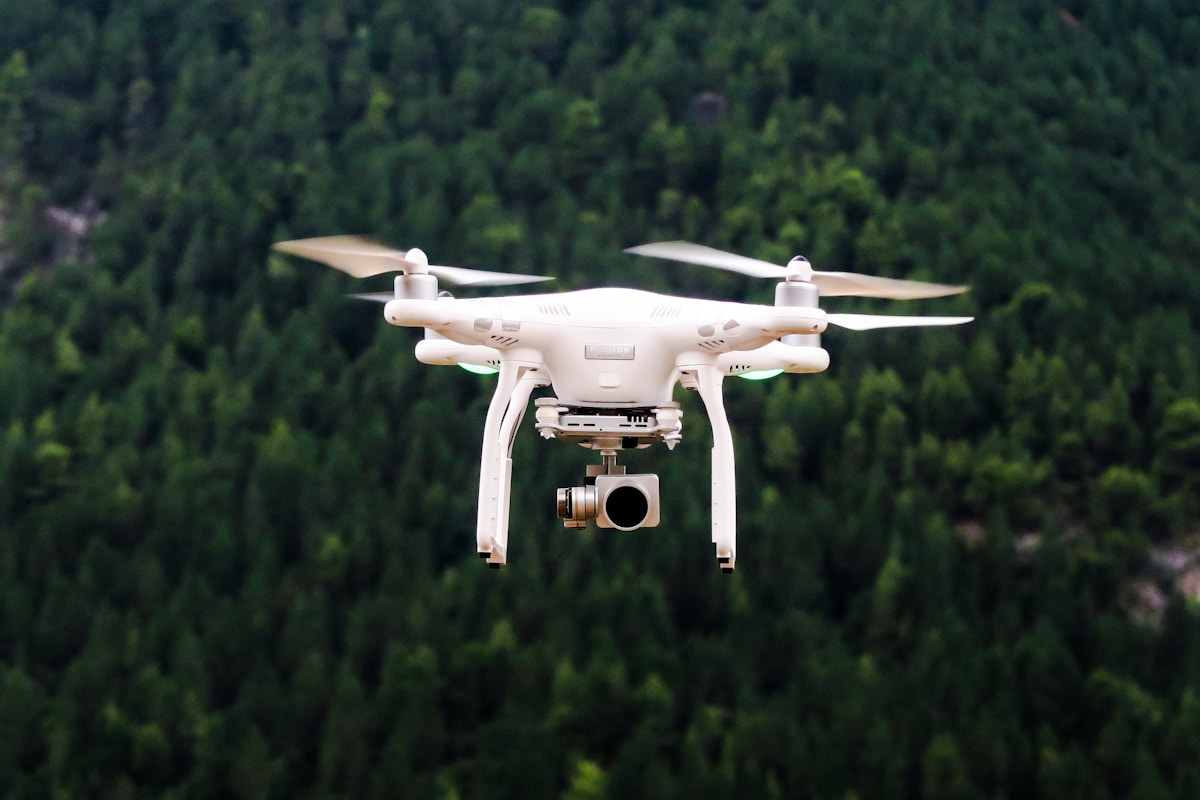
DJI dominates the consumer drone market, and the DJI Mini 4 Pro and DJI Air 3S sit right at the heart of its 2026 line-up. Both are exceptional drones, but they serve different pilots with different priorities. One is small enough to fly almost anywhere with minimal registration friction; the other is a semi-professional aerial camera that handles wind and distance with ease.
What Happened
- Size, Weight, and Registration
- Camera Quality
- Obstacle Avoidance
- Range and Flight Time
- Wind Resistance
- Price
- Who Should Buy the DJI Mini 4 Pro?
- Who Should Buy the DJI Air 3S?
- The Verdict
Here is everything you need to know to decide which one belongs in your kit bag.
Size, Weight, and Registration
This is the single biggest practical difference between these two drones, and it affects far more than portability.
The DJI Mini 4 Pro weighs 249 grams, just under the 250g threshold that historically triggered lighter registration requirements. Under the UK’s 2026 rules it still needs an Operator ID because it has a camera, but classification and fly-near-people rules are more relaxed than for heavier drones. You still need to follow the CAA drone code, but it is the easier drone to travel with. The compact folded size (roughly the footprint of a smartphone) means it genuinely fits in a jacket pocket.
The DJI Air 3S weighs 724 grams, nearly three times heavier. This puts it firmly in the registration-required category and will usually need both Operator and Flyer IDs in the UK. The upside of the extra weight is better stability in wind and a more substantial camera system. It folds to roughly the size of a water bottle.
If simplicity and fly-anywhere flexibility matter to you, the Mini 4 Pro’s sub-250g weight is a decisive advantage. If you are willing to handle registration for better performance, the Air 3S delivers.
Camera Quality
The Mini 4 Pro features a 1/1.3-inch CMOS sensor that captures 48MP stills and 4K video at up to 100fps. For a sub-250g drone, this is extraordinary. The image quality rivals drones that cost twice as much and weigh three times more. Low-light performance is respectable, and it shoots in D-Log M for colour grading flexibility.
The Air 3S uses a larger 1-inch CMOS primary sensor with 50MP stills plus a 1/1.3-inch 48MP medium tele camera, and records 4K video at up to 120fps. According to DJI’s official spec sheet, the primary camera offers up to 14 stops of dynamic range. 10-bit D-Log M and HLG colour profiles are supported, making it more versatile for professional colour grading workflows.
Obstacle Avoidance
Both drones offer full omnidirectional obstacle sensing using DJI’s APAS system, which actively routes around obstacles during automated flight modes.
The Air 3S steps things up with forward-facing LiDAR for improved detection in low light, plus a larger sensor array with greater detection range and faster processing. In practice, both drones avoid obstacles reliably, but the Air 3S is noticeably more confident in complex or dim environments, such as flying between trees or around structures. The added weight and size give DJI more room for sensor hardware.
Range and Flight Time
The Mini 4 Pro offers a maximum transmission range of 20 kilometres on DJI’s O4 system under ideal conditions (realistically you will achieve 8 to 12km in typical UK environments) and a flight time of up to 34 minutes per battery. The Fly More Combo includes additional batteries and a charging hub, which is highly recommended.
The Air 3S uses O4+ with similar official range and a flight time of up to 45 minutes. The longer flight time and more powerful transmission system give the Air 3S a real edge on longer flights, though both drones comfortably exceed the needs of most recreational pilots.
Wind Resistance
This is where physics favours the heavier drone. The Air 3S handles wind up to Level 5 on the Beaufort scale (approximately 38 km/h), maintaining stable footage even in moderately windy conditions. The Mini 4 Pro manages Level 5 as well on paper, but its lighter weight means it works harder to maintain position, and footage can show subtle instability in gusty conditions that the Air 3S handles with ease.
MasterShots: an automated sequence of movements that produces a ready-to-share highlight reel. Available on both drones with similar results.
Hyperlapse: creates dramatic time-lapse footage while the drone moves along a programmed path. Both support this, though the Air 3S’s greater stability in wind produces smoother results.
Panorama and Sphere: automated wide-angle and 360-degree panoramic shots. Both handle these identically.
If you are new to drones, our beginner drone guide covers how to get the best from these modes, and our drone accessories guide has affordable add-ons that improve your footage further.
Price
The Mini 4 Pro starts at around £759 for the drone with the standard RC-N2 controller, with the Fly More Combo Plus (extra batteries, charging hub, shoulder bag) closer to £959. The Air 3S starts at around £1,099 with the RC-N3, and the Fly More Combo with RC 2 sits at around £1,399 on DJI’s UK store.
Who Should Buy the DJI Mini 4 Pro?
The Mini 4 Pro is the right choice if you want a drone that you can take anywhere with minimal hassle. Its sub-250g weight means fewer legal restrictions, its compact size means it actually comes with you on trips, and its camera quality is genuinely excellent. It suits travel videographers, casual pilots, real estate photographers who want portability, and anyone who values simplicity and flexibility over raw capability.
Who Should Buy the DJI Air 3S?
The Air 3S is for pilots who need that extra margin of performance. If you regularly fly in windy conditions, need the absolute best camera quality for professional work, or want the most capable obstacle avoidance for confident flying in complex environments, the Air 3S delivers. Content creators, semi-professional videographers, and anyone who prioritises results over portability will appreciate what the extra size and cost bring.
The Verdict
For most people, the DJI Mini 4 Pro is the drone to buy. Its combination of portability, image quality, and regulatory simplicity makes it the most practical choice for the widest range of pilots. The Air 3S is objectively more capable, but the Mini 4 Pro’s advantages in real-world usability, the fact that you will actually bring it with you, often matter more than theoretical performance margins. Buy the drone you will fly, not the drone that looks best on a spec sheet.
Final verdict
DJI Mini 4 Pro vs DJI Air 4 compared: weight, camera, obstacle avoidance, range, wind resistance, and price. Find out which DJI drone is right for you.
How we compare
Buyer action
Where to buy or check next
Use this as the final check before ordering a phone, changing network or trusting a headline monthly price.



Reader discussion
Leave a comment
Comments are moderated. Keep it useful, accurate, and on topic.