
AI scribes are saving doctors hours of paperwork every week, and those AI scribes healthcare costs savings are supposed to trickle down to patients. They are not. Instead, the same technology that was meant to reduce administrative burden is quietly inflating medical bills, and the incentive structure driving this problem is one that nobody in the healthcare industry seems willing to fix.
What AI Scribes Actually Do — the ai scribes doctor visits angle
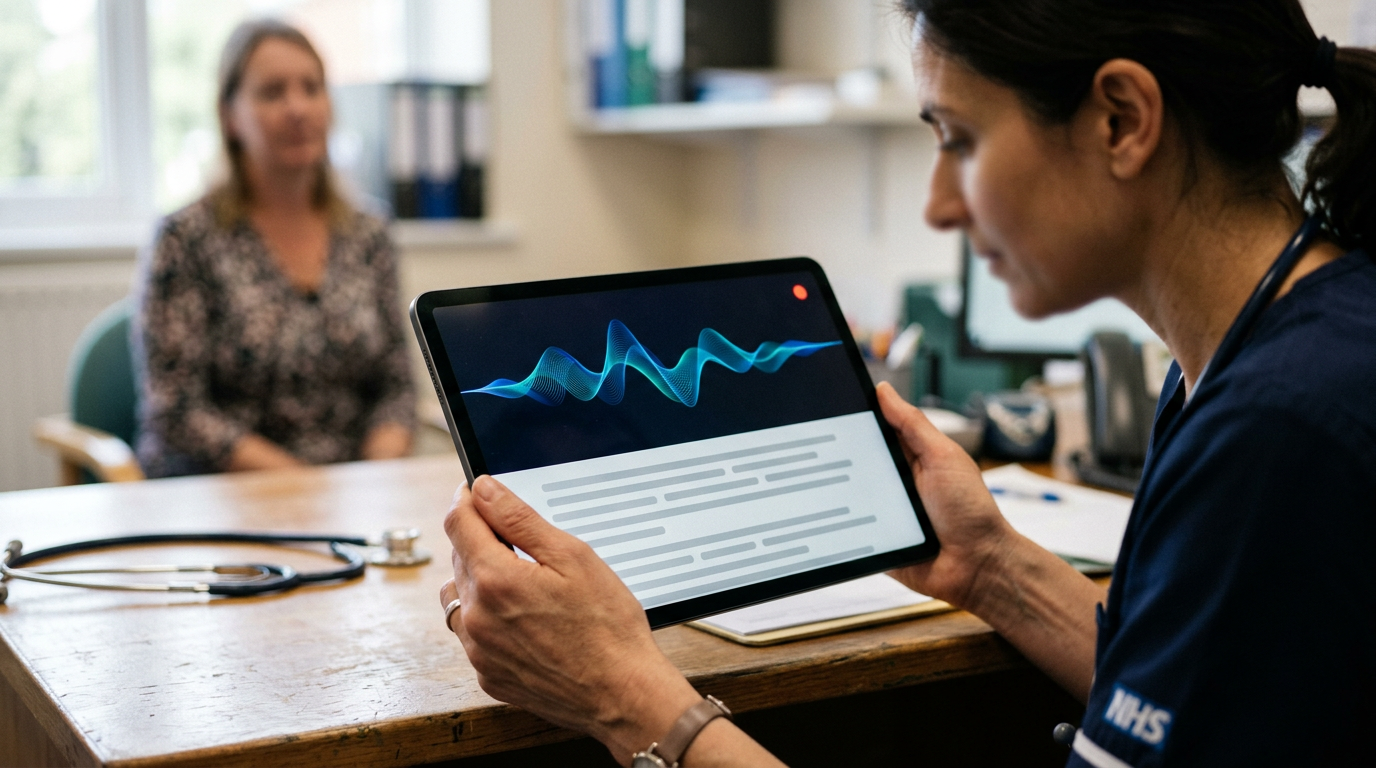
AI scribes, also called ambient documentation tools, sit in the exam room (usually running on a tablet or phone) and listen to the conversation between doctor and patient. They use speech recognition and large language models to generate clinical notes in real time, capturing symptoms, diagnoses, treatment plans, and follow-up instructions. The doctor reviews and signs off on the notes after the appointment rather than spending 15 to 20 minutes manually typing them up. Major players include Microsoft’s DAX Copilot (integrated with the Nuance platform), Abridge, and Freed, with subscription costs that run from under £79 (about $100) per month at the Freed end through to several hundred dollars a month for enterprise DAX deployments, according to industry pricing analyses.
The time savings are real, if smaller than early hype suggested. A large JAMA study of 1,800 clinicians across five US health systems found AI scribe users saved around 16 minutes of documentation time and 13 minutes of electronic health record time for every eight hours of patient care, with heavy users (scribe running on at least half of visits) saving closer to 27 minutes per shift. Across a typical working week that works out to one to two additional patient visits rather than a multi-hour reduction. Adoption is nonetheless accelerating: London NHS trusts alone are rolling out AI scribing to 20,000 clinicians over the next few years.
The Billing Problem Nobody Wants to Talk About — the ai scribes doctor visits angle
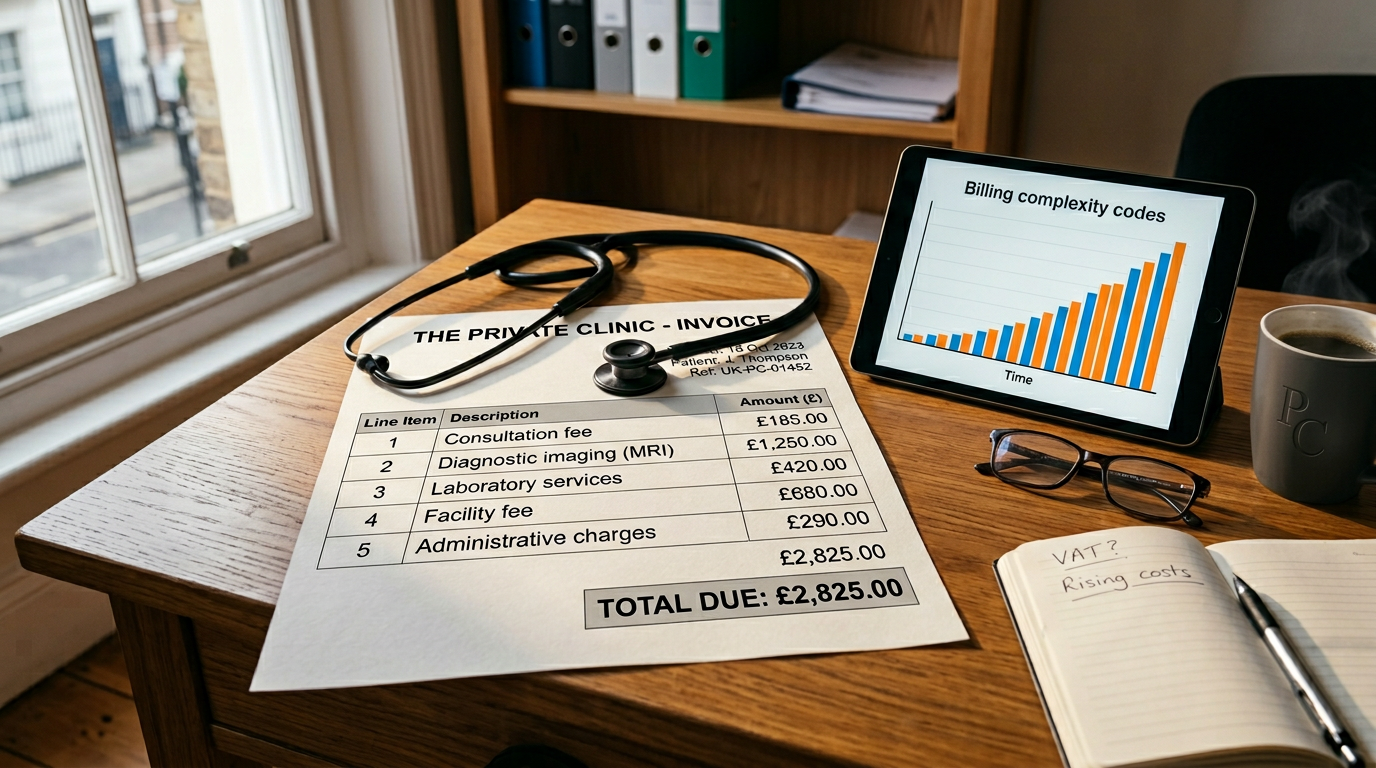
Here is where the story turns ugly. Medical billing in the United States (and increasingly in privatised segments of UK healthcare) is based on complexity coding. The more complex and detailed a patient encounter is documented to be, the higher the billing code, and the more the provider gets paid. When doctors wrote their own notes, they often under-documented, not out of laziness, but because manually typing detailed notes for every encounter was simply not feasible in a 15-minute appointment slot.
AI scribes capture everything. Every symptom mentioned, every question asked, every detail of the physical exam. This comprehensive documentation naturally supports higher complexity codes because the encounter genuinely was complex, it was just never fully documented before. The result is what the industry calls “code creep”: a systematic upward shift in billing complexity that is technically accurate but practically inflationary. Insurers are seeing claims increase, patients are seeing higher co-pays, and nobody is committing fraud, the AI is simply documenting reality more thoroughly than humans ever did.
Insurers and Hospitals Both See the Problem
The fascinating dysfunction here is that both sides of the equation acknowledge what is happening but cannot agree on a solution. Insurers argue that AI-generated documentation is inflating costs beyond what the actual patient encounter warrants, and they are beginning to flag AI-documented claims for additional review. Hospitals and physician groups counter that the documentation is accurate and that the previous system was simply under-capturing the true complexity of patient care. Both arguments have merit, which is precisely why the problem is so difficult to resolve.
Some insurers are now developing their own AI tools to analyse incoming claims and identify patterns consistent with AI-assisted documentation upcoding. This creates an absurd arms race: AI generates the documentation, AI reviews the documentation, and the actual patient care that supposedly drives the entire system becomes almost incidental to the technological tug-of-war over billing codes.
The Mobile Angle: AI Scribes Run on Tablets and Phones
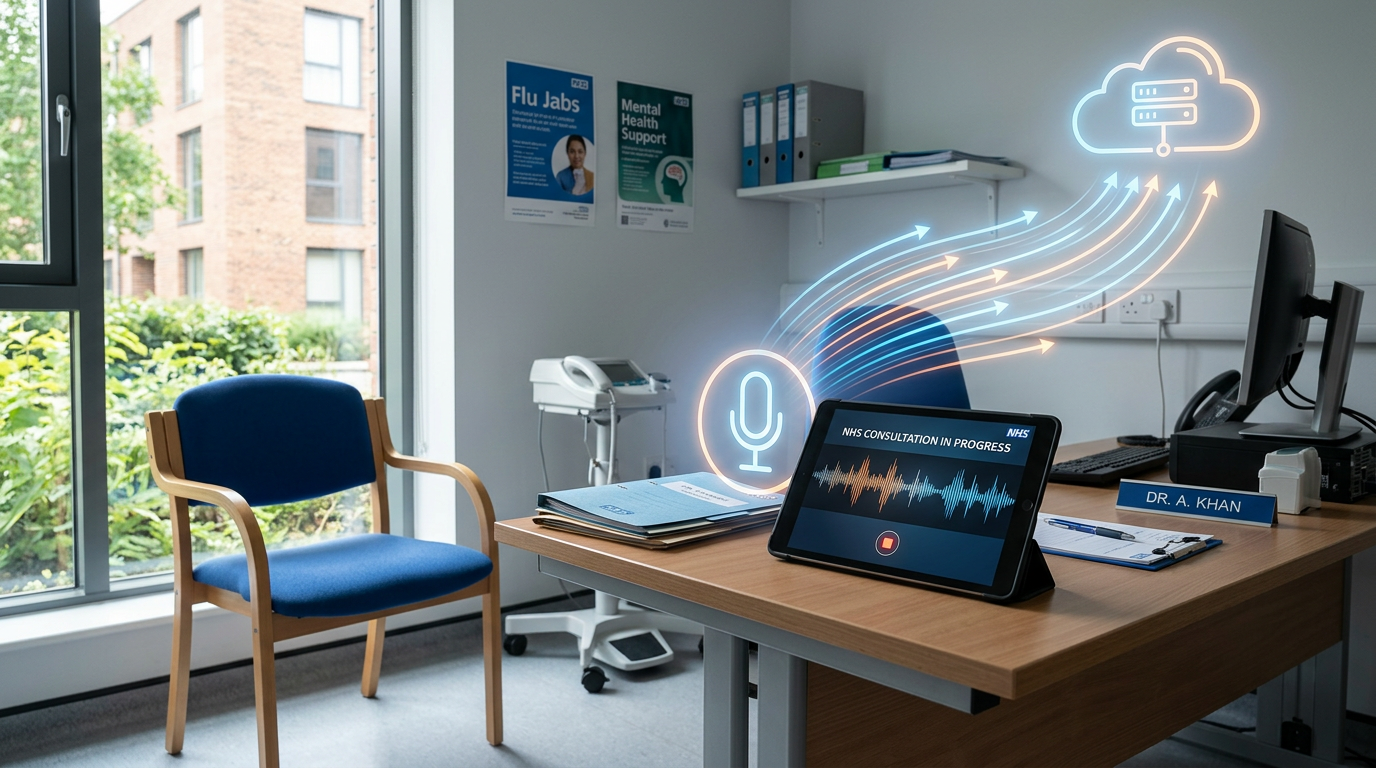
This is not just a healthcare policy story, it is a mobile technology story. AI scribes are deployed on iPads, Android tablets, and even smartphones that sit on the exam room desk or clip to a doctor’s lanyard. Microsoft’s DAX Copilot runs as a mobile app that captures audio and processes it through Azure’s cloud infrastructure. Abridge offers both iOS and Android apps optimised for clinical environments. The processing happens in the cloud, but the capture device is almost always a mobile device, which raises significant questions about data security, microphone access, and patient consent.

In the UK, an ambient voice technology pilot at Oxford University Hospitals found 87 per cent of users saved time on admin tasks, with documentation time per task cut from 12 to 6 minutes. NHS England has issued national guidance on AI-enabled ambient scribing to standardise consent, data protection and clinical governance across trusts. The billing incentive problem is less acute in the NHS’s fixed-payment system, but questions about data governance, patient consent for AI recording, and the accuracy of AI-generated clinical notes remain pressing concerns.
The Privacy Question That Patients Are Not Being Asked
When you visit your doctor and an AI scribe is running on a tablet in the room, are you being told? In many cases, technically yes, there may be a notice in the waiting room or a line in the intake paperwork. But meaningful informed consent for AI-powered recording of sensitive medical conversations requires more than a poster on the wall. Patients should understand what is being recorded, where the data is processed, how long it is retained, and who has access to the AI-generated notes. Most patients currently have no idea that their appointment is being transcribed by AI, and that is a problem regardless of whether the technology is beneficial.
Verdict: Brilliant Technology, Broken Incentives
AI scribes are genuinely good technology solving a genuine problem. Doctors should not be spending a third of their day typing notes instead of seeing patients, and ambient documentation is an elegant solution to that burden. The problem is not the technology, it is the system the technology operates within. When better documentation automatically means higher bills, and when nobody has the authority or the will to recalibrate the billing framework, patients end up paying more for the same care they were already receiving. For more, see our AI coverage. You might also read Apple Business Is the Quiet Launch That Could Matter More Than the iPhone 18.
The fix requires regulatory intervention: updated billing guidelines that account for AI-enhanced documentation, clear rules on patient consent for AI recording, and honest conversations between insurers and providers about what “appropriate” documentation looks like in the age of AI. Until those conversations happen, AI scribes will keep making your doctor visits more expensive, and everybody in the chain will keep pointing at somebody else as the reason why.
Related reading on MTW
Buyer action
Where to buy or check next
Use this as the final check before ordering a phone, changing network or trusting a headline monthly price.













Reader discussion
Leave a comment
Comments are moderated. Keep it useful, accurate, and on topic.