UPDATED · News · 5 Apr 2026 · Daniel Reid
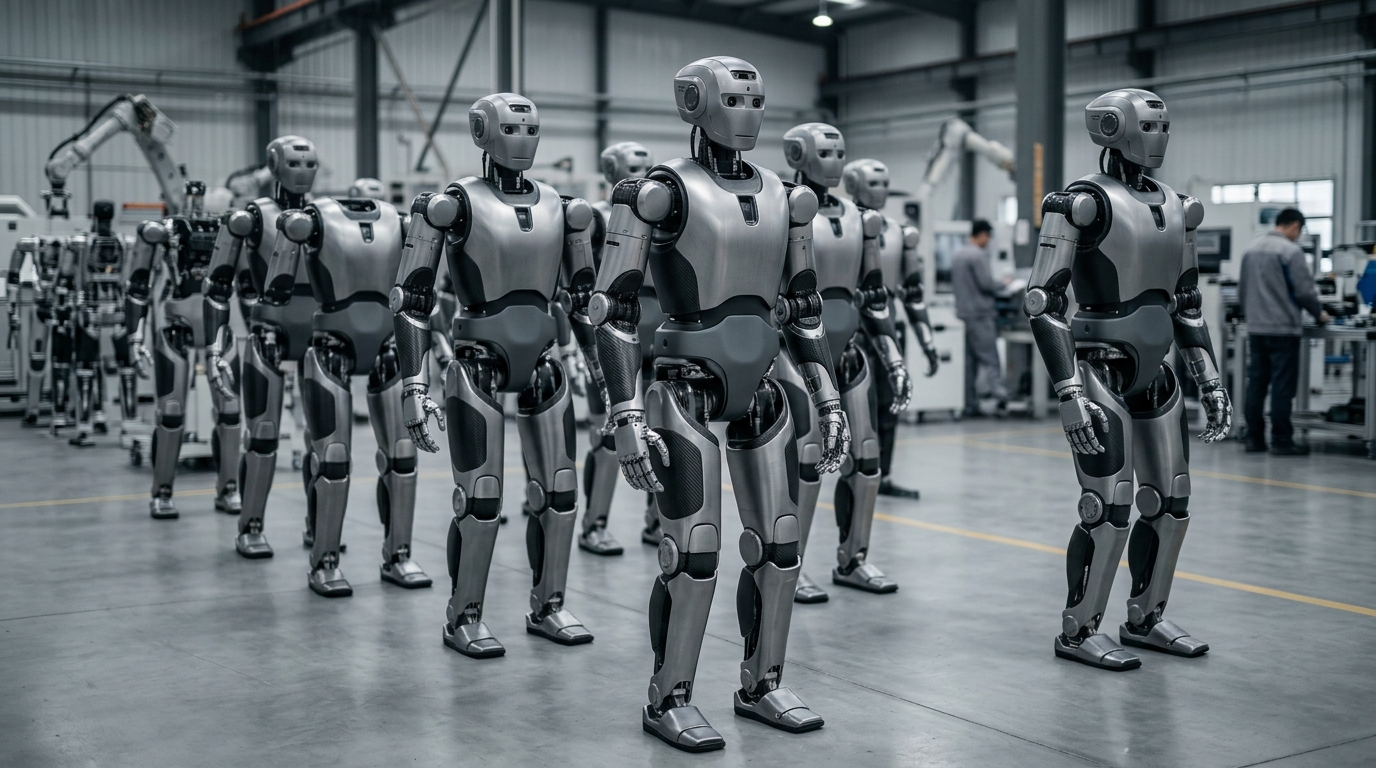
China has fired the starting gun on mass-produced humanoid robots, and the rest of the world is still lacing up its trainers. This humanoid robots 2026 development matters. On 29 March, a purpose-built factory in Foshan, Guangdong province officially opened its doors with the capacity to churn out 10,000 humanoid robots every single year. That is not a prototype line. It is not a lab demonstration. It is a full-scale manufacturing operation, and it signals that Beijing’s ambitions in physical AI have moved from policy papers to production floors.
The Guangdong Factory Changes Everything for Humanoid Robots in 2026 — the china humanoid robot factory angle
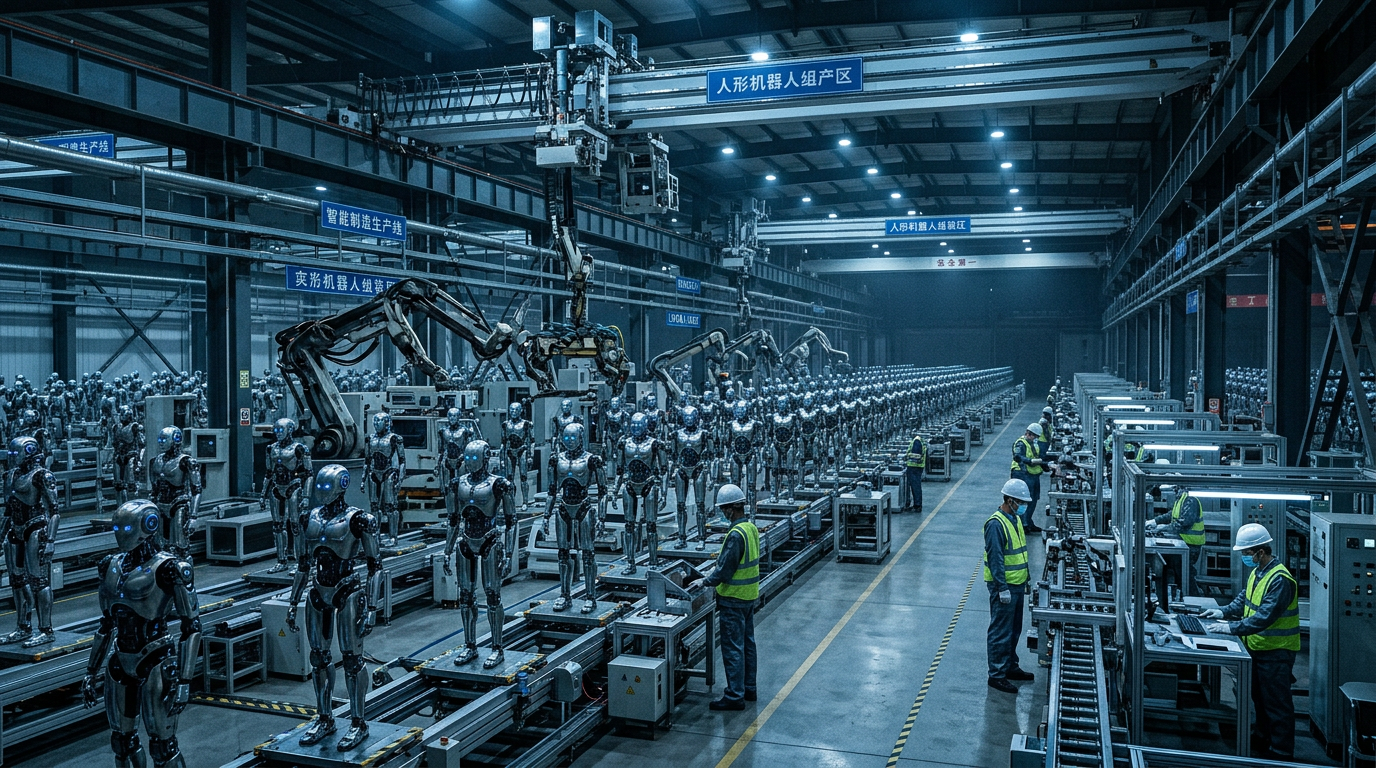
The facility, a joint effort between Leju Robotics and Dongfang Precision Science and Technology, represents the single largest dedicated humanoid robot production line on the planet. While Western companies have spent years refining individual prototypes and running controlled pilot programmes, China has quietly built the infrastructure to produce these machines at automotive scale. The line pushes out a finished robot every 30 minutes thanks to 24 precision assembly processes, with 77 checks on each unit before it leaves the factory gate.
This is not an isolated bet, either. Agibot, one of the country’s most prominent humanoid robotics firms, recently celebrated hitting its 10,000th robot milestone, a figure that would have seemed absurd just eighteen months ago. Meanwhile, Unitree has filed for a £460 (about $580) million Shanghai IPO earmarked partly for a new plant with the capacity to build 75,000 humanoid robots a year. Read that number again. Seventy-five thousand humanoid robots, annually, from a single company.
Tesla, Figure, and Boston Dynamics Are Playing Catch-Up — the china humanoid robot factory angle
The West is hardly standing still, but the gap between ambition and execution is becoming uncomfortable. Tesla has outlined plans to build around 50,000 Optimus units in 2026, pricing them between $20,000 (around £16,000) and $30,000 (around £24,000) each, a figure Elon Musk insists will make them cheaper than a car. Yet Tesla’s robotics division has a habit of promising spectacle and delivering slideshows. The Optimus prototypes shown at investor events have improved markedly, but volume manufacturing is a fundamentally different challenge to building a handful of demo units that can fold laundry on stage.
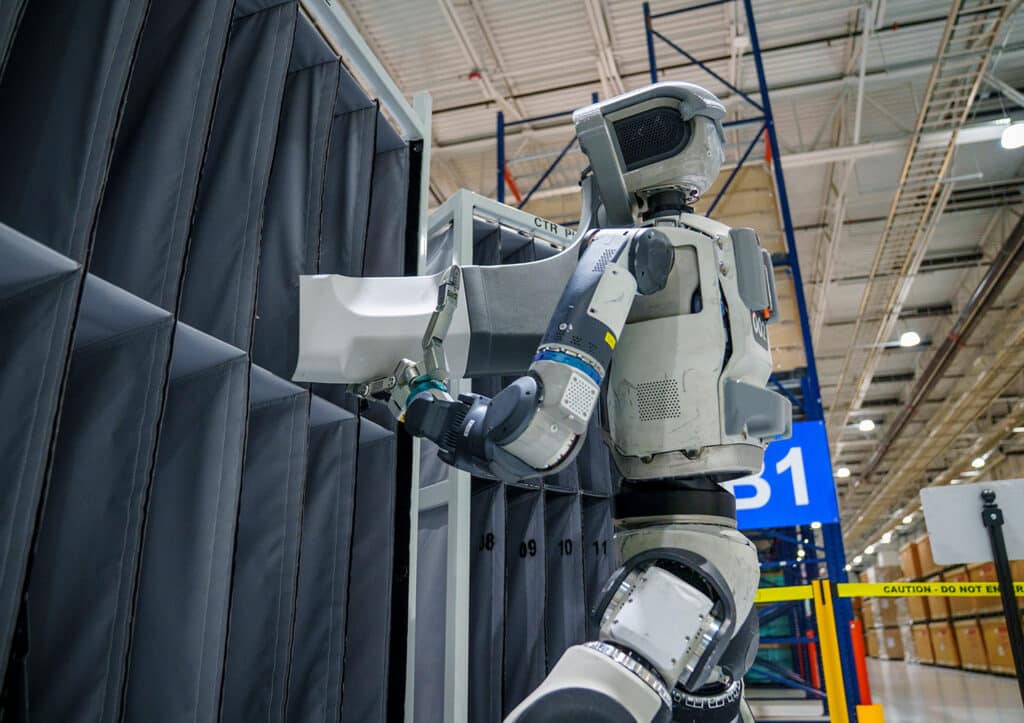
Figure, the Californian startup that made headlines with its OpenAI-powered conversational robot, has attracted serious capital but remains firmly in the pilot phase. Its robots are being tested in controlled warehouse environments, not rolling off a production line by the thousand. The company has genuine technical talent, but talent alone does not build factories.
Then there is Boston Dynamics, which has pivoted its iconic Atlas platform to a fully electric design and struck a partnership with Google DeepMind’s Gemini Robotics programme. The combination of Boston Dynamics’ world-class hardware with DeepMind’s frontier AI models is genuinely exciting, but it is also still in the laboratory stage. Commercial availability at scale remains a question mark, not a timeline.
1X NEO and the Quiet Norwegian Contender
Norway’s 1X Technologies deserves a mention in this race, even if it is frequently overlooked. The NEO humanoid is designed from the ground up for domestic environments, lighter, softer, and deliberately less intimidating than the industrial machines coming out of Tesla or Chinese factories. Backed by OpenAI, 1X has taken a different approach: rather than chasing volume, it is chasing trust. Whether that strategy can compete with Chinese scale economics is another matter entirely.
NVIDIA’s Invisible Empire
Behind nearly every serious humanoid robotics programme sits NVIDIA. The company’s physical AI infrastructure, from its Omniverse simulation platform to its Jetson and Thor compute modules, has become the default development stack for robotics companies worldwide. Chinese firms use it. American firms use it. European firms use it. Jensen Huang has positioned NVIDIA as the arms dealer in a global robotics race, and business is booming.
This is a strategic reality that Western policymakers should be paying far more attention to. If NVIDIA hardware underpins both sides of the humanoid race, then the differentiator is not silicon, it is manufacturing capacity, supply chain control, and the political will to deploy these machines at scale. On every one of those metrics, China is currently ahead.
The Spectacle That Told the Story
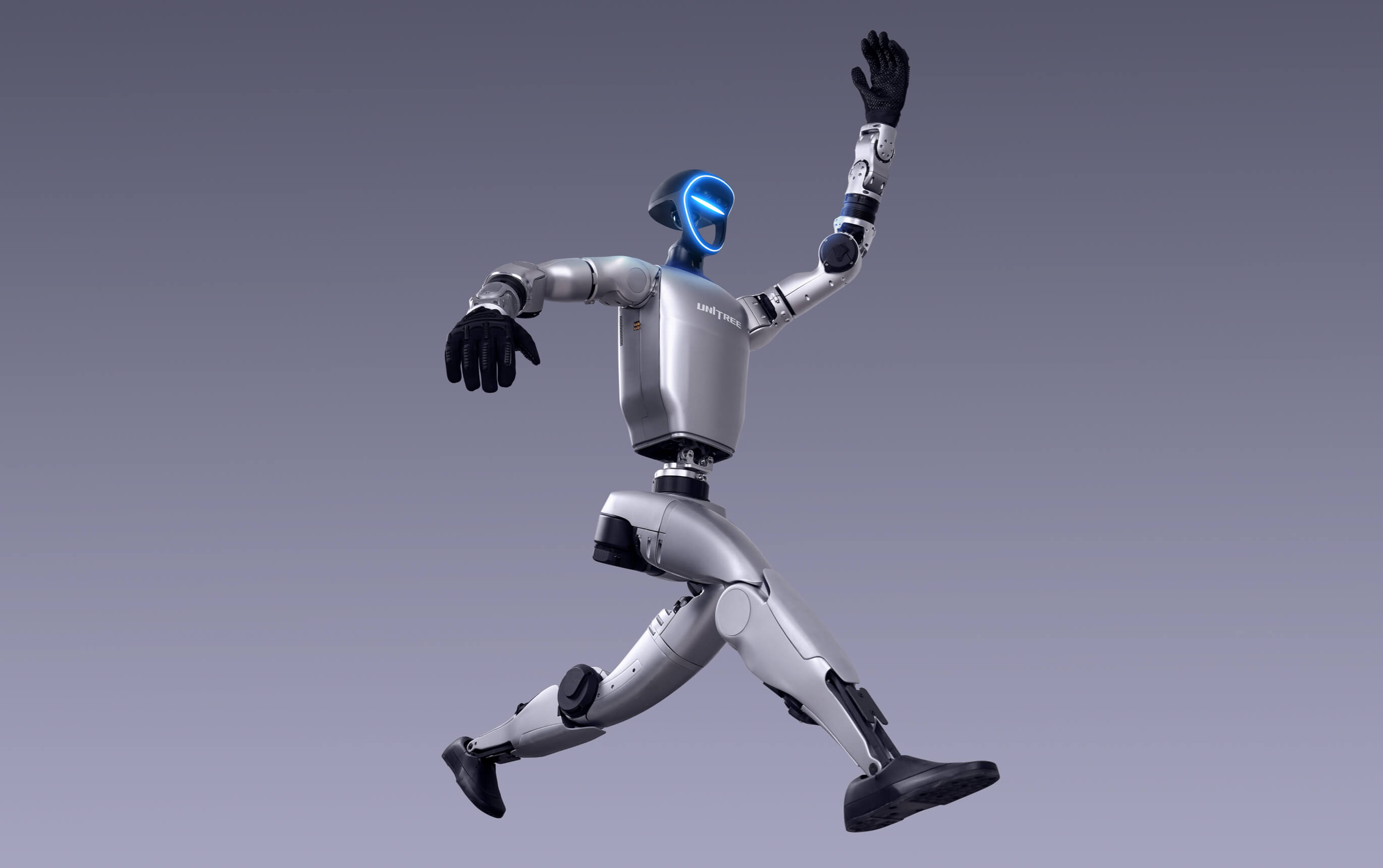
If you want a single image that captures where China stands on humanoid robotics, look no further than the 2025 Chinese New Year gala. Sixteen Unitree H1 humanoid robots performed live on national television alongside human dancers in a widely viewed routine, executing synchronised moves in front of hundreds of millions of viewers. It was propaganda, certainly. But it was also a technical demonstration that no Western company could replicate that easily. Those robots were not CGI. They were not on wires. They moved with a fluidity and confidence that signalled years of engineering investment reaching maturity.
Where This Leaves the West
The uncomfortable truth is that the humanoid robotics race in 2026 looks remarkably similar to the EV race circa 2018. Western companies had the technology and the talent, but China had the manufacturing infrastructure, the government backing, and the sheer willingness to move fast. We know how that story ended.
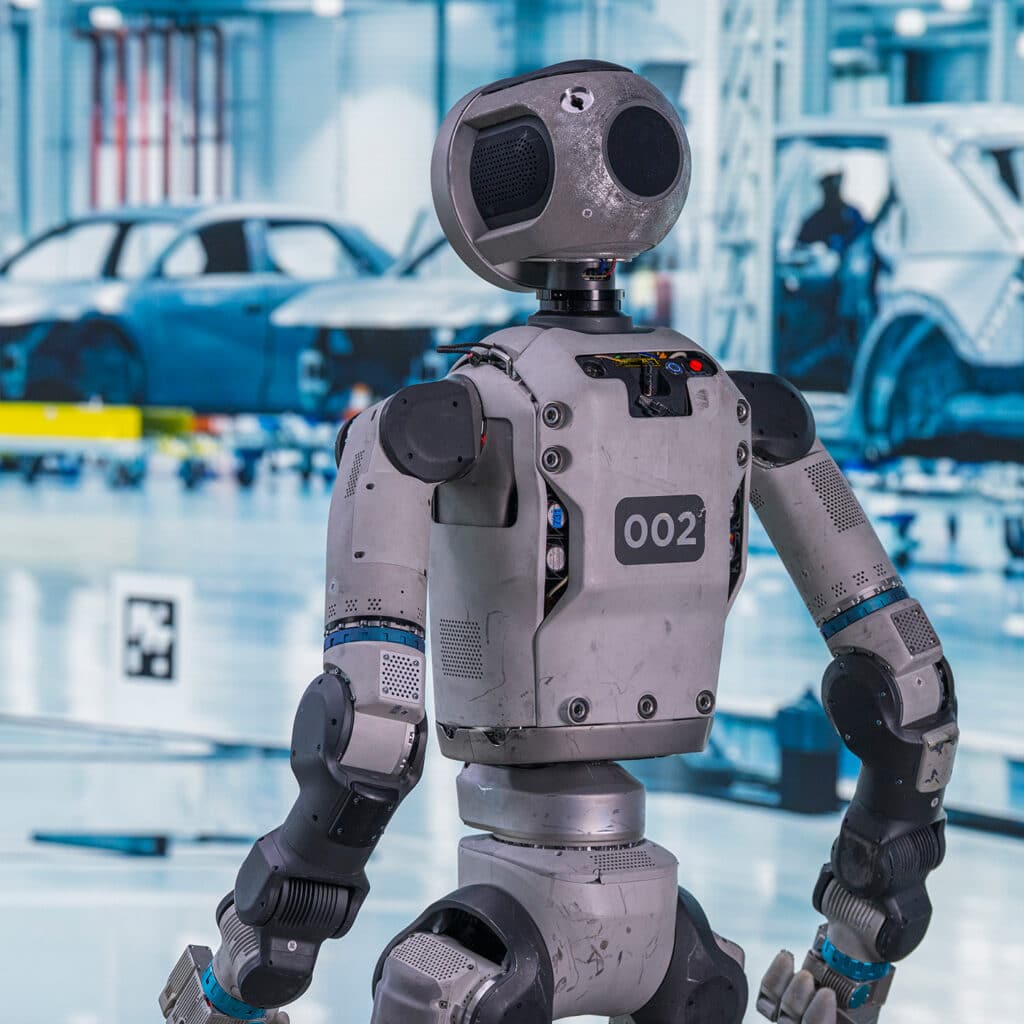
This does not mean Tesla, Figure, Boston Dynamics, or 1X cannot compete. It means they cannot compete at their current pace. The Guangdong factory is not a warning shot. It is the shot. Ten thousand humanoid robots a year, with Unitree planning to scale that by nearly an order of magnitude, means that within two to three years China could have more operational humanoid robots than the rest of the world combined. For more, see our latest news coverage. You might also read Samsung AirDrop Expands to Every Galaxy Phone From the Last Three Years and Apple Cannot Stop It.
The West has the AI models. It has the chip designers. What it does not yet have is the industrial conviction to turn prototypes into products at the speed this moment demands. That needs to change, and it needs to change this year.
Related reading on MTW
Buyer action
Where to buy or check next
Use this as the final check before ordering a phone, changing network or trusting a headline monthly price.












Reader discussion
Leave a comment
Comments are moderated. Keep it useful, accurate, and on topic.