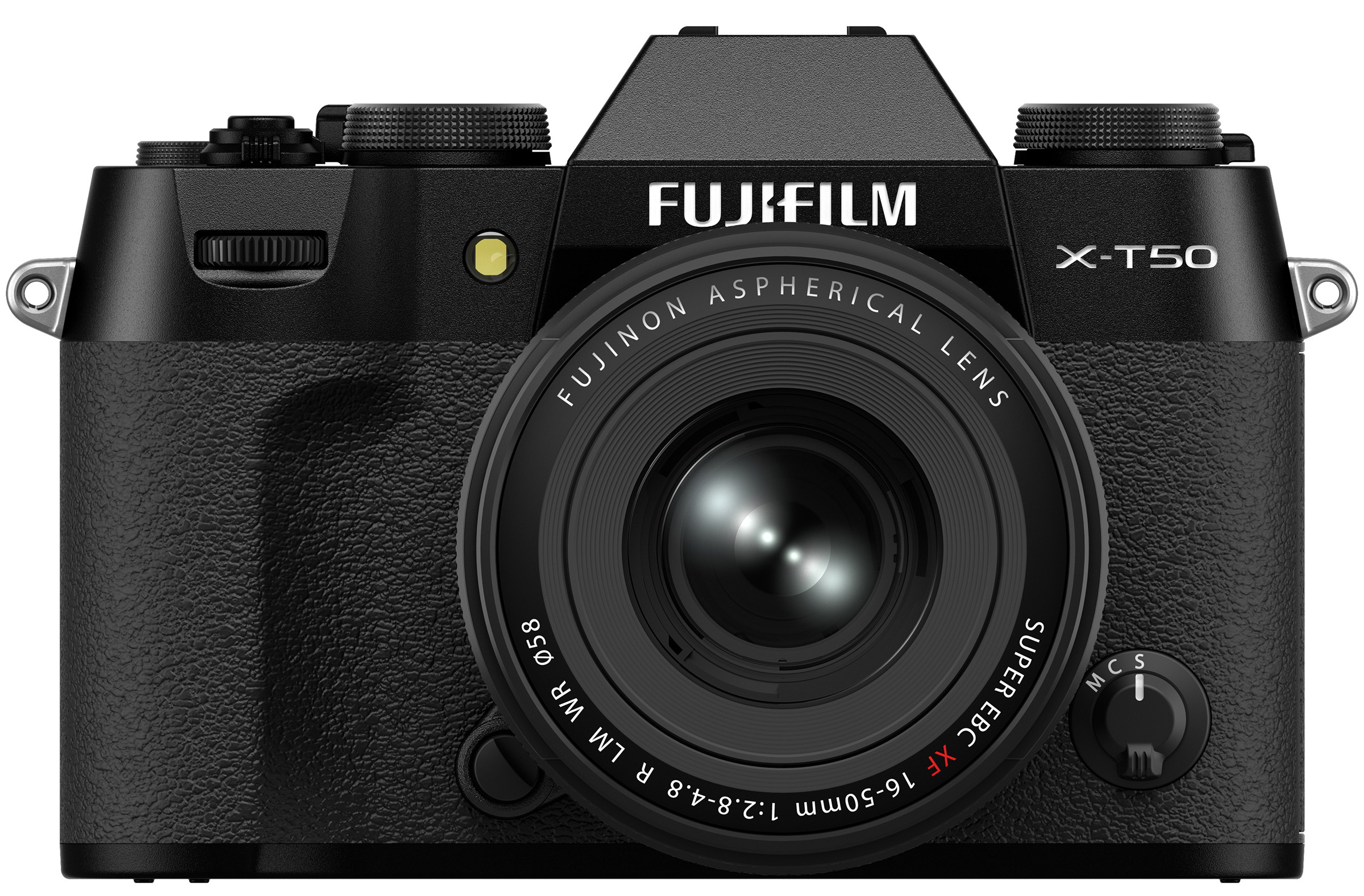
The Fujifilm X-T50 UK proposition is unusual for a 40-megapixel camera: it puts the same sensor and processor as the pricier X-T5 into a smaller, friendlier body, then bolts a dedicated Film Simulation dial onto the top plate. Fujifilm lists the body at £1,299 on its UK eShop, which is the figure that frames every decision here. We have pulled together the specifications, the real UK prices and the trade-offs so you can judge whether the X-T50 is the mirrorless camera to buy or one to skip.
- 40.2-megapixel X-Trans CMOS 5 HR sensor and X-Processor 5, the same core as the Fujifilm X-T5.
- Up to 7.0 stops of in-body image stabilisation and 6.2K/30p internal video.
- New top-plate Film Simulation dial with 20 looks, including the recent REALA ACE.
- £1,299 body-only on the Fujifilm UK eShop; kits with the XF16-50mm lens run roughly £1,549 to £1,649 at UK dealers.
- Compact 438g body in silver, black or charcoal, using the NP-W126S battery rated at about 305 frames.
What the Fujifilm X-T50 UK price actually buys you
At £1,299 body-only the X-T50 sits above entry mirrorless cameras and below the enthusiast X-T5, which makes it the awkward middle child until you look at what is inside. Fujifilm has used the 40.2-megapixel X-Trans CMOS 5 HR sensor and the X-Processor 5 engine, the exact pairing that powers the larger X-T5. In practical terms you are paying for resolution and processing that comfortably out-resolves the 24- to 26-megapixel sensors in most rivals at this money, with the file headroom to crop hard or print large.

The catch is that high resolution is demanding. Forty megapixels reward good technique and sharp glass and punish soft lenses or shaky hands, which is why the in-body stabilisation matters so much on a camera this small. If you mostly share to phones and rarely crop, you may never use the resolution; if you print, sell stock or shoot landscapes, it is the single best reason to choose the X-T50 over a cheaper Fujifilm body. For a sense of how a high-resolution sensor changes a shooting workflow, our notes on getting the most out of a high-megapixel camera apply just as well here.
The Film Simulation dial and who it is really for
The headline change versus every other X-series camera is physical: a dedicated Film Simulation dial on the top plate, giving direct access to 20 colour profiles including the newer REALA ACE. Fujifilm has long had its film simulations buried in menus, and moving them to a dial is a clear pitch at people who want a finished look straight out of camera rather than hours in Lightroom. For a creator posting daily, dialling in Classic Chrome or ACROS and shooting JPEG is a genuine time saver.
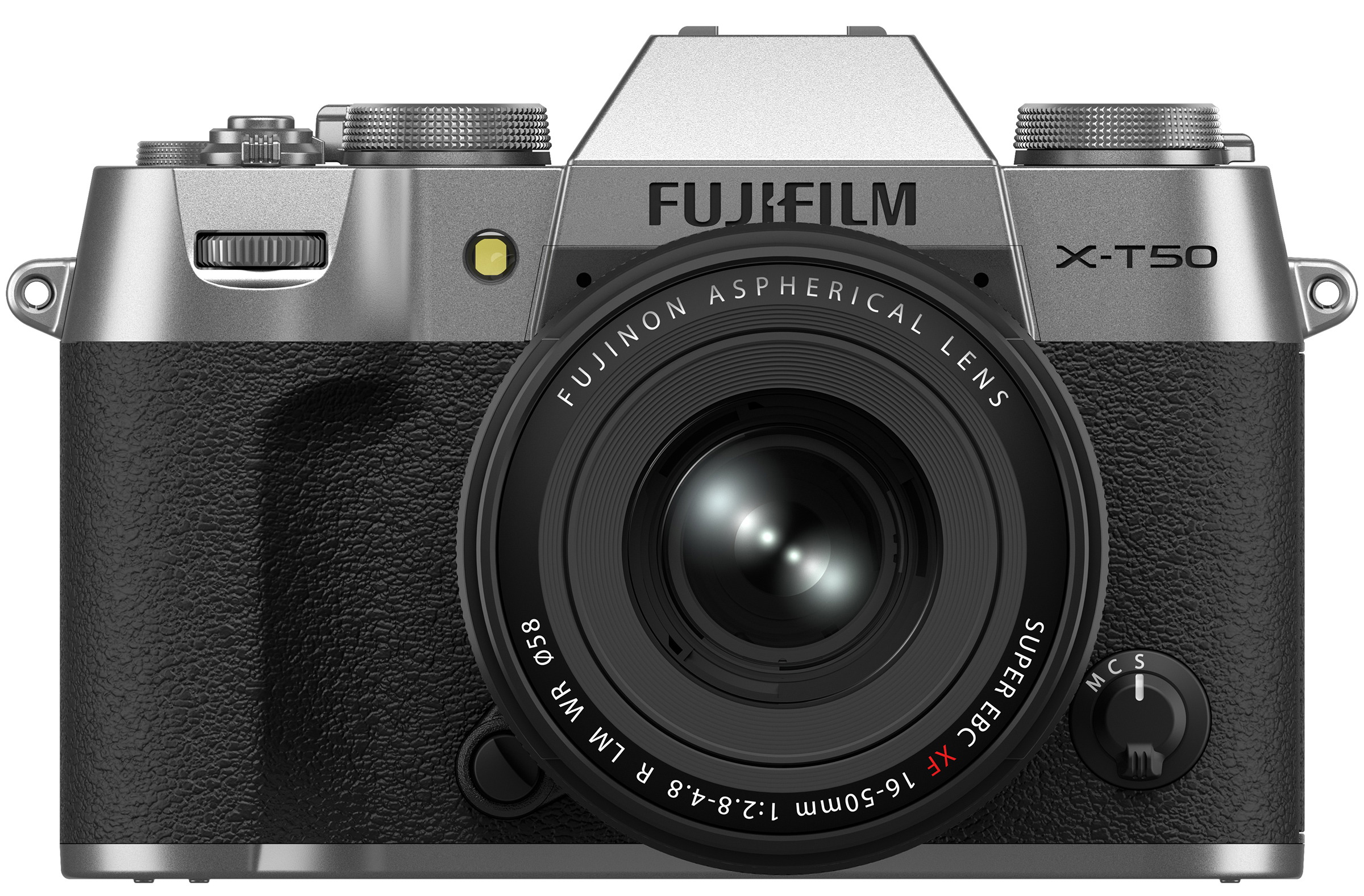
We would temper the enthusiasm with a caveat. Enthusiasts who shoot RAW and grade their own files will get less from the dial, because the simulation only bakes into the JPEG, and some will resent giving a prime top-plate position to a feature they may rarely touch. The dial also locks rather than free-spinning on some bodies, so check the action in store. The honest read is that the Film Simulation dial is brilliant for the JPEG-first shooter and merely pleasant for the RAW purist, and your camp decides how much weight to give it.
Stabilisation, autofocus and video for hybrid shooters
Fujifilm’s specifications rate the in-body stabilisation at up to 7.0 stops, which is what makes 40 megapixels usable handheld in low light and what separates the X-T50 from cheaper bodies that omit IBIS entirely. The X-Processor 5 also brings the subject-detection autofocus from higher Fujifilm cameras, tracking people, animals, birds and vehicles. It is not flawless against the best from Sony and Canon, but for the price it is a real step up on older Fujifilm focusing.
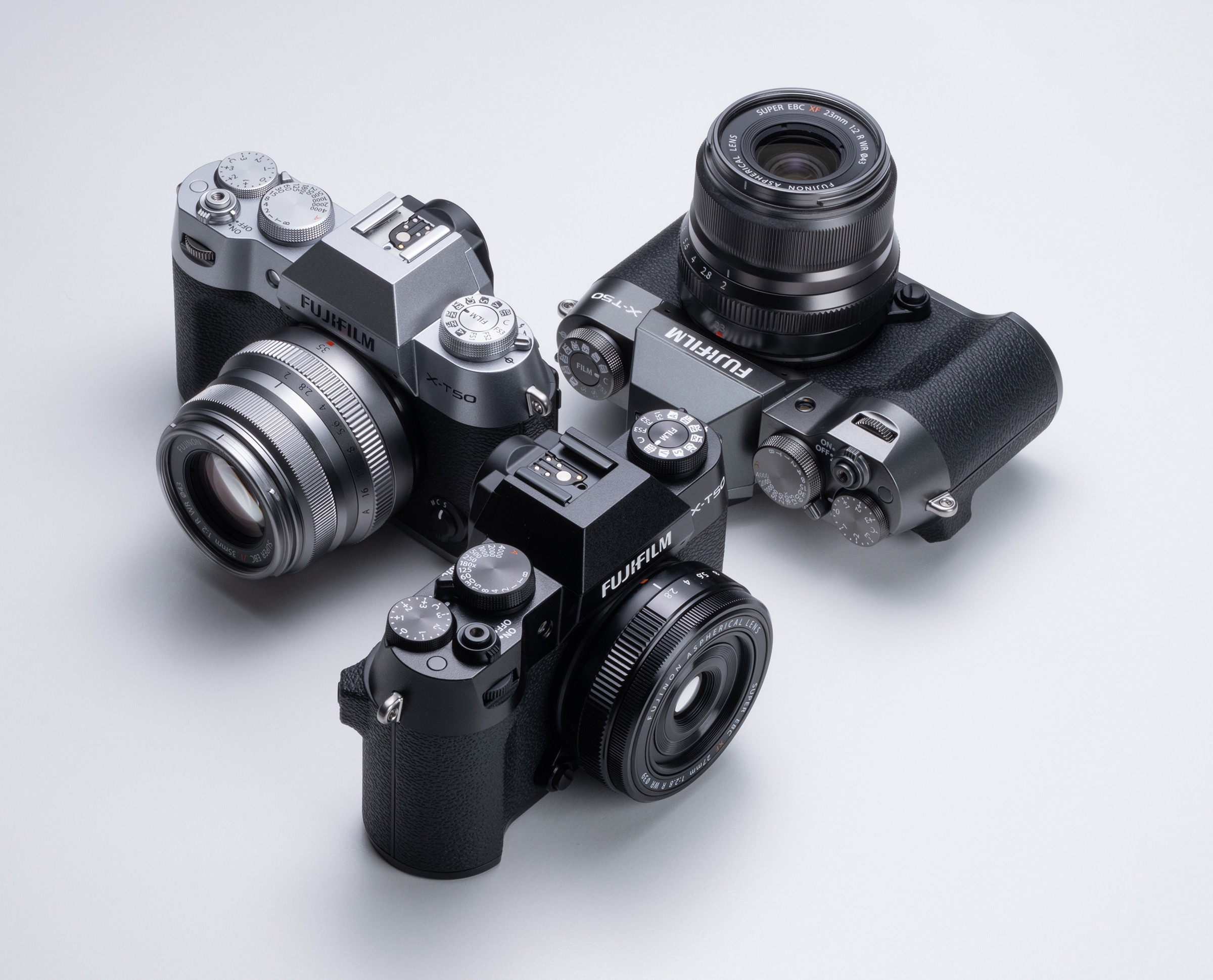
On video the X-T50 records 6.2K at up to 30p internally and 4K up to around 60p, with Full HD reaching 240fps for slow motion. That is a capable spec for a body this size, though the rolling shutter and the modest cooling mean it suits creators and travel video rather than long studio takes. If your work is mostly motion, it is worth weighing the X-T50 against dedicated vlogging kit; our guide to the best DJI vlogging cameras and the broader vlogging drone picks show where a fixed-lens or aerial rig can do a job the X-T50 cannot.
How it compares with the X-T5 and rivals
The most useful comparison is internal. The X-T5 shares the sensor and processor but adds weather sealing, twin card slots, a higher-resolution viewfinder and the classic three-dial control layout that enthusiasts prize. The X-T50 trades those for a smaller body, lighter weight and the Film Simulation dial, at a lower price. If you want a rugged everyday workhorse, the X-T5 earns its premium; if you want the same image quality in a bag-friendly shape, the X-T50 is the smarter buy.
Against the wider field, Sony, Canon and Nikon all offer 24- to 33-megapixel mirrorless bodies near this money with stronger autofocus tracking, so a sports or wildlife shooter may be better served elsewhere. Fujifilm’s pitch is colour, the tactile dials and the resolution, and it lands hardest with street, travel, portrait and documentary photographers. If you are still deciding between camera systems entirely, it is worth reading how we rate gear across categories in our best action camera guide before committing to an interchangeable-lens system.

The X-T50 gives you X-T5 image quality in a smaller, cheaper body, and asks you to give up weather sealing and twin card slots to get there.
Real-world handling, battery and the kit lens
The body weighs about 438g and uses the NP-W126S battery rated at roughly 305 frames per charge, which is modest. Heavy shooters should budget for a spare battery and a USB-C top-up cable, because 40-megapixel files and active autofocus drain the cell faster than the headline number suggests. The 3.0-inch tilting touchscreen and 2.36-million-dot viewfinder are fine rather than class-leading, and the lack of weather sealing is the compromise that pays for the smaller body and price.
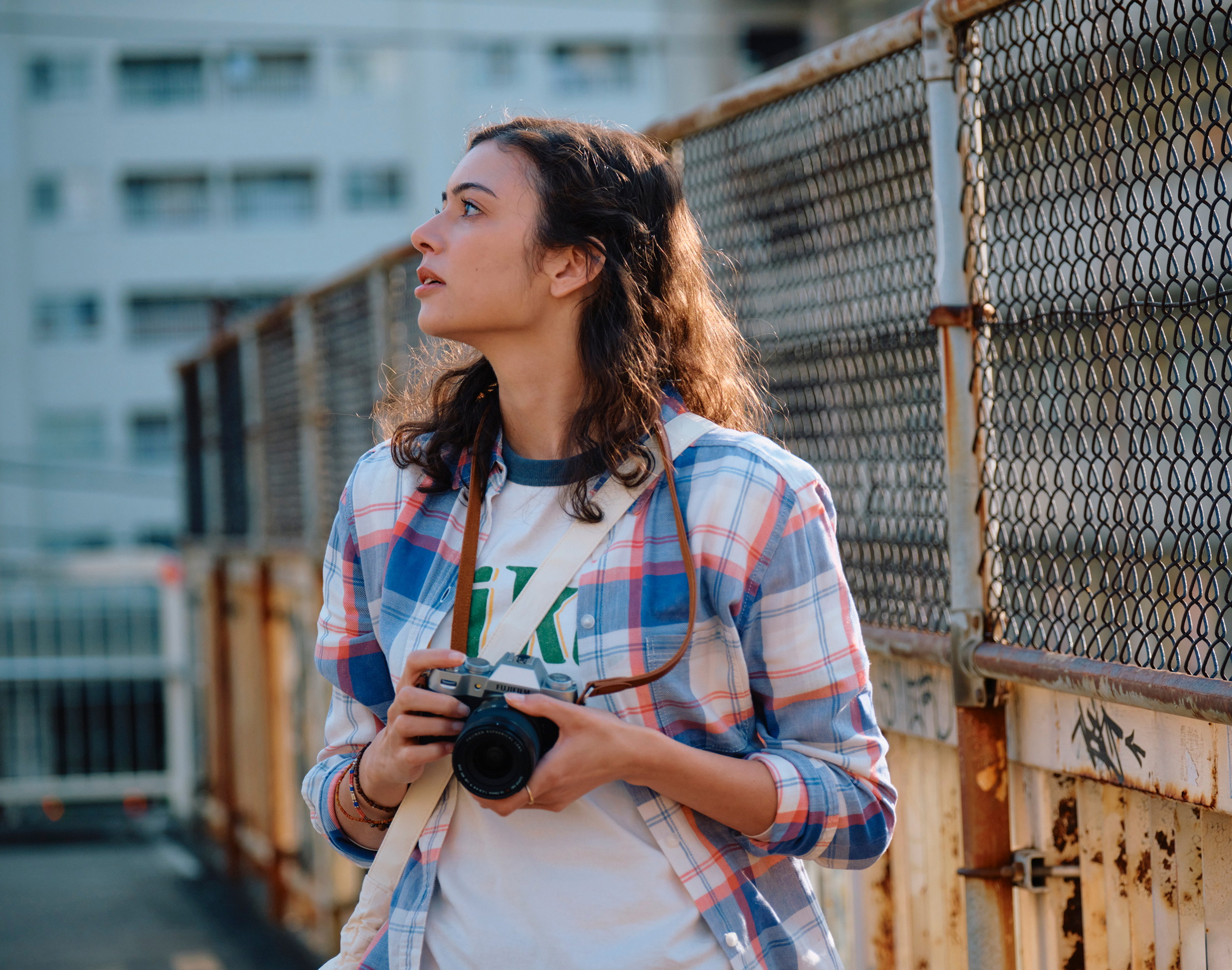
The kit choice matters more than usual here. The new XF16-50mm f/2.8-4.8 lens is compact, weather-resistant and a sensible match for travel, and most UK buyers will be better off with the kit than buying a cheaper third-party zoom that cannot resolve 40 megapixels. If you already own Fujifilm glass, the body-only route at £1,299 is the value play. Either way, the camera rewards good lenses, so plan your spend on optics as carefully as on the body. Photographers moving from a phone will find the jump in control closer to stepping up from earbuds to a flagship set like the Nothing Headphone (1) than a like-for-like swap.
Sample image quality and the film-look appeal
The point of the resolution and the simulations is the picture, so it is worth looking at what the camera produces. The 40-megapixel sensor holds detail across the frame, and the colour science gives JPEGs a finished look that many photographers ship without editing. That out-of-camera quality is the practical case for the Film Simulation dial: it turns a quick street or travel frame into something postable in seconds.

Portraits show the same strengths, with smooth tonal transitions and skin tones that need little correction. The resolution gives room to crop in tight without falling apart, which suits documentary and event work where you cannot always move closer. None of this is unique to the X-T50, but getting X-T5 output in a smaller, dial-led body is the proposition, and the sample frames back it up. For buyers weighing whether a dedicated camera still earns its place next to a phone, our look at phone-led gimbal shooting is a useful counterpoint.
Specifications and price at a glance
| Spec | Fujifilm X-T50 | MTW read |
|---|---|---|
| Sensor | 40.2MP X-Trans CMOS 5 HR (APS-C) | Class-leading resolution at the price |
| Processor | X-Processor 5 | Same engine as the X-T5 |
| Stabilisation | Up to 7.0-stop IBIS | Makes 40MP usable handheld |
| Video | 6.2K/30p, 4K/60p, FHD 240fps | Strong for the body size |
| Weight | Approx. 438g | Genuinely compact |
| Body price (UK) | £1,299 (Fujifilm eShop) | Value sits in the body-only route |
| Kit price (UK) | ~£1,549 to £1,649 with XF16-50mm | Worth it for the matched lens |
Where to buy or check next in the UK
For the body-only route, the Fujifilm UK eShop lists the X-T50 at £1,299 and is the safest source for launch stock and warranty. Specialist dealers are where the kit deals live: Park Cameras and Currys list the XF16-50mm kit around £1,549, while Wex Photo Video has shown the charcoal kit nearer £1,649, so it pays to compare the exact colour and bundle. Harrison Cameras and other Fujifilm UK Pro Dealers are worth a call for trade-in offers.
Before you pay, check three things. First, confirm the finish in stock, because silver, black and charcoal sell through at different rates. Second, decide between body-only and the kit based on the lenses you already own, since the £250-plus jump to a kit only makes sense if you need the XF16-50mm. Third, check the returns window and warranty under the Consumer Rights Act, and consider a refurbished or used body from a graded UK seller if budget is tight, as 40-megapixel output does not change between new and graded stock.
Our view is that the Fujifilm X-T50 is the right buy for the street, travel, portrait and documentary photographer who wants X-T5 image quality in a smaller body and loves a finished look straight out of camera. At £1,299 body-only it undercuts the X-T5 while keeping the sensor and processor that matter, and the Film Simulation dial earns its place for JPEG-first shooters. We would steer two groups elsewhere: anyone who needs weather sealing, twin card slots or the best autofocus for sport and wildlife should pay up for the X-T5 or look at Sony and Canon, and RAW purists who grade every frame will get less from the dial that defines this body. Buy it if colour and portability are your priorities; wait or spend more if ruggedness and tracking are. What would flip our call is a meaningful UK price cut on the X-T5, which would narrow the gap and make the larger body the smarter long-term buy.
| What we like | What we would watch |
|---|---|
| 40MP X-T5 sensor in a compact 438g body | No weather sealing and a single card slot |
| Film Simulation dial for fast finished JPEGs | Modest ~305-frame battery life |
| Up to 7-stop IBIS and capable 6.2K video | Autofocus trails the best from Sony and Canon |





Reader discussion
Leave a comment
Comments are moderated. Keep it useful, accurate, and on topic.