UPDATED · News · 5 Jun 2026 · Claire Bennett
The Nothing Headphone (1) is the London brand’s first over-ear set, and it lands in the UK at £249 with KEF-tuned 40mm drivers, a see-through design and up to 80 hours of battery. That price slots it neatly between budget cans and the £400-plus flagships from Sony, Bose and Apple, so the question for British buyers is whether the transparent looks come with the substance to match. This guide walks through the design, sound, battery, app, comfort, microphones and warranty, then lands on a firm verdict on who should buy and who should wait.
- UK price: £249, in black or white, from nothing.tech and Currys.
- Sound: 40mm dynamic drivers tuned with KEF, LDAC, AAC and SBC codecs.
- ANC: real-time adaptive, rated up to 42 dB; spatial audio with head tracking.
- Battery: up to 80 hours with ANC off, around 35 hours with ANC on; 5-minute charge for 5 hours.
- Build: 329g, IP52 water and dust resistance, USB-C audio and 3.5mm wired input.
What the Nothing Headphone (1) is and who makes it
Nothing is the consumer-tech firm founded by Carl Pei, and until now its audio range has been earbuds rather than over-ear cans. The Headphone (1) changes that. It keeps the brand’s signature transparent panels, but wraps them around an aluminium frame and squarish earcups that look unlike anything from Sony or Bose. If you have followed the brand through products like the Nothing Phone 3 and its pricing, the design language here will feel familiar: industrial, a little playful, and built to stand out on a commute. The headline pitch is a premium-feeling over-ear set at a sub-£250 price, which is a genuinely awkward spot for the established names to compete in.
The set was co-engineered with KEF, the British hi-fi brand, which handled the sound tuning. That partnership is the main reason the Headphone (1) is being taken seriously by reviewers rather than written off as a style buy. It is worth being clear about what this is and is not: it is a first-generation product, not a polished fourth iteration like the rivals it is chasing, so a few rough edges are part of the deal.
Design and the transparent aesthetic
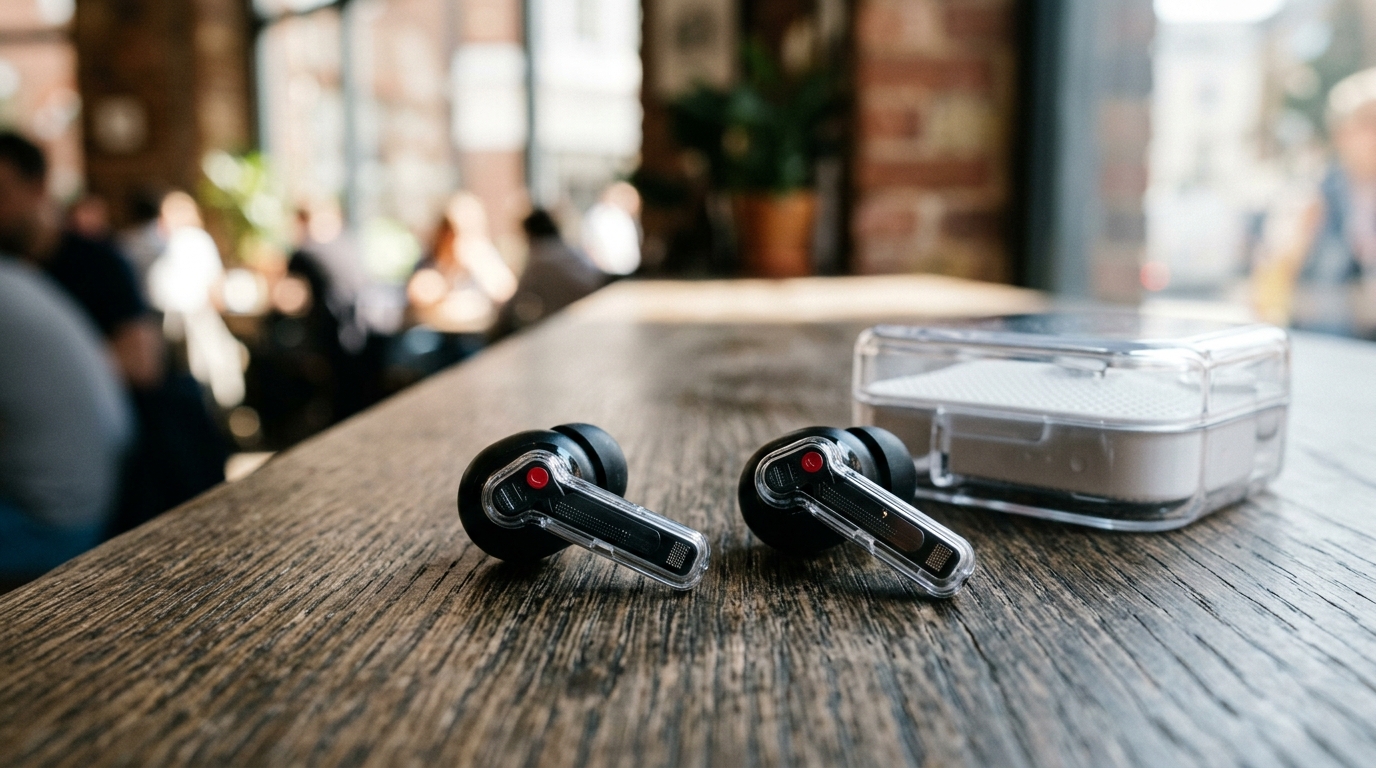
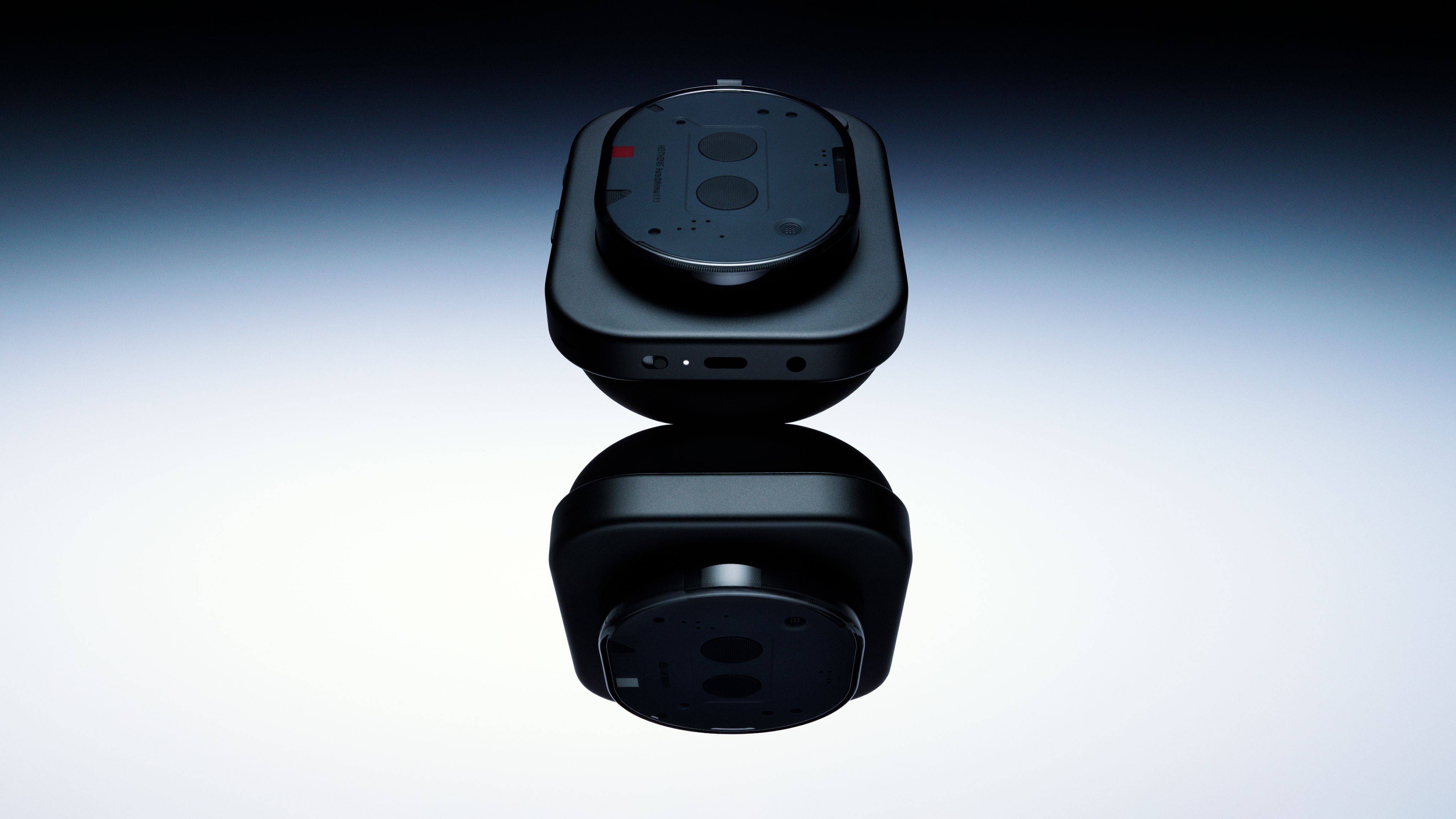
The styling is the first thing anyone will notice. The earcups are oval-meets-rectangle slabs with a transparent layer over a visible internal structure, and a small red dot marks the right side. It is divisive in the best way: some will love it, some will find it loud, but nobody will mistake it for a generic pair of black headphones. The build leans on aluminium rather than the soft-touch plastic many rivals use at this price, which lifts the in-hand feel. There is a tactile roller and a paddle on the right earcup for volume, playback and track skips, and these physical controls are a real strength over the fiddly touch panels that dominate the category.

An IP52 rating covers light rain and dust, which is unusual on over-ear headphones and handy for a British commute. At 329g the set is on the heavier side, so it is not the lightest option for long sessions, but the clamping force and padding are judged well. The same design-first thinking runs through the wider Nothing range, including the recent Nothing Ear (open) launch, so the Headphone (1) feels of a piece with the brand rather than a one-off experiment.
Sound quality, KEF tuning and codecs
Each earcup houses a 40mm dynamic driver, and the tuning was done with KEF. Out of the box the signature is balanced and natural, with strong low-end, clear mids and crisp highs, and reviewers consistently report it stays composed without distortion at volume. The trade-off is that the default tuning can feel a touch reserved for listeners who want an immediate bass punch, which is exactly what the in-app equaliser is there to fix. For wireless quality the set supports LDAC alongside AAC and SBC, so Android owners with hi-res files get the better codec, and there is spatial audio with head tracking for a more immersive feel on films.
If you care about the absolute ceiling of sound quality, the £400 flagships still edge ahead on refinement, and our Sony WH-1000XM6 versus Bose comparison lays out where that extra money goes. But the gap is far smaller than the price difference suggests, and for most listeners the Headphone (1) covers the essentials very well. Wired options matter too: there is USB-C audio for lossless playback from a laptop or phone, plus a 3.5mm jack for old-school analogue, which is more flexibility than several pricier sets offer.

KEF-tuned 40mm drivers at £249 close most of the gap to the £400 flagships, leaving only the last slice of refinement on the table.
Noise cancelling and call performance
The active noise cancellation is real-time and adaptive, rated up to 42 dB, with a transparency mode for letting the world back in. In practice it is competent rather than class-leading: it handles steady drones like trains and aircraft cabins well, and it is good enough that most commuters will be happy, though the very best Sony and Bose systems still pull ahead on the trickiest, most variable noise. For phone calls the set uses AI-powered noise reduction across its microphone array, and call clarity is solid for everyday use.
This is the area where a first-generation product shows its age fastest, because the rivals have spent years refining their ANC algorithms. If silence is your single most important feature, weigh that carefully. If you want strong, dependable cancellation that covers the common cases without paying flagship money, the Headphone (1) delivers. Anyone cross-shopping true wireless instead can see how the category compares in our roundup of the best wireless earbuds in the UK for 2026.
Battery life and charging
Stamina is a clear win. Nothing quotes up to 80 hours of playback with ANC switched off, and around 35 hours with cancellation on, both measured with the AAC codec at moderate volume. Using LDAC or pushing the volume will bring those numbers down, but even in the worst case you are looking at days of use between charges rather than hours. A quick 5-minute top-up over USB-C delivers up to 5 hours of listening, which covers the panic moment before you leave the house.
Those figures comfortably beat most flagship rivals, which tend to sit in the 30-to-40-hour bracket with ANC on. For travellers and heavy daily listeners, fewer trips to the charger is a genuine quality-of-life upgrade. It is the kind of practical advantage that does not show up in a spec war headline but matters every week you own the product.
Nothing X app, EQ and comfort
The Nothing X app is where the Headphone (1) earns back any reserve in its default sound. It includes an 8-band equaliser, which is more granular than the simple presets many competitors ship with, plus controls for ANC levels, spatial audio, and the button mapping. Bluetooth multipoint lets the set hold two devices at once, so you can stay paired to a laptop and a phone and switch without re-pairing. Google Fast Pair and Microsoft Swift Pair make the first connection painless on Android and Windows.
On comfort, the 329g weight is the main caveat. Most people will wear the set happily through a working day, but the heaviest listeners and those sensitive to clamp may notice it over very long stretches. The earcup padding and headband cushioning are well judged, and the physical controls mean you are not constantly poking at a touch surface to skip a track. If you prefer a lighter, more pocketable approach, the brand’s earbuds and rivals such as those in our Soundcore Liberty 5 Pro guide are worth a look.

How it compares with Sony, Bose and AirPods
At a high level the rivals split into two camps. Sony’s WH-1000XM6 and Bose’s QuietComfort Ultra sit around £400 to £450 and lead on noise cancelling and sound refinement; Apple’s AirPods Max is pricier still and locked into the Apple world. Against all three, the Headphone (1) competes on price, build, battery and design rather than out-and-out ANC. If you want the quietest cabin or the most polished sound and budget is no object, the flagships win. If you want most of that experience, better looks and far longer battery for £150 to £200 less, Nothing makes a strong case.
| Spec | Nothing Headphone (1) |
|---|---|
| UK price | £249 |
| Drivers | 40mm dynamic, KEF-tuned |
| Codecs | LDAC, AAC, SBC |
| ANC | Adaptive, up to 42 dB |
| Battery (ANC off / on) | Up to 80h / around 35h |
| Fast charge | 5 min for 5 hours |
| Weight | 329g |
| Water resistance | IP52 |
| Wired | USB-C audio, 3.5mm jack |
| Extras | Spatial audio, 8-band EQ, multipoint |
For Apple-centric households the decision is closer, because AirPods integration is hard to beat on iPhone; our AirPods Pro 3 versus AirPods 4 comparison shows how tight that ecosystem is. But the Headphone (1) works perfectly well with an iPhone over AAC, and Android owners gain LDAC on top. It is a more brand-agnostic buy than the AirPods Max, which counts in its favour.
UK price, where to buy and warranty
In the UK the Headphone (1) costs £249 in black or white. You can buy direct from nothing.tech or from Currys, with Amazon UK and other audio retailers also stocking it. In the box you get a USB-C cable, a 3.5mm audio cable, a softshell case, a user guide and the safety and warranty paperwork. Buying direct from Nothing or from a UK retailer gives you a clear 30-day return window under standard distance-selling rules, plus the usual manufacturer warranty, so check the seller’s exact terms before you commit.

Stock has been steady since launch, so there is rarely a need to chase grey imports, and buying from a UK seller keeps warranty claims simple. If you are kitting out a wider setup, our look at the best mid-range Android phones in the UK pairs naturally with the LDAC support here, since you need an Android source to unlock the better codec.
At £249 the Nothing Headphone (1) is an easy set to recommend, with caveats. Buy it if you want a striking, well-built pair of over-ear cans with KEF-tuned, balanced sound, days of battery, proper physical controls and wired flexibility, all for a chunk less than the Sony and Bose flagships. The 8-band EQ in the Nothing X app means you can tune it to taste, and Android owners get LDAC on top. Wait, or pay more, if active noise cancelling is your single most important feature, because the established flagships still edge ahead on the trickiest noise and on the last slice of sound refinement. Also weigh the 329g weight if you are sensitive to heavier headphones over long sessions. What flips our recommendation either way is price: at full £249 it is a smart buy, and if a sale pushes it lower it becomes one of the most sensible over-ear purchases in the UK right now. For most listeners who want most of the flagship experience without the flagship bill, this is the set to get.










Reader discussion
Leave a comment
Comments are moderated. Keep it useful, accurate, and on topic.