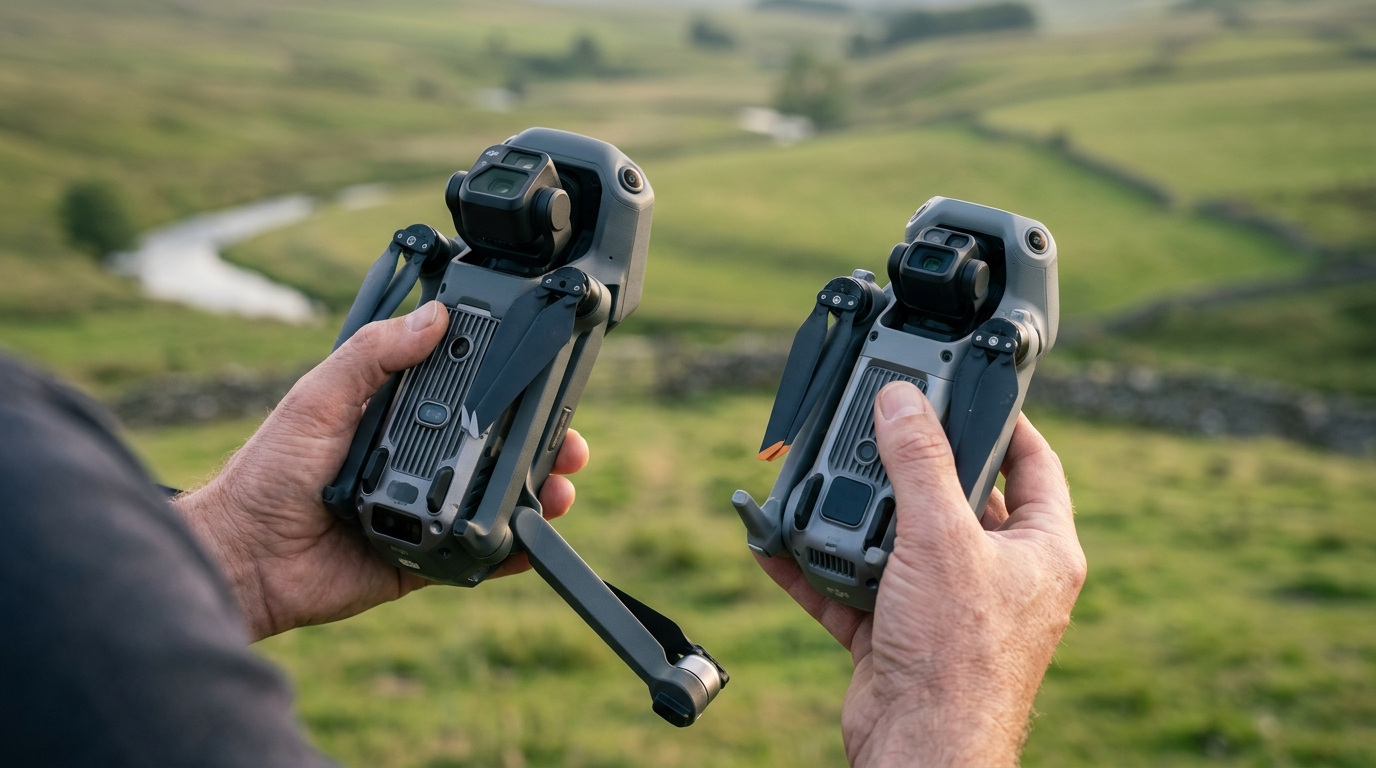
The Mavic 4 Pro vs Air 3S decision comes down to one number most UK buyers underestimate: the gap between £2,459 and roughly £1,289 at like-for-like Fly More Combo level buys you a Hasselblad 4/3 sensor, a 51 minute battery and a third telephoto camera, and for a lot of people that is more drone than the brief actually needs. DJI lists the Mavic 4 Pro as its flagship folding drone, while the Air 3S is the dual-camera traveller that already does 90 per cent of what most flyers ask. We have put the two side by side on price, cameras, range, flight time, safety, size and the UK Civil Aviation Authority rules that catch both, and called a winner in every category.
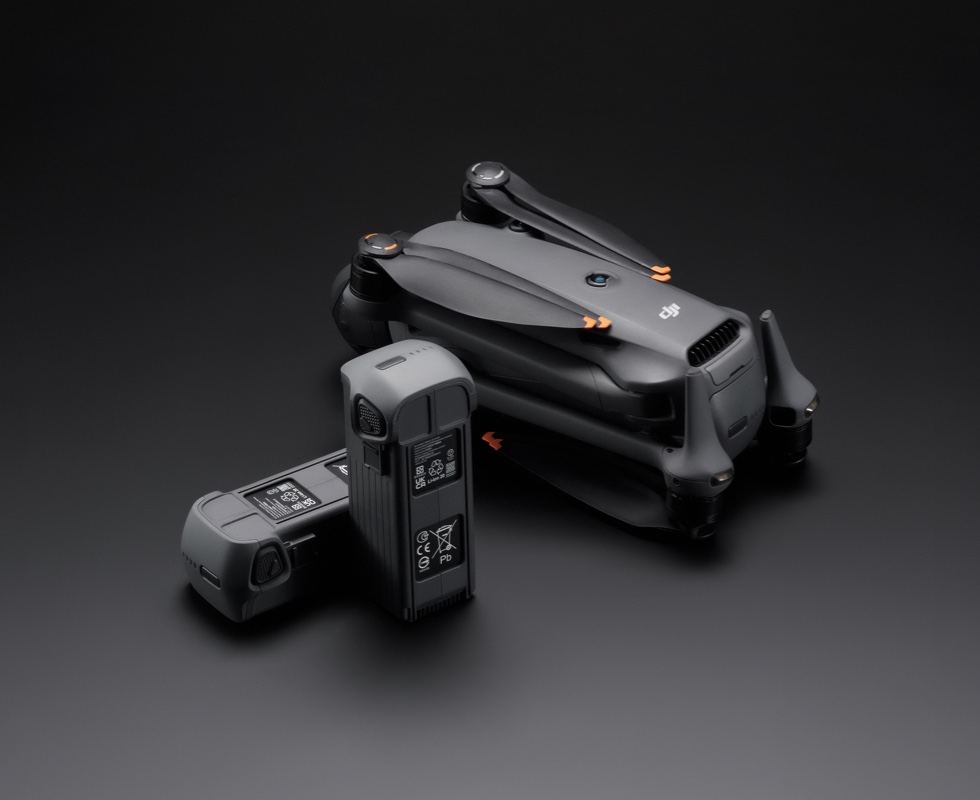
- DJI Mavic 4 Pro: from £1,879 (DJI RC 2), 1,063g, Hasselblad 4/3 100MP main plus two telephoto cameras, 51 min flight, O4+ to 30km.
- DJI Air 3S: Fly More Combo from about £1,239 at Currys, 724g, 1-inch 50MP wide plus 70mm medium tele, 45 min flight, O4 to 20km.
- Both weigh over 250g, so both need a CAA Operator ID (£12.34 a year) and a free Flyer ID before you fly in the UK.
- Price gap of roughly £1,170 between like-for-like Fly More Combos is the real decision, not the spec sheet.
Price and value: what the extra £1,170 actually buys
Start with the money, because it frames everything else. The Mavic 4 Pro opens at £1,879 with the standard DJI RC 2 controller, climbs to £2,459 for the Fly More Combo, and reaches £3,209 for the 512GB Creator Combo with the DJI RC Pro 2. The Air 3S sits well below that: Currys lists the Air 3S Fly More Combo with the RC-N3 at about £1,239, and the version bundled with the screen-equipped DJI RC 2 at around £1,289. At combo level you are looking at roughly £1,170 between them for the like-for-like RC 2 kit, comparing the Air 3S Fly More Combo at £1,289 against the Mavic 4 Pro Fly More Combo at £2,459, and more again if you step up the Mavic.
That gap is not abstract. It is most of a second drone, a stack of spare batteries, or a chunk of a holiday. The Mavic 4 Pro justifies the premium if you sell footage, shoot stills you will crop hard, or need the longer battery for genuinely remote work. For everyone else the Air 3S is the value pick, and it is worth remembering that the much cheaper DJI Lito X1 at £369 exists a tier below if even the Air 3S feels like overkill. There is a category-by-category argument coming, but on pure value the verdict is already clear.
Category winner: DJI Air 3S. It costs hundreds less and the gap is not matched by a proportional gap in usable output for most flyers.
Camera system: Hasselblad 4/3 versus the dual-camera traveller
This is where the Mavic 4 Pro earns its name. It carries a three-camera gimbal led by a Hasselblad 4/3 CMOS sensor at an effective 100MP, with an adjustable f/2.0 to f/11 aperture, backed by a 70mm medium telephoto on a 1/1.3-inch 48MP sensor and a long 1/1.5-inch 50MP tele, both at f/2.8. It records 6K at up to 60fps and DCI 4K at up to 120fps. The Air 3S takes a simpler two-camera approach: a 1-inch 50MP wide at a bright f/1.8 and a 70mm medium tele on a 1/1.3-inch 48MP sensor, topping out at 4K 120fps. The full numbers sit on the DJI Air 3S spec page.
In practice, the Mavic 4 Pro gives you a bigger main sensor, a third focal length and far more cropping room for stills, which matters if you print or sell. The Air 3S answers with a brighter f/1.8 wide that holds up better at dusk and a genuinely useful 70mm tele, which is exactly the trade-off we flagged in our wider look at the best DJI vlogging cameras for UK creators. For social clips and travel reels, the difference on a phone screen is small. For a paid commercial edit on a large display, it is obvious.
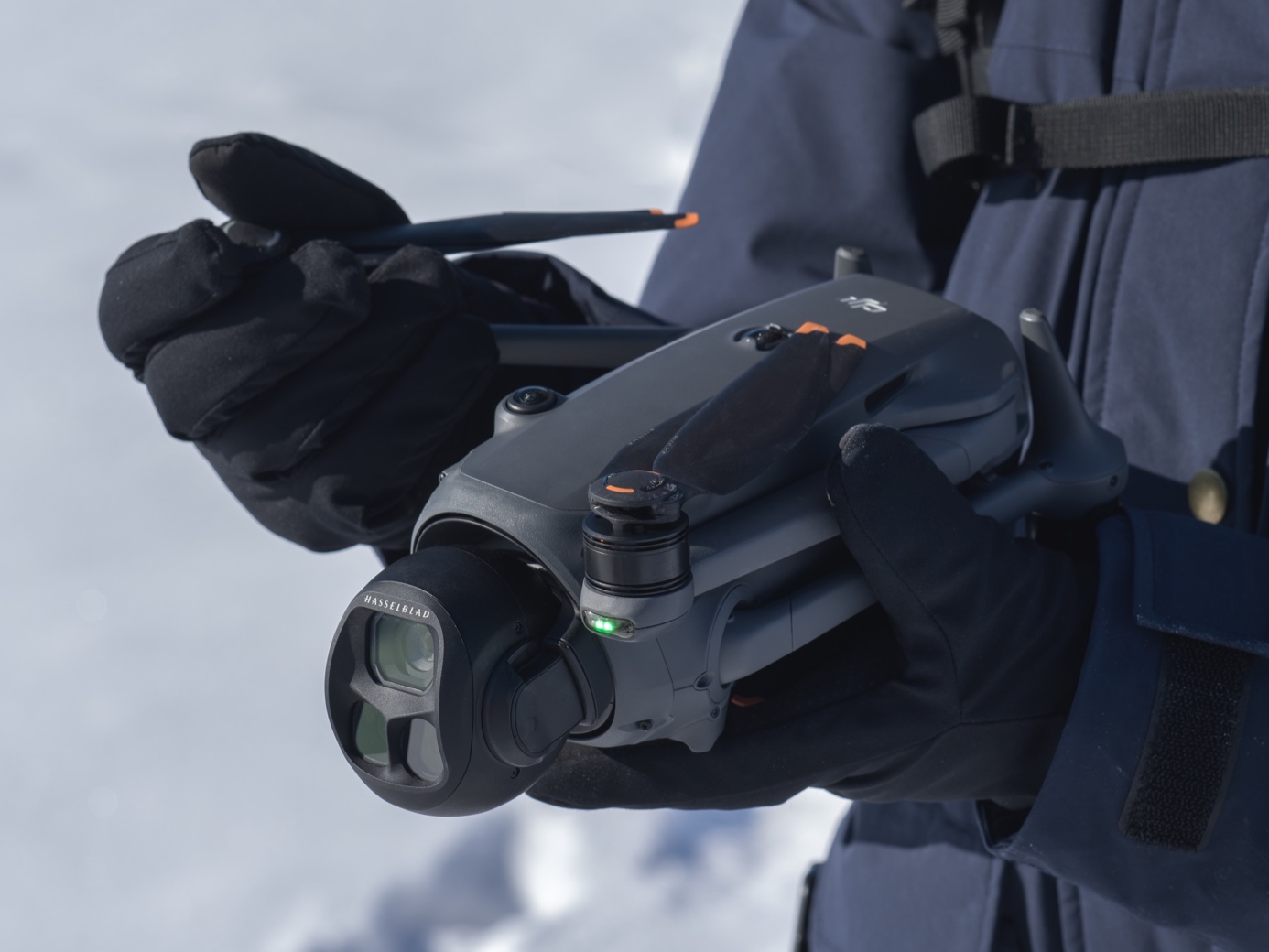
Category winner: DJI Mavic 4 Pro. The Hasselblad 4/3 sensor, the third tele and 6K capture are a real step up for anyone whose footage leaves a phone.
Range and transmission: O4+ to 30km versus O4 to 20km
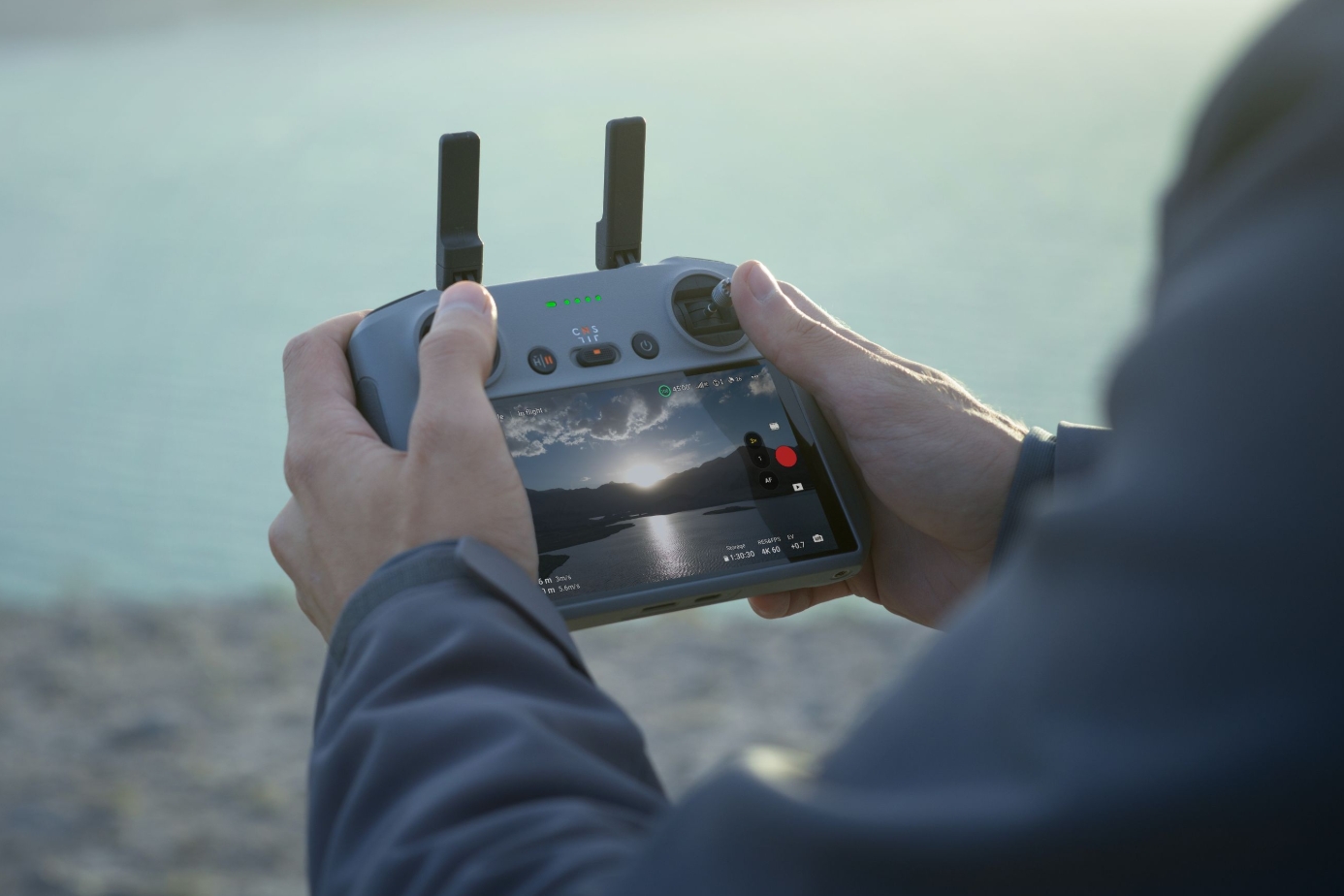
Both drones use DJI’s latest video link, but at different tiers. The Mavic 4 Pro runs O4+ with a maximum transmission distance quoted at 30km under FCC rules in clear conditions, while the Air 3S uses standard O4 rated to 20km FCC. Those headline figures are best-case, interference-free numbers that no UK flyer will ever legally chase, because you must keep the aircraft in unaided visual line of sight. What the numbers really signal is link robustness: a higher ceiling tends to mean a more stable feed at the short ranges you actually fly, in built-up areas with competing signals.
Controller choice also shapes the experience. Both can ship with the screen-equipped DJI RC 2, which removes the phone-mounting fuss of the basic RC-N3 that comes on the cheaper Air 3S combo. If you have used a screen controller on DJI’s gimbals, such as the DJI RS 4 Mini workflow, you will know how much smoother a built-in display is than threading a phone in every time. For most UK flying the transmission gap is academic, but the Mavic’s higher tier is the safer feed.
Category winner: DJI Mavic 4 Pro. O4+ gives a higher ceiling and a steadier feed, even though neither drone’s maximum range is legally usable in the UK.
Flight time: the six-minute gap that adds up
DJI rates the Mavic 4 Pro at 51 minutes of flight per charge and the Air 3S at 45 minutes. Those are still-air, single-battery figures measured in ideal conditions, and a British coastal headwind will trim both. The Mavic’s six-minute advantage sounds modest, but across a day of repositioning, framing and reshooting it is the difference between three flights and four on the same pack. For remote landscape work, where the nearest power point is an hour’s drive away, that margin is the headline feature, not the cameras.
Both drones wrestle 12 m/s of wind before they warn you, so neither is fragile. The practical takeaway is to buy spare batteries with either one. A Fly More Combo on either model bundles extra packs and a charging hub, which is why we always steer UK buyers toward the combo rather than the bare drone, the same logic we applied to the DJI Osmo Mobile 8P accessory question. With two or three packs in the bag, the Mavic’s per-charge edge compounds across the day.
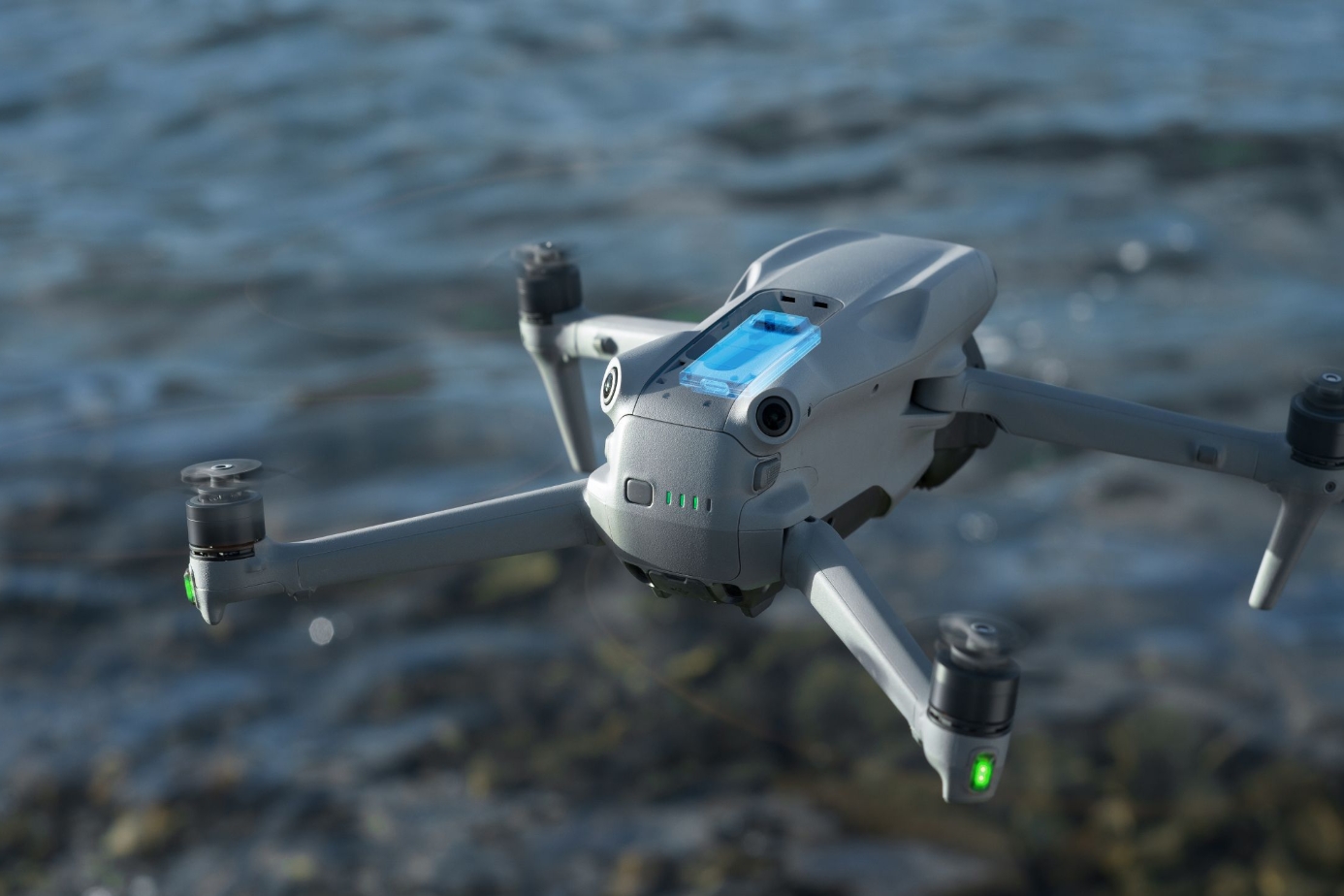
Category winner: DJI Mavic 4 Pro. Fifty-one minutes versus forty-five is a genuine, repeatable advantage for long or remote sessions.
Obstacle avoidance and safety: how close they really are
This is the category where the Air 3S closes the gap hardest. Both drones use omnidirectional dual-vision sensors backed by a forward-facing LiDAR unit and a downward infrared sensor, which means both can see and avoid obstacles in low light, not just in daylight. The forward LiDAR on the Air 3S was the headline upgrade that pulled it level with DJI’s pricier models, and it is the same architecture the Mavic 4 Pro uses. For night flying near trees or buildings, both are far safer than the older vision-only generation.
The Mavic 4 Pro adds a more sophisticated sensing array tuned to its higher transmission tier, and DJI markets stronger automated return-to-home behaviour, but the day-to-day safety experience is close enough that a nervous first-time flyer will feel protected on either. If you are new to the hobby and weighing safety above all, read our best beginner drone guide for the UK first; the Air 3S sensing suite is more than most newcomers will ever push to its limit.
Category winner: draw, edging to the Mavic 4 Pro. Both have forward LiDAR and omnidirectional sensing; the Mavic’s array is marginally more advanced, but the Air 3S is genuinely close.
Size, portability and the UK CAA drone class
Weight decides both portability and paperwork. The Mavic 4 Pro tips the scales at about 1,063g and folds to 257.6 by 124.8 by 106.6mm. The Air 3S is markedly lighter at 724g and smaller folded at 214.2 by 100.6 by 89.2mm, so it slips into a day bag where the Mavic demands a dedicated case. If you hike to your shots, the Air 3S is the one you will actually carry.
The legal picture is where many UK buyers trip up. Both drones sit well above the 250g line, so both pull you into the same Open Category obligations. You must register for a CAA Operator ID, which costs £12.34 a year and must be renewed annually, and you must pass the free online test for a Flyer ID before you fly either model. Neither qualifies for the sub-250g exemption that lets the smallest drones skip the Flyer ID test. Label the aircraft with your Operator ID and keep it in unaided line of sight; the rules are identical for both, so the CAA class is not a tiebreaker here.
Category winner: DJI Air 3S. It is over 300g lighter and folds smaller, which is the difference between packing it and leaving it at home.
Specifications compared
| Spec | Mavic 4 Pro | Air 3S | MTW read |
|---|---|---|---|
| UK price (combo) | From £2,459 Fly More | From about £1,239 Fly More | Air 3S wins on cost |
| Take-off weight | 1,063g | 724g | Both over 250g |
| Main camera | Hasselblad 4/3, 100MP, f/2.0-11 | 1-inch, 50MP, f/1.8 | Mavic for cropping room |
| Extra cameras | 70mm tele plus long tele | 70mm medium tele | Mavic adds a third lens |
| Max video | 6K/60, DCI 4K/120 | 4K/120 | Mavic for 6K |
| Flight time | 51 min | 45 min | Mavic by six minutes |
| Transmission | O4+, 30km FCC | O4, 20km FCC | Mavic higher tier |
| Obstacle sensing | Omnidirectional plus forward LiDAR | Omnidirectional plus forward LiDAR | Near level |
| Wind resistance | 12 m/s | 12 m/s | Identical |
Who each drone suits
Buy the Mavic 4 Pro if you earn from your footage, print large stills, shoot in 6K, or fly long sessions in remote places where the 51-minute battery and the third telephoto pay for themselves. It is the flagship for a reason, and the deeper detail sits in our DJI Mavic 4 Pro UK price and specs breakdown. Buy the Air 3S if you are a serious hobbyist or travel creator who wants a 1-inch sensor, dual cameras and forward LiDAR safety in a bag-friendly body for several hundred pounds less.
The clean dividing line is output destination. If your work ends on a phone or a social feed, the Air 3S is the smarter spend and you will not see the Mavic’s advantages in the final clip. If your work ends on a client’s large screen or in print, the Mavic 4 Pro’s sensor and 6K headroom are worth the premium. Drone buyers cross-shopping action cameras should also weigh the GoPro Mission 1 Pro for ground-level work, since a drone and an action cam cover different jobs rather than the same one.
Category winner: split. Mavic 4 Pro for paid and print work, Air 3S for hobby, travel and social.
Where to buy in the UK
Both drones are stocked through DJI’s own UK store and the major high-street electricals retailers. Currys lists the Air 3S Fly More Combo with the RC-N3 at about £1,239 and the RC 2 version near £1,289, with delivery and click-and-collect, and Currys CarePlan available as a paid add-on. Argos carries the Mavic 4 Pro range, with the standard drone at £1,879, the Fly More Combo at £2,459 and the 512GB Creator Combo at £3,209, with fast-track collection at many stores. John Lewis is worth checking for its standard two-year guarantee on electricals, which can outvalue a small price saving elsewhere. Buy direct from DJI for the widest combo choice; buy from a UK retailer if you want a named warranty and an easier returns path under the Consumer Rights Act.
Our view is that the DJI Air 3S is the right buy for most UK flyers, and the Mavic 4 Pro is the right buy for a smaller, specific group. The Air 3S gives you a 1-inch 50MP sensor, a useful 70mm tele, 45 minutes of flight and the same forward-LiDAR safety as the flagship, in a 724g body that fits a day bag, from about £1,239. That is the value pick and we would not talk most people out of it. Choose the Mavic 4 Pro, from £1,879, only if you sell footage, print stills, need 6K or fly long remote sessions where the Hasselblad 4/3 sensor, third telephoto and 51-minute battery earn their keep. Before either purchase, budget for the £12.34 CAA Operator ID, the free Flyer ID test and at least one spare battery. The one thing that would flip our recommendation is a deep UK discount on the Mavic 4 Pro that closes the price gap to the Air 3S; at that point the flagship becomes the obvious pick.
Reader discussion
Leave a comment
Comments are moderated. Keep it useful, accurate, and on topic.