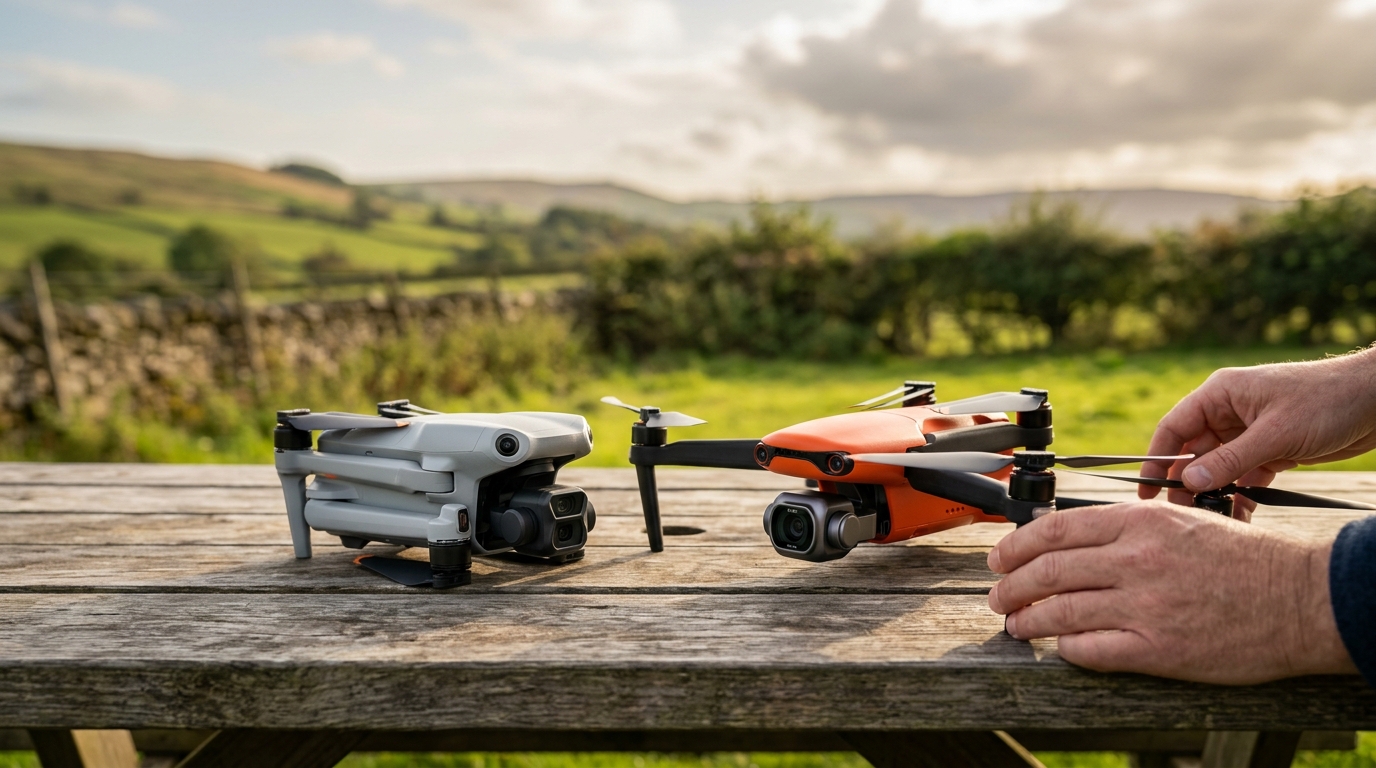
The mid-range drone fight in the UK has narrowed to two serious contenders, and neither is the drone most buyers assume they want. The DJI Air 3S vs Autel EVO Lite+ call is about how you actually fly, what UK class marking lets you do in the A1 subcategory, and how comfortable you are tying your hobby to a supply chain that could wobble with the next round of US-China politics. We have flown both, checked Jessops and Currys pricing, and cross-referenced the CAA class marking database to give you the honest answer most comparison videos will not.
Contents
- TL;DR verdict
- Why the 2026 UK rules change this comparison
- Camera and image quality head to head
- Flight performance, range and wind
- Obstacle avoidance and safety
- UK price, bundles and ongoing costs
- App, editing and ecosystem
- Our verdict
- FAQs
TL;DR: which drone actually wins
Best overall: DJI Air 3S (£959 standard, £1,239 Fly More with RC-N3). Sharper telephoto, LiDAR for low light, better transmission, the broader app and accessory ecosystem.
Best for variable aperture and colour science: Autel EVO Lite+ (around £1,129 standard at Jessops). Adjustable f/2.8 to f/11 aperture, 6K/30fps recording, a less crowded UK airspace experience with Autel Explorer.
Best for UK buyers worried about DJI sanctions exposure: Autel EVO Lite+. Both carry C1 class marks recognised by the CAA, but Autel’s US parent position gives it a different regulatory risk profile to DJI.
Why the 2026 UK rules change this comparison
Since 1 January 2026, the CAA has required class marks on any new drone placed on the UK market, and the registration threshold has dropped from 250g to 100g. Both the DJI Air 3S and the Autel EVO Lite+ carry a C1 class mark, which the CAA recognises as equivalent to the UK1 class until 31 December 2027. You can fly either in the A1 Open subcategory, closer to uninvolved people than a heavier C2 drone, without needing the A2 Certificate of Competency.
That shared legal footing is the most important framing detail for any DJI Air 3S vs Autel EVO Lite+ decision this year, and most comparison videos skip it entirely. You still need an Operator ID, every flight still happens inside the Drone Code, and Remote ID is coming. From the CAA’s perspective, you are picking between two drones that can legally do the same kinds of shoots. See the CAA Drone Code, and our guide to flying a drone legally in the UK under the new 2026 rules walks through registration and Flyer ID.
Camera and image quality head to head
Both drones sit at the “proper 1-inch sensor” tier, where drone footage cuts together with mirrorless B-roll without looking obviously smaller-sensor. They take different routes to get there.
DJI Air 3S: dual-camera flexibility, fixed apertures
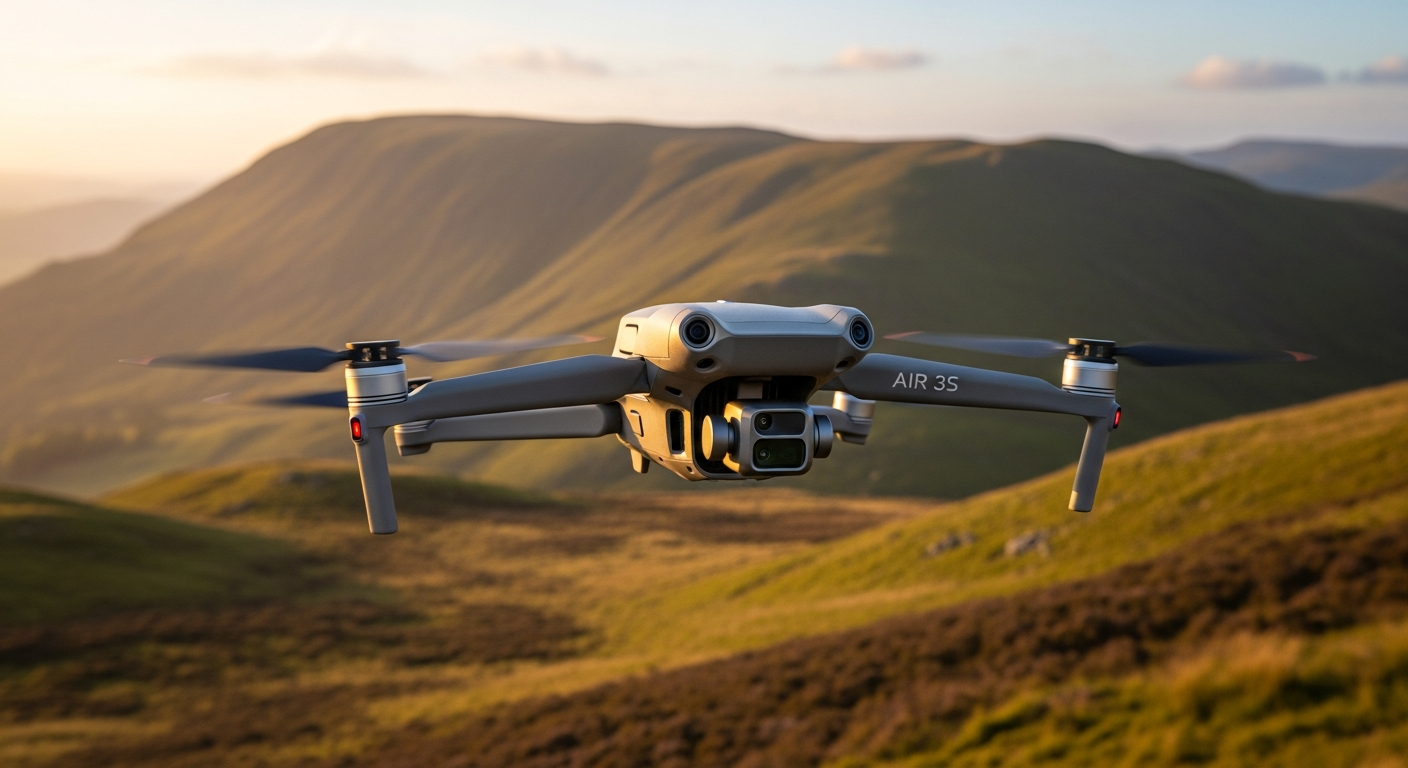
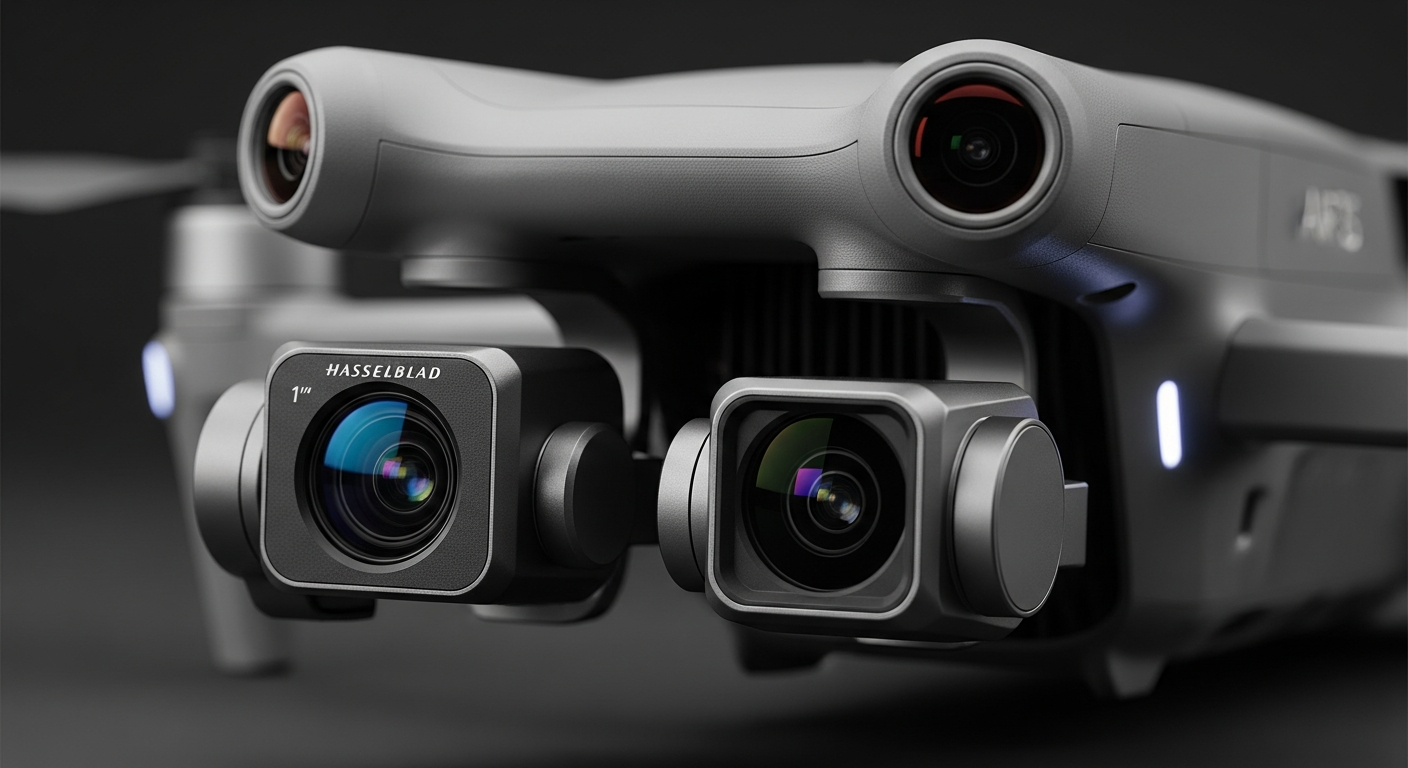
The Air 3S pairs a 1-inch primary sensor (f/1.8, 24mm equivalent) with a 1/1.3-inch 70mm medium telephoto at f/2.8. Both shoot 4K/120fps, capture 14 stops of dynamic range, and record 10-bit D-Log M and HLG. You can switch from sweeping landscape to compressed portrait shots without dropping the sticks. No variable aperture, so exposure control leans on ND filters and shutter adjustment.
Autel EVO Lite+: one sensor, variable aperture, 6K
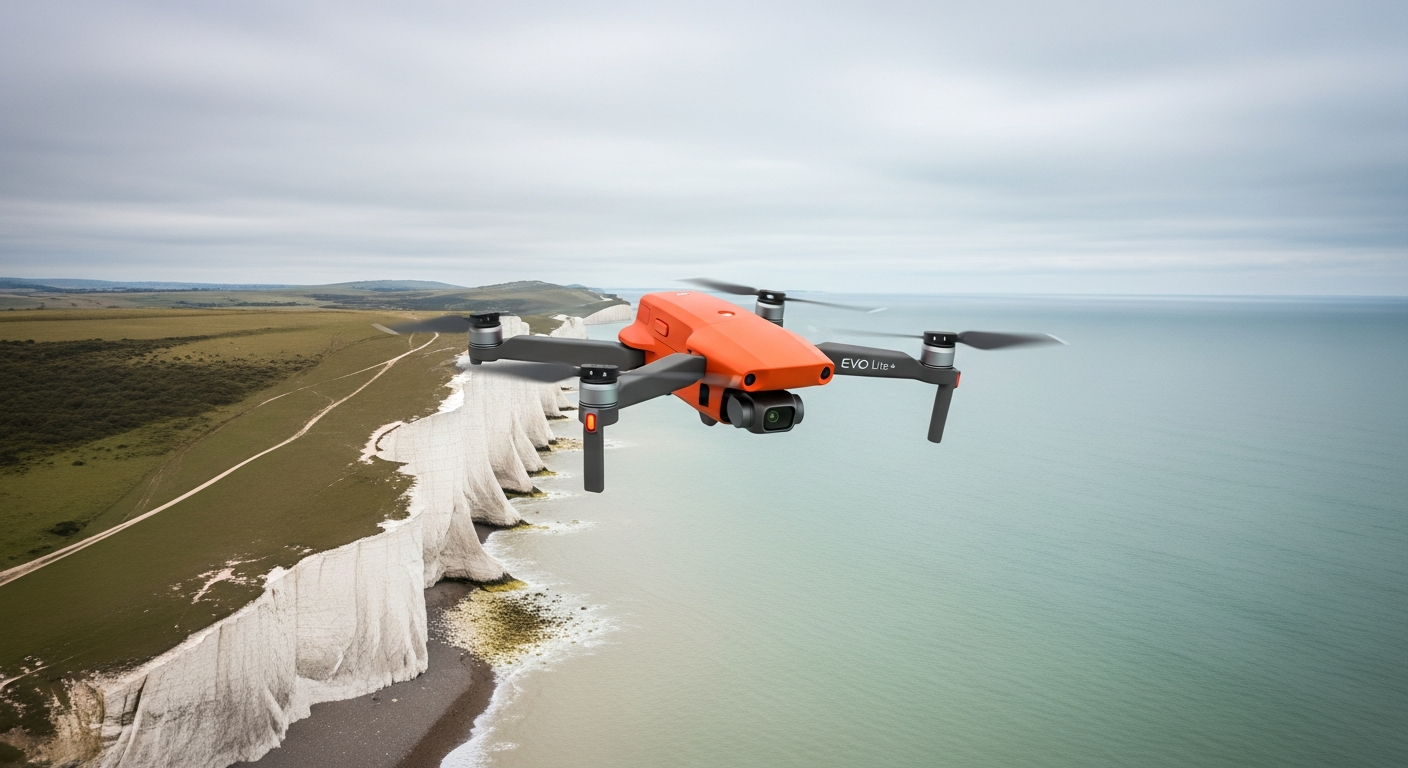
Autel takes the opposite route. The EVO Lite+ uses a single 1-inch sensor with a mechanical aperture stepping from f/2.8 to f/11. It shoots 6K/30fps and 4K/60fps, with Autel’s Moonlight algorithm pulling detail out of low ISO night flights. For photographers crossing over from DSLR bodies, adjustable aperture is a creative lever: keep shutter angle stable, dial in depth-of-field, and cut ISO without reaching for a neutral density disc. 20MP stills look clean, colour science leans warmer than DJI’s, and A-Log grades well, though without DJI’s latitude.
On paper 6K sounds like a win. In practice, 4K/60 D-Log from the Air 3S looks cleaner in post because DJI’s codec and noise handling are further ahead. The Autel’s win is daylight stills and slow, deliberate cinematography. For fast cutdowns and travel vlogs, the dual-camera DJI is more useful.
Flight performance, range and wind
The DJI Air 3S weighs 724g with battery, the Autel EVO Lite+ comes in at 835g. Both are sub-900g C1 drones. The Air 3S is rated at 45 minutes flight time, the EVO Lite+ at 40. In real UK conditions (hover-heavy work) expect 35 to 38 minutes from the Air 3S and 30 to 33 from the Autel.
Transmission is where DJI pulls ahead. The Air 3S runs the O4 video link, rated at 20km and far more resilient to 2.4GHz interference than older protocols. The EVO Lite+ uses Autel’s SkyLink 2.0 at up to 12km. Nobody flies 12km VLOS legally, but the headroom translates into steadier links in crowded cities. In central Manchester or along the Thames the DJI signal stays cleaner. The Autel is fine in open countryside, choppier in urban environments.
Wind resistance is essentially a tie at around 12 m/s (level 6 Beaufort, 27mph). The heavier Autel feels more planted in gusts; the Air 3S recovers more gracefully. UK weather being what it is, we would rather have either than a sub-250g drone in anything above a light breeze. Our guide on how to fly a drone safely in wind covers the specific speed limits worth respecting.
Obstacle avoidance and safety
This is the least competitive section. The DJI Air 3S has omnidirectional obstacle sensing backed by a forward-facing LiDAR module, the first time LiDAR has appeared on a consumer drone at this price. It works in the dark, unlocking dusk and dawn flying the Autel cannot match. Return-to-Home routes round obstacles, ActiveTrack 360 behaves more predictably.
The Autel EVO Lite+ has three-way obstacle detection: forward, backward and downward. No upward or sideways sensors. In daylight flying with you in command, that is adequate. In tight, reactive flying or anywhere you might clip the drone sideways into a tree, DJI is meaningfully safer. Crash a £1,000 aircraft in your first month and the repair bill plus insurance excess eats the price gap instantly. Safety is rarely glamorous spec-sheet material, but here it is the most honest reason to pay DJI’s premium.
UK price, bundles and ongoing costs
At the time of writing, Currys lists the DJI Air 3S with the RC-N3 controller at £959, the Fly More Combo with RC-N3 at £1,239, and the Fly More Combo with screened DJI RC 2 at £1,439. Jessops prices the Autel EVO Lite+ Standard Bundle at roughly £1,129 and the Premium Bundle at around £1,379.
That is the Autel’s first surprise: it is more expensive at the entry point than a basic Air 3S. The bundles close up once you add extra batteries. Spares cost £99 for the Air 3S and around £129 for the Autel. ND filter sets are about £55 from DJI, £65 from Autel. DJI Care Refresh adds £79 a year and is worth having; Autel’s equivalent plan is broadly similar. Budget £150 to £250 on accessories for either drone on top of the starter bundle over two years.
App, editing and ecosystem
DJI Fly is the more polished app. It hands footage off cleanly to LightCut and LumaFusion, the flight screen is cleaner, subject tracking is more reliable, and FocusTrack modes (Spotlight, Point of Interest, ActiveTrack) work first time. Autel Explorer is functional and occasionally more generous with manual control, but it crashes more often on older iPhones and its auto-edit feature is a generation behind. Our how to edit drone footage on your phone guide covers the post tools that pair well with either drone.
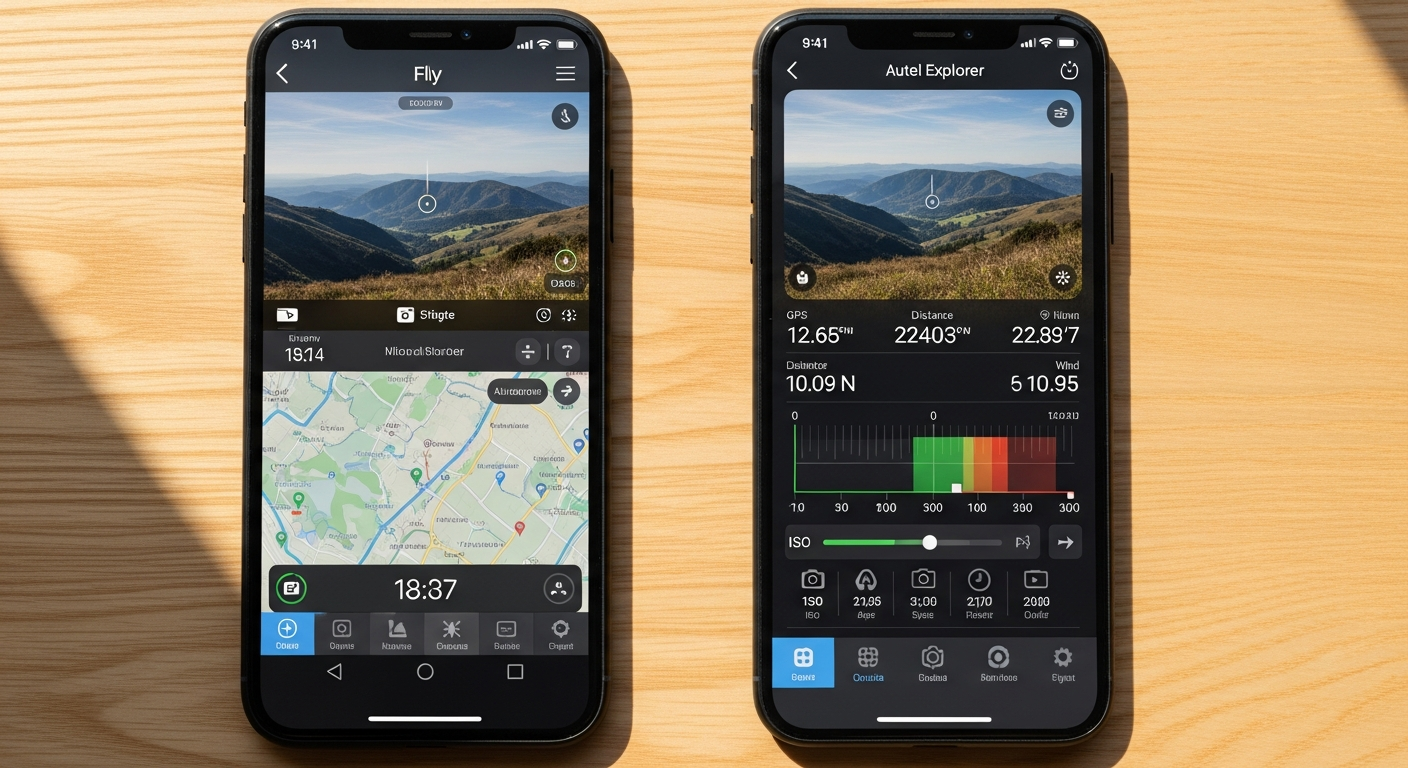
Autel has the edge on geofencing philosophy. DJI’s no-fly zones are famously overzealous, particularly around parks and rural estates. Autel’s approach is lighter and trusts the pilot more. The flip side: regulators prefer DJI’s approach, and UK and EU drift is towards more automated geofencing, not less. If you want the fewest surprises in five years, DJI is the safer ecosystem bet.
Our verdict
For most UK buyers, the DJI Air 3S is the right call in this DJI Air 3S vs Autel EVO Lite+ fight. It is cheaper at the entry point, has a more capable dual-camera sensor package thanks to the 70mm tele, flies with safer obstacle avoidance including LiDAR for low light, and sits in an ecosystem of apps, accessories and filter makers that will still be updated in three years. If you shoot in cities, rely on ActiveTrack, or you are new enough that LiDAR could save you an expensive first-month crash, the Air 3S is the obvious pick.
Pick the Autel EVO Lite+ if you specifically want variable aperture, 6K and warmer colour science matter to how you cut, or you are uncomfortable adding another DJI product after years of US scrutiny. For stills-first shooters crossing over from mirrorless, it feels more familiar, and Autel Explorer hand-holds less than DJI Fly. Just go in with realistic expectations on transmission steadiness in urban environments and the narrower obstacle coverage.
FAQs
Related reading on MTW
Buyer action
Where to buy or check next
Use this as the final check before ordering a phone, changing network or trusting a headline monthly price.


Reader discussion
Leave a comment
Comments are moderated. Keep it useful, accurate, and on topic.