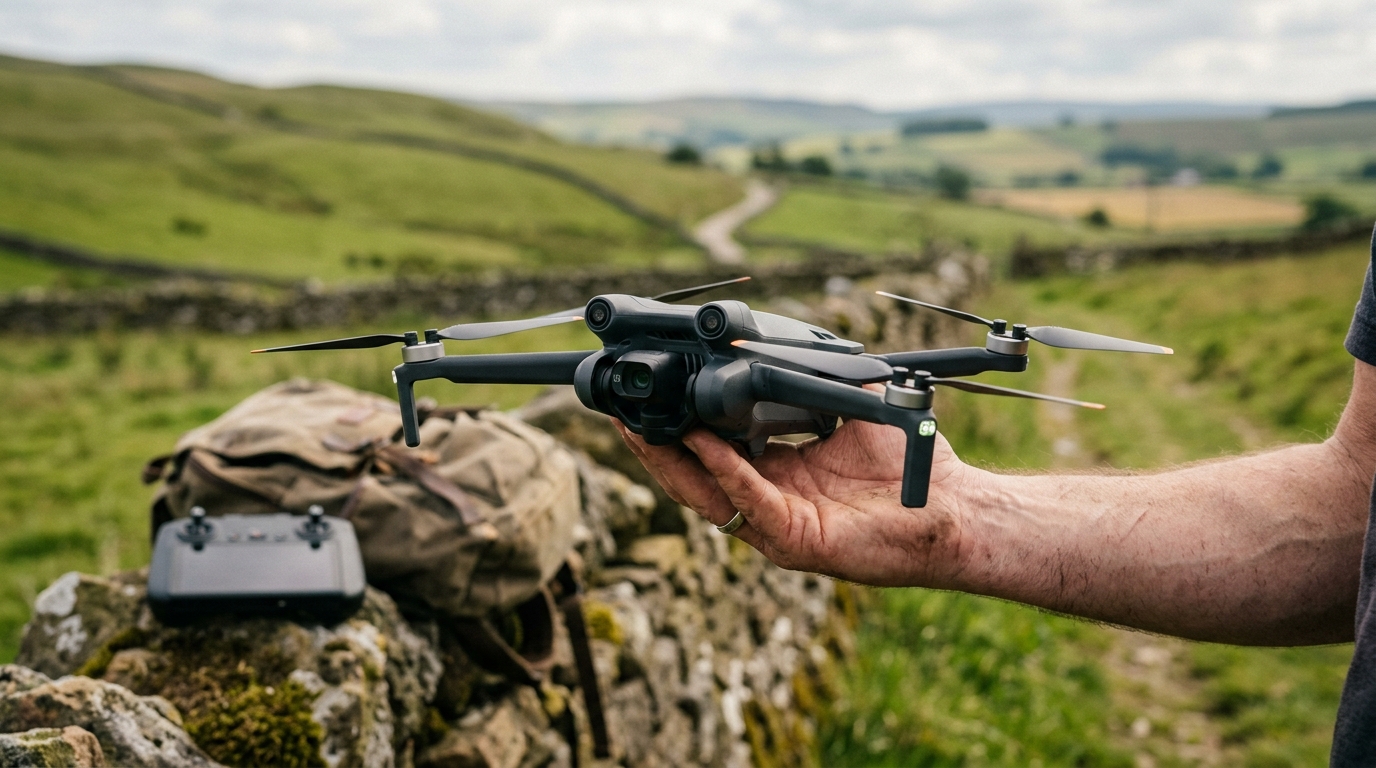
Flying a drone in the UK has never been more popular, or more regulated. The new rules that came into effect on 1 January 2026 have changed the game significantly, and if you are still operating under the old guidelines, you could be looking at fines of up to £2,500. Whether you have just bought your first DJI Mini or you are an experienced pilot, understanding the current UK drone rules 2026 framework is not optional. Here is everything you need to know to fly legally and avoid a very expensive letter from the CAA.
Who Needs to Register: The 100g Rule — the fly drone legally uk angle
From 1 January 2026 the registration threshold dropped from 250g to 100g. If your drone weighs 100 grams or more at take-off (that includes the battery, any accessories, and the camera), the pilot must obtain a Flyer ID by passing the CAA’s free online theory test. This covers virtually every drone worth flying, including the DJI Mini 4 Pro, which sits right at 249 grams. Tiny toys under 100 grams without cameras remain exempt.
Registration actually involves two separate credentials: a Flyer ID and an Operator ID. They are not the same thing, and heavier drones need both. The Flyer ID proves you understand the rules, while the Operator ID is essentially your licence plate, and it must be displayed on every drone you fly. If you let someone else fly your drone, they need their own Flyer ID, but your Operator ID stays on the aircraft.
You can register at register-drones.caa.co.uk. The Flyer ID is obtained by passing a free online theory test that takes about 20 minutes. The Operator ID currently costs £12.34 per year and is required for any drone 250g or more, or any drone under 250g that carries a camera. Both are mandatory before your first flight.
Remote ID: The Biggest Change in 2026 — the fly drone legally uk angle
The most significant new requirement for 2026 is Remote ID broadcasting. From 1 January 2026, all new UK class-marked drones sold in the UK must have Remote ID enabled, broadcasting their location, the operator’s registration number, and the take-off point via a wireless signal. This allows authorities (and potentially other airspace users) to identify who is flying what, and where. Legacy drones (those already in the wild without a UK class mark) have until 1 January 2028 to comply.
Most modern drones from DJI, Autel, and Parrot either have Remote ID baked into firmware or will get it via an update, you just need to ensure it is activated in the drone’s settings. Older drones that lack the capability will eventually need a separate Remote ID module, which typically costs between £50 and £100. Plan ahead.
Where You Can and Cannot Fly
The fundamental rules about where you can fly have not changed dramatically, but enforcement has tightened. You must stay below 120 metres (400 feet) altitude at all times unless you have specific permission from the CAA. You must maintain visual line of sight with your drone, meaning you can see it with your own eyes, not through a screen or goggles, at all times.
Flight restriction zones around airports extend significantly (typically several kilometres) and flying within these zones without permission carries serious penalties including potential criminal prosecution. The NATS Drone Assist app and DJI’s built-in geofencing both provide real-time maps of restricted areas, and you should check them before every single flight.
For drones under 250 grams (like the DJI Mini series), you can fly over uninvolved people but not over crowds. For heavier drones, you must maintain a 50-metre horizontal distance from uninvolved people and a 150-metre distance from residential, recreational, commercial, and industrial areas unless you hold a specific operational authorisation.
Night Flying: Rules for After Dark
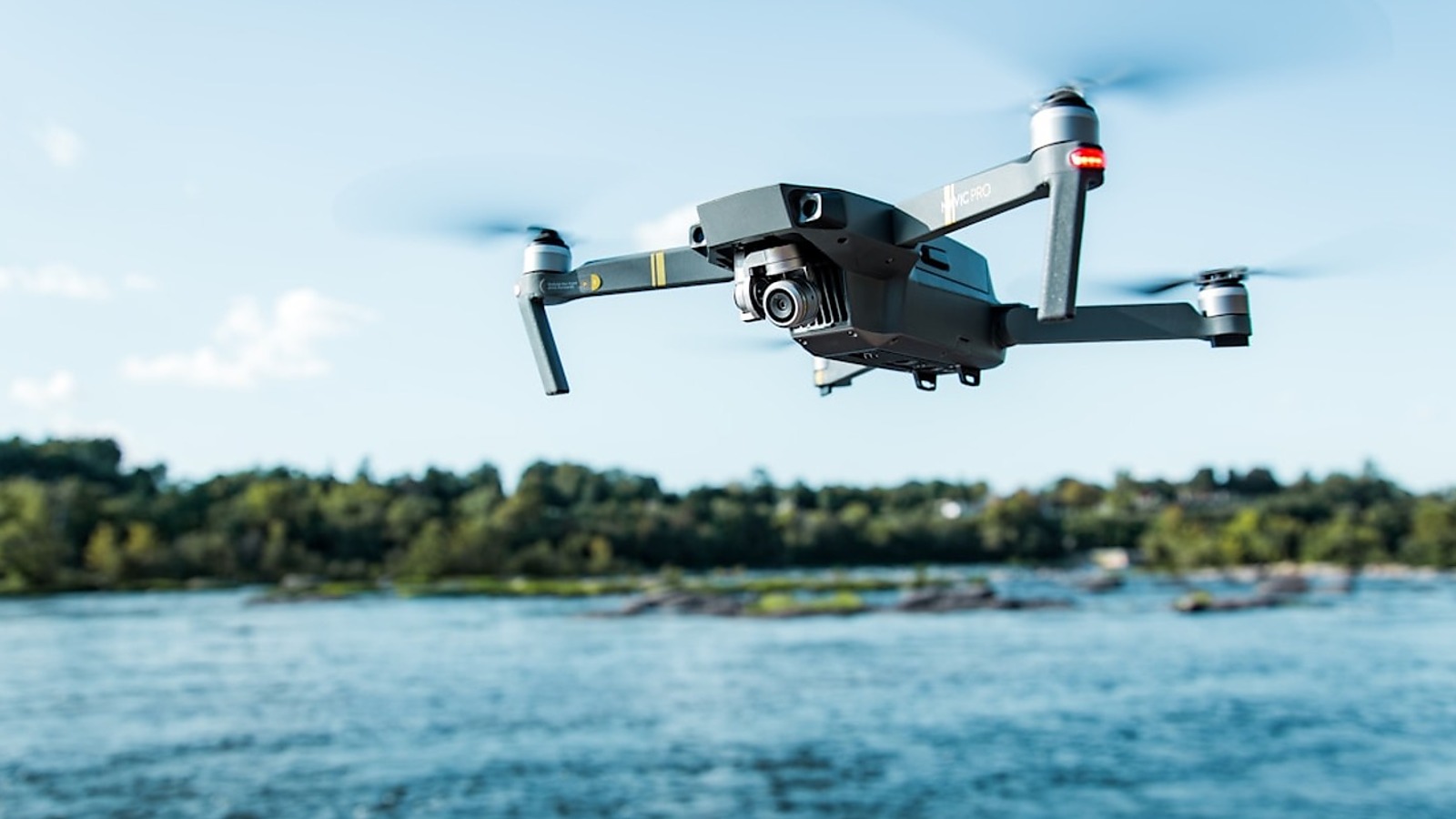
Flying at night is permitted, but with conditions. Your drone must be fitted with a light that is visible from a significant distance, and you must still be able to maintain visual line of sight. This is not a suggestion, it is a legal requirement. Most serious drones can be fitted with aftermarket strobe lights, and DJI offers compatible accessories for its Mavic and Air series.
In practice, this limits night flying to relatively close range. If you cannot see your drone clearly, you should not be flying it, regardless of what your controller screen shows.

UK Class Marking: Not the Same as EU
One important distinction that catches many pilots out: from 1 January 2026 the UK has its own class-marking system (UK0 to UK6) that is separate from the EU CE marking (C0 to C6). If you bought a drone that carries a European C0, C1, or C2 classification, that does not automatically apply in the UK. The CAA has its own certification process, and manufacturers need to obtain UK class marks separately.
In practice, most major manufacturers are obtaining both certifications, but it is worth checking your specific model. Drones without a UK class mark are not illegal to fly, they simply fall under the “legacy” or “open category A1/A3” rules, which impose stricter distance requirements from people and buildings.
Penalties and Enforcement: Do Not Take the Risk
The CAA is not messing about with enforcement in 2026. Flying without the correct registration carries a fixed penalty of up to £1,000. Flying in a restricted zone, flying without Remote ID where required, or flying dangerously can result in fines of up to £2,500. In the most serious cases, flying near airports or endangering aircraft, you are looking at criminal prosecution with unlimited fines and potential imprisonment.
Police forces across the UK now have drone detection equipment at major events and sensitive locations, and the Remote ID requirement makes it trivially easy to trace an offending drone back to its registered operator. The days of flying anonymously and hoping nobody notices are well and truly over. For more, see our Drone coverage. You might also read How to Set Up Matter and Thread Smart Home Devices Without Losing Your Mind.
The bottom line is straightforward: register, pass the test, enable Remote ID, check where you are flying, and follow the altitude and distance rules. It takes less than an hour to get fully compliant, and it means the difference between enjoying a brilliant hobby and receiving a prosecution letter. The UK drone rules 2026 framework is more structured than ever, but it is also clearer than ever. There is no excuse for not knowing.
Related reading on MTW
Buyer action
Where to buy or check next
Use this as the final check before ordering a phone, changing network or trusting a headline monthly price.







Reader discussion
Leave a comment
Comments are moderated. Keep it useful, accurate, and on topic.