
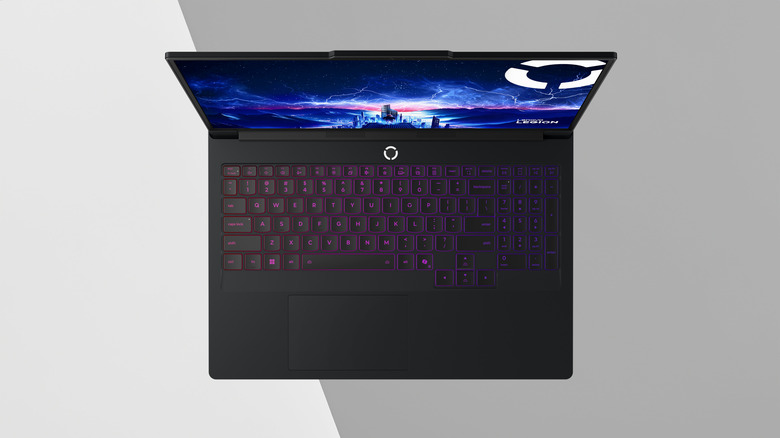
The Lenovo Legion Pro 7i Gen 10 in its top UK trim, model 83F5000UUK, costs £4,539.99 at Costco UK as of 20 June 2026, and it pairs a mobile RTX 5090 with 24GB of GDDR7 in a 2.6kg chassis. That makes it one of the most capable render laptops you can buy in this country right now. The real question for UK 3D and rendering work is not whether it is fast. It is whether a 175-watt laptop 5090 is where your money belongs, or whether you are paying a portability tax you do not need.
Short answer: for a mobile 3D or rendering professional who needs the 24GB VRAM ceiling in a bag, the £4,539.99 83F5000UUK is worth it: 24-core Core Ultra 9 275HX, RTX 5090 (24GB GDDR7), 64GB DDR5-6400, 2TB Gen 5 SSD and a 100% DCI-P3 OLED panel. For anyone rendering at a fixed desk, a desktop RTX 5090 will out-render it for similar or less money. The laptop 5090 runs at 175W total graphics power, well under half a desktop 5090’s draw, so the premium you pay here is portability, not peak speed.
Lenovo’s badging muddies what this machine is. The “Pro 7i” name and gamer styling suggest a top-end play box. The spec sheet tells a different story, and it puts the Legion in the same buying conversation as overtly creator-pitched rigs like the Asus ProArt P16 rather than the gaming aisle.
What you actually get for £4,539.99 (RTX 5090 laptop)
The headline parts are genuinely high end. According to Lenovo’s own PSREF spec sheet, the 83F5000UUK pairs an Intel Core Ultra 9 275HX, 24 cores boosting to 5.4GHz, with NVIDIA’s GeForce RTX 5090 laptop GPU carrying 24GB of GDDR7. That VRAM figure is the one to circle if you render: it is the difference between a scene that fits in memory and one that spills and crawls.
Round it out with 64GB of DDR5-6400, a 2TB PCIe Gen 5 NVMe SSD, and a 16-inch WQXGA (2560×1600) OLED panel running at 240Hz, 500 nits, 100% DCI-P3 with Dolby Vision and G-SYNC. It runs Windows 11 Home and weighs 2.6kg. The full configuration is mirrored on UK retail listings at e-catalog.co.uk and pcparts.uk, so the build is consistent across the channel rather than a single retailer’s quirk.
That is a coherent rendering rig. A 24-core CPU chews through simulation, scene assembly and the CPU-bound parts of a render pipeline; the 5090 with 24GB handles the GPU-accelerated passes in the renderers most UK studios actually run: Blender Cycles, Octane, Redshift, V-Ray RTX. The OLED panel matters more than gamers give it credit for. 100% DCI-P3 coverage means you are grading and texturing on a screen that shows you something close to the truth, the same argument I keep making about colour-accurate panels in photo-editing workflows.
The 175W question nobody puts on the box
Here is the figure that should shape your decision. The RTX 5090 in this chassis runs at a 175W total graphics power, per Lenovo’s datasheet. A desktop RTX 5090 draws well over double that. They share a name and an architecture; they do not share a performance class. A mobile 5090 is a brilliant piece of engineering, but it is not a desktop 5090 you can carry. It is the same caveat worth keeping in mind with any thin RTX 5090 portable, including the Razer Blade 16.
You are not buying the fastest 5090 money can buy. You are buying the fastest one that fits in a bag, and for a lot of UK creative work, that distinction is the entire purchasing decision.
Lenovo’s answer to thermal reality is its Vapor Chamber plus Hyper Chamber cooling, designed to hold that 175W under sustained load rather than for a 30-second benchmark. For rendering, which is exactly the kind of pinned, hours-long workload that exposes a thin laptop’s cooling, sustained clocks matter far more than peak. A 5090 that throttles after ten minutes is a 5080 you overpaid for. On the spec, Lenovo has at least built for the right kind of load.
Where it earns its keep, and where it doesn’t
The case for buying it is mobility with no real compromise on the GPU memory ceiling. If you are a freelance 3D artist who works at clients’ sites, a motion designer who travels, or a small studio that cannot dedicate desk space and a tower per seat, 24GB of VRAM in a 2.6kg package is a serious proposition. You can light a scene on a train and you are not waiting on a render farm for previews. That render speed is also exactly where the GPU earns its keep in timeline-heavy video work, not just 3D.
The upgradability quietly helps the long-term sums. There are two M.2 slots and two SODIMM slots on board, so you can add storage down the line and the SSD is not soldered, a flexibility the soldered-memory Arm Windows machines still cannot match. RAM tops out at 64GB, which is the one number I’d want higher on a rendering machine: heavy scenes and large texture sets eat system memory, and 64GB is comfortable rather than generous. If your workflow regularly pushes past it, this is the spec line that will date first.
The case against is simpler than the price suggests. If your renders happen at a fixed desk, a desktop RTX 5090 will out-render this laptop meaningfully for similar or less money, and you can stuff a tower with 128GB of RAM without thinking about it. And remember that the surcharge on that extra memory is real right now: as I covered in the 2026 memory price squeeze, DRAM and NAND have climbed sharply this cycle. The Legion Pro 7i’s premium is the portability. Pay it only if you will use it.
One caution on the configuration
Watch the model number when you buy. The 5090 appears in the Legion Pro 7i line alongside cut-down variants with 32GB of RAM and 1TB storage, and the difference between trims is not cosmetic. For rendering, the 64GB/2TB 83F5000UUK is the one worth having. The smaller-memory builds undercut the whole reason you are looking at a 5090 in the first place. Cross-check the exact SKU on the pcparts.uk listing against whatever a retailer puts in your basket before you part with the money. It is also worth noting the AMD-based Legion Pro 7 Gen 10 is a separate SKU; the RTX 5090 model is the Intel “7i”, a distinction Lenovo does little to signpost on the shelf.
Who I’d hand this to
I’d put the Legion Pro 7i in the hands of one specific person: the mobile 3D or rendering professional whose work physically moves and who needs that 24GB VRAM ceiling in a bag, not under a desk. For them, £4,539.99 is a tool that pays for itself, and the OLED panel and sustained-cooling design mean they are not making a quiet quality sacrifice for the privilege of carrying it. If your priorities tilt toward portability over raw GPU, the lighter Framework Laptop 16 is a more sensible starting point.
For everyone else doing this work from a fixed studio, I’d walk past it without much hesitation and put the budget into a desktop 5090 with more system memory and more thermal headroom. What would change my mind is the next-tier RAM option: a 96GB or 128GB build at this GPU spec would turn a very good travelling workstation into one I’d recommend almost without the caveat. As it stands, the Legion Pro 7i is precisely as good as your need to leave the desk. Be honest about that need, and the price answers itself.
Buyer action
Where to buy or check next
Use this as the final check before ordering a phone, changing network or trusting a headline monthly price.













Reader discussion
Leave a comment
Comments are moderated. Keep it useful, accurate, and on topic.