
UPDATED · News · 18 Jun 2026 · Daniel Reid For our 2026 take on this story, see The best laptop for UK photo and video work in….
You can now buy a Framework Laptop 16 RTX 5070 graphics module on its own, in pounds, VAT included, with no whole-laptop purchase and no US import faff. Framework confirmed the part on its blog on 27 April 2026, and on 17 June 2026 the UK store at frame.work/gb lists it as a standalone upgrade. This is the headline: a discrete GPU you slot into a chassis you already own, priced for the UK and shipped to the UK.
“We’re continuing to live up to graphics upgradeability in a laptop, now with our third discrete GPU option,” said Nirav Patel, CEO of Framework, in the 27 April 2026 announcement. The 5070 is the third discrete option for the Laptop 16 and is backwards-compatible with the existing second-generation chassis. No new laptop required.
The essentials
- New RTX 5070 12GB GDDR7 module, Framework’s third discrete GPU for the Laptop 16, backwards-compatible with the second-gen chassis (Framework blog, 27 April 2026).
- UK pricing on frame.work/gb (17 June 2026): 8GB module £699, 12GB module £1,199.
- The 12GB is Pre-order Batch 3, ships around August 2026, with a £100 refundable deposit.
- Blackwell architecture, roughly 100W sustained TGP and about a 30 to 40 per cent uplift over the older RX 7700S module, on Framework’s own figures.
- This is a module sold alone, in GBP inc VAT, direct from frame.work/gb. Not a new laptop.
The UK buy maths
Two numbers matter on frame.work/gb: the 8GB module at £699 and the 12GB module at £1,199. Both are bought outright as parts, both drop into an existing Laptop 16, and both arrive without the customs charges and currency-conversion guesswork that have long made US-priced upgrades a gamble for British buyers. The 12GB sits in Pre-order Batch 3 with an August 2026 ship window and a £100 refundable deposit, so you are reserving rather than paying in full today.

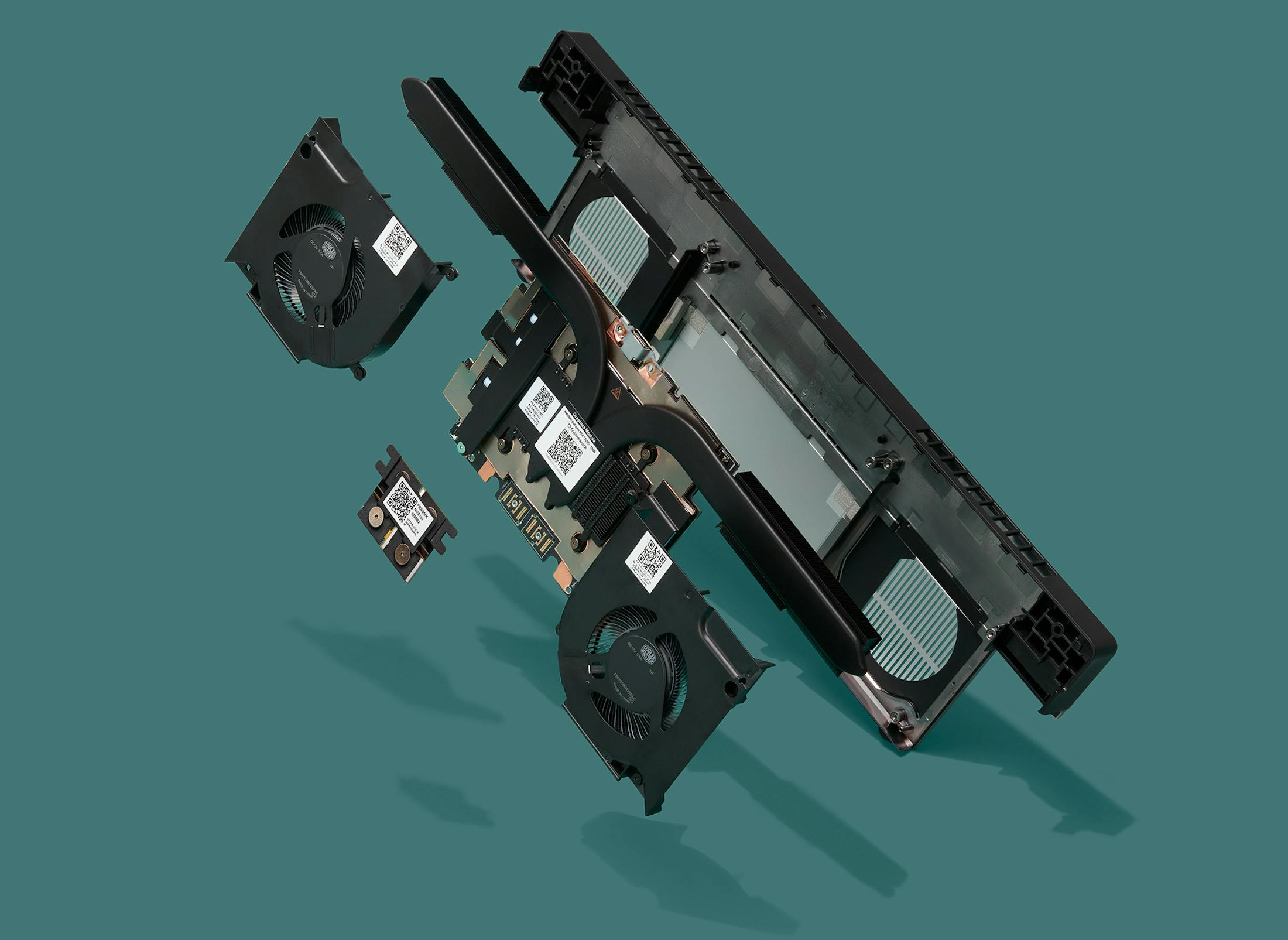
That standalone-part framing is the whole point of the platform. Where a Razer Blade 16 review or an Asus ProArt P16 review ends with you replacing the entire machine to chase a faster GPU, Framework asks you to replace one component. The 8GB at £699 is the sensible default for most owners. The 12GB at £1,199 is the considered upgrade, and the gap between them is where the real decision lives.
Is the £500 jump for 4GB worth it
Here is what the launch copy glosses over: the 12GB lands more than 70 per cent above the 8GB — £1,199 against £699 on frame.work/gb — and that £500 premium buys you exactly 4GB more VRAM. Not more cores you can lean on, not a meaningfully higher clock in everyday use. Four gigabytes. Whether that is money well spent depends entirely on whether your work is VRAM-bound.
That £500 premium buys you exactly 4GB more VRAM — everything else is the same silicon. The question is not whether 12GB is better; it is whether your timeline ever touches the ceiling that 8GB sets.
For raster gaming, it largely is not. The extra VRAM rarely changes frame rates at the resolutions this class of laptop runs. For creators, the calculus flips. Large video timelines with multiple 4K or higher tracks, heavy colour work in DaVinci Resolve Studio, and complex 3D scenes will all spill past 8GB and start swapping, which tanks performance. If that is your day job, the 12GB is headroom you will actually use. If you mostly game and occasionally edit, the 8GB is the smarter £699.
Cross-shop it honestly. A creator weighing a sealed-box alternative might look at a MacBook Pro M5 Max vs M4 Max comparison, where unified memory sidesteps the VRAM ceiling entirely, or at Snapdragon X2 Elite laptops for battery-first editing. Framework’s pitch is different: you are buying into upgradeability, not a fixed spec.
Factor the deposit into the timeline, not just the price. The £100 on the 12GB is refundable and comes off the £1,199 when Batch 3 ships, so the real question is cash-flow: you commit £100 now to hold an August slot, then settle the balance on dispatch. For a working creator that is easy to justify against the cost of an evening lost to a stalled render; for a hobbyist it is £100 parked for two months on a part you may not need. There is no UK financing dressed around the module and no trade-in for the GPU you are replacing — it is a straight parts purchase, which is exactly why the maths stays honest. The only line you cannot price today is what the displaced 8GB module is worth second-hand once Batch 3 deposits start landing.
Upgrade the chassis you own, or buy whole
If you already run a second-gen Laptop 16, the maths is clean: £699 or £1,199 for the module, and you are done. No new keyboard, no new screen, no migration. That backwards compatibility is the lever Framework keeps pulling, and it is the one thing rivals cannot answer, because a ThinkPad X1 Carbon Gen 14 or any sealed creator laptop is a fixed object the day you buy it. Swapping a GPU is a screwdriver job, not a courier-and-data-migration weekend, and that alone changes how often a UK owner can afford to stay current.
If you do not own a Laptop 16 yet, the module price is only part of the bill. You are buying a whole machine plus the GPU you want, and at that point you should weigh the platform tax against a one-and-done rival. The upgrade story only pays off over years of ownership, especially with component prices unsettled, as my earlier look at the 2026 memory-price squeeze set out. Buy in for the longevity, not the day-one value — the sum only works if you actually take a second or third upgrade over the laptop’s life rather than treating it as a pricier sealed box.
What to watch next
The date to circle is the Batch 3 ship window for the 12GB module, currently around August 2026. Watch whether Framework holds it, whether the £100 deposit converts cleanly at the listed £1,199, and whether stock of the cheaper 8GB tightens as Batch 3 deposits pile up. If you are VRAM-bound, the deposit reserves your place. If you are not, sit on the 8GB and keep an eye on the ship date before committing a penny more.
Buyer action
Where to buy or check next
Use this as the final check before ordering a phone, changing network or trusting a headline monthly price.











Reader discussion
Leave a comment
Comments are moderated. Keep it useful, accurate, and on topic.