UPDATED · News · 26 May 2026 · Hannah Foster
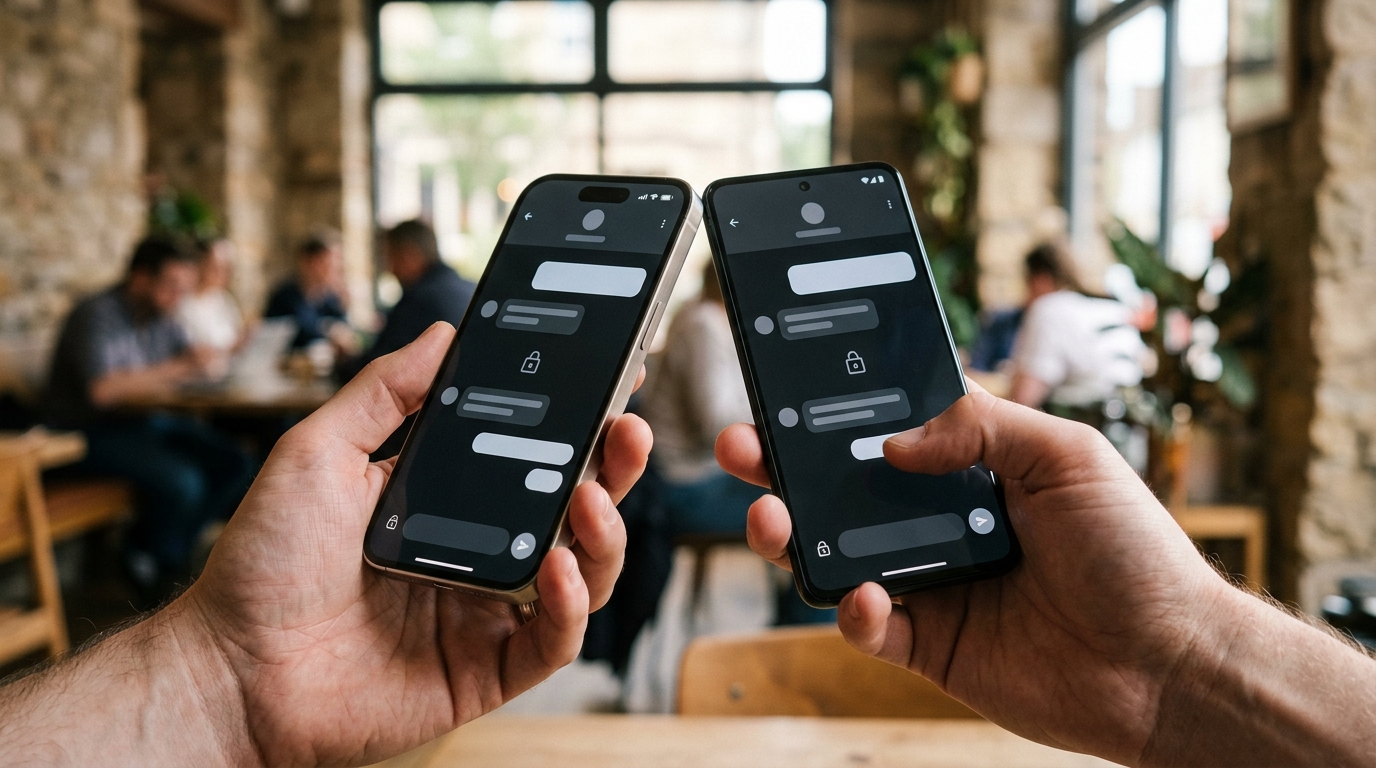
RCS encryption UK rollout is the story UK iPhone users have waited a decade for: cross-platform end-to-end encryption that finally treats an EE iPhone chatting an EE Android the same way iMessage treats two iPhones. Apple announced on 11 May 2026 that end-to-end encrypted RCS begins rolling out today in beta on iOS 26.5 with supported carriers, and on Android with the latest version of Google Messages. Two weeks in, the lock icon is appearing in real UK threads, and it changes the privacy maths for every blue-bubble / green-bubble household in the country.
- Apple confirmed encrypted RCS rollout began 11 May 2026 in beta on iOS 26.5, with the latest Google Messages on the Android side.
- A lock icon now appears in RCS chats once both sides qualify, signalling messages cannot be read in transit.
- Encryption is on by default and rolls out gradually to new and existing conversations rather than flipping overnight.
- UK iPhone users on EE, VodafoneThree and Virgin Media O2 already had RCS enabled in 2024 and 2025; the encryption layer is the missing piece, not the protocol itself.
Why RCS encryption UK matters more than the US version
The privacy gap between an iPhone-to-iPhone chat and an iPhone-to-Android chat has always been a UK problem dressed in American clothes. The US debate was about blue-bubble snobbery. In Britain it was practical: most households and most office groups are mixed-platform, and the chats that ran the country (school groups, family threads, small-business orders) lived on apps outside the carrier system because RCS had no encryption story.
Apple’s 11 May announcement closes that gap at the protocol level, not the app level. WhatsApp and Signal do end-to-end encryption beautifully, but they are walled gardens that need both sides to install the same app. RCS is the carrier-native default messenger on every modern Android and now every iOS 26.5 iPhone. Encrypting it means the boring system app finally matches the one privacy nerds nag relatives to install. Our Apple Intelligence delay audit covers the wider iOS 26 roadmap.
What UK iPhone users will actually see in iOS 26.5
The visible change is unspectacular by design, which is the right call. Apple’s own description: a lock icon appears in RCS chats to indicate encryption, messages cannot be read while in transit between devices, encryption is enabled by default, and the system rolls out automatically to new and existing conversations over time. There is no toggle, no per-contact onboarding, no QR-code dance. If both ends qualify, the lock appears. If one end is on an older iPhone, an older Android build, or a carrier that has not finished its plumbing, the chat stays unencrypted RCS or falls back to SMS as before.
That “rolls out gradually” caveat is the bit UK users should pay attention to. Apple is not flipping a global switch on 11 May. The beta is server-gated by carrier and by handset, which is why two iPhones on the same network in the same room can show different states for a week. If your lock icon has not appeared yet, that is normal. The two checks worth doing are running Settings then General then Software Update to confirm iOS 26.5, and asking the Android side to update Google Messages from the Play Store. Our earlier coverage of the iOS 26.4.2 UK update walks through the same update flow if you have not done it in a while.
UK carriers and the RCS encryption rollout, honestly
EE, VodafoneThree (the merged Vodafone and Three UK that completed in 2025) and Virgin Media O2 all enabled RCS for iPhone over 2024 and 2025, which means the carrier-side plumbing for non-encrypted RCS was already in place before Apple’s beta. That does not mean every UK carrier has flipped the encryption flag on day one. Apple’s own support docs point at a carrier compatibility page rather than naming carriers in the press release for a reason: the schedule is per-network and per-region.
If you are on EE, VodafoneThree or Virgin Media O2 and you have already been seeing RCS chats with Android friends, the encryption layer is the only thing being switched on, and it should appear within the rolling beta window. If you are on an MVNO that piggybacks one of those networks (Smarty, iD Mobile, Tesco Mobile, GiffGaff, Voxi), expect a lag behind the host network as you historically saw with RCS itself. Our VodafoneThree ownership story explains why the merged operator is the one to watch.
Ofcom, the Online Safety Act and Apple’s awkward UK position
The political subtext is impossible to ignore. The Online Safety Act 2023 gives Ofcom powers to require platforms to identify and remove illegal content, including powers that several encrypted messaging providers, Apple included, have publicly opposed because of the implications for end-to-end encryption. Apple shipping encrypted RCS to UK users at default while the OSA enforcement regime is still bedding in is a fairly bold political statement, even if Apple frames it as a routine product update.
For UK readers the practical answer is: nothing in the Online Safety Act bans you from using end-to-end encrypted messaging, and Apple has not asked for permission to ship it. The OSA’s most contentious provisions on scanning encrypted messages have not been enforced against a major messaging operator, and Ofcom has signalled that the relevant powers would only be used where it is technically feasible to do so without breaking encryption (a feasibility test the encrypted-messaging industry has consistently argued is not currently met). Until that changes, an iOS 26.5 iPhone-to-Android chat in the UK is, from the user’s perspective, a private chat.

RCS encryption UK vs iMessage, WhatsApp and Signal: who actually wins?
| Platform | UK default? | MTW read |
|---|---|---|
| iMessage (iPhone-to-iPhone) | Yes, on iOS | Still the best within Apple. Untouchable for blue-on-blue. |
| Encrypted RCS (iOS 26.5 + latest Google Messages) | Default once your carrier and handset qualify | The biggest UK win. No app to install, no contact onboarding. |
| By install; near-universal in the UK | Still the social default. The group-chat layer most UK families live in. | |
| Signal | By install; niche outside privacy circles | The technical gold standard, the smallest UK user base. |
The 2026 winner is the new normal, not one app. WhatsApp keeps the social graph because that is where your family chat already lives, but encrypted RCS removes the last excuse for unencrypted SMS in the UK. It does nothing for one-way SMS (the banks doing two-factor, the retailers sending order updates, the scammers sending phishing), but it does mean far fewer reasons to ever start a personal conversation on SMS in the first place. For UK buyers comparing handsets, our iPhone 17 Pro vs Pixel 10 Pro UK comparison now reads differently: cross-platform messaging is no longer a tie-breaker.
What UK iPhone users should do this week
Three steps. First, update to iOS 26.5 (Settings, General, Software Update). Second, ask the Android side of your important cross-platform chats to update Google Messages. Third, do not panic if the lock icon does not appear immediately: Apple has been explicit that the beta rolls out gradually. Our iPhone 17 Pro Max vs iPhone Air guide is the one to read if you are on an older iPhone weighing an upgrade.
One useful sanity check: the lock appears per-conversation, not per-account. If your kid’s iPhone shows the lock with a school friend but yours does not with the same friend’s parent, that is the readiness logic at work, not a setting you have missed.
MTW verdict
Encrypted RCS is the biggest practical UK privacy upgrade since iMessage launched. The winner is the mixed-platform UK household, which finally gets carrier-grade privacy on the boring default app. Update to iOS 26.5, nudge your Android contacts to update Google Messages, and stop worrying about whether the green-bubble thread is being read in transit.
Buyer action
Where to buy or check next
Use this as the final check before ordering a phone, changing network or trusting a headline monthly price.










Reader discussion
Leave a comment
Comments are moderated. Keep it useful, accurate, and on topic.