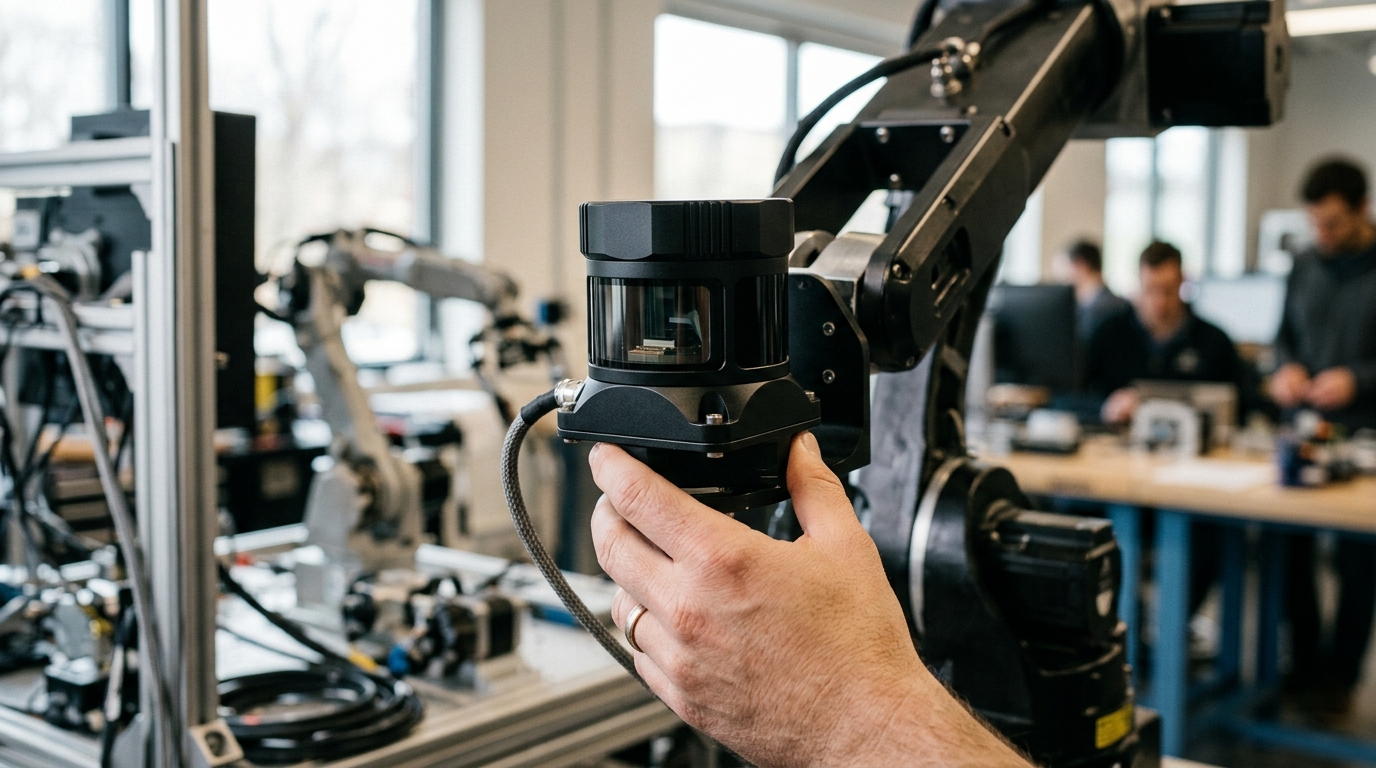
Ouster Rev8 lidar is the 4 May story that quietly redraws the autonomy and robotics map. Ouster announced the Rev8 OS family on 4 May 2026, calling it the world’s first patented native colour lidar, with the flagship OS1 Max delivering up to 500m maximum detection range and a 256-channel architecture.
- Ouster Rev8 lidar launched 4 May 2026: redesigned OS0, OS1, OSDome sensors plus a new flagship 256-channel OS1 Max.
- Powered by L4 and L4 Max Ouster Silicon: 42.9 GMACs of processing, up to 10.4 million points per second, 40 kHz measurement rate.
- 48-bit colour depth, 116 dB of dynamic range; operating range from 1 lux to 2 million lux with embedded Fujifilm colour science.
- OS1 Max sees up to 200m at 10% reflectivity, with a 500m max detection range and a 45-degree field of view; available to order now, shipping this quarter.
Why the Ouster Rev8 lidar launch matters
The Ouster Rev8 lidar matters because it is the first time a single sensor unifies depth and colour at the silicon level rather than fusing two devices in software. Ouster’s pitch is that every point in the 3D cloud is “born” with colour, eliminating the spatial-temporal alignment errors that plague camera-lidar fusion stacks. CEO Angus Pacala called it the “holy grail” technology, arguing “there’s no reason that one sensor can’t do both” – a direct shot at the autonomous-vehicle convention of running separate camera arrays alongside lidar.
That is a real shift for the robotics and autonomy stack. Pure-camera vision systems have always struggled in extreme lighting; pure-lidar systems have always lacked the semantic richness needed to read brake lights, road signs and clothing. The Ouster Rev8 lidar collapses that trade-off into one sensor with 48-bit colour depth and 116 dB of dynamic range. The wider robotics story sits alongside this – Google DeepMind’s recent Gemini Robotics-ER 1.6 release made it clear that better perception is the bottleneck for embodied AI, and the Ouster Rev8 lidar arrives exactly when the industry needs sensors that can match the new model capability.
Ouster Rev8 lidar specs and how the family splits
Ouster has structured the Rev8 family the way a phone maker would structure a flagship line. The OS1 Max sits at the top: 256 channels, up to 500m max detection range, 200m at 10% reflectivity, and a 45-degree field of view aimed squarely at long-range automotive and survey use. Below it sit the redesigned OS0, OS1 and OSDome sensors, each tuned for different field-of-view and range trade-offs – the OSDome’s hemispherical pattern suits dock and warehouse robotics, while the wider-FOV OS0 fits short-range mobile robots. All four products share the L4 Ouster Silicon chip, embedded Fujifilm colour science and the native colour pipeline.
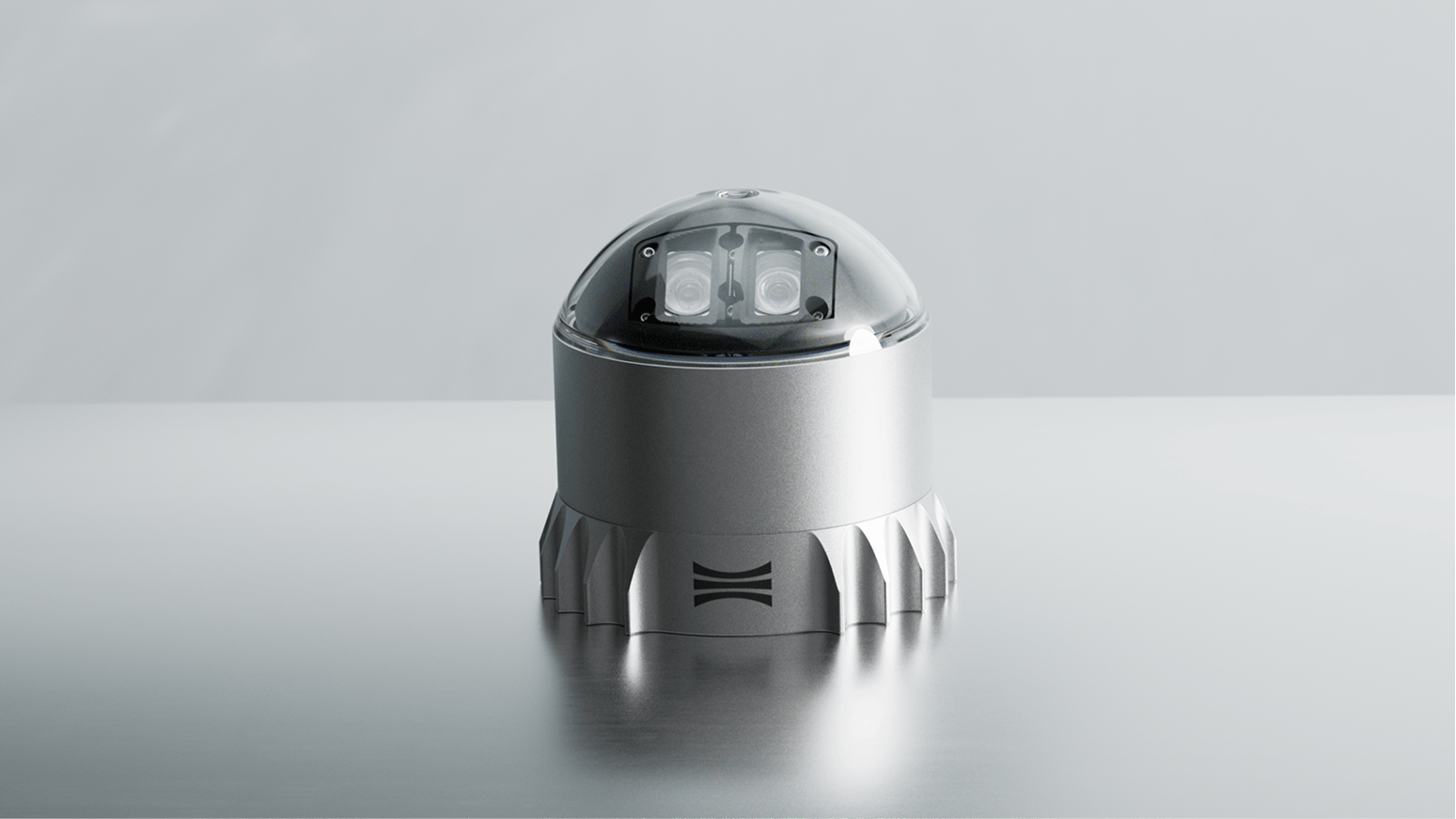
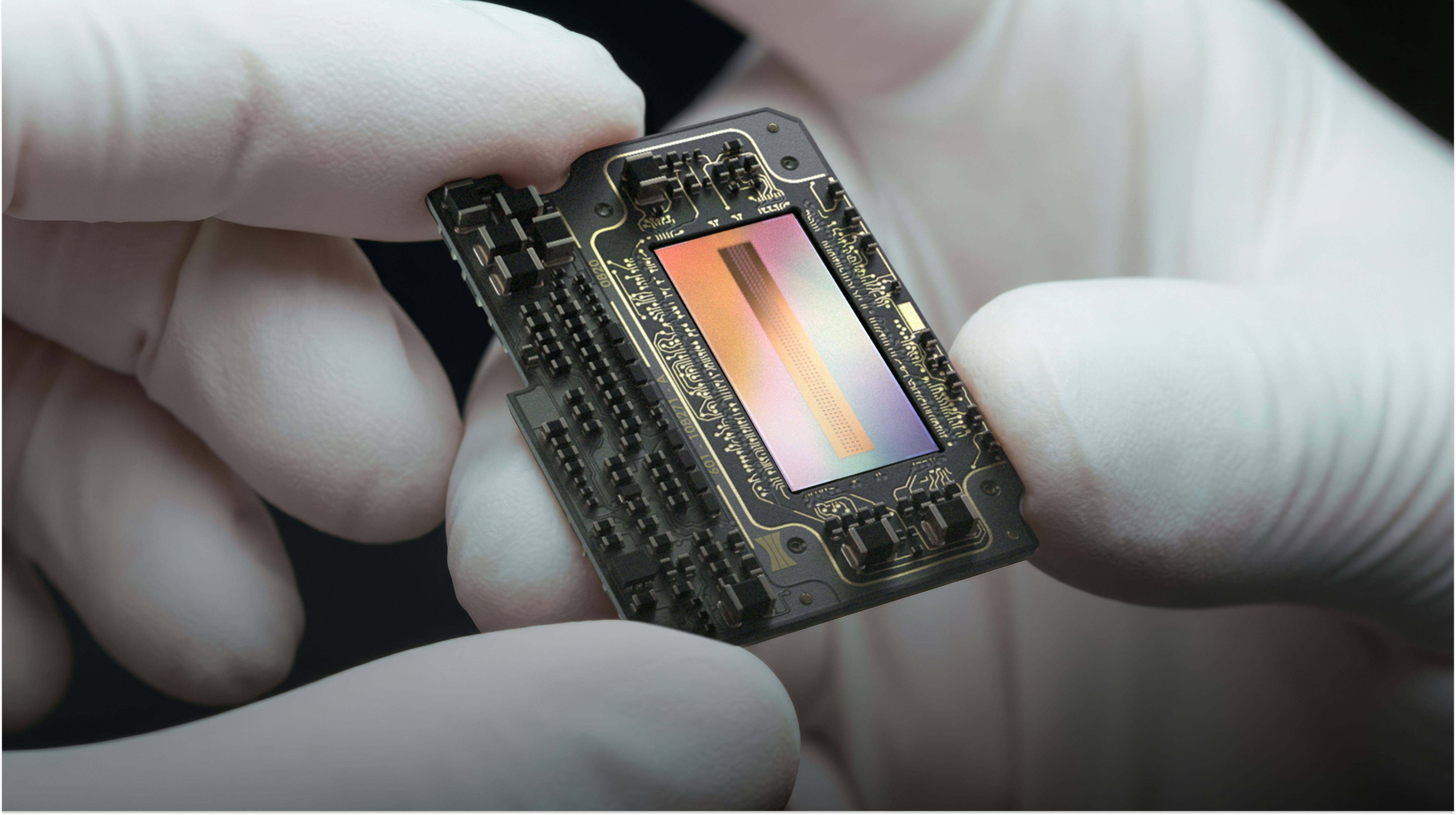
The numbers behind the L4 chip are not subtle. Ouster claims 42.9 GMACs of processing, detection of up to 20 trillion photons per second, picosecond timing precision and 22.4 Gbps of off-chip data bandwidth. That allows up to 10.4 million points per second, which is enough headroom to drive multiple downstream perception models in parallel – the kind of compute budget that previously required external GPUs. For commercial operators, the practical upshot is fewer racks of compute on a robot and a lower bill of materials per autonomous platform.
Where the Ouster Rev8 lidar fits in robotics and EVs
For UK robotics teams and autonomous-vehicle integrators, the Ouster Rev8 lidar offers a tidy procurement story: one sensor, one calibration job, one data stream. That makes a measurable difference on bills of materials for delivery robots, warehouse forklifts, security patrols and agricultural platforms, where every additional sensor adds compute, wiring and failure modes. Ouster’s existing channel includes Boston Dynamics, NVIDIA-partner robotaxi developers and survey-grade mapping vendors, so the upgrade path is short for anyone already on Rev7.
| Ouster Rev8 sensor | Where it fits | MTW read |
|---|---|---|
| OS1 Max (256ch) | Highway autonomy, long-range survey, AV platforms | The flagship – 500m max range is the headline. |
| OS1 (mid-range) | Robotaxis, mining trucks, perimeter security | Likely the volume product. |
| OS0 (ultra-wide FOV) | Mobile robots, last-mile delivery | Best for tight indoor and yard scenarios. |
| OSDome (hemispherical) | Forklifts, docks, fixed monitoring | Niche but underserved category. |
The other Rev8 angle worth tracking is the strategic one. Cameras-only platforms – notably Tesla’s vision-only stack – have argued for years that lidar is an unnecessary cost. Ouster’s bet is that adding colour to the lidar side closes that gap, while keeping the physics-based depth precision that pure-camera systems still struggle to match in fog, rain and low light. For the UK drone sector, where regulators are explicitly looking for redundant sensing on BVLOS platforms, native colour lidar is also a regulator-friendly story, sitting alongside the new UK 2026 drone rules that lean toward higher-grade onboard perception.
What UK buyers and integrators should watch next
The arrival of native colour lidar sits in a broader story about hardware sovereignty for the autonomy stack – the same shift that Firestorm xCell production lines are tackling for drones. Ouster says Rev8 sensors are available to order today and shipping this quarter, but the practical question for UK integrators is which OEMs adopt it first. The robotaxi side is the obvious near-term home; survey, mapping, security and warehouse automation are the medium-term opportunities. Pricing was not disclosed in the 4 May release, so UK distributors will need to confirm the cost gap against Rev7. The compelling commercial argument is reduced compute and calibration overhead, not just better data quality.
The slightly less glamorous angle – and the one worth taking seriously – is the Fujifilm colour-science partnership. That is not a marketing badge; it is the reason Ouster can claim survey-grade colour fidelity at lidar speeds. If independent benchmarks (Ouster is already working with DXOMARK on this) back up the dynamic range and colour-depth claims, the Ouster Rev8 lidar moves from interesting product announcement to category reset. Robotics teams who have spent years writing fusion code that aligns camera and lidar frames will, by 2027, be asking why they ever bothered.
MTW verdict
The Ouster Rev8 lidar is the most consequential autonomy hardware launch of the year so far. The OS1 Max is the headline, but the OS1 will be the volume product. UK robotics buyers should plan their next BoM revisions around it, not around another year of camera-lidar fusion code.
Buyer action
Where to buy or check next
Use this as the final check before ordering a phone, changing network or trusting a headline monthly price.



Reader discussion
Leave a comment
Comments are moderated. Keep it useful, accurate, and on topic.