Onix Personal Intelligence is, at last, a consumer health AI launch that does not pretend to be a doctor. Announced on 10 April, Onix pitches its Personal Intelligence product as a privacy-first assistant trained on licensed expert content rather than the open web. By naming its limits up front, Onix Personal Intelligence becomes the rare wellness product whose first selling point is what the AI will not do, not what it claims it can.
- Onix announced Personal Intelligence on 10 April 2026 – subscription AI trained only on a named experts licensed research and IP.
- User conversations are end-to-end encrypted and stored locally; Onix says the company itself never accesses user data, only an email address.
- Launch experts include Dr William Li (Eat to Beat Disease) and Jeffrey Bland PhD (Functional Medicine); Onix is HIPAA compliant and launches first on iOS.
- Why it matters: this is the first credible UK-relevant attempt to ship clinician-bound AI without the data-harvesting model that has shaped the rest of generative AI.
The anti-hype framing is the product: what Onix Personal Intelligence actually changes
Onix is not claiming a general medical model. According to the company’s launch announcement, each Onix “intelligence” is trained only on a single expert’s licensed research and intellectual property, with conversations end-to-end encrypted and stored locally on the user’s device rather than being centrally logged or monetised. That restraint is the feature. In a field where consumer AI is still fighting to stop hallucinating about drug interactions, restraint is strategy.
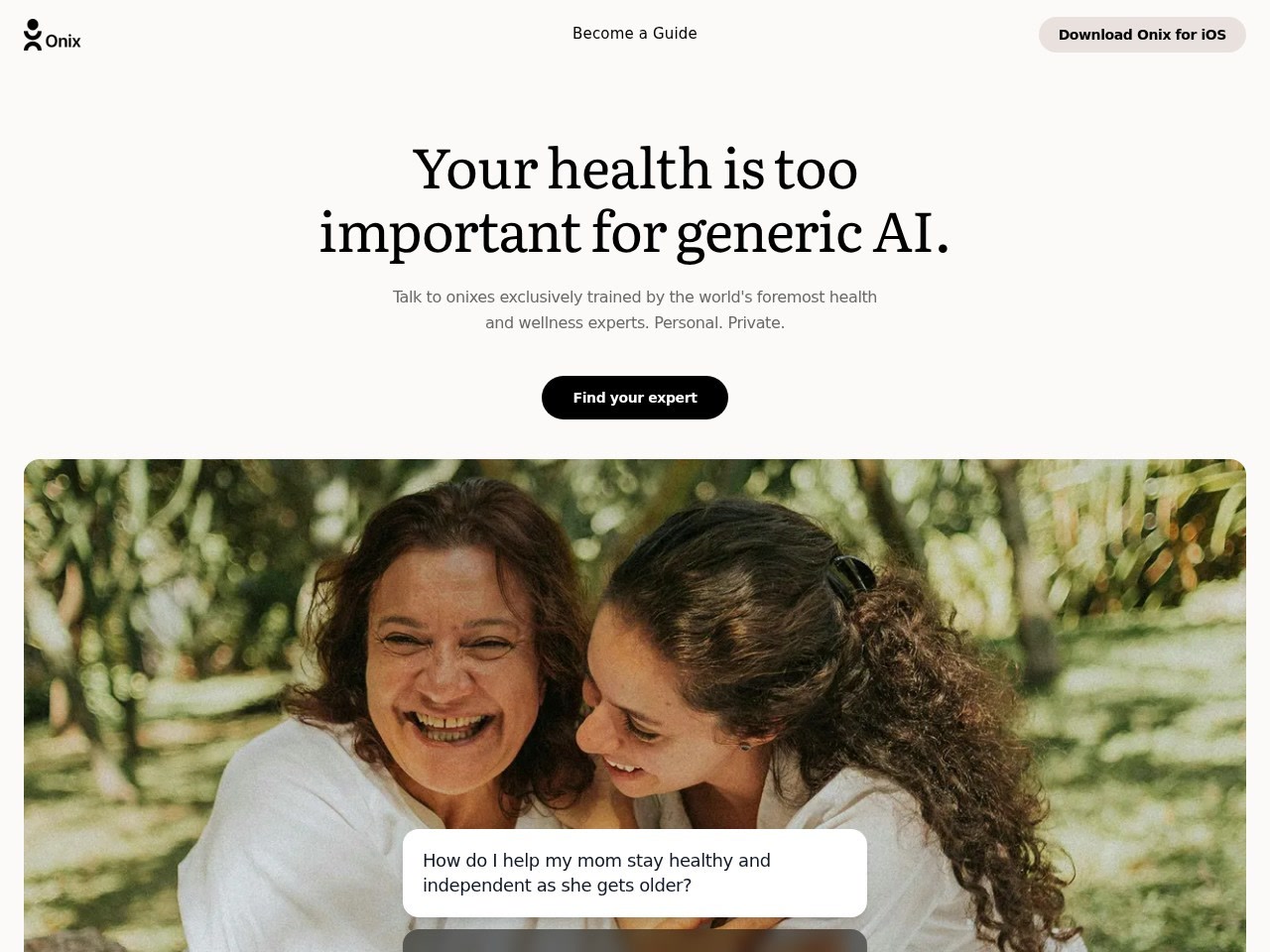
Privacy as a product, not a policy
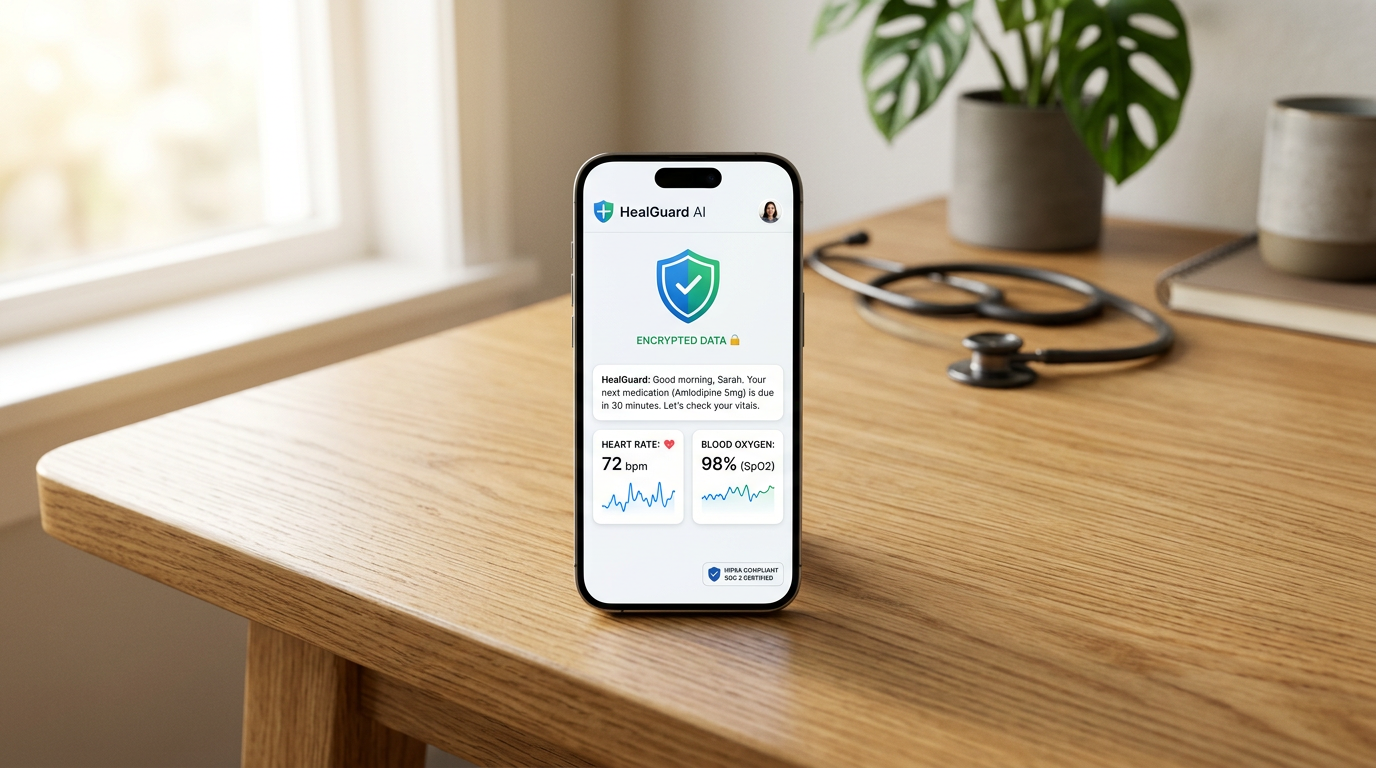
Most health apps treat privacy as a legal obligation buried in a settings tab. Onix is treating privacy as a front-page product claim. Personal information sits in a “personal data vault” that Onix says neither the company nor the expert can read, the service is HIPAA compliant, and Onix has committed not to use health data to train general-purpose models. That is an increasingly valuable position as the consumer AI backlash grows. It is also a position that is very hard to walk back if the company grows past seed-stage and starts needing data to train.

Why this is risky, not just admirable
The honest pitch is also the slow pitch. Onix will not viral-grow through TikTok users posting outrageous AI answers. It will not rack up DAU through gamified streaks. It will acquire users through slow channels: clinicians, insurers, employers, cautious caregivers. That is the right audience, but it is not the audience that drives early-stage valuations. The risk is that Onix raises at health AI hype prices and then gets judged against consumer AI growth curves.
| Dimension | Typical health AI launch | Onix Personal Intelligence |
|---|---|---|
| Marketing lead | AI capability list | Privacy and clinical posture |
| Scope | General symptom checker | Personal context only |
| Compliance signalling | Buried in footer | On the product page |
| Growth vector | Consumer virality | Clinician and caregiver trust |
The part the industry needs
Consumer AI and health have collided badly over the last two years. Users who misunderstood chatbot output. Clinicians frustrated by patients arriving with AI-generated self-diagnoses. Regulators scrambling. Onix’s disciplined framing is a template for what a responsible consumer-facing clinical assistant should look like. Whether or not Onix itself wins, the industry needs several more launches that look like this. Too many look nothing like it.

Verdict
Personal Intelligence does not look like an AI product designed to maximise attention. It looks like an AI product designed to maximise trust. That is a meaningful departure in consumer health. The execution risks are real, and the growth numbers will look boring next to louder competitors, but if the team can resist the temptation to broaden scope and compromise its privacy position to please a later funding round, Onix has a chance to set an honest template for an industry that badly needs one. The service launches on iOS first, with Android to follow.
What honest Onix Personal Intelligence marketing looks like
The cleanest test for any consumer health AI pitch is whether the marketing acknowledges what the product cannot do. The Onix Personal Intelligence launch passes that test, which is more than can be said for most of the wellness-app industry. The Personal Intelligence framing names the limits up front: not a diagnostic tool, not a substitute for a clinician, not designed for emergency triage, and Onix explicitly says the platform can redirect high-risk situations to appropriate medical services when needed. That kind of restraint is unfashionable in consumer AI marketing, which is exactly why it stands out. Buyers have been trained to ignore disclaimer fine print; products that put the limits in the headline copy actually move trust forward. The risk is that this honesty becomes a competitive disadvantage if rivals continue to overclaim. The category will only become safer if more brands follow Onix’s example.
Related reading on MTW
Buyer action
Where to buy or check next
Use this as the final check before ordering a phone, changing network or trusting a headline monthly price.










Reader discussion
Leave a comment
Comments are moderated. Keep it useful, accurate, and on topic.