
UPDATED · News · 3 Jun 2026 · Claire Bennett
The Microsoft Work Trend Index 2026 lands at an awkward moment for British workplaces, because its central finding is that workers are ready for artificial intelligence while their organisations are not. Microsoft’s annual research, drawn from a survey of 20,000 people across 10 countries and trillions of anonymised Microsoft 365 productivity signals, frames this gap as a transformation paradox: the people doing the work have moved faster than the firms paying them. For UK employers still settling the rules of hybrid working, that mismatch is the practical story, and it has consequences for productivity, skills and the way teams are managed.
This is an editorial read of the report for a UK audience rather than a press release. We will set out what Microsoft actually measured, which numbers are solid, where the company is selling its own products, and what a sensible British employer or hybrid worker should take from it. The headline themes, the Frontier Firm and the rise of the so-called agent boss, are genuinely useful framing, but they need translating into the realities of UK pay, data protection and the office-versus-home tug of war that has defined work here since 2020.
Key facts: what the 2026 report is and why it matters now
The Work Trend Index is Microsoft’s flagship annual study on the way we work, published through its WorkLab research arm. The 2026 edition combines a survey of 20,000 workers in 10 countries with a privacy-preserving analysis of how Microsoft 365 Copilot is actually being used inside organisations. Microsoft published the report on 5 May 2026, alongside a set of how-to guides aimed at leaders. The reason it matters now is timing: AI tools have moved from novelty to daily habit for a large share of knowledge workers, and the 2026 report is the first to put hard usage data behind that shift rather than relying on sentiment alone.
The framing carries over from 2025, when Microsoft first described the Frontier Firm, an organisation rebuilt around human and AI collaboration rather than bolting AI onto old processes. In 2026 the company sharpens that into a question of operating models, and the tension it identifies is one most UK readers will recognise from their own teams. The gap between an eager individual and a cautious employer is exactly the friction that shows up in British debates about Microsoft 365 Copilot rollouts, which we have covered in our guide to the Microsoft 365 Copilot UK price changes and what they mean for budgets.

The transformation paradox in plain numbers
The numbers that define the paradox are worth stating precisely, because they are the part of the report least contaminated by marketing. Microsoft found that 65 per cent of AI users fear falling behind if they do not adopt AI quickly, yet only 13 per cent say they are rewarded for reinventing how they work when outcomes miss short-term targets. A further 45 per cent say it feels safer to focus on current goals than to redesign their work around AI. In other words, the appetite is high and the incentives are wrong.
On the value side, 58 per cent of AI users say they are producing work they could not have produced a year ago, and 66 per cent report spending more time on high-value tasks. Among the small group Microsoft labels Frontier Professionals, the most advanced users, that first figure rises to 80 per cent. The contrast is the point: the tools clearly help, but the organisational scaffolding to spread that benefit is missing for most workers. For UK managers wondering whether the productivity claims around AI are real, this is a more honest picture than the breathless vendor pitches, and it lines up with the cautious enterprise lessons in our piece on Microsoft Copilot at Accenture and what UK enterprises should learn from a rollout at that scale.
Why culture beats individual mindset
The most quietly important finding is that organisational factors, namely culture, manager support and talent practices, account for more than twice the AI impact of individual factors such as mindset and behaviour. Microsoft puts the split at roughly 67 per cent organisational versus 32 per cent individual. When managers actively model AI use themselves, employees report a 17-point increase in the value they get from AI and a 30-point rise in trust in AI agents. The lesson is that you cannot train your way out of the paradox one employee at a time; the unit of change is the team and its leadership.

Jared Spataro, Chief Marketing Officer, AI at Work at Microsoft, frames the task bluntly. Writing alongside the report, he says: “The real work ahead for leaders is redesigning their firm’s operating model around the collaboration patterns.” That is a tidy summary of why the British instinct to issue a Copilot licence and hope for the best tends to disappoint. For UK firms, this points at middle management as the bottleneck, which is awkward, because hybrid working has already stretched that layer thin. A manager who never opens Copilot is now, on Microsoft’s own evidence, capping the return on every seat they oversee.
The Frontier Firm and the agent boss
The Frontier Firm is Microsoft’s name for an organisation that rebuilds its operating model around humans working with AI agents, rather than treating agents as a productivity add-on. The agent boss is the matching role for individuals: a worker who supervises, briefs and coordinates AI agents the way a manager directs a small team. Microsoft reports that active agents in Microsoft 365 grew 15 times year on year, rising to 18 times in large enterprises, which suggests the agent boss is not a thought-experiment but an emerging job description. Roughly 19 per cent of AI users sit in what Microsoft calls the Frontier zone, where skilled people work in environments built to use them, and 16 per cent qualify as Frontier Professionals.
For UK readers, the agent boss idea is the part with the clearest career implication. As agents take on routine drafting, scheduling and data-gathering, the differentiating skill becomes knowing how to delegate to them, check their output and own the result. That is a management skill applied to software, and it favours workers who are comfortable being accountable for work they did not type by hand. We have explored the human side of this shift in our look at how AI is reshaping professional services, including a practical guide to Claude for UK accountants, where the same delegate-and-verify discipline applies to client-facing work.
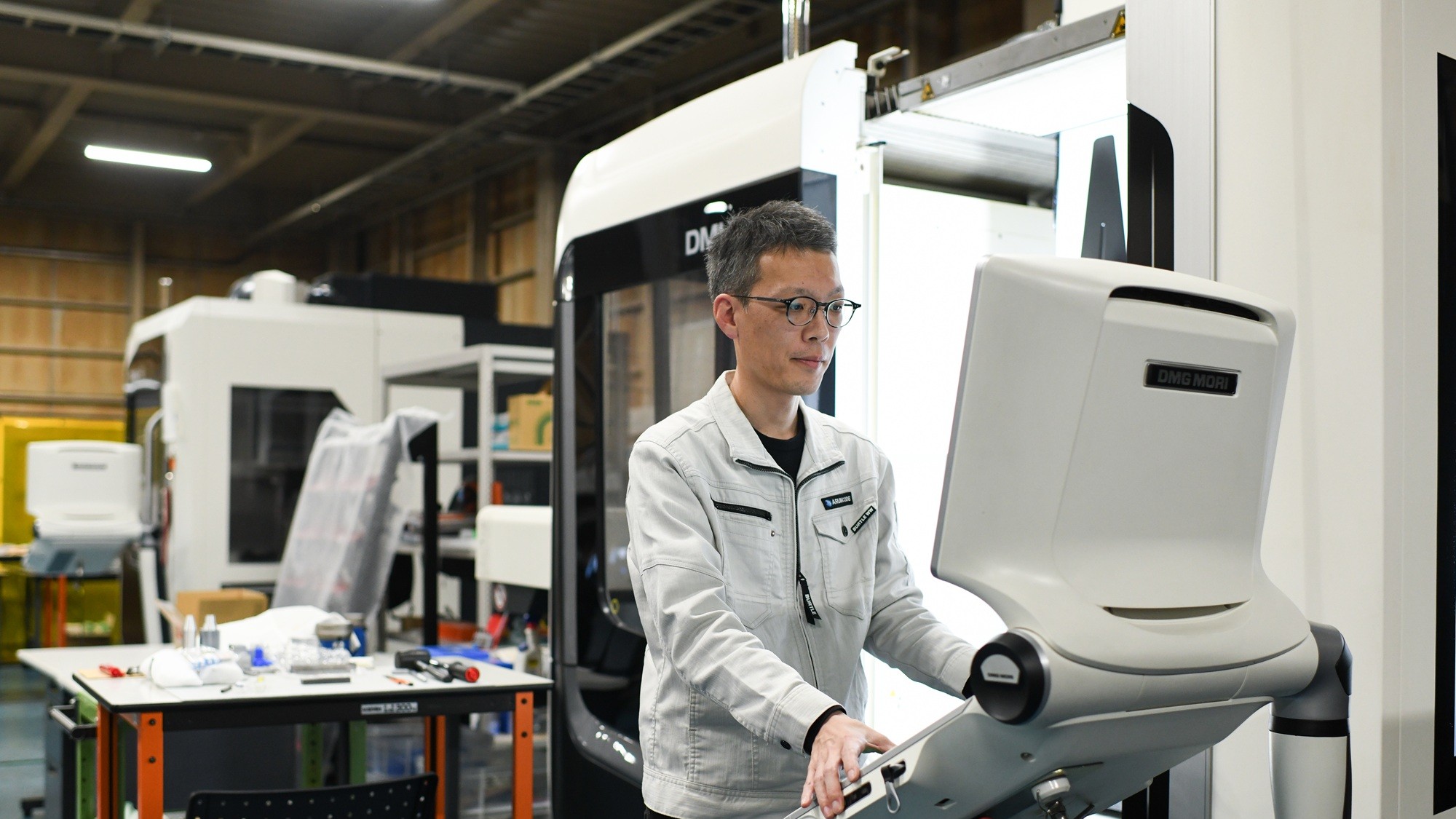
Microsoft’s own diffusion research, summarised in the video above, sits behind much of the 2026 report and shows how unevenly AI use is spreading across roles and regions. That unevenness is the through-line of the whole study, and it is why a blanket UK rollout rarely matches the glossy averages. Some teams race ahead while others barely log in, and the gap widens the longer it is left unmanaged.
What the Copilot usage data really shows
One of the more interesting disclosures is a privacy-preserving analysis of how Microsoft 365 Copilot is actually used. Microsoft reports that 49 per cent of Copilot conversations support cognitive work such as analysis, problem-solving and decision-making. The rest splits between working with people at 19 per cent, finding information at 15 per cent and producing finished work at 17 per cent. That is a useful corrective to the assumption that AI at work is mostly about churning out text. Nearly half of the use is thinking support, which is harder to measure and harder to fake on a slide.
It is worth being clear-eyed about the source. This is Microsoft measuring usage of a Microsoft product and concluding that the product is valuable, so the direction of the findings is never going to surprise. The signal that survives that bias is the shape of the usage rather than the volume: people lean on Copilot to reason, not just to write. UK firms weighing a rollout should test that claim against their own work. If your teams would mainly use AI for thinking and analysis, the report’s framing fits; if you want it for bulk content, you may get more from a focused tool, a question we tackle in our comparison of the best AI writing assistant in the UK for 2026.
What it means for UK hybrid work
Hybrid working in the UK has settled into an uneasy norm, with most office-based staff splitting their week between home and a desk, and employers periodically tightening attendance expectations. The Work Trend Index 2026 lands on top of that debate with an inconvenient implication: if culture and manager modelling drive most of the AI benefit, then the patchy, asynchronous nature of hybrid work makes it harder to spread good AI habits. You cannot easily lean over to watch a colleague use an agent when half the team is at home on a Tuesday. British managers therefore have to be more deliberate about demonstrating AI use in shared sessions rather than assuming it spreads by osmosis.
There is a productivity angle the UK cannot ignore. The country’s stubborn productivity gap with comparable economies has been a fixture of Treasury hand-wringing for over a decade, and AI is now routinely cited as a potential fix. The 2026 report suggests the tools can lift individual output meaningfully, but only where the organisation is built to absorb the change. That is a caution against expecting a software licence to solve a structural problem. The skills implication is equally pointed: the workers who pull ahead are not the most technical but the most willing to redesign their own tasks, and that is a training and culture challenge before it is an IT one. Our broader coverage of the AI-at-work theme, including the Microsoft Build 2026 keynote and its business impact, tracks how the tooling is evolving to support exactly this shift.
Data protection and Copilot: the ICO angle
No honest UK read of the report can skip data protection. When a Copilot conversation supports cognitive work, it often does so by drawing on internal documents, emails and chats, which means personal data and commercially sensitive material flow through the system. Under UK GDPR, employers remain the data controller for that processing, and the Information Commissioner’s Office expects organisations to carry out a data protection impact assessment for high-risk processing, to set a lawful basis, and to be transparent with staff about how their inputs are used. None of that is a reason to avoid Copilot, but it is a reason not to switch it on across an organisation without governance in place.

The practical checklist for a UK firm is short but firm. Confirm where data is processed and stored, check the tenant settings that control whether prompts can train models, restrict agent access to the documents a role genuinely needs, and keep an audit trail. The agent boss model raises the stakes here, because an agent acting semi-autonomously can touch more data faster than a person clicking through files. Sectors handling sensitive records, from healthcare to legal services, need the tightest controls, a theme we explore in our preview of Microsoft Copilot Health in the UK, where data handling is the whole ballgame.
Key takeaways at a glance
| Finding | Detail |
|---|---|
| Sample | 20,000 workers across 10 countries, plus anonymised Microsoft 365 signals |
| Fear of falling behind | 65% of AI users worry about being left behind without fast adoption |
| Rewarded for reinvention | Only 13% feel rewarded for redesigning work when outcomes miss targets |
| New work produced | 58% of AI users, rising to 80% of Frontier Professionals |
| Organisation vs individual | Culture and management drive roughly 67% of AI impact |
| Agent growth | 15x year on year in Microsoft 365, 18x in large enterprises |
| Copilot use mix | 49% cognitive work, 19% with people, 17% producing, 15% finding info |
| Published | 5 May 2026, via Microsoft WorkLab |
Where to check next in the UK
The report itself is free to read, but the decision most UK readers face is whether to commit budget to Microsoft 365 Copilot, and that means checking the right channels rather than acting on a headline. The full report sits on the Microsoft WorkLab site, and the licensing details live on the Microsoft UK store and through the established reseller channel. If you are pricing a rollout, compare the per-seat cost against the value framing in the report and confirm the current UK figure before you sign, as Microsoft adjusted its pricing in 2026.
For hardware that pairs with a Copilot deployment, mainstream UK retailers including Currys, John Lewis and Amazon UK stock business-ready Windows machines, and the Microsoft UK store sells Surface devices direct with business warranty options. Check delivery timelines, the returns window and whether business support is included before buying in volume. If a fleet refresh is on the cards alongside the AI rollout, our guide to Microsoft Surface for Business 2026 in the UK sets out what to verify on warranty and support tiers. For organisations weighing whether to standardise on a single AI assistant, it is worth reading widely first, including independent SME experience such as the lessons in our Code with Claude 2026 write-up from the London keynote before committing to one ecosystem.

What we like and what we would watch
| What we like | What we would watch |
|---|---|
| Honest framing of the worker-ready, firm-not paradox | The data measures Microsoft’s own product usage, so positive findings are unsurprising |
| Hard usage data behind the cognitive-work claim, not just sentiment | Frontier Professionals are a small 16% slice, so averages can flatter the typical user |
| Clear emphasis on management and culture over individual mindset | The agent boss model raises real UK GDPR and oversight questions that the report skirts |
Our verdict
Our view is that the Microsoft Work Trend Index 2026 is a more grown-up document than its predecessors, and UK leaders should read it as a management brief rather than a sales sheet. The strongest, most defensible finding is that culture and manager behaviour drive most of the benefit, which means the British firms that win with AI will be the ones that fix how teams work before they buy more licences. If you are a hybrid worker, the practical takeaway is to build agent-boss habits now, because supervising AI well is becoming a distinguishing skill. If you are an employer, we would not rush a blanket rollout: get governance and manager modelling in place first, then scale.
What would change our recommendation is independent evidence. Because the usage data comes from Microsoft measuring Microsoft, we would weight third-party productivity studies and your own pilot results more heavily than the report’s averages. Run a small, well-supported trial, measure the cognitive-work uplift against the 49 per cent claim, and only then decide whether the Frontier Firm framing fits your organisation. The report is a good map. It is not a substitute for checking the ground yourself.













Reader discussion
Leave a comment
Comments are moderated. Keep it useful, accurate, and on topic.