DJI ended the rumour phase on 16 April 2026. Its dated UK launch announcement put the Osmo Pocket 4 Standard Combo at £445, while on 14 July John Lewis lists the Pocket 3 at £329, reduced from £389. That changes the answer: the Pocket 3 is no longer the pocket gimbal to beat on capability. It is the model that can still make more sense when saving £116 matters more than the newer camera’s higher frame-rate ceiling, built-in storage and longer quoted runtime.
I do not think that demotes it to clearance-bin technology. At £329, the Pocket 3 remains a premium, specialised camera with an unusually coherent purpose. The honest case for buying it in 2026 is value within that premium tier, not a claim that DJI has failed to replace it.
The £116 gap is now the whole argument (Osmo Pocket 3)
1-inch CMOS, 14-stop dynamic range and 10-bit D-Log
Pocket 4
Maximum slow motion
4K/120fps
4K/240fps
Pocket 4
Subject tracking
ActiveTrack 6.0
ActiveTrack 7.0, including tracking at up to 4× zoom
Pocket 4
Quoted operating time
166 minutes
240 minutes
Pocket 4
Storage
No internal storage; microSD up to 1TB
107GB built in
Pocket 4
My buying call
Stronger value within its tier
Stronger camera and workflow
Pocket 4 overall; Pocket 3 on price
The runtime figures use controlled 1080p/24fps conditions with Wi-Fi and the screen off, so I would not treat either as an all-day promise. The useful conclusion is narrower: Pocket 4 has the higher technical ceiling, while Pocket 3 keeps £116 available for audio, storage or lighting.
Why the Pocket 3 still feels like one complete tool
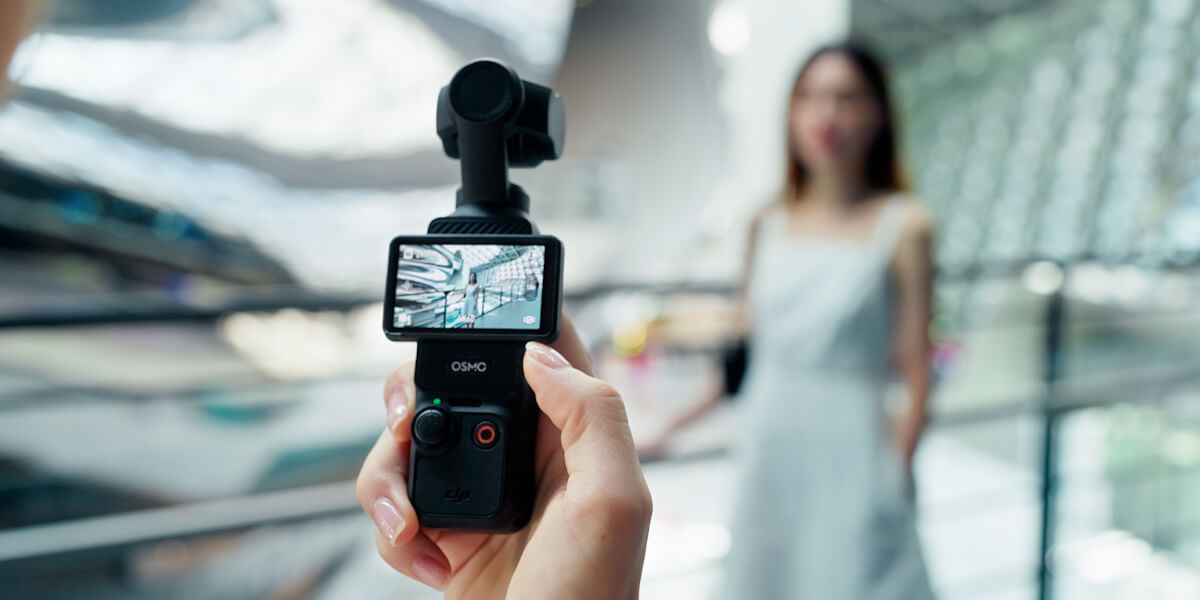
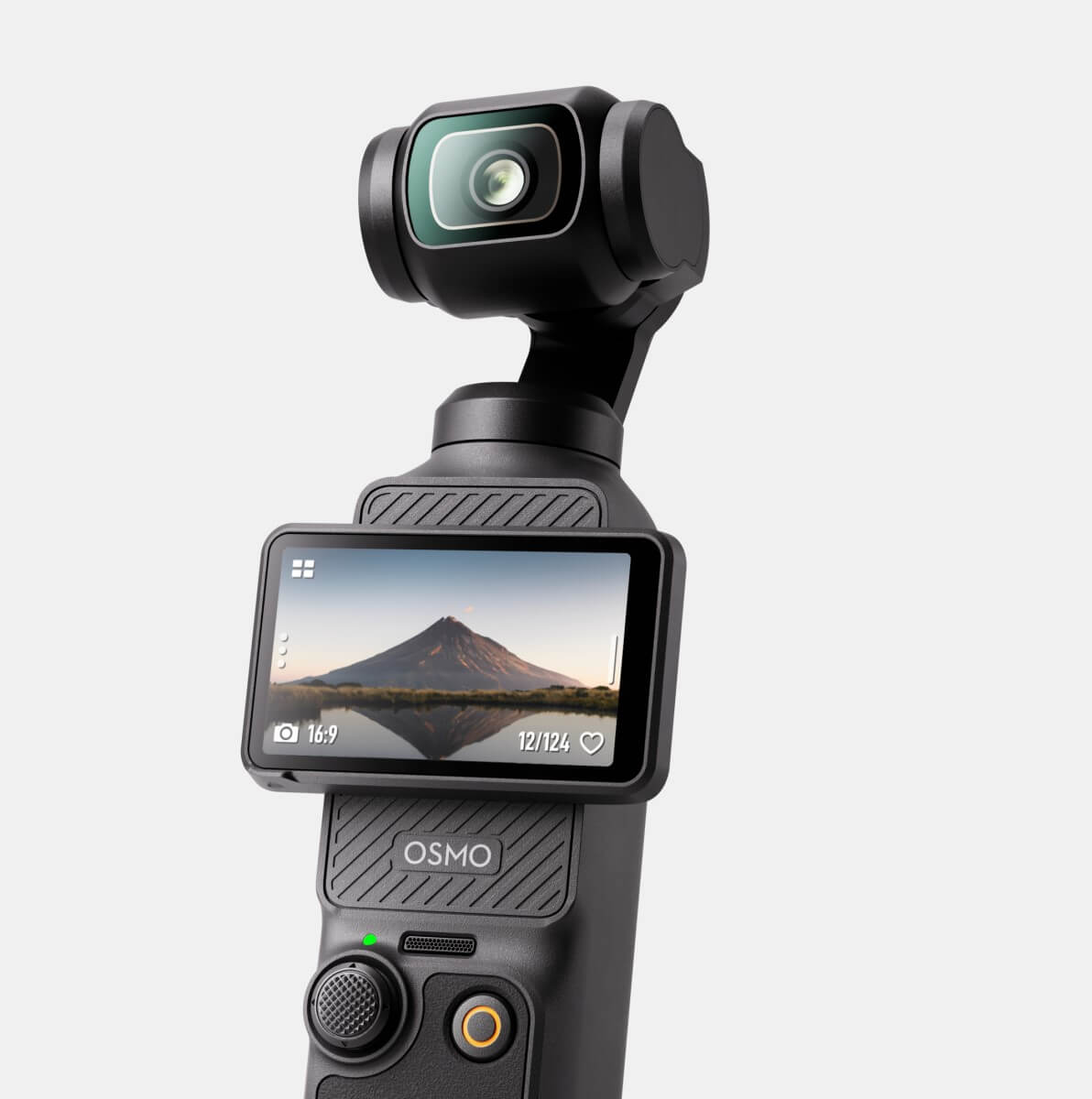
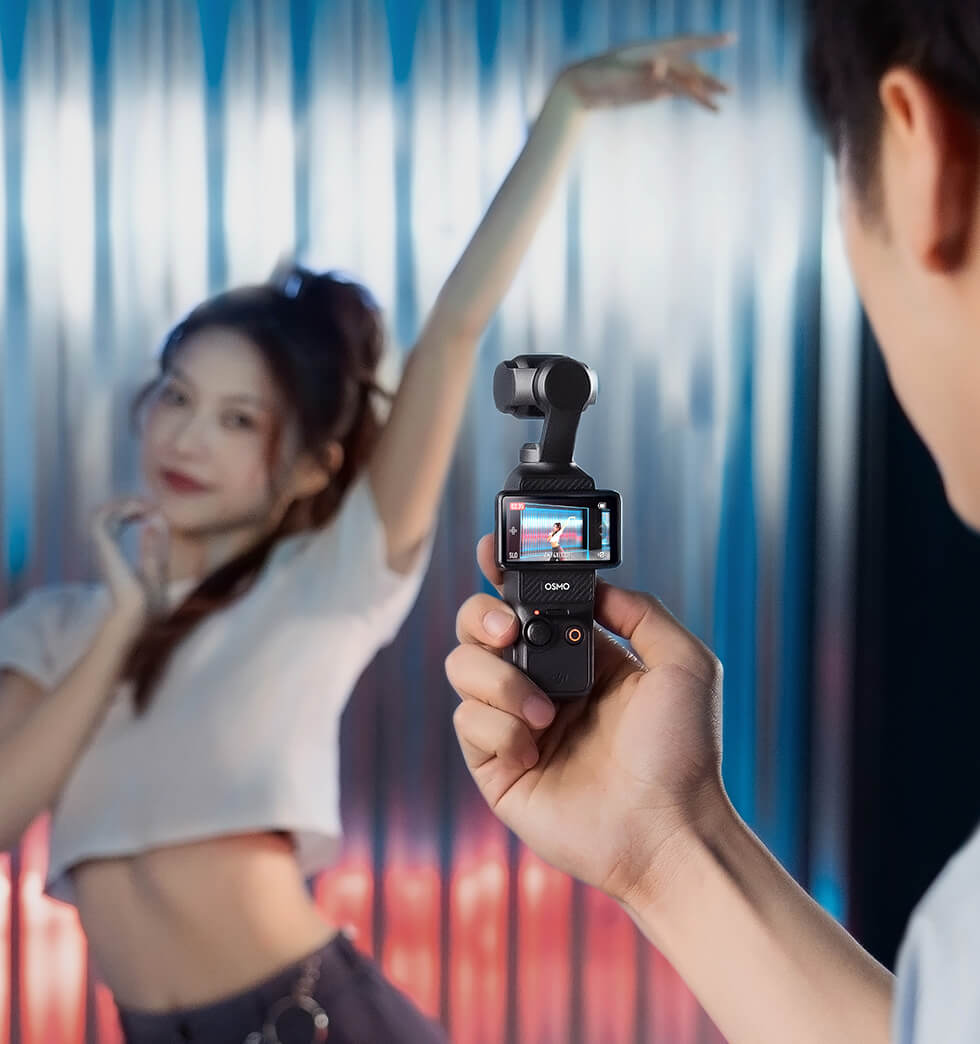
The Pocket 3’s appeal starts with its physical three-axis gimbal. Stabilisation is part of the composition rather than software applied after capture, while ActiveTrack 6.0 can keep a selected subject framed as the camera moves. Add the rotatable 2-inch touchscreen and the controls make sense for one-person filming: framing, tracking and stabilisation live in the same device instead of being split between a phone, an app and a separate mount.
Image: DJI
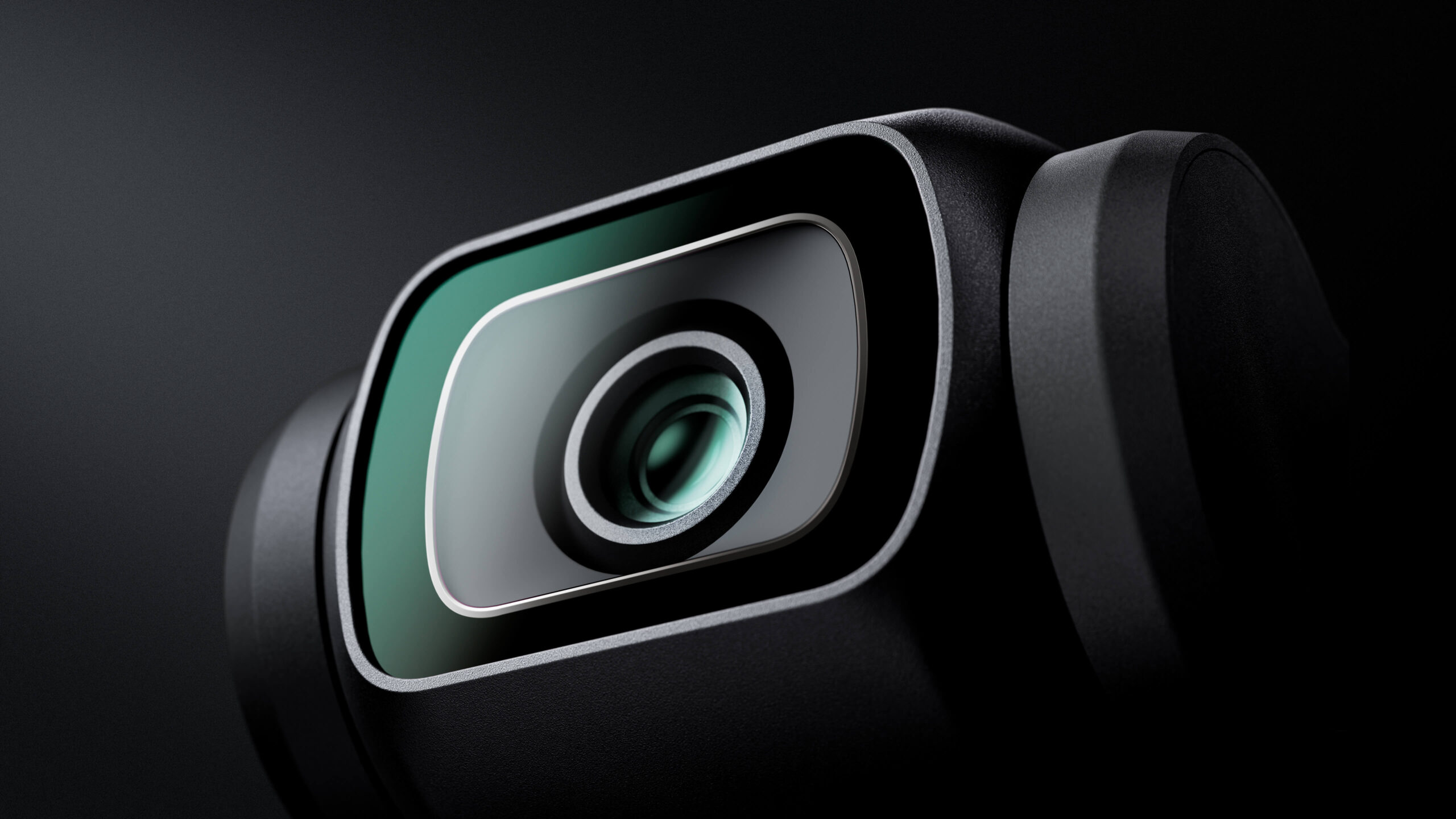
Its 1-inch CMOS sensor sits behind a 20mm-equivalent f/2.0 lens. I would not turn sensor size into a guarantee of lovely footage; exposure, focus and movement still decide whether a shot works. What matters is the design choice. DJI built a dedicated camera around the sensor and gimbal rather than asking a phone to become the camera, monitor, communications device and stabilisation computer simultaneously.
The recording modes also need sober reading. Normal 4K capture tops out at 60fps; 4K/120fps belongs to Slow Motion mode. The 179g body has no built-in storage, so a compatible microSD card is mandatory. Those are not hidden defects, but they are exactly the practical details that disappear when a buying decision is reduced to “1-inch sensor” and “4K/120”.
The Pocket 3 has stopped being the benchmark, but it has not stopped being a coherent camera.
Image: DJI
Where Pocket 4 earns the extra £116
The newer camera’s improvements are not cosmetic. DJI specifies 4K/240fps slow motion, 14 stops of dynamic range, 10-bit D-Log, ActiveTrack 7.0 at up to 4× zoom, 107GB of internal storage and as much as 240 minutes of 1080p/24fps recording under its controlled test conditions. It also adds dedicated zoom and custom-preset controls. That is a meaningful upgrade for creators who regularly move between locations and cannot afford storage or battery friction.
I would rank the built-in storage and higher quoted runtime above 240fps for most buyers. Extreme slow motion is a creative option; being able to start recording without finding a memory card is a workflow advantage every time the camera leaves its case. Pocket 4 is therefore the stronger default for a new system, not merely the model with the larger numbers.
The Pocket 3 bundle can still overturn the decision
AllThingsGeek’s deal report records the Pocket 3 Creator Combo between £405 and £419, against £329 for the Standard Combo. The 20 May 2026 AIToys page is useful as another dated record of the £329 price, but its suggestion that Pocket 4 was still merely rumoured had already been overtaken by DJI’s April launch. I would use that page as a price snapshot, not as authority on the current range.
DJI’s original launch material says the Pocket 3 Creator Combo adds a wide-angle lens, Mic 2 transmitter, battery handle, mini tripod and carrying bag. That package makes sense when those items have immediate jobs. If good audio and support kit are already in the cupboard, the Standard Combo is the cleaner purchase. The revealing comparison is that a £405–£419 Pocket 3 Creator Combo overlaps the £429 Pocket 4 Essential Combo, but includes different equipment; the bundle name cannot make that decision for you.
Image: DJI
Choose the camera category before choosing the generation
A phone gimbal remains a different purchase. My DJI Osmo Mobile 8P assessment explains the appeal when a phone should stay at the centre of capture. An action camera is different again: the Osmo Action 6 review is the relevant route when weather resistance and an action-camera form matter more than gimbal-led movement.
The HoverAir X1 ProMax shifts still more positioning work to a follow-camera. Pocket 3 instead keeps authorship in the hand while helping with tracking. I would decide which relationship I want with the camera before comparing specifications across those categories.
The support date is the Pocket 3’s awkward line
DJI’s specification page guarantees Pocket 3 software updates until 31 December 2026. “Guaranteed until” is a floor rather than an announced shutdown date, but it is the only promise a July buyer can bank. A premium camera may remain useful long after its last update, yet buyers relying on app compatibility, accessory support or workflow fixes should not pretend that the published date is irrelevant.
Image: DJI
That date is also why £329 should not trigger an impulse purchase. I would match the cost against work the camera can do now, with its current features and support terms. If the use case is vague, Pocket 4’s arrival removes any reason to buy the older model simply because it was once the category leader.
I’d buy the Pocket 3 for a job, not for its old crown
I would choose the £329 Pocket 3 Standard Combo if I already had suitable audio, needed a dedicated gimbal camera now and knew that 4K/60fps, 4K/120fps slow motion and ActiveTrack 6.0 covered the brief. I would choose the Creator Combo only when its microphone, battery handle and support kit replaced purchases I was already going to make. For a new system with room in the budget, Pocket 4’s storage, runtime and imaging upgrades justify its £116 premium.
So, no: the Pocket 3 is not still the UK pocket gimbal to beat on specification. It is something more defensible than that — a mature premium camera whose £329 price can still beat its successor for the right, immediate piece of work.
Buyer action
Where to buy or check next
Use this as the final check before ordering a phone, changing network or trusting a headline monthly price.
We use cookies to make this site work, measure how it is used, and (with your consent) personalise advertising. Strictly necessary cookies always run. Analytics and advertising cookies run only if you accept. See our Cookie Policy and Privacy Policy.
MobileTechWorld Ltd — Companies House registration 16224011. Independent UK technology publisher since 2009.


Reader discussion
Leave a comment
Comments are moderated. Keep it useful, accurate, and on topic.