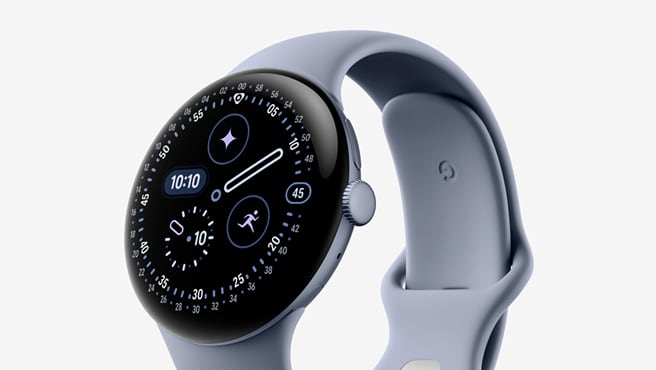
The Google Pixel Watch 4 is the first Pixel wearable you can actually get repaired, and for UK buyers weighing a £349 starting price that single change reframes the whole decision. Announced at Google’s Made by Google event on 20 August 2025 and on sale since 9 October, the watch pairs a raise-to-wake Gemini assistant with Fitbit health tracking and, on the LTE models, calls and texts on EE or Vodafone without your phone in the room. On store.google.com the 41mm starts at £349, the 45mm at £399, and Currys lists the 4G LTE editions from £449 (last checked: 2026-06-12). This review is grounded in Google’s published specifications and current UK pricing rather than a fresh lab teardown, and our buyer notes are flagged as such throughout.
- Price (UK): 41mm from £349, 45mm from £399, 4G LTE from £449 on store.google.com and Currys (last checked: 2026-06-12).
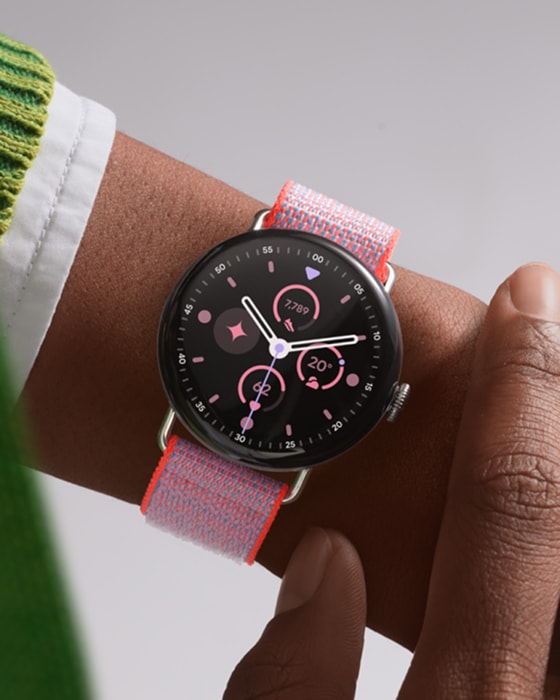
- Display: domed Actua 360 LTPO AMOLED, 3,000 nits peak, Corning Gorilla Glass, per Google’s spec sheet.
- Battery: Google quotes 30 hours (41mm) and 40 hours (45mm), with Battery Saver stretching to two and three days.
- Repairability: Google says the Pixel Watch 4 is the first serviceable Pixel Watch, with a replaceable battery and display.
- Connectivity: Wear OS 6 with Gemini; LTE via EE and Vodafone OneNumber plans from about £7.50 a month.
Why the Google Pixel Watch 4 matters for UK buyers
For three generations the knock against Google’s wearable was that a flat battery meant a landfill watch. Google’s own launch post calls the Pixel Watch 4 the first serviceable model, with a replaceable battery and display, and that is the headline that should move a UK buyer more than any new watch face. A smartwatch you can keep alive past its two-year warranty changes the value maths, especially at £349. It is the kind of structural shift we flagged when Google reset its software roadmap in our Android 17 guide for UK Pixel owners, and it lands alongside the wider Wear OS 7 rollout with Live Updates and tiered Gemini.
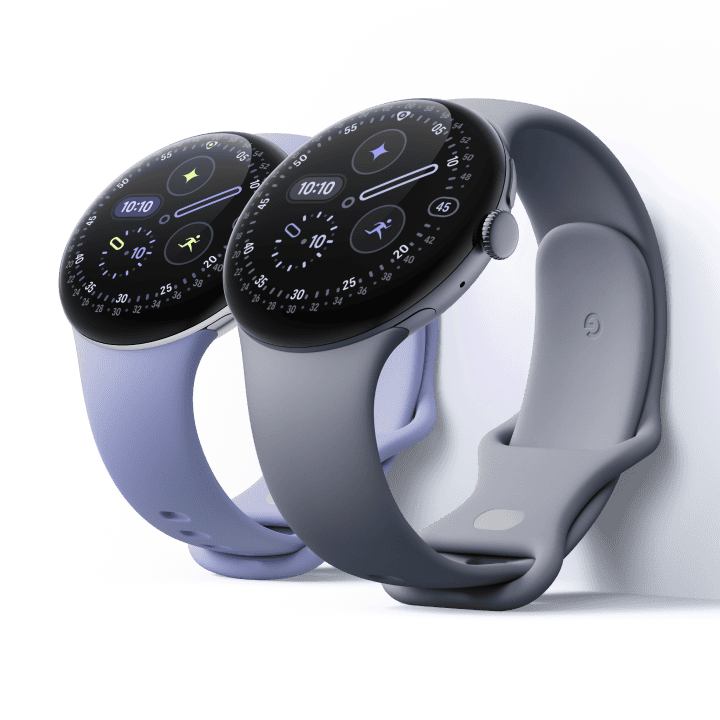
The second reason to care is Gemini. Google has moved its assistant onto the wrist so a raise of the arm gets you on-the-go answers, reminders and message replies without unlocking a phone. That is a meaningfully different proposition from the canned voice commands of older smartwatches, and it slots into the same Gemini story we tracked across the ecosystem in our look at the Gemini Intelligence Android rollout for UK Pixel and Galaxy owners. If you have already decided Google’s assistant is worth paying for, our UK verdict on whether Gemini is worth it is the natural companion read before you commit to the hardware.
Specifications at a glance
The numbers below come from Google’s published Pixel Watch 4 spec pages and GSMArena’s listing. The headline upgrades over the Pixel Watch 3 are the brighter domed display, the longer battery and the serviceable build. From our buyer notes, the spec that matters most day to day is the 3,000-nit peak brightness, because a watch you cannot read in June sunshine is a watch you stop wearing.
| Spec | Pixel Watch 4 |
|---|---|
| Sizes | 41mm and 45mm |
| Display | Domed Actua 360 LTPO AMOLED, 3,000 nits peak, Gorilla Glass |
| Resolution (45mm) | 456 x 456 |
| Chip | Qualcomm Snapdragon W5 Gen 2 (4nm) |
| Memory | 2GB RAM, 32GB storage |
| Battery life | 30h (41mm) / 40h (45mm); Battery Saver up to 2-3 days |
| Fast charging | 50% in roughly 15 minutes |
| Software | Wear OS 6 with Gemini |
| Durability | IP68, 5ATM (50m), aerospace-grade aluminium, ECG-certified |
| Connectivity | Wi-Fi, Bluetooth, NFC, dual-band GPS; LTE optional |
| UK price | From £349 (41mm), £399 (45mm), £449 LTE |
One genuine first for the category: Google says the Pixel Watch 4 supports standalone satellite communication for emergencies, the first smartwatch to do so. UK availability of that feature depends on network and regulatory rollout, so treat it as a forward-looking safety net rather than a reason to buy today. We will update this review when Google confirms the UK switch-on date.
Health and fitness: the Fitbit layer
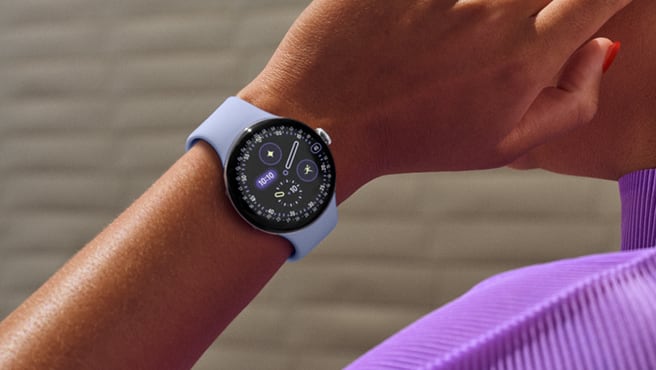
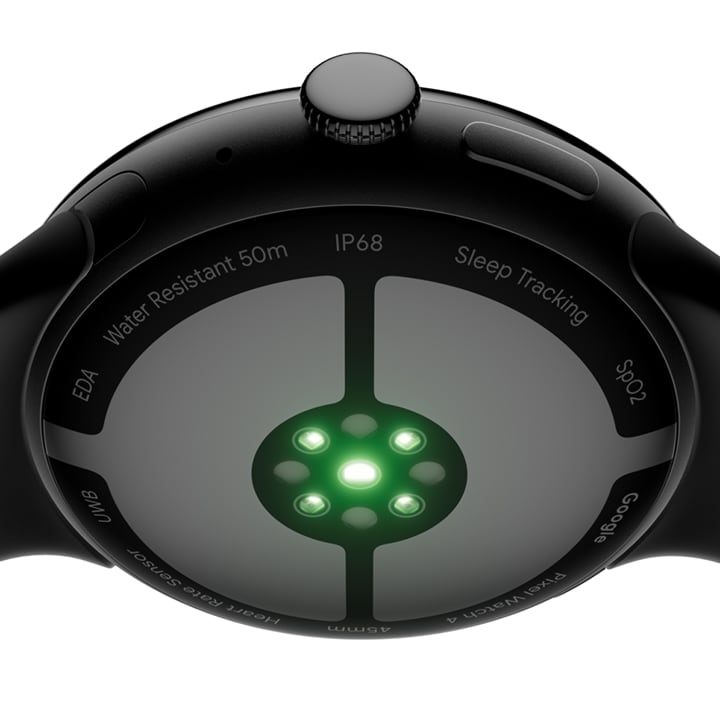
Health is where the Pixel Watch 4 earns its keep. The watch runs Fitbit’s tracking stack natively, covering heart rate, SpO2, skin temperature, a continuous electrodermal activity sensor for stress, ECG and sleep staging. Google pitches a new AI health coaching layer that reads your readiness and nudges training load, though the deepest coaching features sit behind a subscription. We pulled apart that paywall in our guide to Google Health Premium in the UK and what ties Pixel Watch and Fitbit together, and it is worth reading before you assume every health feature is free out of the box.
From our buyer notes, the practical question is not whether the sensors are accurate, Google’s hardware has been solid here for two generations, but whether you will use the data. If you want structured training plans and recovery scores, the Fitbit and Health Premium combination is competitive. If you only glance at steps and a sleep score, you are paying for a platform you will barely touch, and a cheaper band would do. That trade-off is the same one we weighed against rivals in our Huawei Watch GT 6 review, where battery life beats software depth.
The serviceable battery is the real story: a smartwatch you can keep past year two changes the £349 maths more than any new watch face.
Battery and real-world use
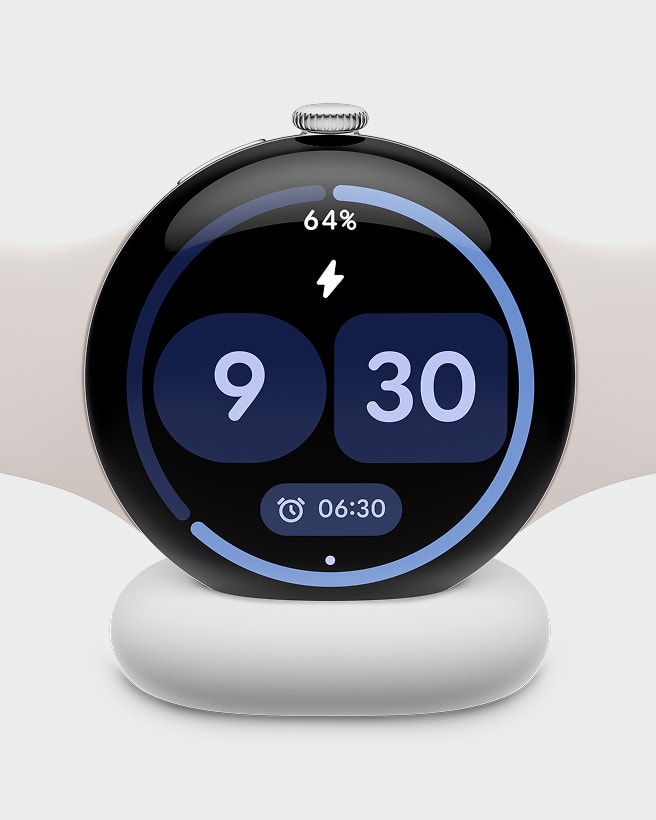
Google quotes 30 hours on the 41mm and 40 hours on the 45mm with the always-on display active, rising to two and three days respectively in Battery Saver. In practical terms that means the 45mm comfortably clears a day plus an overnight sleep track before it needs the puck, while the smaller 41mm is closer to a charge-every-night device if you keep the screen always on. Fast charging softens the blow: Google says roughly 50% in about 15 minutes, so a shower-length top-up is enough to get through a night of sleep tracking.
This is the area where Apple and Samsung still trade blows with Google, and the gap is narrower than it was. If multi-day endurance is your priority over apps and assistant smarts, the comparison shifts, which is exactly the calculus we ran in our Galaxy Watch 8 versus Apple Watch Series 11 face-off. Android users cross-shopping the Samsung side should also read our Samsung Galaxy Watch 8 UK pricing breakdown before deciding.
LTE on UK carriers: EE, Vodafone and O2
The LTE editions are the ones that justify the step up to £449, because they let the watch take calls, texts and music when your phone is at home. In the UK the official OneNumber partners are EE and Vodafone, which mirror your existing mobile number onto the watch rather than charging for a separate line. Vodafone lists its OneNumber connectivity from around £7.50 a month, and EE bundles its watch plans into pay-monthly wearable contracts. O2 has historically lagged on Pixel Watch eSIM support, though it now carries a Pixel Watch 4 page, so confirm activation with O2 directly before you buy the LTE model expecting it to work on that network.
From our buyer notes, most people should buy the Wi-Fi model and save the £100. LTE only earns its premium if you genuinely run, cycle or commute without a phone. If that is you, budget the watch plan into your monthly carrier bill, not just the upfront price, because OneNumber fees add up over the two years you are likely to keep the watch. For broader UK carrier context on EE and Vodafone, our BT versus EE versus Vodafone deals roundup is a useful primer on how those networks price add-ons.
Who should buy it and who should skip
Buy the Pixel Watch 4 if you own a Pixel or other Android phone, want Gemini on your wrist and value Fitbit’s health depth, and like the idea of a watch you can actually have serviced. The 45mm Wi-Fi model at £399 is the sweet spot for most readers: bigger screen, longer battery, no carrier fee. Skip it if you are on an iPhone, where the Apple Watch remains the only sensible pick, or if you want multi-day battery above all, where a Garmin or a Huawei wearable will outlast it by days.
Budget-minded Android buyers should also pause. If your phone is a cheaper Pixel, the watch can cost more than the handset, a mismatch we noted in our Pixel 10a value review. In that case a fitness band covers 80% of the use for a fraction of the spend. The Pixel Watch 4 is a premium buy that rewards people who will lean on the assistant and the health platform, not a default upgrade for every Android owner.
Where to buy or check next in the UK
- store.google.com/gb: 41mm from £349, 45mm from £399, LTE from £449, with up to £75 trade-in and £14.54/month financing (last checked: 2026-06-12).
- Currys: stocks the full 41mm and 45mm range including 4G LTE editions, frequently the place to find a bundle discount (last checked: 2026-06-12).
- Argos: carries the 45mm Wi-Fi model for quick collection, handy if you want it the same day (last checked: 2026-06-12).
- Amazon UK: lists the 45mm Wi-Fi model and routinely discounts it below RRP around sale events (last checked: 2026-06-12).
- EE and Vodafone: the two confirmed OneNumber LTE partners, with watch connectivity from around £7.50 a month on Vodafone (last checked: 2026-06-12).
Our verdict on the Pixel Watch 4
The Pixel Watch 4 is the most complete Android smartwatch Google has made. The brighter domed display, the longer 45mm battery and the genuine repairability fix the three complaints that dogged earlier models, and Gemini plus Fitbit gives it a software edge no rival quite matches on Android. It is not perfect: the 41mm is still a daily-charge watch with the screen always on, the best health coaching sits behind a subscription, and LTE only makes sense for phone-free athletes. But at £349 to start, with a battery you can replace, it is the Android wearable we would point most readers towards. Buy the 45mm Wi-Fi at £399 and you get the best of it without the carrier tax.
Our score: 8.5/10













Reader discussion
Leave a comment
Comments are moderated. Keep it useful, accurate, and on topic.