News

EE Scam Guard launches AI Triple-Lock to fight UK mobile fraud

EE Scam Guard launches 29 April 2026 with AI Triple-Lock fraud protection at £2 a month. What it blocks, what it misses, and how it stacks up in the UK.

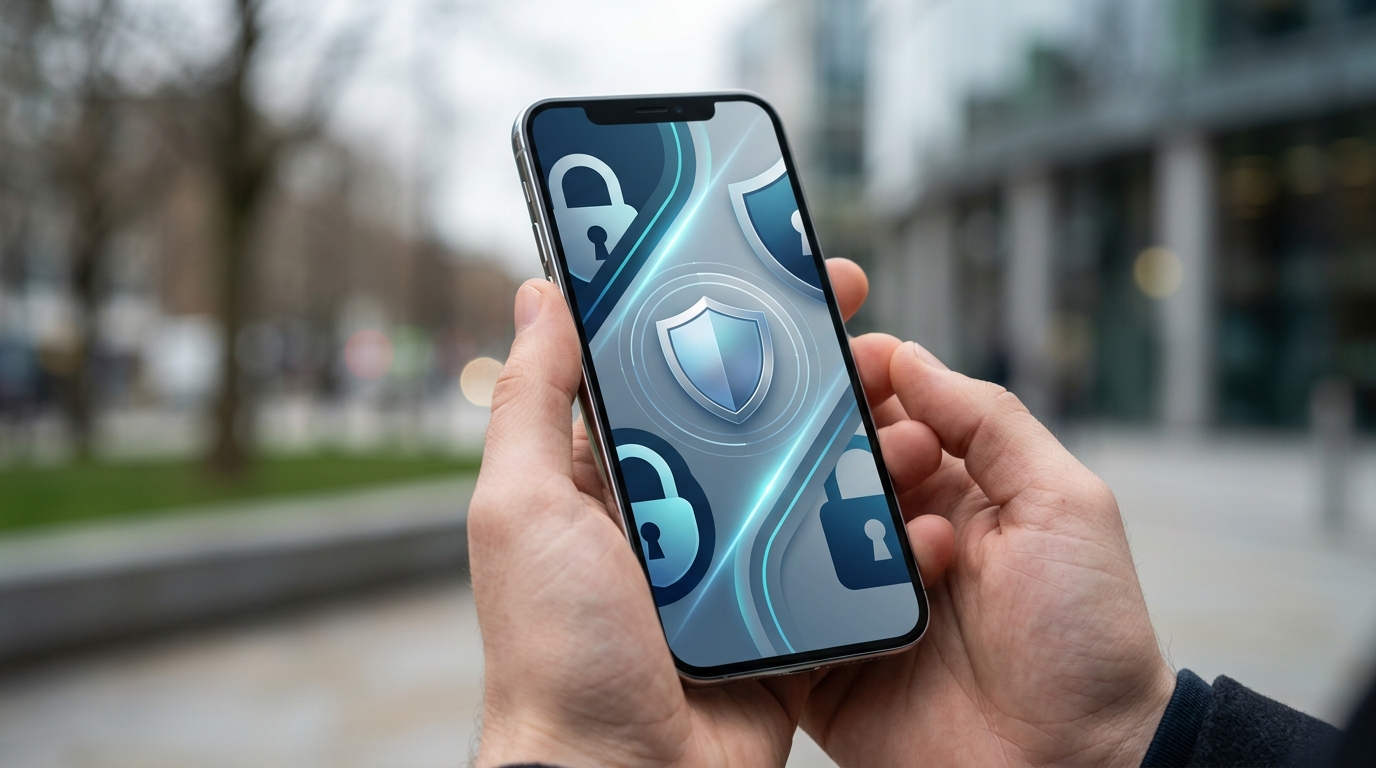
EE Scam Guard UK AI Triple-Lock fraud protection hero

IMAGE CREDITS: IMAGE: EE

EE Scam Guard is the 29 April 2026 launch that puts a paid £2 monthly add-on between EE pay monthly customers and the UK’s record fraud wave. EE announced the service as a Norton Genie AI-powered “Triple-Lock” of Safe Email, Safe SMS and Safe Web, sold alongside existing free network call-labelling and Cifas identity monitoring.

Key facts
  • EE Scam Guard launched 29 April 2026, costs £2 per month on a 30-day rolling add-on, and is open to EE pay monthly mobile customers.
  • “AI Triple-Lock Protection” is three Norton-powered layers: Safe Email, Safe SMS and Safe Web, the latter scanning links opened on the device.
  • EE cites Cifas reporting that “444,000 cases were recorded to the National Fraud Database in 2025, the highest number ever recorded in a single year, and a 6% increase on 2024”.
  • Universal free defences still apply on every UK network: report suspicious SMS to 7726 and suspicious calls to 7726 (free) regardless of carrier.

EE Scam Guard and the UK fraud number it’s pitching against

EE’s release leads with a Cifas figure: 444,000 cases logged to the National Fraud Database in 2025, “the highest number ever recorded in a single year, and a 6% increase on 2024”. Malcolm Cubitt, EE’s Director of Product, Mobile, says “fraud in the UK is at a record high, with AI making scams more convincing and harder to detect”. That is the entire pitch: AI on AI, and EE wants £2 a month to broker it.

EE Scam Guard UK AI Triple-Lock fraud protection hero
Image: EE

For context on the industry side, Mobile UK’s National SMS Fraud Tracker, launched 10 February 2026, put the cumulative UK total at “2,831,725,191 scam SMS messages” blocked as of its Q1 2026 update on 27 April 2026. That is the baseline of free, network-level filtering EE customers already benefit from before any Scam Guard subscription. The question is whether the new paid layer earns its keep, and we covered the underlying network economics in our piece on EE 5G+ expansion across the UK.
What the AI Triple-Lock actually does, layer by layer

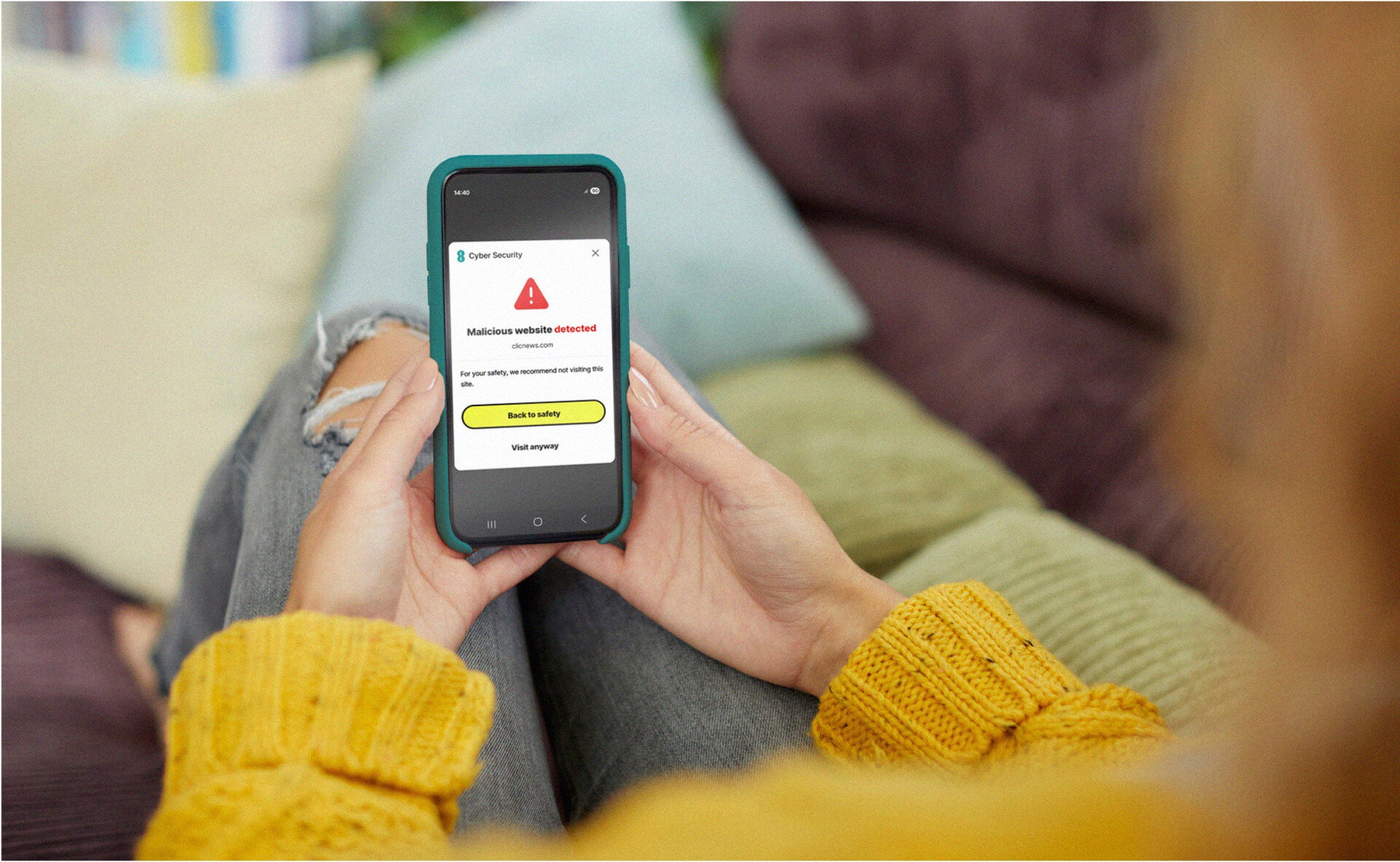
The “Triple-Lock” branding maps to three Norton-powered components. Safe Email scans messages in supported inboxes and flags suspected phishing. Safe SMS adds a similar check to texts arriving on the device. Safe Web inspects links the customer is about to open and warns before the page loads. The AI engine doing the work is Norton’s Genie, and EE positions the bundle as complementary to its existing free Call Labelling, which puts a “Likely Scam” or business-verified badge on incoming voice calls at the network layer.

iPhone 17 in bright style next to EE Scam Guard fraud protection
Image: Apple

Crucially, EE’s press release does not specify iOS versus Android coverage in detail, nor does it claim the AI inspects encrypted content inside third-party apps. That is the line where any operator-level scam protection stops on a modern phone. WhatsApp, Signal, iMessage and Telegram traffic is end-to-end encrypted between endpoints; we have explored that boundary before in our coverage of iOS 26.5 RCS encryption. The honest framing is that EE’s Scam Guard claims to block scams that arrive through SMS, email and the open web, not anything happening inside an encrypted chat.

Video: EE

How EE Scam Guard compares to O2, VodafoneThree and free UK defences

The UK rivals already have their own pieces of this. Virgin Media O2 runs Call Defence (network-level scam call blocking) and pushes the cross-network 7726 short code for reporting suspicious SMS, which works on every UK mobile network at zero cost. VodafoneThree, post-merger, has been running its own scam-call and SMS filtering and is folding the two legacy networks’ fraud teams together (we tracked that ownership shift in Vodafone’s full takeover of VodafoneThree). Most of the call-level work happens for free on the network whether the customer pays for an add-on or not.

None of this replaces basic hygiene. The Financial Conduct Authority’s ScamSmart guidance and the Information Commissioner’s Office published advice on nuisance and scam communications are the regulator-side reading that any UK mobile customer should bookmark. Our own roundup of the best password managers for 2026 covers the credential layer most phishing campaigns are ultimately trying to harvest, and the hardware security key argument applies just as cleanly to a banking app as it does to an AI account.

iPhone Air 48MP camera used for EE Scam Guard era fraud protection
Image: Apple

Where EE Scam Guard realistically helps, and where it doesn’t

Be specific about the wins. Network-level call labelling, the SMS layer of Triple-Lock, and email scanning in supported mail apps are genuinely useful against the largest UK fraud volume: cold scam calls and bulk SMS impersonating delivery firms, HMRC and banks. EE bundling Cifas identity monitoring and breach alerts is the part of the package that arguably justifies the £2 on its own. The reuse of Norton’s Genie engine, rather than a bespoke EE model, is sensible: Norton sees a much bigger global telemetry feed than any single UK telco could build alone.

Now the gaps, because they matter. Scam Guard, by EE’s own description, scans SMS, email and the open web. It does not, and cannot, read end-to-end encrypted chats inside WhatsApp, Signal, iMessage with iMessage-to-iMessage, encrypted RCS, Telegram secret chats, Instagram DMs or Messenger encrypted threads. That is precisely where modern UK scam traffic is migrating, especially “Hi Mum” family-impersonation fraud on WhatsApp, romance and crypto scams on Instagram and Telegram, and marketplace fraud on Facebook Marketplace chat. Any UK operator selling AI scam protection in 2026 needs to be transparent that the most dangerous attack surface sits inside apps the network simply cannot inspect.

iPhone Air focus control for UK fraud-aware phone buyers
Image: Apple

The second honest caveat: AI filtering is a probability game. Norton’s Genie will catch a high share of obvious phishing, but advanced AI-generated scam emails and voice clones are explicitly designed to slip past statistical classifiers. EE’s own Cubitt quote (above) concedes AI is “making scams more convincing and harder to detect”. That is not a flaw in Scam Guard; it is a reality of the cat-and-mouse, and any UK reader thinking a £2 add-on means they can stop reading messages carefully is misreading the product.

What UK buyers should actually do this week

Start with the free layer. Forward suspicious texts to 7726 on any UK network. Report scam calls to the same code. Use the NCSC’s Suspicious Email Reporting Service (forward to [email protected]) for phishing emails. None of this costs anything and all of it feeds the data set EE, O2 and VodafoneThree’s filters are drawing from. Our guide to privacy-first mobile workflows walks through the wider data-minimisation routine that makes most of these scams harder to land in the first place.

iPhone Air bright photographic style for EE Scam Guard reader
Image: Apple

Then assess the paid layer on its own terms. £2 per month is £24 a year, materially less than standalone Norton 360 or LifeLock-style identity products, and Cifas is the genuine extra. If a household already pays for antivirus or a password manager with dark-web monitoring, the marginal benefit shrinks; if not, EE Scam Guard plus 7726 reporting plus careful behaviour inside encrypted apps is a credible setup, not a substitute for staying suspicious.

MTW verdict

EE Scam Guard is the most fully-marketed of the UK carrier anti-fraud offers, and the Cifas identity element alone justifies the £2 for households without other protection. But the Triple-Lock branding flatters what is, in practice, Norton filtering on SMS, email and web links, not anything happening inside the encrypted apps where most aggressive UK scams now live. Pay if you want one bill instead of two, keep using 7726, and assume the AI is a helper, not a guarantee.

UK networkHeadline protectionMTW read
EE Scam GuardNorton-powered Safe Email, SMS and Web. £2/month add-on. Pay monthly only.Most marketed of the three. The £2 is the clean question: is the email/web piece worth paying for, given third-party apps already do similar?
Virgin Media O2 Call Defence + 7726Free network scam-call blocking. Universal 7726 SMS reporting.Pragmatic baseline. Costs nothing. Reporting to 7726 feeds the same industry block-list EE benefits from.
VodafoneThree fraud filtersNetwork-level SMS and call filtering integrated post-merger.Quieter, but the merged scale should make it the largest single dataset in UK mobile by year end.

Buyer action

Where to buy or check next

Use this as the final check before ordering a phone, changing network or trusting a headline monthly price.


Stay in the loop

Get MTW reporting, reviews, guides, and buying advice in your inbox.

Subscribe

Reader discussion

Leave a comment

Comments are moderated. Keep it useful, accurate, and on topic.

Join the discussion

Your email address will not be published. All comments are held for moderation.

Spam protection

Keep reading

Today on MTW

The latest stories moving through the newsroom.