Choosing the best home EV charger UK 2026 buyers can plug in at the kerb just got more interesting. From 1 April 2026 the OZEV chargepoint grant jumps from £350 to £500 for renters, flat owners and on-street parkers, while a separate £25 million cross-pavement gully fund finally lets terraced-street drivers run a cable across the public footpath. Homeowners with a private driveway no longer get a penny. This guide separates the grant rules, install economics and buyer types so you can match the right 7kW box to your kerb, your wallet and your tariff.
Table of Contents
Table of contents — the best home ev charger uk 2026 angle
TL;DR: our home EV charger picks for spring 2026 — the best home ev charger uk 2026 angle
- Best overall: Ohme Home Pro at £999 fitted, the screen-equipped tethered box with a clear tariff-integration pitch.
- Best smart-tariff and solar pick: myenergi Zappi from £779 hardware, especially if you already have or plan solar.
- Best budget: Hypervolt 3 Pro, for buyers who want a slick app without the Ohme price tag.
- Best for grant-eligible buyers: Pod Point Solo 3 or Wallbox Pulsar Plus, paired with the £500 OZEV grant.
- Best add-on: Kerbo Charge from £999 fitted, the cross-pavement gully system for households without driveways.
The £500 grant rise: who actually qualifies in 2026
The £500 grant is paid as a lump sum once an OZEV-authorised installer fits a qualifying 7kW (or 22kW) charger. It is restricted to renters, flat owners (freehold or leasehold) and households reliant on on-street parking. If you own a house with a private driveway, that route closed when the Electric Vehicle Homecharge Scheme retired. You self-fund.
The grant covers up to half of a typical £800 to £1,500 install. Your installer must be OZEV-authorised, which overlaps with NICEIC and ECA-registered firms but is not automatic; ask. Leaseholders also need written permission from the freeholder, so allow a fortnight for admin. As we covered in our real cost of owning an EV in 2026 explainer, it is the only major UK EV subsidy you pocket up front rather than reclaim through tax. See also why your next car purchase should start with the charging plan.
Best overall: Ohme Home Pro at £999 fitted
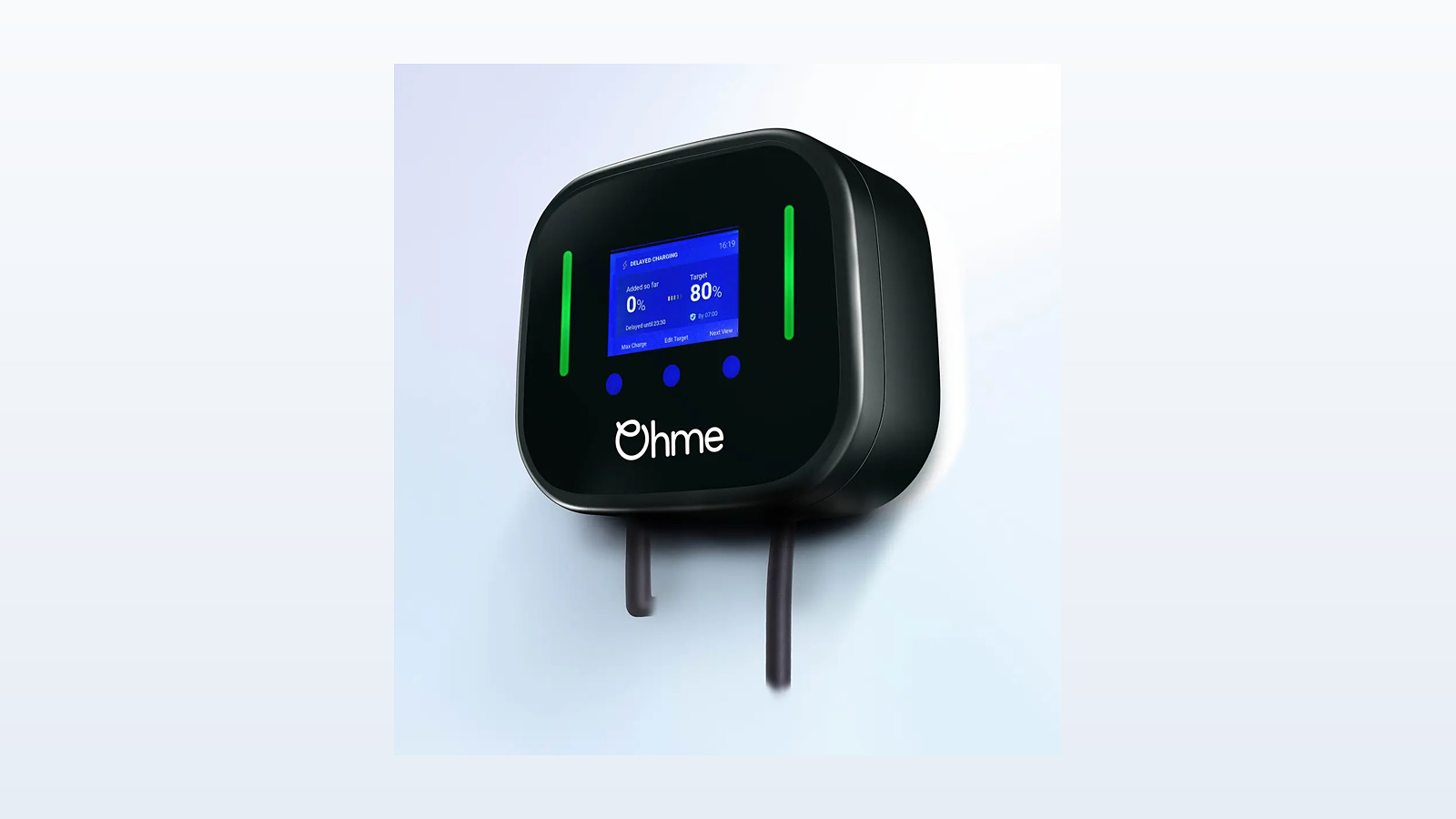
Buy the Ohme Home Pro if you want a charger that quietly does its job for the next decade. At £999 including standard install by an Ohme-approved partner, it bundles a 7.4kW (32A) tethered 5m Type 2 cable with a small colour LCD. That screen is the practical advantage: you can verify the schedule at a glance without unlocking your phone in the rain.
Tariff support is Ohme’s real strength. The app reads cheapest slots from Octopus Agile, Intelligent Octopus, EDF GoElectric, OVO Charge Anytime and smaller fixed EV tariffs. Set a target battery percentage and a ready-by time; the box hits it. The useful confirmed point is tariff support: Ohme says the Home Pro is compatible with all energy tariffs and promotes dynamic charging technology. Cons: the 5m tethered cable is non-negotiable, and the matte plastic body is not the prettiest box on a wall.
Best smart-tariff integration: myenergi Zappi v2.1
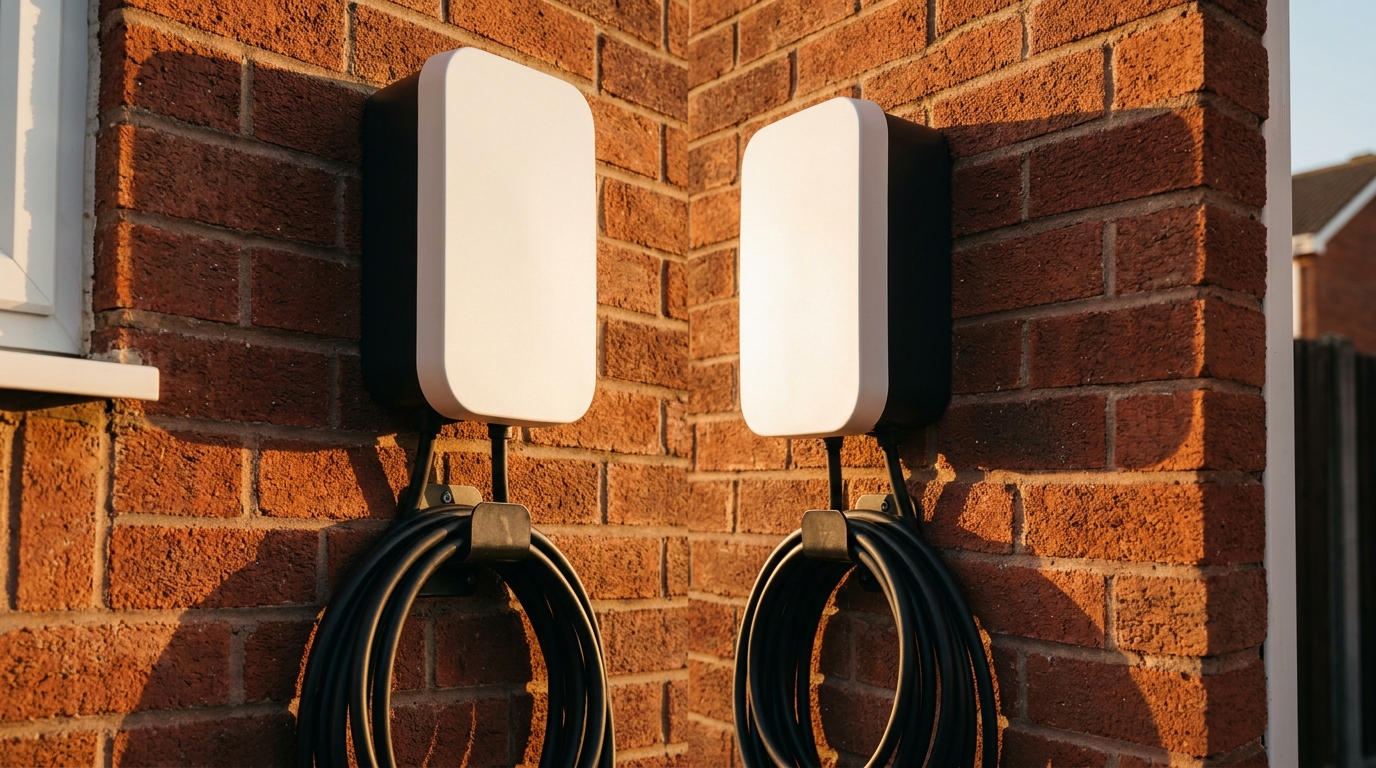
If you have or plan to install solar PV or a home battery, the myenergi Zappi v2.1 is the charger to buy. Hardware starts at £779 inc VAT for the 7kW single-phase unit before a typical £350 to £500 install, so all-in lands around £1,150 to £1,300 self-funded. The £500 grant cuts that meaningfully if you qualify.
ECO+ is the mode you buy a Zappi for. It diverts surplus solar that would otherwise be exported to grid into your EV, giving free miles when the sun is out. Combine ECO+ with Octopus Intelligent and the algorithm fills remaining demand from cheap overnight slots. On the right solar setup, Zappi can divert surplus generation into the car instead of exporting it, but the saving depends on array size, driving pattern, season and tariff. Cons: the built-in display is fiddly versus Ohme’s LCD, and the myenergi app looks like an electrician designed it. If your home broadband is unreliable, fit the Ethernet port.
Best budget: Hypervolt 3 Pro
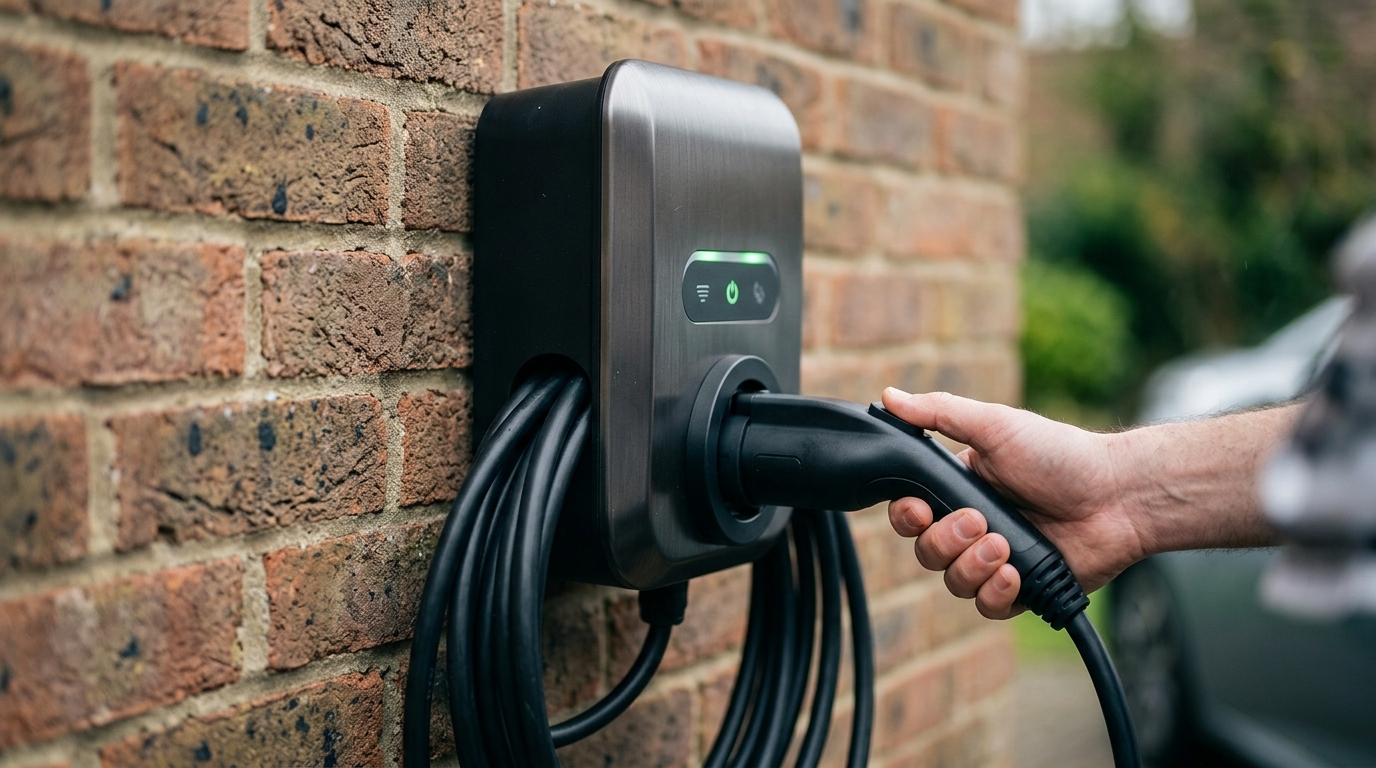
The Hypervolt 3 Pro is a curveball pick: priced closer to mid-market but consistently undercutting Ohme once install is bundled. The styling is the best of the bunch (slim brushed-steel body, RGB charge ring you can dim or kill), and the app is the cleanest in UK EV charging. British-designed, three-year warranty, sold through John Lewis, Currys and Hypervolt’s direct install network.
Why budget rather than overall? Tariff list. Hypervolt supports Octopus Intelligent, Octopus Agile and a handful of fixed EV tariffs, but lags Ohme by a release or two when new tariffs launch. If you are on Octopus and not switching, that gap is academic. If you might move suppliers, Ohme’s wider tariff library hedges the bet.
Cross-pavement charging if you don’t have a driveway
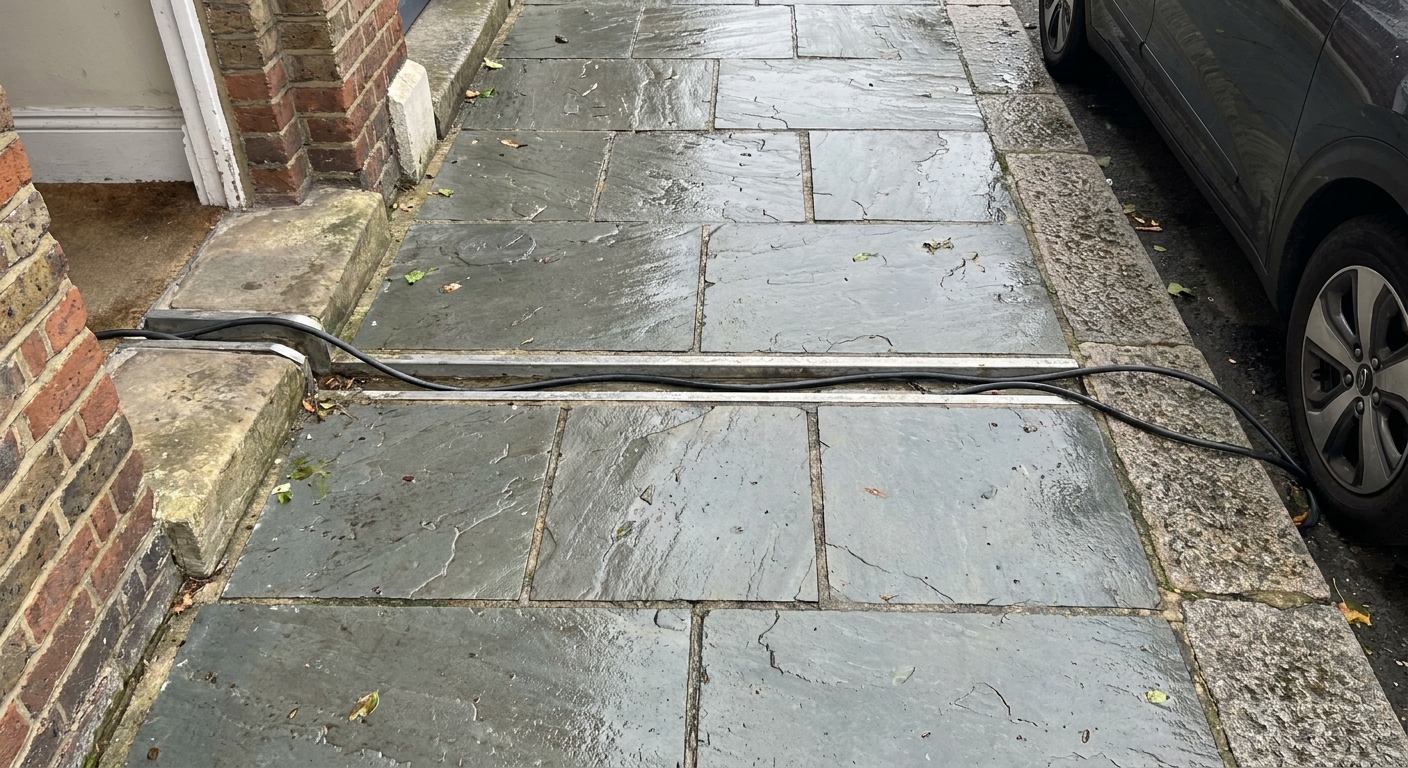
The cross-pavement gully unlocks home charging for millions of UK households parked on the public street. A thin metal channel sunk flush into the pavement lets a cable run from your house to your kerbside car without becoming a trip hazard. The £25 million cross-pavement fund opened to local authorities in late 2024; by spring 2026 the certified systems are Kerbo Charge, Gul-e, Charge Gully and Pavecross.
Kerbo Charge is the system we recommend if your council is participating. From £999 fully fitted, it includes property survey, council permissions, certified channel install and a ten-year warranty. Local support varies by council, so check your authority before budgeting. Combined with the OZEV grant on an eligible wall charger, cross-pavement charging can make home charging realistic for some terraced-street households. Do not run a loose cable across a public pavement without checking council rules; many authorities require an approved cross-pavement solution.
What to ask your installer before signing
Interview installers, do not just compare prices. Our checklist: are you OZEV-authorised (not just NICEIC), is your fitter MCS-accredited if I want to add solar later, do you handle the £500 grant claim on my behalf, and what is your earliest survey slot. Reputable firms answer all four in one phone call. Slower ones drop the OZEV question on email and never come back.
Then ask install-quality questions. What cable run is included (typically 10m), do you fit a Type A+DC RCD, will you upgrade my consumer unit if needed. UK regs require 6mA DC fault detection on EV circuits; older fuse boxes sometimes need a £150 to £250 board upgrade. Get it itemised before signing. Our guide to reading EV efficiency data helps you size the kWh you need overnight, and our 2026 home EV charger primer covers the wider field.
Our verdict
The 1 April 2026 reset is good news, even though the headlines focused on private-driveway homeowners losing out. The drivers who actually need help (renters, leaseholders, on-street parkers) get a larger grant and a cross-pavement scheme that treats them as full citizens of the EV transition. Our pick is the Ohme Home Pro at £999 fitted as the best home EV charger UK 2026 buyers can start with. The screen is small, the tariff pitch is clear, and the standard-install package is easy to compare.
If you have solar, buy the Zappi. If budget is tight, the Hypervolt 3 Pro is the only sensible cheaper alternative under £900 fitted. If you are grant-eligible, the £500 makes the Pod Point Solo 3 or Wallbox Pulsar Plus the rational picks. And if you are parked at the kerb, do not give up; Kerbo Charge plus the OZEV grant turns a decade-long problem into a fortnight of admin.
Frequently asked questions
Related reading on MTW
Buyer action
Where to buy or check next
Use this as the final check before ordering a phone, changing network or trusting a headline monthly price.














Reader discussion
Leave a comment
Comments are moderated. Keep it useful, accurate, and on topic.