The sales pitch for electric vehicles has always been simple: save money on fuel, save money on maintenance, save the planet. But the real cost of owning an EV in 2026 reveals a more nuanced picture than the brochures suggest. Insurance premiums are higher, public charging is not as cheap as it once was, and depreciation — while improving — still catches some buyers off guard. Here is an honest breakdown of what it actually costs to own an EV in the UK this year.
What Happened
- Purchase Price: The Gap Is Closing
- Insurance: The Uncomfortable Truth
- Charging Costs: Home vs Public
- Road Tax and Incentives
- Depreciation: Getting Better, Still a Factor
- The Monthly Cost Comparison
- The Bottom Line
Purchase Price: The Gap Is Closing
The upfront cost of an EV is still higher than an equivalent petrol or diesel car, but the gap has narrowed significantly. A Volkswagen ID.3 starts at around £33,000 compared to a similarly equipped Golf at £28,000. At the premium end, a Tesla Model 3 at £38,000 competes with a BMW 3 Series at £40,000 — where the EV is actually cheaper. The second-hand market has also matured, with three-year-old EVs now available from £15,000 to £20,000.
Insurance: The Uncomfortable Truth
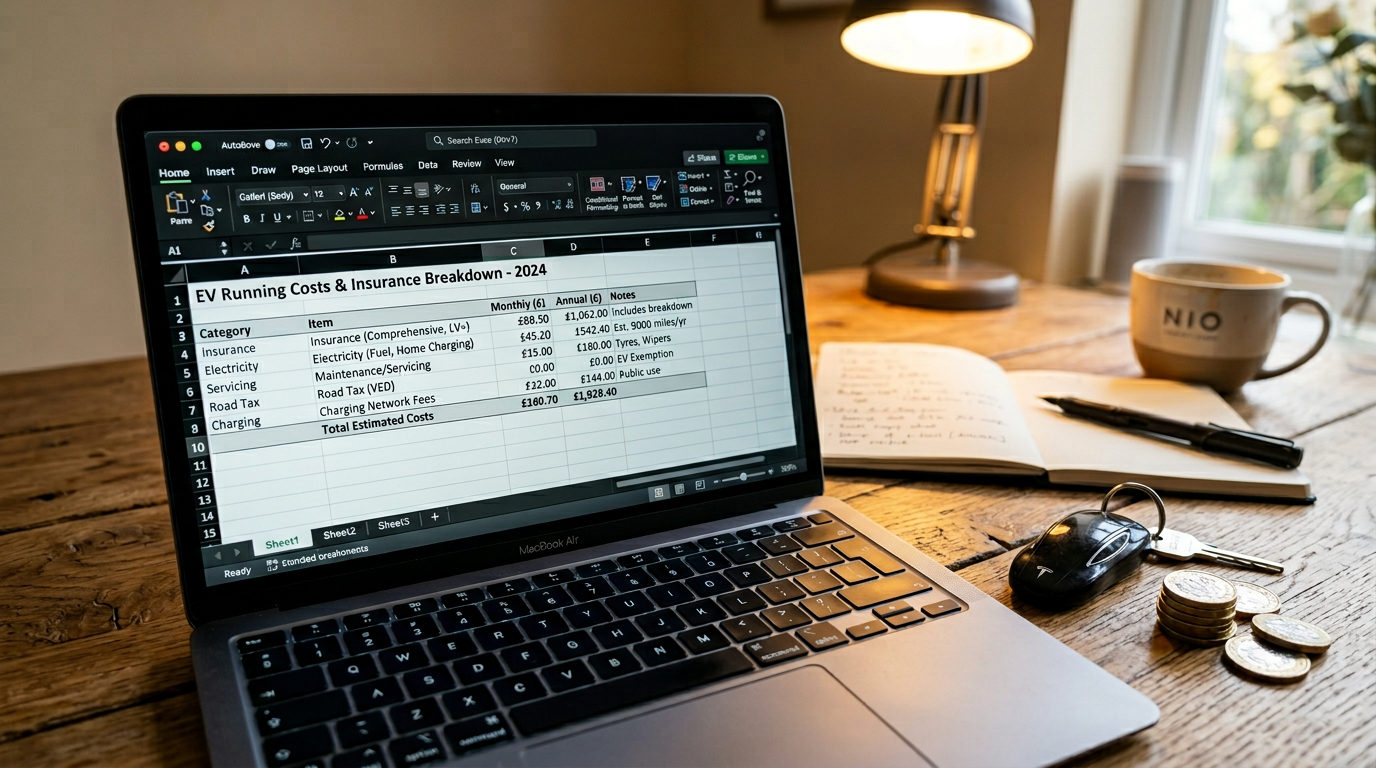
EV insurance premiums remain a sore point. On average, insuring an EV costs 20 to 30 per cent more than an equivalent petrol car. A Tesla Model 3, for example, typically costs £800 to £1,200 per year to insure, compared to £500 to £800 for a comparable BMW 320i. The reasons are threefold: higher repair costs (particularly for battery and panel damage), fewer qualified repair shops, and more expensive replacement parts.
Charging Costs: Home vs Public

Road Tax and Incentives
As of April 2025, EVs are no longer exempt from Vehicle Excise Duty (road tax) in the UK. New EVs now pay the standard first-year rate based on list price, and from the second year onwards, the flat rate of £190 per year. EVs with a list price over £40,000 also pay the £410 expensive car supplement for five years. This change removed one of the financial advantages of EV ownership, though the rates are still the same as — not higher than — petrol equivalents.
Benefit-in-Kind (BiK) tax for company car drivers remains low at 3 per cent for 2025/26, making EVs exceptionally attractive as company cars. This is arguably the strongest financial incentive still available and saves company car drivers thousands per year compared to petrol or diesel vehicles.
Depreciation: Getting Better, Still a Factor
Early EVs depreciated alarmingly fast, with some models losing 60 per cent of their value in three years. In 2026, depreciation has stabilised for popular models. A Tesla Model 3 retains around 55 to 60 per cent of its value after three years, which is comparable to a BMW 3 Series. Less popular models and those with smaller batteries still depreciate faster.

The Monthly Cost Comparison
For a typical driver covering 10,000 miles per year, here is how the monthly running costs compare between a Tesla Model 3 and a BMW 320i:
Tesla Model 3: Finance (£450), insurance (£85), home charging (£35), road tax (£16), servicing (£10), tyres (£15) = approximately £611/month.
BMW 320i: Finance (£400), insurance (£55), petrol (£110), road tax (£16), servicing (£25), tyres (£12) = approximately £618/month.
When you examine the real cost of owning each option, the costs are remarkably similar — the EV saves on fuel and servicing but pays more for insurance and finance. The EV advantage grows substantially if you charge at home on an off-peak tariff, and shrinks if you rely heavily on public rapid chargers.
The Real Cost of Owning an EV — Is It Worth It?
Owning an EV in 2026 is not dramatically cheaper or more expensive than a petrol car for most drivers. The savings are real but modest, and they depend heavily on your charging situation and insurance costs. The strongest case for an EV remains the driving experience (smooth, quiet, instant torque), environmental benefits, and the direction of travel — as electricity gets cleaner and charging infrastructure improves, the equation only gets better. For more on the practicalities, our piece on why range anxiety is no longer the problem it used to be covers how far the infrastructure has come.
For anyone following the Real Cost of Owning story, the key takeaway is that the industry is changing faster than most consumers realise. Our Real Cost of Owning analysis will continue as new developments emerge in 2026.
Insurance is a big part of EV running costs — Car Deal Expert breaks down the UK picture in its EV insurance renewal guide.
MMTW Editorial
Buyer action
Where to buy or check next
Use this as the final check before ordering a phone, changing network or trusting a headline monthly price.














Reader discussion
Leave a comment
Comments are moderated. Keep it useful, accurate, and on topic.