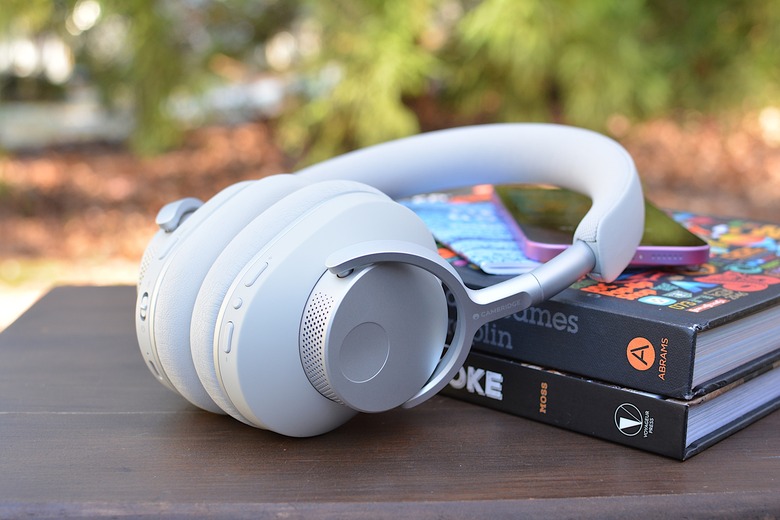
Cambridge Audio Melomania P100 review: the British ANC pair that undercuts Sony
Cambridge Audio made its name on hi-fi separates that cost more than some people’s first cars. So its very first pair of noise-cancelling over-ears was never going to arrive quietly — and it didn’t. Since the Melomania P100 landed in July 2024, the verdicts have stacked up in its favour, with Engadget calling them “an impressive headphone debut”. What makes them genuinely awkward for the incumbents isn’t the sound signature or the spec sheet. It’s the sticker.
At £229, these undercut the two headphones every British buyer cross-shops at this level — and they do it by a margin wide enough to change the decision entirely.
The price is the whole argument (Melomania P100)
Let me put the numbers on the table, because this is where the P100 does its damage. Cambridge Audio’s debut lands at £229 in the UK ($279 in the US, AU$479 in Australia). The Sony WH-1000XM5, still the class default, sits at £380. Bose’s QuietComfort Ultra asks £349.95. That’s a £151 gap to the Sony and a £120 gap to the Bose — not a rounding error, but the price of a decent pair of true wireless earbuds on top.
I’m wary of “cheaper therefore better” arguments, because at this tier corners usually get cut somewhere you’ll feel later. What’s unusual here is how little the P100 appears to have surrendered to hit that figure. This isn’t a stripped-back alternative pitched at people who can’t stretch to a Sony — it’s a fully specified flagship that happens to cost less, and the specialist press has largely lined up behind it. Engadget signed off calling the debut “impressive”, and What Hi-Fi came away praising the refined design and “crisp, clear sound profile” — the sort of reception Sony and Bose are used to keeping to themselves.

| Cambridge Audio Melomania P100 | Sony WH-1000XM5 | Bose QuietComfort Ultra | |
|---|---|---|---|
| Price (UK) | £229 | £380 | £349.95 |
| Battery, ANC on | 60 hours | 30 hours | — |
| User-replaceable battery & earpads | Yes | No | No |
| Winner | Melomania P100 — on price, stamina and repairability; Sony and Bose still lead on software polish | ||
What Cambridge Audio actually put inside
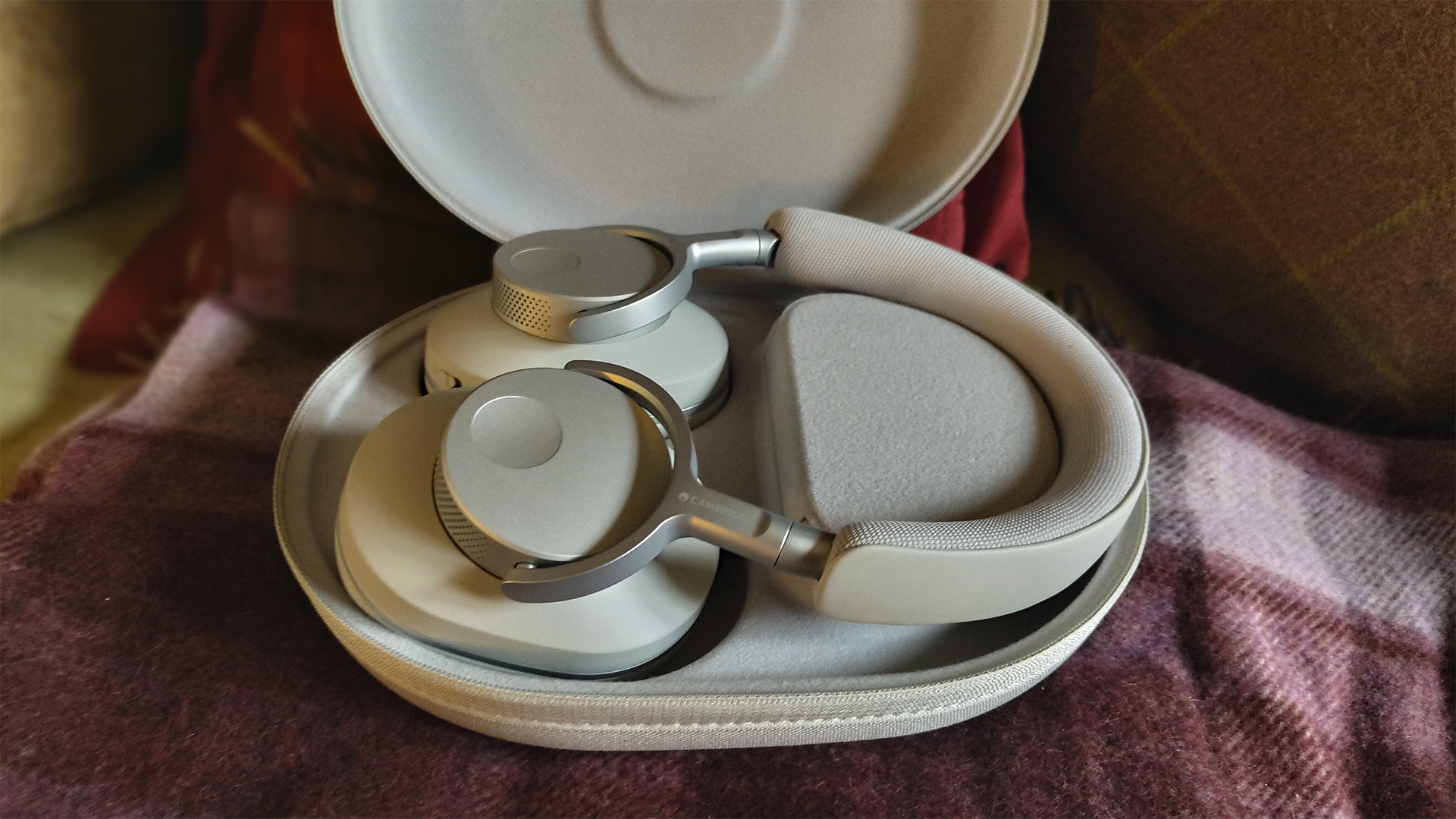
The engineering is where the brand’s heritage shows. Each earcup runs a 40mm three-layer composite driver — PEEK, then polyurethane, then PEEK again — the sort of sandwich construction meant to keep the diaphragm stiff without turning brittle. More telling is the Class AB amplification, which Cambridge Audio says is the same approach it uses in its CX-series hi-fi amplifiers — a genuinely hi-fi choice you rarely see named on a headphone spec sheet, and a hint at where the brand’s priorities sit.
Connectivity is current rather than cautious: Bluetooth 5.3 with the full codec ladder — SBC and AAC as standard, then aptX Adaptive and, crucially, aptX Lossless for anyone with a compatible Android phone. That last one matters more than the marketing suggests. If you’ve already committed to a high-resolution tier — and I’d argue the codec support only earns its keep if you’re feeding them a lossless streaming plan — the P100 can carry it end to end without the Bluetooth bottleneck that quietly undoes a lot of expensive headphones.
This isn’t a budget alternative pretending to be a flagship. It’s a flagship priced like it wants to win, and that’s a far more dangerous thing for Sony and Bose to be facing.
The battery figure that reframes the class
Here is the spec that made me sit up. Cambridge Audio quotes 60 hours with noise cancelling on, and 100 hours with it off — figures Engadget and What Hi-Fi both repeat in their reviews. For context, Sony’s XM5 claims 30 hours with ANC engaged. The P100 doubles it.

In real terms, 60 hours of ANC is the difference between charging weekly and charging roughly once a month. It’s a long-haul return flight to Australia and back with the noise cancelling running the whole way, and you’d still not be near empty. That kind of headroom stops being a bragging number and starts being a genuine convenience — the sort of thing you notice by never having to think about it. When a debutant beats the category benchmark by that margin on the one spec everyone actually lives with, the “you get what you pay for” framing starts to wobble.
Where the debut still shows
I’m not going to pretend it’s flawless, because the reviews don’t. Engadget’s main reservation is the low end — it found the bass a touch reserved for a headphone pitched at this tier, the kind of tuning that reads as tasteful to some ears and thin to others. It’s a judgement call rather than a fault, but if you want the wall of sub-bass a Bose leans into out of the box, budget for a few minutes in the app dialling the EQ to taste. That the P100 lets you do that at all is part of the point: this is a headphone built for people who fiddle.
Comfort is the other honest caveat. Reviewers flagged the earpads as a weak spot over long sittings, and that squares with the weight — the P100 tips the scales at 330g, on the substantial side and heavier than you might expect for a pair with no metal-and-leather luxury pretensions. Whether that bothers you comes down to your head and how long you wear them in one go, which is exactly why I’d want them on before buying rather than ordered blind.
Built to be kept, not replaced
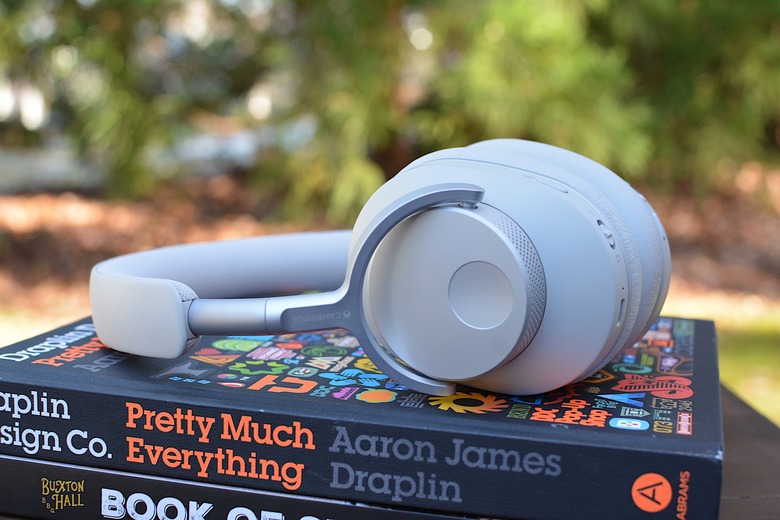
The detail I keep coming back to, though, is quieter and, frankly, more grown-up: the battery and the earpads are both user-replaceable. That turns the comfort caveat above into something you can actually solve — a set of fresh pads rather than a new pair of headphones.
Think about what that means over a five-year horizon. The single most common reason a beloved pair of headphones ends up in a drawer is a battery that no longer holds charge, or earpads that have flaked and gone hard. Cambridge Audio has designed both out as failure points. In an era where “premium” too often means sealed, glued and disposable, designing a product to be maintained rather than binned is the kind of thinking I wish more of the industry shared — and it lends the £229 a longer tail of value than the headline figure suggests. Pair that with the two-year guarantee you’d get buying through John Lewis, and the ownership maths tilts further still.
UK buyers get two finishes — Black and Silver (not white, whatever some early listings implied) — available direct from Cambridge Audio and through Amazon UK. It’s a restrained pair of colourways, which suits the understated, engineering-first character of the thing.
Where they fit in a crowded shortlist
None of this makes the P100 an automatic buy. Sony and Bose have spent years refining their ANC algorithms, their app ecosystems and their call quality, and a first-generation product from a brand better known for amplifiers has ground to make up on software polish. If flawless adaptive noise cancelling and a mature companion app are non-negotiable, the established names still have arguments to make, and they remain fixtures in the current noise-cancelling order.
But the framing has shifted, and I don’t think it shifts back. Cambridge Audio has form for turning its hand to a new category and pricing it with intent — the same instinct that drives its pricier active-speaker ambitions — and the P100 is that instinct aimed squarely at the mainstream. For once the value isn’t in what’s been left out; it’s in what’s been kept.
The debut the incumbents should worry about
My position is straightforward. If you’re standing in a John Lewis with £380 earmarked for a Sony WH-1000XM5, the Melomania P100 deserves the demo before you commit — not because it’s the cheaper option, but because it answers the two questions that actually matter over years of ownership. It plays properly, right up to lossless. And it’s built to still be working long after a sealed rival has quietly died on you. Sony and Bose can out-polish it on software today, and I’d want a listen for the bass and a few minutes with the pads on before I signed off. What they can’t easily answer is a flagship that costs £151 less and asks to be kept, not replaced. That’s not a bargain-bin pitch. That’s a warning shot — and Cambridge Audio fired it first time out.
How we test
Buyer action
Where to buy or check next
Use this as the final check before ordering a phone, changing network or trusting a headline monthly price.










Reader discussion
Leave a comment
Comments are moderated. Keep it useful, accurate, and on topic.