UPDATED · News · 4 Jun 2026 · Daniel Reid
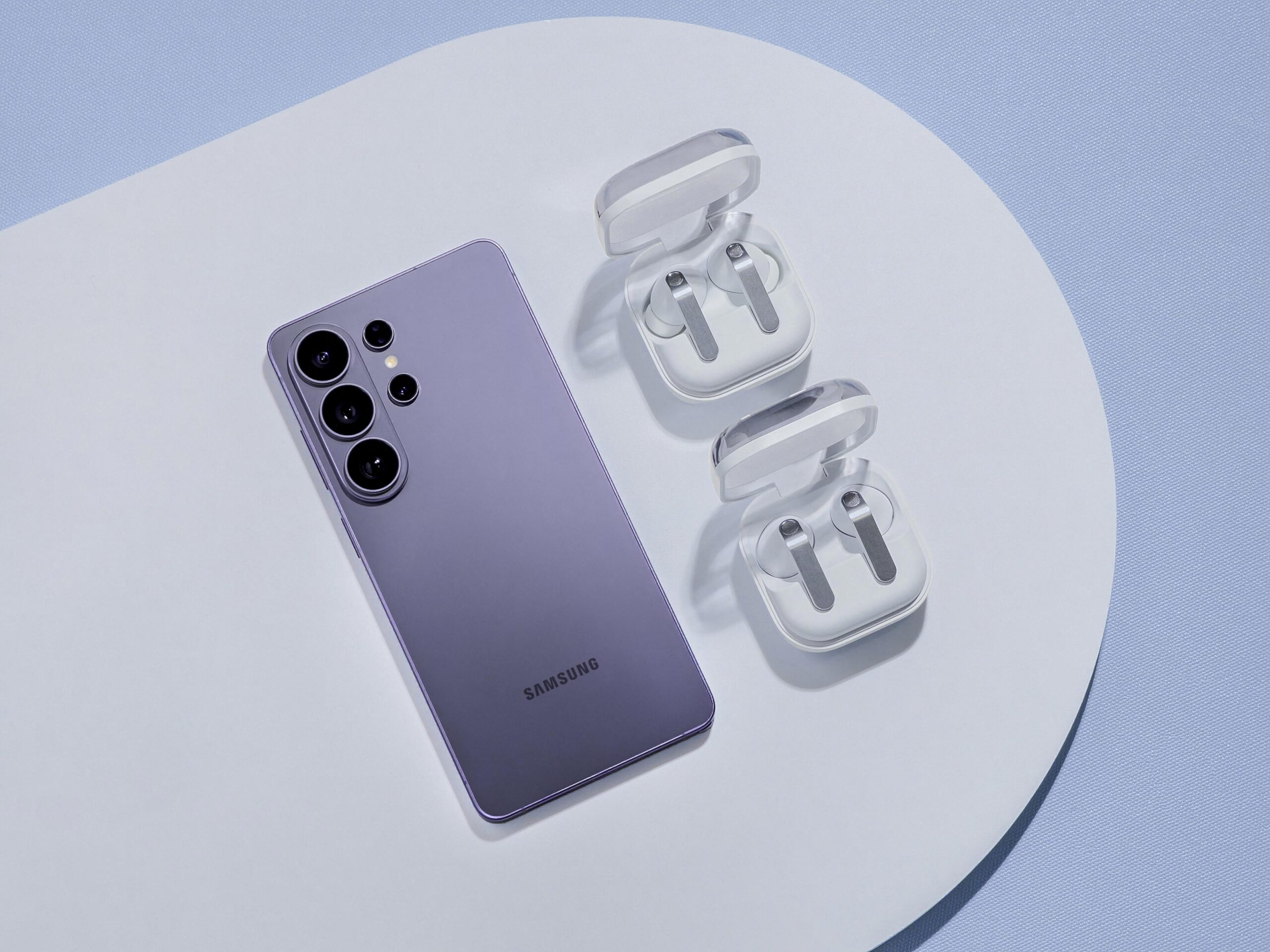
The Samsung Galaxy S26 starts at £879 SIM-free on samsung.com/uk for the 256GB model, and that single number does more work than any spec sheet when you are deciding whether to buy now or wait. Samsung announced the line-up at Galaxy Unpacked on 25 February 2026, opened UK pre-orders the same day, and put stock on shelves from 11 March. Six months on, the launch promotions have lapsed, retailers have moved off their day-one prices, and the real UK buying picture has settled enough to give you a clear answer.
This is the definitive UK buyer guide to the range: the confirmed prices across Samsung, Currys, John Lewis, Argos, Amazon UK and Very, the carrier and MVNO routes on EE, VodafoneThree, Virgin Media O2 and Three, what genuinely changed versus the Galaxy S25, and our buy-now-or-wait call. We have verified every price and date against Samsung’s own UK pages before writing it.
- Three models: Galaxy S26 (£879), Galaxy S26+ (£1,099) and Galaxy S26 Ultra (£1,279), all 256GB SIM-free starting prices.
- Announced at Galaxy Unpacked on 25 February 2026; UK pre-orders opened the same day; on-sale 11 March 2026.
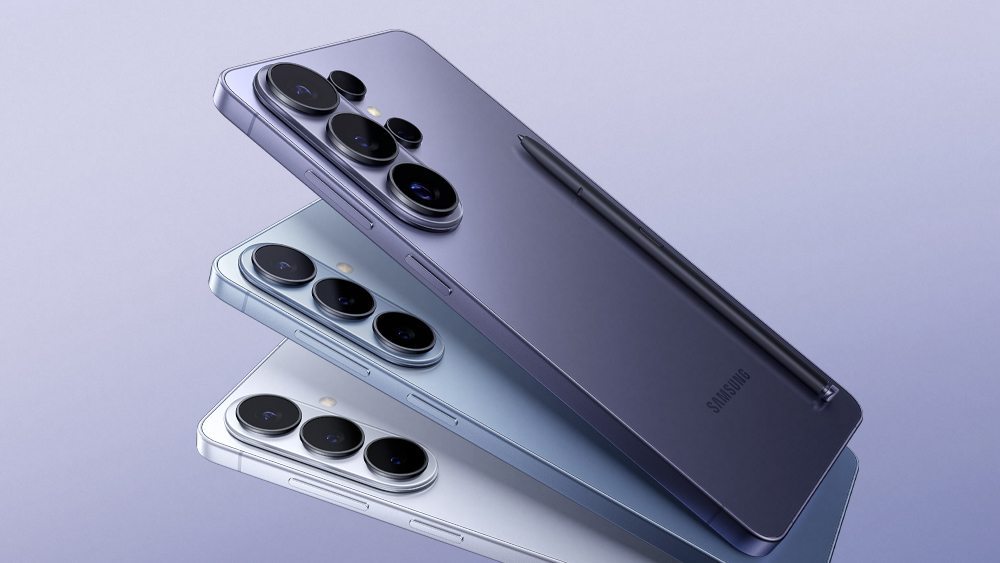
- Standard colours: Cobalt Violet, Black, Sky Blue and White, with Pink Gold and Silver Shadow exclusive to samsung.com.
- The headline upgrades sit on the Ultra: a 200MP main sensor, a Privacy Display, and a body 0.3mm thinner at 214 grams.
What the three Galaxy S26 models cost in the UK
Samsung sells three phones under the Galaxy S26 banner this generation. The base Galaxy S26 opens at £879 for 256GB, the larger Galaxy S26+ at £1,099, and the Galaxy S26 Ultra at £1,279, with every figure confirmed on Samsung’s own UK store and corroborated by independent UK coverage at Tech Advisor’s release guide. Those are the 256GB entry points; stepping up to 512GB or 1TB adds the usual storage premium on the Plus and Ultra.
The price ladder matters because the jumps are not trivial. The £220 gap between the S26 and S26+ buys a bigger battery and a larger display rather than a meaningfully better camera, while the further £180 to the Ultra is where the real hardware separation lives. If you are cross-shopping Android flagships, it is worth reading our take on the Pixel 10 Pro versus Galaxy S26 Ultra match-up before you commit, because Google undercuts the Ultra on sticker price. Buyers leaving iOS should also check our guide to the best iPhone alternative in the UK for 2026, where the S26 sits near the top.
When the Galaxy S26 launched and what that means now
Samsung unveiled the range at Galaxy Unpacked on 25 February 2026 and opened UK pre-orders immediately, with general sale from 11 March. The double-storage pre-order promotion that ran until 10 March, where buyers got 512GB for the 256GB price, has long expired, so anyone buying today pays for storage at the standard rate. That timing is the crux of the buy-now question: the phone is no longer new enough to carry launch incentives, but not old enough to have been discounted to clear stock before a successor.
Historically Samsung refreshes the S line each winter, which puts a Galaxy S27 announcement roughly eight months out. That window shapes the wait calculation later in this guide. If your current handset still holds a charge and takes a decent photo, the absence of a launch deal right now is a genuine reason to pause. If you are coming off a three or four-year-old phone, the upgrade is large enough that the timing barely registers. We made a similar point about not chasing software alone in our piece on why you should not buy a new phone for an Android AI upgrade.
What is genuinely new versus the Galaxy S25
Samsung’s UK first-look post frames this as its most intuitive AI phone yet, but strip the marketing and the substance lands in three places. The Ultra moves to a 200MP wide sensor paired with a 50MP telephoto offering 5x optical and what Samsung calls 10x optical-quality zoom, with wider apertures aimed at low-light shooting and an upgraded Nightography pipeline. The AI image signal processing now extends to the front camera too.
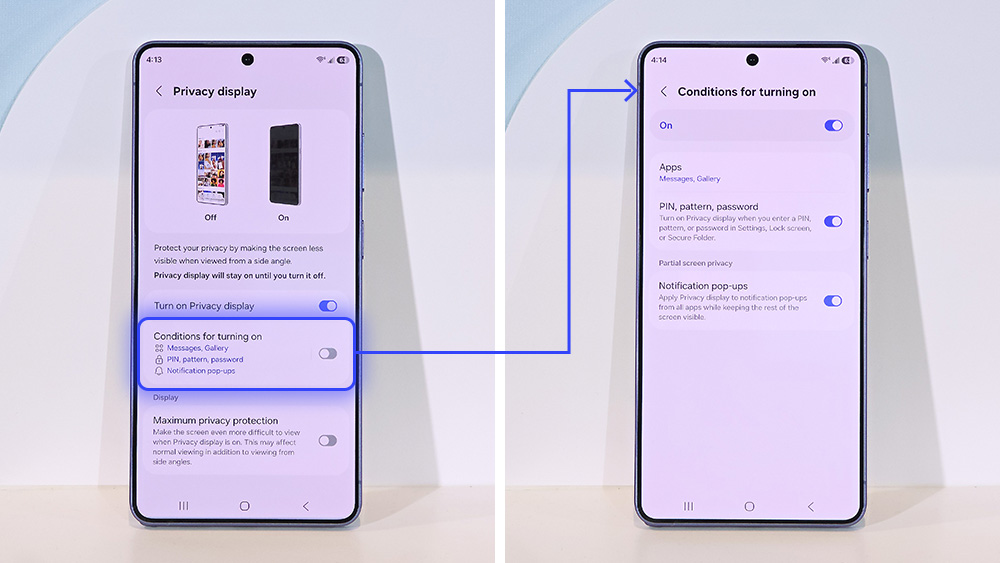
The second change is the Ultra’s new Privacy Display, which restricts side-angle viewing in a single tap, a feature commuters and anyone working on a train will actually use. The third is software: Now Nudge surfaces proactive suggestions from on-device context, Circle to Search handles multi-element queries, and the AI layer spans Bixby, Gemini and Perplexity rather than locking you into one assistant. If the Gemini side interests you, our explainer on the Gemini Intelligence rollout on Android in the UK covers which Galaxy models get what.
On the hardware feel, the Ultra is 0.3mm thinner and weighs 214 grams, with a more rounded frame than the S25 Ultra’s hard-edged design. None of this rewrites what a flagship phone does, and that honesty matters: if you own a Galaxy S25 Ultra, almost nothing here justifies the spend. The upgrade story is strongest for owners of an S22 or S23-era device, where the camera, the chipset and the battery all move forward at once.
Galaxy S26 UK price and specification comparison
The table below lays out the three models against the figures Samsung publishes, so you can see exactly where the money goes before you choose a tier. Camera buyers should pair this with our Galaxy S26 Ultra camera tips, which cover the settings worth changing on day one.
| Model | From (256GB, SIM-free) | Headline hardware | MTW read |
|---|---|---|---|
| Galaxy S26 | £879 | Compact flagship, standard triple camera | The value pick for most buyers |
| Galaxy S26+ | £1,099 | Larger display and battery, same core cameras | Pay for size, not for photos |
| Galaxy S26 Ultra | £1,279 | 200MP main, 5x telephoto, Privacy Display, S Pen | Where the real upgrade lives |
Notice the pattern: the S26+ is the weakest-value rung because it charges Plus money for base-model cameras. If you want the photography leap, the Ultra is the only model that delivers it; if you do not, the standard S26 saves you £400 over the Ultra for a phone that handles everyday shooting well.
Storage tiers and trade-in: how to bring the price down
The single biggest lever on what you actually pay is trade-in. Samsung’s UK store applies trade-in credit at checkout, and a working recent Galaxy or iPhone can knock a meaningful chunk off the £879 to £1,279 sticker before you add Samsung Care+ accidental damage cover, which the store lists as reducing some upfront contract costs by £70. The catch is that Samsung’s trade-in values fluctuate, so it is worth getting a quote on the day rather than budgeting around a figure you saw at launch.
On storage, the 256GB base is the right starting point for most people now that the double-storage promotion has gone. Paying up for 512GB only makes sense if you shoot a lot of 8K video or carry a large offline library, because Samsung does not include a microSD slot on any S26 model. If you mainly stream and back up to the cloud, the 256GB tier is plenty and the saving is better spent on a case and screen protection. Budget-minded buyers who balk at flagship pricing altogether should read our roundup of the best mid-range Android phones under £500, several of which cover the basics the S26 does for a fraction of the outlay.
Where to buy the Galaxy S26 in the UK
The SIM-free route is the cleanest way to own a Galaxy S26 outright, and the major UK retailers all stock the range. Samsung’s own store lists the S26 from £879, the S26+ from £1,099 and the Ultra from £1,279, and it is the only place offering the Pink Gold and Silver Shadow colours plus trade-in credit applied at checkout. Currys matches Samsung on the headline prices and adds its own CarePlan cover and click-and-collect from local stores, which suits anyone who wants the phone the same day.
John Lewis is worth a look for its standard two-year guarantee on smartphones at no extra cost, which is a genuine consumer-rights advantage over rivals that charge for it. Argos offers fast collection through its store and Sainsbury’s network, Amazon UK tends to be quickest to discount once launch demand cools, and Very is the route to consider if you want to spread the cost on its own credit account, which is regulated by the FCA. Compare delivery, returns and warranty rather than chasing the lowest sticker, because under the Consumer Rights Act your protections are the same wherever you buy.
Carrier and MVNO deals on EE, VodafoneThree, O2 and Three
If you would rather spread the cost on contract, the networks all carry the Galaxy S26. Samsung’s UK pages show example deals such as the Ultra at £34 a month on O2’s 400GB plan with £300 upfront, and the standard S26 at £18 a month with £299 upfront on Three’s 300GB tariff. Those are illustrative tariffs rather than fixed offers, so check the network’s own page on the day. EE positions itself at the premium end with add-on perks, while VodafoneThree, formed when the two networks completed their merger in 2025, now fields one of the widest coverage maps in the country.

Watch the mid-contract price rises: most networks now apply a fixed annual increase in pounds rather than a percentage, an approach Ofcom pushed the industry toward so customers can see the actual cost before signing. If you already own a phone, a SIM-only deal on an MVNO such as Smarty, iD Mobile, Voxi, Tesco Mobile or GiffGaff will almost always beat a handset contract on total cost, since you avoid paying interest baked into the monthly figure. For buyers who like to time their network switch, our roundup of the best UK phone deals on EE shows the kind of structure to expect on a Samsung tariff too.
Who should buy now and who should wait
The buy-now case is strongest if you are upgrading from an S22 or older, want the Ultra’s 200MP camera and S Pen, or need a phone today and value John Lewis’s two-year guarantee or Currys’ same-day collection. At £879, the standard S26 is a complete flagship that will see years of Samsung software support. The wait case applies if you own an S25, if you can hold out for the inevitable Amazon UK and retailer discounts that follow a launch by six to nine months, or if a likely winter Galaxy S27 announcement makes you want to see the next generation first. If you are weighing Samsung against the wider field, our buyer’s view on the best foldable phone in the UK for 2026 and the iPhone 17 Pro Max versus Galaxy S25 Ultra comparison both help frame the decision.
What we like and what we would watch
| What we like | What we would watch |
|---|---|
| Ultra’s 200MP camera and 5x telephoto are a real generational step | The S26+ charges Plus money for base-model cameras |
| Privacy Display is a genuinely useful Ultra feature for commuters | Launch double-storage promotion has expired; you pay full storage now |
| £879 entry price keeps the standard S26 competitive | A Galaxy S27 is likely roughly eight months out |
Our view is straightforward. If you are upgrading from a phone two or more generations old, buy the standard Galaxy S26 at £879, or the Ultra at £1,279 if the camera and S Pen earn their keep for you. Both are mature, well-supported flagships and the lack of a current launch promotion is a small penalty against a phone you will keep for years. We would skip the S26+ specifically, because it asks £1,099 for the same cameras as the £879 model with only a larger screen and battery to show for it. We would wait if you own a Galaxy S25, where the year-on-year gains do not justify the spend, or if you can hold out for the retailer discounts that reliably arrive six to nine months after a Samsung launch. The one risk that would flip our buy call is the Galaxy S27: with a winter announcement plausible, anyone who is not in a hurry loses little by seeing the next generation first.











Reader discussion
Leave a comment
Comments are moderated. Keep it useful, accurate, and on topic.