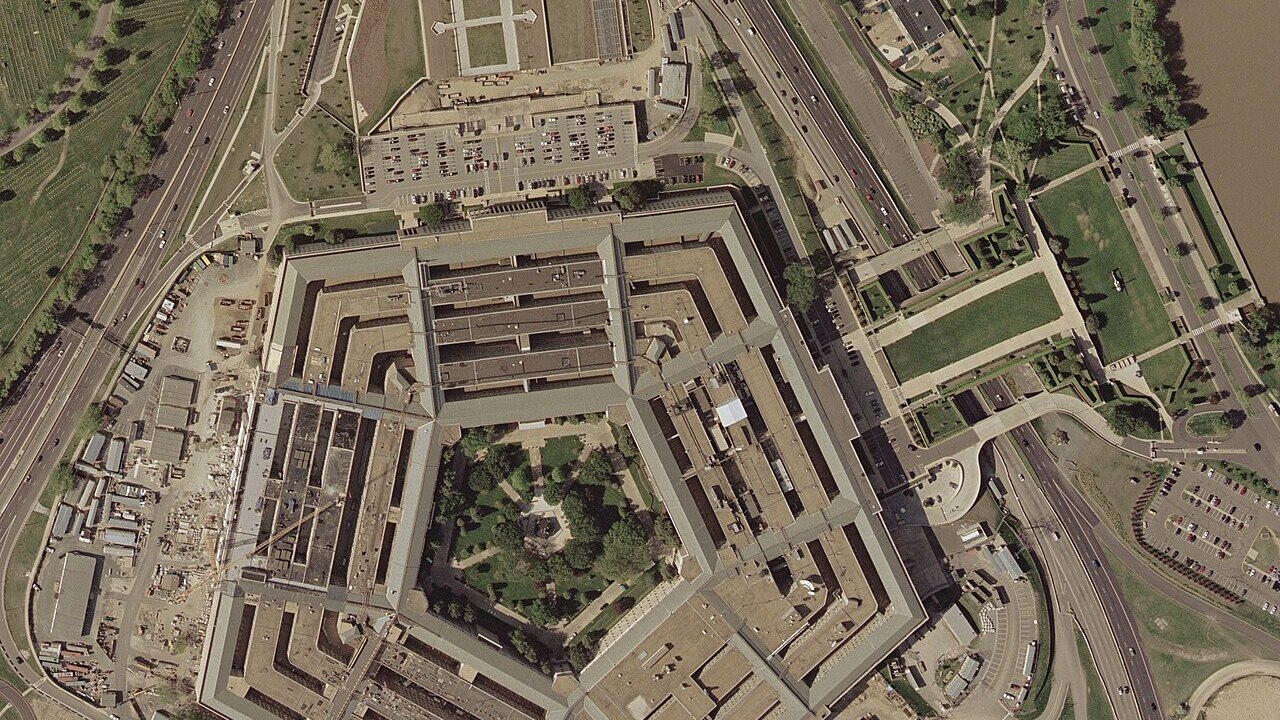
Pentagon AI deals signed on 1 May 2026 finally turn classified military networks into a frontier AI marketplace. TechCrunch reported the Department of Defence cleared Nvidia, Microsoft, AWS and Reflection AI to run models on Impact Level 6 and Impact Level 7 networks, joining earlier-cleared Google, SpaceX and OpenAI. Al Jazeera and Nextgov independently confirmed the eight-vendor roster.
- Pentagon AI deals on 1 May 2026 clear eight vendors for classified networks: Nvidia, Microsoft, AWS, Google, SpaceX, OpenAI, Reflection AI and Oracle.
- Cleared classification levels: Impact Level 6 (secret) and Impact Level 7 (the most highly classified DoD systems).
- Access flows through GenAI.mil, the Pentagon’s central AI platform; the DoD says 1.3 million personnel already use it for non-classified work.
- Anthropic is the deliberate absence after refusing to permit Claude use for autonomous weapons and broad domestic surveillance.
Why these Pentagon AI deals matter beyond defence
The Pentagon AI deals are not merely a procurement footnote. They are the moment frontier AI vendors became indistinguishable from defence primes for the purposes of US national security. The DoD framed the deals as accelerating “the transformation toward establishing the United States military as an AI-first fighting force” – language that is striking partly because of what it skips. There is no public dollar figure. There is no firm-fixed-price contract value. There is just a clearance to operate on the most sensitive networks the US government runs, alongside the existing classified hardware and software stack.
For UK readers, the Pentagon AI deals matter for three reasons. First, the eight companies cleared – Nvidia, Microsoft, AWS, Google, OpenAI, SpaceX, Oracle and Reflection AI – are the same companies whose consumer products run on every UK phone, laptop and TV. Second, the UK Ministry of Defence has its own AI procurement programme that historically tracks US classifications. Third, the absence of Anthropic – the company whose Claude model powers some of the most popular UK consumer AI tools – is the most interesting refusal in the AI industry in 2026. We explored part of that pressure in our Anthropic-Amazon AWS £79 (about $100)bn editorial.

Pentagon AI deals: who is in, what they actually unlock
Impact Level 6 (IL6) and Impact Level 7 (IL7) are the DoD’s secret and top-secret cloud-network classifications. Before these Pentagon AI deals, almost no commercial AI vendor was permitted to run a foundation model on either. AWS GovCloud and Microsoft Azure Government were the partial exceptions, and even they were heavily scoped. The 1 May 2026 Pentagon AI deals collapse that gap. Nvidia’s AI hardware and Reflection AI’s models are now formally cleared for IL6/IL7; OpenAI’s are cleared alongside Google’s; SpaceX gets in via Starlink and its embedded AI stack.
| Vendor | What they bring | MTW read |
|---|---|---|
| Nvidia | GPUs, GR00T, NIM microservices | The picks-and-shovels winner regardless of model choice. |
| Microsoft | Azure Government, Copilot, OpenAI hosting | Likely largest commercial revenue beneficiary. |
| AWS | GovCloud, Bedrock, Trainium | Infrastructure default for most DoD AI workloads. |
| Gemini, TPU, BigQuery | Brings the model that finally has parity with GPT and Claude. | |
| OpenAI | GPT-class models | Frontier model leader; deepest DoD relationship pre-2026. |
| SpaceX | Starlink + on-board AI | The unconventional pick; warfighter connectivity story. |
| Oracle | OCI + database AI | Late entrant, added “hours later” per coverage. |
| Reflection AI | Frontier model challenger | The surprise inclusion – youngest vendor in the cohort. |
The DoD says all eight will operate through GenAI.mil, the central platform already used by 1.3 million unclassified personnel. That is the part that should worry the privacy hawks. GenAI.mil is being scaled into a single-pane operating surface for AI across DoD, with the Pentagon AI deals as the policy lever that lets commercial models plug in directly. Once that pipe exists, the cost of adding model #9, model #10 and so on falls dramatically. The Pentagon AI deals are not a one-off; they are a procurement architecture.
Pentagon AI deals: the Anthropic-shaped hole
The deliberate absence of Anthropic from the Pentagon AI deals is the most important sentence in the announcement. Anthropic publicly refused to permit Claude for “all lawful use” because that would have meant clearing the model for autonomous weapons and broad domestic surveillance applications. The dispute became public in late February 2026. The 1 May Pentagon AI deals are the answer: Anthropic does not get into IL6/IL7; the DoD goes ahead without it. That sets up a two-track AI industry. Track one – everyone else – takes the Pentagon contract and the political risk. Track two – Anthropic – holds the line and accepts the foregone revenue.
UK readers should not assume that line will hold quietly. Claude is one of the most-used AI assistants in British knowledge work; Anthropic’s MCP installs have crossed 97 million, the company’s revenue is climbing, and the UK government has been a measurable customer of Claude through its AI Safety Institute partnerships. A clean refusal of the largest defence contract on offer is a strategic position, not a moral one – and it is the kind of position that gets revisited under board pressure. Watch for Anthropic’s next funding round; the Pentagon AI deals are the reason that round will be priced differently.

What UK buyers and readers should take from the Pentagon AI deals
The Pentagon AI deals do not change what UK consumers can buy this week. They do change three things that UK readers should track. First, the commercial pricing of cloud AI in the UK will edge upward as US defence procurement absorbs capacity at premium rates – the same dynamic we wrote about in the OpenAI Cerebras deal and in our coverage of on-device AI. Second, the policy bar UK ministries can use to procure AI just rose: if the US DoD can run frontier models on IL7, the UK MoD’s equivalent restrictions look conservative by comparison and will be argued over.
Third, the consumer-facing AI assistants UK readers use every day are now legally and operationally entangled with US defence work. That does not make them less useful, but it makes them more political. Microsoft Copilot, ChatGPT, Gemini, Grok, Claude – five of the six are now Pentagon-cleared vendors. Only Anthropic’s Claude sits outside the tent. The Pentagon AI deals settled who counts as a US national-security partner and who does not, and the answer is “almost everyone you have heard of”. That is the lasting result, and the part UK readers should factor into their own AI-vendor choices for the rest of 2026.
MTW verdict
The Pentagon AI deals are the moment frontier AI became a defence industry. Eight of the nine biggest names took the deal. One did not. UK buyers should keep using whichever assistant works best for their workflow but should stop pretending the Pentagon AI deals are neutral plumbing. They are now part of the product.
MMTW Editorial
Buyer action
Where to buy or check next
Use this as the final check before ordering a phone, changing network or trusting a headline monthly price.











Reader discussion
Leave a comment
Comments are moderated. Keep it useful, accurate, and on topic.