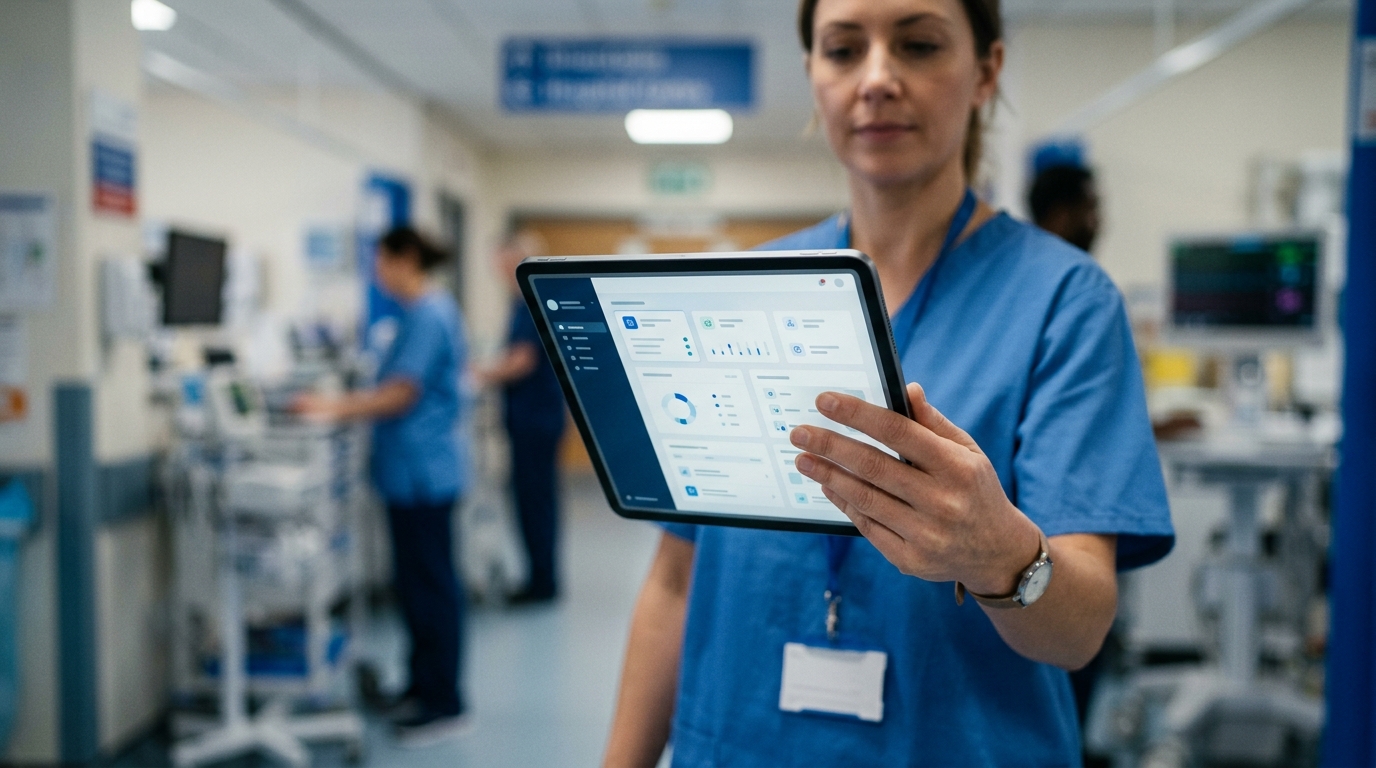
The Microsoft 365 Copilot NHS England rollout has moved from controlled trial to national deployment, and it is one of the largest single AI commitments any public health service has made. On 8 June 2026, NHS England confirmed it will give 505,000 clinicians and support staff access to Microsoft 365 Copilot, the generative AI assistant that sits inside Word, Outlook, Teams and Excel. The stated goal is blunt: claw back time lost to administration and hand it back to patient care. For UK readers, this is not a far-off Silicon Valley story. It is a decision about how half a million people who work in your local hospital or GP practice will spend their day.
- Scale: 505,000 NHS England clinicians and support staff get Microsoft 365 Copilot.
- Timeline: a 12-month onboarding plan, with 200,000 users live in the first six months and full roll-out targeted for October 2026.
- Evidence: the deal follows a trial of more than 30,000 workers across 90 NHS organisations.
- Time saved: an average of 43 minutes per staff member per day, equivalent to roughly five weeks a year per person.
- Announced: 8 June 2026 by NHS England, with the Department of Health and Microsoft UK.
What the Microsoft 365 Copilot NHS England rollout actually covers
The headline number, 505,000 staff, is easy to misread. This is not a clinical diagnosis tool and it is not being put in front of patients. It is the workplace version of Copilot, embedded in the Microsoft 365 apps NHS teams already use, drafting emails, summarising long Teams meetings, pulling key points out of documents and building spreadsheets from plain-language prompts. Rob Thompson, Chief Digital, Data and Technology Officer at NHS England, framed it in service terms: “NHS England wants to embrace cutting-edge technology, and this Microsoft partnership will mean staff can be freed from admin so they can focus on what they want to be doing, treating patients.”
Crucially, the agreement also lets NHS England build and deploy AI agents centrally, while individual trusts can build their own. A trust might create an agent to triage helpdesk tickets, speed up freedom of information responses, or chase complaints that have stalled. That agent-building layer is the same Copilot Studio capability that UK businesses are already experimenting with, and we have covered how that works in practice in our look at building AI agents in Copilot Studio. The difference here is the sheer scale of the organisation switching it on at once.
The 43-minute claim: what the trial really measured
The number that will get quoted in every headline is 43 minutes saved per person, per day. It comes from what Microsoft describes as the largest AI trial of its kind in global healthcare: more than 30,000 NHS workers across 90 organisations were given Microsoft 365 Copilot and their usage was measured over time. Forty-three minutes a day adds up to about five weeks of working time per person per year, which is the figure NHS England is leaning on to justify the spend.
We would treat that average with healthy caution. Self-reported and tool-measured time savings in productivity pilots are notoriously soft, and an average hides a wide spread: a records clerk drowning in correspondence may save far more than 43 minutes, while a nurse on a ward with little screen time may save almost none. The honest reading is that the trial shows a real, repeatable benefit for admin-heavy roles, not a uniform 43 minutes for every one of the 505,000 people. Microsoft’s own Work Trend Index for 2026 makes a similar point about uneven adoption, and it is worth reading alongside the NHS figures rather than taking the average at face value.
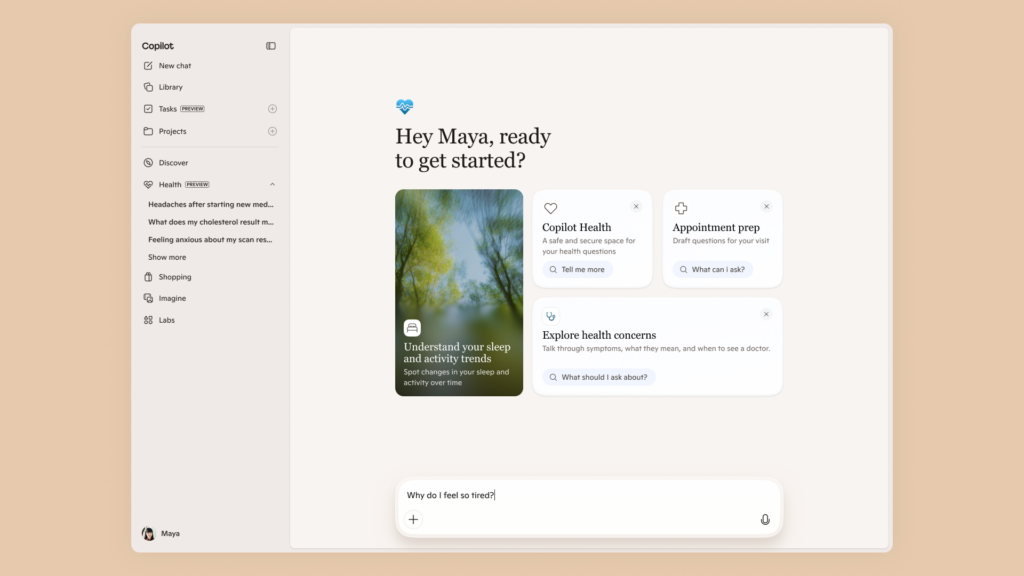
Where the saved time is supposed to land
Health Innovation and Safety Minister Preet Kaur Gill put the political case plainly: “Technology should support our NHS staff, not slow them down. Every day, doctors, nurses and other healthcare professionals spend valuable time on administrative tasks that take them away from patients.” The theory is that minutes saved on discharge letters, referral summaries and meeting notes convert into shorter waiting lists and more face-to-face care.
Whether that conversion actually happens is the real test, and it is not guaranteed. Time freed by automation can quietly be absorbed by more meetings or a heavier caseload rather than reaching patients. NHS England will need to publish outcome data, not just adoption data, for this to count as a success. The contrast with private-sector deployments is instructive: businesses measure Copilot against revenue and cost, while the NHS has to measure it against care quality and staff wellbeing, which are harder to put a pound sign against. We explored that measurement gap when we looked at lessons from earlier enterprise Copilot deployments.
Data, privacy and the rules the NHS cannot ignore
This is where UK readers should pay closest attention. Putting a generative AI assistant in front of 505,000 staff who handle some of the most sensitive personal data in the country raises immediate questions under UK GDPR and the Data Protection Act 2018. The Information Commissioner’s Office has been clear that AI tools processing health data need a lawful basis, a completed data protection impact assessment, and tight controls on what the model can see. Microsoft’s commercial Copilot does not use customer data to train its foundation models and keeps prompts within the organisation’s tenant, which is the assurance that makes a deployment like this legally workable.

The harder risks are operational rather than legal. Copilot can summarise a record incorrectly, miss nuance in a clinical note, or present a confident answer that is wrong, and an overworked member of staff might paste that summary into a letter without checking it. The Royal College of Nursing and the British Medical Association have both warned that AI must not become a way to paper over chronic understaffing. Microsoft has paired the roll-out with what it calls an extensive training and adoption programme, and the success of the whole project arguably rests on that training more than on the model itself. For context on how Microsoft is handling AI safety more broadly, see our piece on its deepfake and content-protection work.
Cost, value and who actually pays
Neither NHS England nor Microsoft has published a headline contract value, and we will not invent one. What is public is the shape of the deal: a centrally negotiated agreement that gives trusts access at scale, almost certainly at a lower per-seat rate than the standard Microsoft 365 Copilot list price of around £24.70 per user per month. Even a deeply discounted half-million seats is a significant annual commitment of public money, which is why the 43-minute figure matters so much: it is the number that has to justify the cheque.
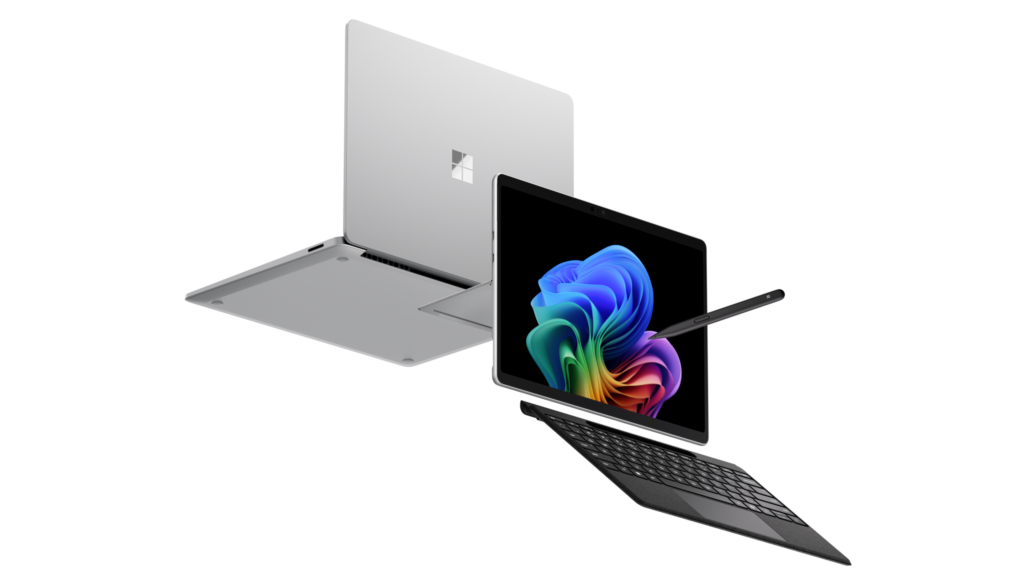
There is a hardware tail to consider too. Copilot runs happily on existing PCs, but the better experience comes on newer machines with capable webcams and microphones for Teams, and many trusts will weigh that against the Surface hardware they buy for business. For organisations outside the NHS weighing the same assistant, our breakdown of what Copilot looks like for UK small businesses covers the per-seat maths in pounds, and our comparison of Copilot and Google’s Gemini is worth a look before any organisation commits to one ecosystem.

It is also worth being honest about what the number does not capture. Licences are only part of the bill: trusts must fund the training programmes, the data protection assessments, the integration work with existing clinical systems, and the staff time spent learning the tool in the first weeks, when productivity usually dips before it rises. None of that is a reason to walk away, but anyone presenting Copilot as a simple saving is skipping the awkward middle. The trusts that budget for the rollout properly, rather than treating the licence as the whole cost, are the ones most likely to see the promised time return within the first year.
What it signals for the wider UK public sector
The NHS is not the only part of British government leaning on Microsoft’s AI stack. HMRC has been building what it describes as a world-class, AI-driven tax system, and a growing list of public bodies are running their own Copilot pilots. A deployment of this size sets a template, and a precedent, for how Whitehall buys and governs generative AI. Darren Hardman, CEO of Microsoft UK and Ireland, cast it as a productivity story: “By rolling out Microsoft 365 Copilot at scale, NHS teams can cut through everyday admin and spend more time where it matters most.”
The risk in setting a template is lock-in. Once half a million staff have built their working day around one company’s agents and assistants, switching becomes expensive and politically awkward. That is not a reason to avoid the deal, but it is a reason for the National Audit Office and Parliament to keep asking how exit, interoperability and data portability are handled. The reporting and transparency around outcomes will tell us within a year whether this was money well spent.
How NHS staff and managers should prepare
If you work in an NHS England organisation, the practical steps are clear. Wait for your trust’s official rollout rather than installing anything yourself, complete the training before you trust a summary, and never paste a Copilot-generated clinical summary into a patient record without checking it against the source. Treat the assistant as a fast first draft, not a final authority. Managers should push for local measurement: track where time is genuinely saved and feed that back, because the trusts that measure honestly will get far more value than those that simply switch it on.
For everyone else watching from outside the health service, this is the clearest signal yet that workplace AI has crossed from pilot to infrastructure in the UK. The questions have shifted from “does it work?” to “how do we govern it, measure it and stop it papering over deeper problems?” That is a more mature debate, and a healthier one. It also mirrors the wider Microsoft 365 Copilot UK rollout across British organisations, of which the NHS is now the single biggest example.
Frequently asked questions
Will Microsoft 365 Copilot make clinical decisions about my care?
No. This is the workplace version of Copilot inside Word, Outlook, Teams and Excel, aimed at administrative tasks such as drafting letters and summarising meetings. It is not a diagnostic tool and is not being placed in front of patients.
How many NHS staff are getting it and by when?
NHS England is giving 505,000 clinicians and support staff access under a 12-month onboarding plan, with 200,000 users targeted in the first six months and full roll-out expected by October 2026.
Is my health data safe with Copilot?
Microsoft’s commercial Copilot keeps prompts within the organisation’s tenant and does not use customer data to train its foundation models. The deployment still requires a data protection impact assessment and must meet UK GDPR and ICO expectations for processing health data.
Where does the “43 minutes saved” figure come from?
It is an average from a trial of more than 30,000 NHS workers across 90 organisations. It reflects admin-heavy roles strongly and lighter-touch roles barely, so it should be read as a range rather than a flat 43 minutes for everyone.
This is the right tool aimed at a real problem, and the trial evidence is genuine, but the 43-minute average will only translate into better care if NHS England measures outcomes as rigorously as it measured adoption. We would back the rollout with conditions: invest in training before anyone trusts a summary, publish care-quality data not just usage stats, and keep a hard eye on data governance and vendor lock-in. If you work in the NHS, treat Copilot as a fast first draft you always check, and push your trust to track where time is actually saved. Done well, this frees clinicians for patients; done lazily, it just adds a confident new way to make mistakes.
Buyer action
Where to buy or check next
Use this as the final check before ordering a phone, changing network or trusting a headline monthly price.










Reader discussion
Leave a comment
Comments are moderated. Keep it useful, accurate, and on topic.