Jeep’s Rewind Editions Prove Retro 4x4s Still Have More Personality Than Most New SUVs
Jeep used April 12 to turn a fan-favourite Safari concept into production reality. The Rewind editions matter because they remember character is still a feature.
The Jeep Rewind Editions remind everyone why retro 4×4 styling still earns more affection than most modern SUV facelifts. Launched on 12 April by Jeep in North America, the Rewind Editions resist the temptation to digital-everything the cabin and instead lean into the physical-control, no-nonsense personality that put the brand on driveways in the first place, as covered by Autoblog and Carscoops.
What Jeep actually announced on 12 April: what Jeep Rewind Editions actually changes
The Rewind package is the sixth of Jeep’s 12 monthly special-edition Wrangler releases under the brand’s year-long Twelve 4 Twelve programme. More importantly, it pulls a proven concept idea out of the show-car cupboard and makes it purchasable. Jeep says both the Wrangler Rewind and Gladiator Rewind are built on the Willys trim, which means this is not supposed to be a soft, decorative nostalgia bundle for people who never leave the car park.
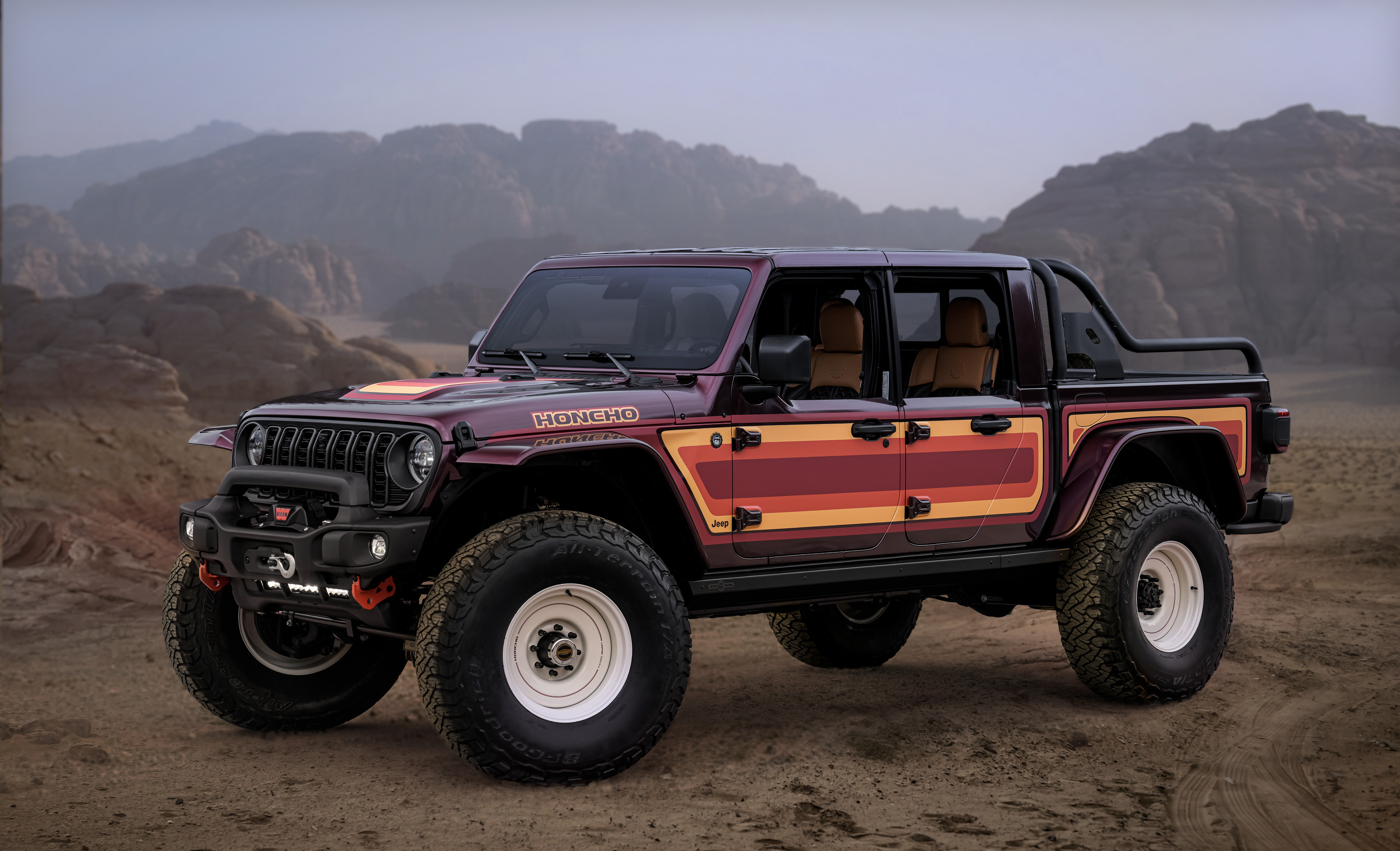
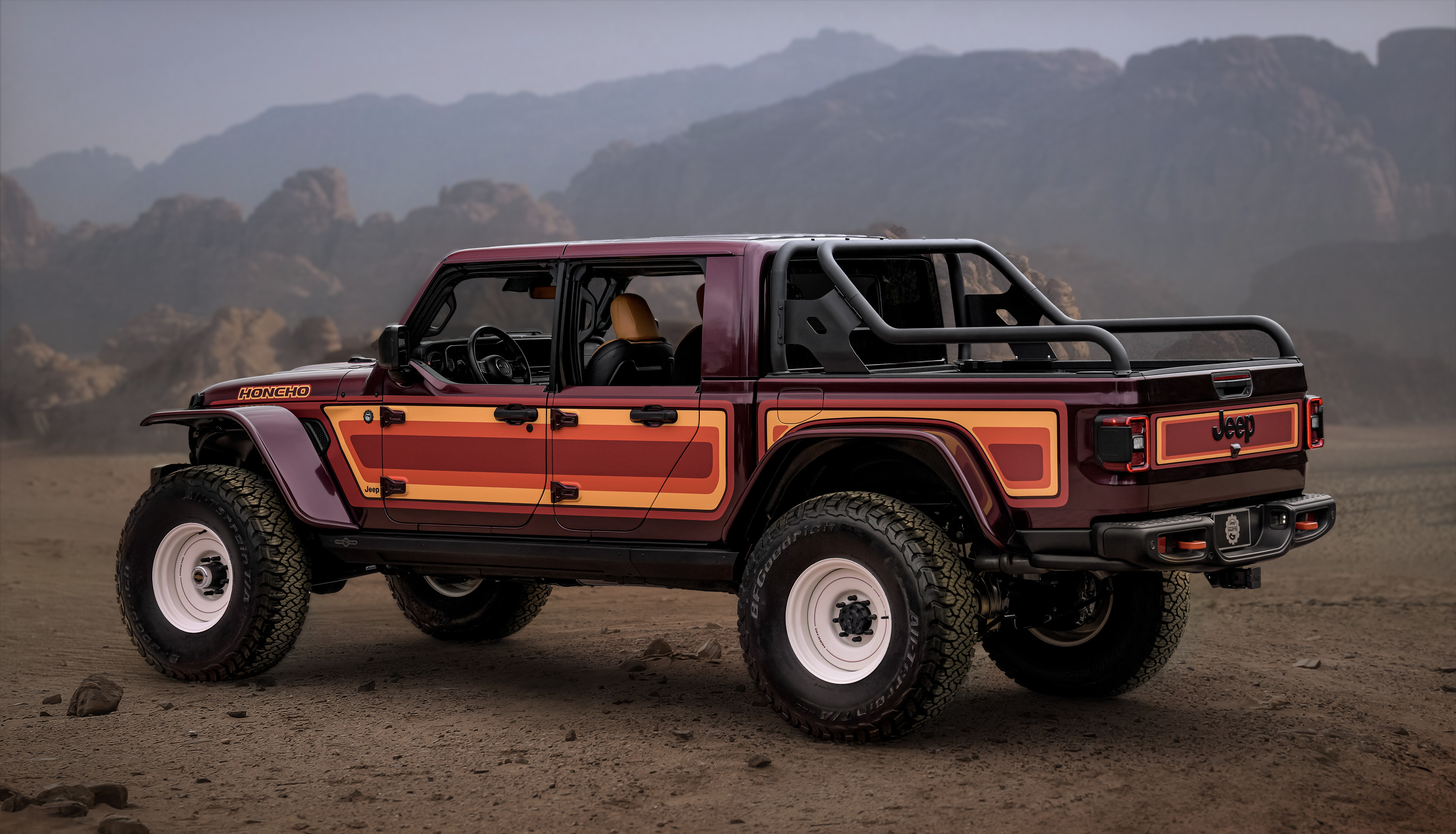
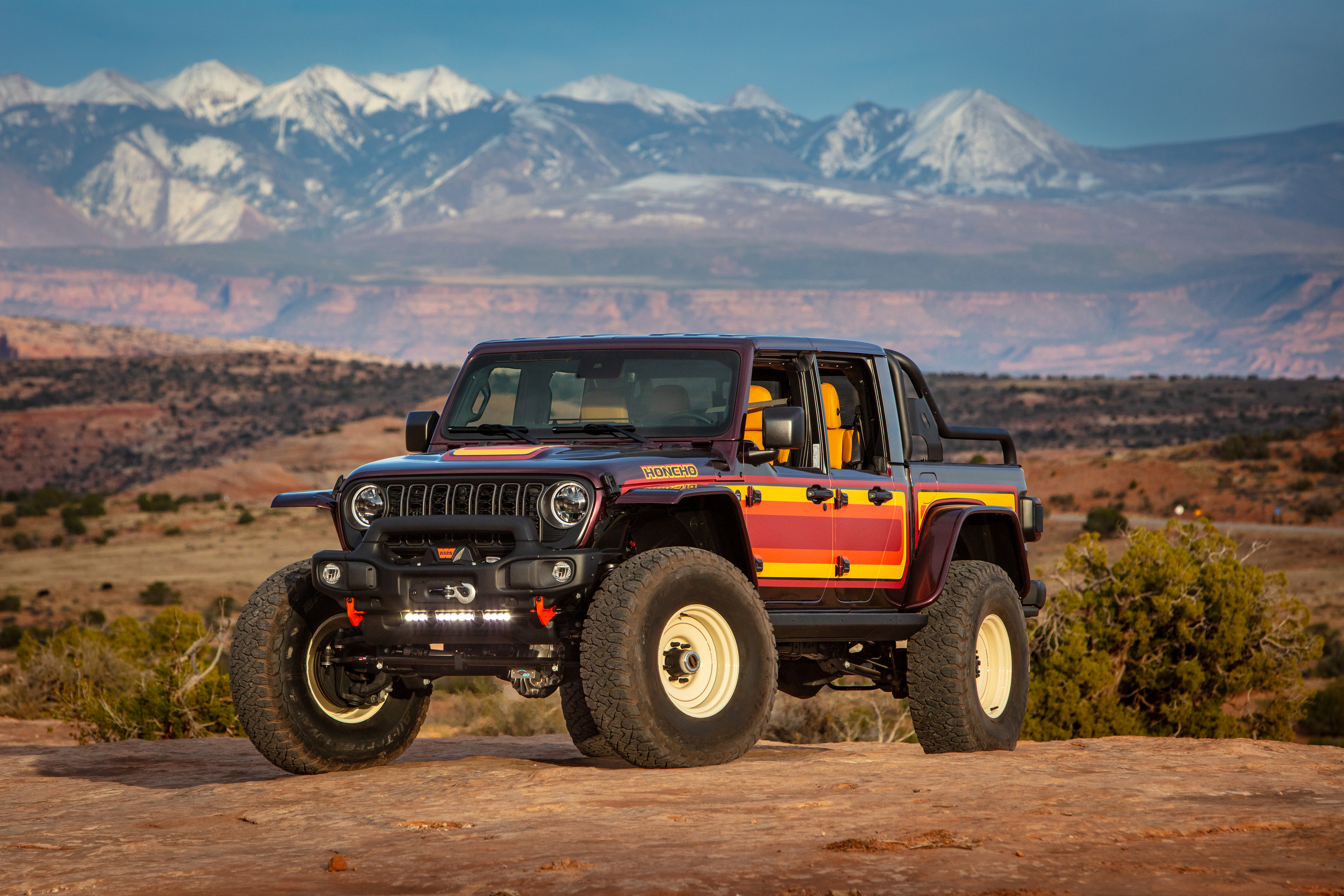
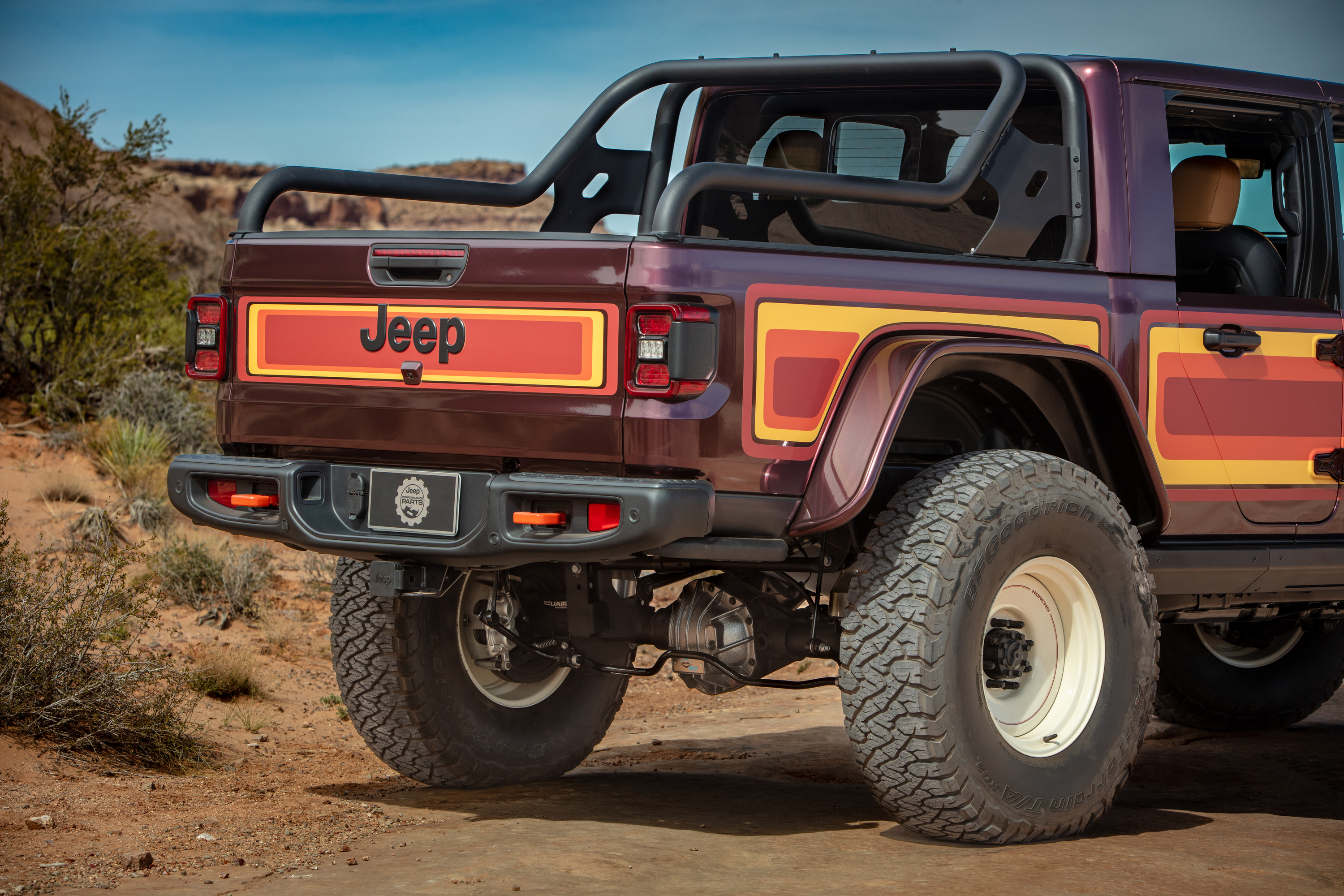
According to Jeep’s own launch release, buyers get multicolour exterior graphics inspired by 1980s and 1990s Jeep culture, gold-accent wheels and tow hooks, off-road tyres, steel rock rails and Nappa leather seats with 8-bit-inspired embossing. The colour list is as bold as it needs to be: Bright White, Granite Crystal, Anvil, Gloss Black, Hydro Blue, Joose and Reign, with Earl reserved for the Wrangler. Orders open in May, and the Rewind package costs roughly $1,900 USD over a comparably equipped Willys, which works out to about £1,500 at current exchange rates (the package is a North American launch for now).
Why this idea works better than most heritage gimmicks — the jeep rewind editions angle
Retro design usually fails when a company mistakes reference for substance. That is how you end up with fake heritage stitched onto bland products that were clearly designed by committee. Jeep’s Rewind editions work because the inspiration is specific rather than vague. The company is not gesturing towards some imaginary golden age of outdoorsy vibes. It is directly borrowing from the brightly coloured CJ, YJ and TJ era that many buyers actually remember as the point where Jeep became culturally iconic.
That matters more than most carmakers admit. There is a reason the 2025 Easter Jeep Safari concept travelled so well online and among enthusiasts on the ground. It looked like a vehicle with an opinion. Modern SUV design too often flattens everything into one safe premium-grey language, as if fun were somehow unserious. Jeep is betting that a properly executed throwback can feel more authentic than another faux-luxury trim pack, and on the evidence of this 12 April reveal, that bet looks sound.
Capability is still doing the heavy lifting
The smartest part of the Rewind strategy is that Jeep did not build it on a weak foundation. The company says the package keeps Willys hardware, including off-road tyres, locking rear differential, Off-Road+ mode, programmable auxiliary switches and trailer-hitch functionality. In other words, the retro look is wrapped around a trim that already speaks Jeep’s core language. This is crucial, because heritage only lands when the product beneath it still behaves like the brand people think they are buying.
It also helps that the Gladiator gets the same treatment. Most brands would have stopped at the Wrangler and declared the job done. Jeep extending Rewind to the industry’s only open-air pickup is a clever reminder that the throwback does not have to stay trapped inside one body style. That move broadens the idea from a neat Wrangler footnote into a stronger line-wide statement about what the Jeep brand wants its personality to look like in 2026.
| Rewind detail | Why it matters |
|---|---|
| Inspired by the 2025 Easter Jeep Safari concept | Shows Jeep is responding to real fan enthusiasm instead of inventing nostalgia out of nowhere. |
| Built on Willys capability | Keeps the package tied to actual off-road credibility rather than pure cosmetics. |
| Retro graphics, gold accents and 8-bit seat embossing | Gives the editions a visual identity strong enough to stand apart in a bland SUV market. |
| £1500 (about $1,900) over Willys, May ordering | Makes the package feel attainable instead of like an absurd collector tax. |
Where the nostalgia pitch could still go wrong
There is still a limit to how far nostalgia can carry a product. Buyers who hate loud graphics are not going to be converted by a clever press release, and some people will always see this as a sticker-heavy throwback rather than a serious trim. Jeep also has to be careful not to overplay retro cues across too many special editions, because the moment every monthly drop is trying to be memorable, the whole programme starts to blur.
Even so, the bigger risk in today’s market is not excess personality. It is a total absence of it. That is what makes Rewind interesting. Jeep is not pretending this package reinvents off-roading. It is reminding buyers that design can still feel playful without becoming unserious. For a sector drifting into identical surfacing and increasingly bloodless premium signalling, that is a welcome correction.
Our verdict
Jeep’s 12 April Rewind launch lands because it does not apologise for being colourful, referential and a bit loud. The package translates real concept-car excitement into something ordinary buyers can actually order, and it does so without abandoning the brand’s capability story. Plenty of carmakers claim to understand heritage. Jeep has done the rarer thing here and made it look fun again.
Related reading on MTW
Buyer action
Where to buy or check next
Use this as the final check before ordering a phone, changing network or trusting a headline monthly price.










Reader discussion
Leave a comment
Comments are moderated. Keep it useful, accurate, and on topic.