
This Google Pixel 9a review is the case for the £499 phone that quietly became the default recommendation for anyone who wants flagship software without the flagship bill. Google launched the 9a in the UK in April 2025, as set out in its own Pixel blog announcement, and a year on it sits in an awkward, brilliant spot: cheaper than an iPhone 16e, the same money as a Samsung Galaxy A56, yet promising seven years of updates and a camera pipeline borrowed from phones costing twice as much. I have not run my own lab tests on the 9a, so what follows is my editorial judgement built from Google’s published specifications and the body of reported owner and reviewer evidence. My verdict, for the impatient: this is the safest £499 in British smartphones.
Key facts
- Price: £499 for 128GB, £599 for 256GB at the Google Store UK (last checked: 2026-06-14).
- Chip and display: Tensor G4, 8GB RAM, 6.3in OLED at 120Hz, up to 2,700 nits peak brightness.
- Cameras: 48MP f/1.7 main, 13MP ultrawide, 13MP front, per Google’s spec sheet.
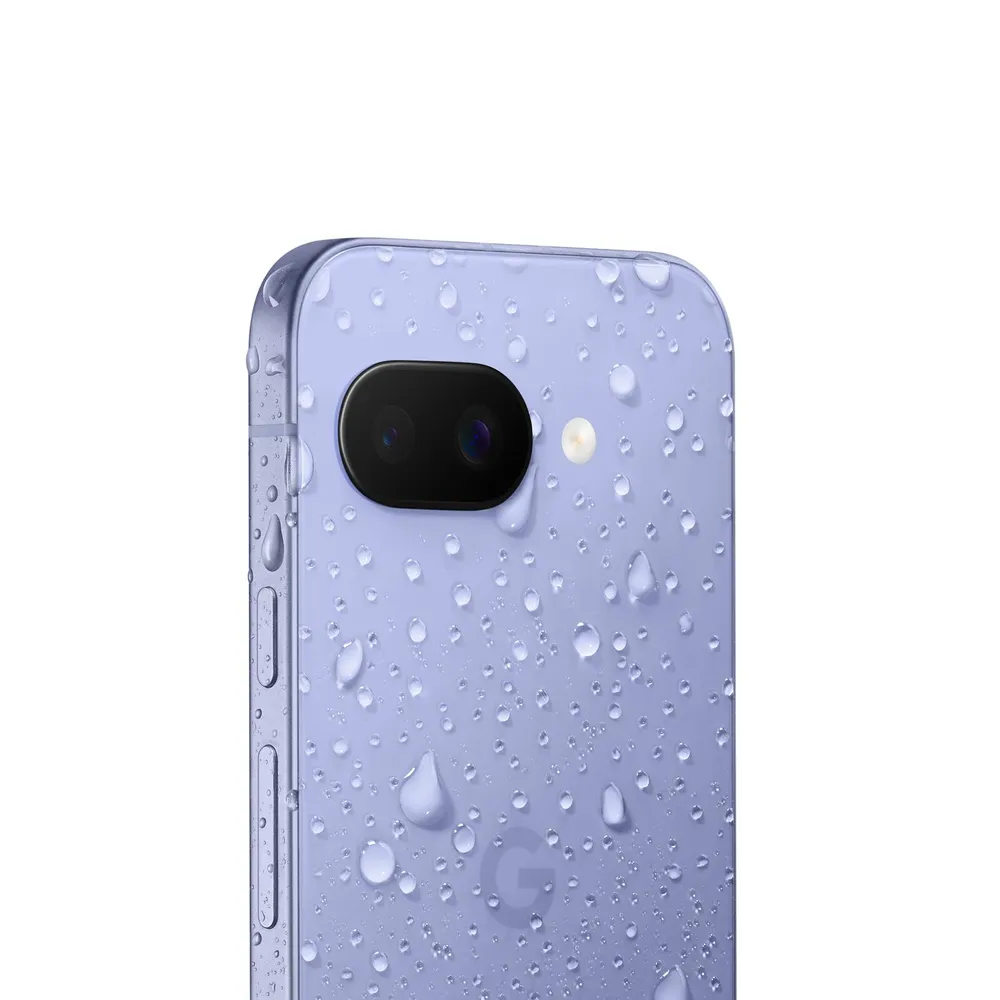
- Battery and durability: roughly 5,100mAh, 23W wired charging, IP68 water and dust resistance.
- Support: seven years of OS, security and Feature Drop updates, the longest in its class.
Why this Pixel 9a review starts with the price
At £499 the 9a is not the cheapest phone in this argument, and that is the point. Google has deliberately parked it above the true budget tier so it can carry hardware the £349 crowd cannot. You are paying a premium over the entry-level mid-rangers for two things that genuinely compound over time: the Tensor G4 silicon that powers on-device Gemini features, and a support window that outlasts almost everything else on a UK shelf. Spread across seven years, £499 works out at a little over £70 a year of guaranteed software currency. Few rivals can make that maths look as sensible.
Context matters here. The 9a undercuts Apple’s iPhone 16e, which launched at £599, while matching the Samsung Galaxy A56 at £499. The Nothing Phone (3a) sits lower, from £329 at launch and now discounted further, and the iPhone 17e and Pixel 10a have since arrived to muddy the waters further. If you want the wider field, MobileTechWorld’s best mid-range phone UK 2026 guide and the iPhone 16e versus Nothing showdown map out the alternatives in detail. The 9a’s job in that crowd is to be the one you cannot really get wrong.
Design and screen: plain on purpose
Google dropped the protruding camera visor that defined recent Pixels and gave the 9a a flat, almost featureless rear with a discreet pill-shaped camera island. It is a polarising look in press shots and a far better one in the hand, because the phone finally sits flush on a desk and slips into a pocket without snagging. The body is plastic-backed with an aluminium frame and IP68 sealing, available in Obsidian, Porcelain, Peony and the lilac Iris finish that has become the unofficial face of the range. At 186g it is light without feeling cheap, and Google’s recycled-material claims hold up to scrutiny on the spec page.
The 6.3in OLED is the quiet hero. A 120Hz adaptive refresh rate keeps scrolling smooth, and a quoted 2,700-nit peak means outdoor legibility on a bright British summer day is no longer the compromise it once was at this price. Bezels are even but not invisible, and there is no telephoto, no in-display gimmickry, nothing to distract. For a phone aimed at people who just want a reliable, bright, fast screen, that restraint reads as confidence rather than cost-cutting.
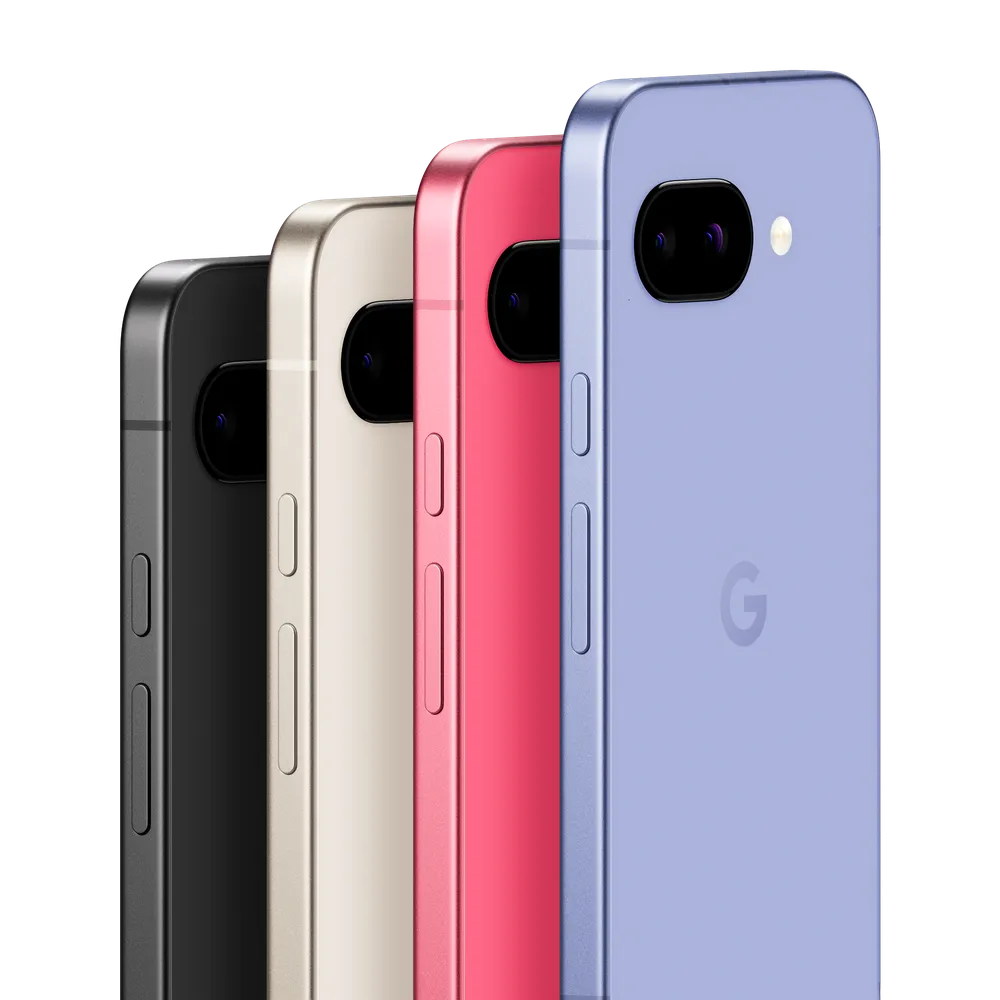
It is worth dwelling on what that screen does not have, because the omissions are the story of the whole phone. There is no curved glass to catch glare and crack expensively, no variable aperture, no headline-grabbing resolution war with rivals. Google has chosen a flat, sharp, bright panel and spent its budget making it consistent rather than spectacular. Colour accuracy out of the box is reported as good, the adaptive refresh genuinely saves battery rather than existing as a spec-sheet boast, and the under-display fingerprint reader is quick enough not to irritate. On the reported evidence the screen is the sort of panel you stop noticing within a few days, which for a £499 phone is the highest praise available.
Camera: a 48MP sensor that punches up
The headline change from the Pixel 8a is the move to a 48MP f/1.7 main sensor with a wider aperture, paired with a 13MP ultrawide. On paper that is a downgrade in resolution from some rivals, and a couple of reviewers, including Moor Insights and Strategy, have called the hardware merely competent. What lifts it is Google’s computational photography. Daylight stills are reported to come out with the punchy, true-to-life colour science Pixels are known for, and the macro focus mode pulls genuinely impressive close-ups from a sensor that, on a spec sheet alone, has no business doing so.
The reported weak spot is low-light moving subjects and low-light video, where the smaller sensor and lack of a dedicated telephoto show. For static scenes, Night Sight remains a class leader at this price. Add Magic Editor, Best Take and the Add Me group-photo trick, all running on Tensor G4, and the 9a’s camera value is less about raw optics and more about what the software extracts from them. If photography is your single priority and budget allows, MobileTechWorld’s Honor 200 Pro versus Pixel 9 Pro comparison is worth a read, but for most buyers the 9a’s camera is more than enough.
Performance, battery and the Tensor question
Tensor G4 with 8GB of RAM is not built to win benchmark league tables, and it does not. What it does well is keep day-to-day Android fluid and, crucially, run the on-device Gemini features Google leans on so heavily. Call Assist, Gemini summaries, voice typing and the various Pixel-exclusive tricks all work because the silicon and software were designed together. If you want to know what those AI features actually deliver day to day, MobileTechWorld’s guide to setting up Gemini on a Pixel or Samsung walks through the lot, and its wider Gemini verdict weighs whether the paid tier is worth it.
Battery is where the 9a quietly excels. The jump to roughly 5,100mAh, up from 4,492mAh on the 8a, is the biggest cell Google has put in an A-series phone, and the firm quotes 30-plus hours of life against the 8a’s 24. Reported owner experience backs a comfortable all-day result with headroom for most users. Charging is the trade-off: 23W wired and 7.5W wireless are slow by 2026 standards, so an overnight top-up is the assumption rather than a quick pre-night-out blast. It is the most defensible compromise on the spec sheet.
The performance picture deserves a fair hearing rather than a benchmark verdict, because raw numbers undersell how the phone actually feels. For everyday tasks, messaging, browsing, social apps, navigation and casual gaming, the Tensor G4 is more than fast enough, and the tight integration between Google’s silicon and software means animations stay fluid where cheaper chips stutter. Push it with heavy 3D titles at maximum settings and it will throttle, and sustained exports or demanding multitasking are not its strong suit. But the reality for the audience this phone targets is that they will rarely, if ever, hit those ceilings. The 9a is tuned for the way most people actually use a phone, and on that measure it never feels slow.
Software and seven years of updates
This is the single strongest line on the 9a’s CV. Google commits to seven years of OS upgrades, security patches and Feature Drops, a promise that, at £499, no rival in this bracket matches. A phone bought today should still be receiving current Android and security updates well into the next decade, which transforms the value calculation. It also means the 9a will keep gaining features after launch, the way Pixels reliably do. For owners weighing the latest platform release, MobileTechWorld’s explainer on Android 17 for UK Pixel owners covers what arrives and when.
The clean Pixel build helps too. No duplicate app stores, no bloat, no skin fighting Android’s own design. You get the OS as Google intends it, with the AI layer baked in rather than bolted on. If you are coming from another platform, the move is painless, and MobileTechWorld’s walkthrough on moving to a new Android phone in the UK smooths the transfer.
How it stacks up against the £499 field
Against the Samsung Galaxy A56, also £499, the choice comes down to philosophy. Samsung counters with a larger, brighter-feeling screen and One UI’s deep customisation, but its update promise is shorter and its on-device AI story less coherent than Google’s. If you live in Samsung’s ecosystem, the A56 is the comfortable pick; if you want the cleanest software and the longest support, the 9a wins. MobileTechWorld’s note on whether the Samsung Galaxy S26 is worth it shows how far up the range you would have to climb to beat the 9a on software longevity.
The iPhone 16e at £599 is the price-jump rival. It buys you Apple silicon that humbles the Tensor G4 on raw speed and the broader iOS ecosystem, but it costs £100 more, ships with a single rear camera, and its long-term update cadence, while strong, is matched by the 9a’s seven-year pledge. The Nothing Phone (3a), from £329 at launch, is the value spoiler: a more distinctive design and lower price, but a shorter support window and a less proven camera pipeline. For the head-to-head detail, see MobileTechWorld’s sub-£600 showdown and the case for the Nothing Phone 3a as a UK bargain.

Where to buy the Pixel 9a in the UK and what it costs
The Google Store UK lists the 9a at £499 for 128GB and £599 for 256GB (last checked: 2026-06-14), and it is the most reliable place for the full colour range and any trade-in offers. Amazon UK stocks it at or around the same price, frequently with short-lived promotions, while Currys and Argos carry it for buyers who want to collect in store or spread the cost on a contract. Across all four, the 128GB model is the one to watch: 128GB is plenty for most people given Google Photos handling, and the 256GB premium is rarely worth it unless you shoot a lot of video.
With the Pixel 10a now on shelves, expect the 9a to drift into discount territory through 2026, which only sharpens its value. If you are weighing the newer model, MobileTechWorld’s Pixel 10a UK verdict sets out whether the upgrade is worth the extra outlay or whether the 9a remains the smarter buy at a falling price.
Verdict
The Pixel 9a does not try to be the best at any one thing, and that is precisely why it is so easy to recommend. The camera is clever rather than class-leading, the chip is steady rather than fast, and the charging is slow. But the screen is excellent, the battery lasts, the software is the cleanest in the business, and the seven-year update promise makes the £499 outlay look like a long-term investment rather than a yearly gamble. I’ll frame it plainly as editorial judgement from the specs and the weight of reported evidence: for most British buyers who want a phone they can stop thinking about, this is the value champion of 2026.
My score: 8.5/10. Buy it if you want the longest software support, the cleanest Android and dependable all-day battery at £499. Skip it if you need fast charging, a telephoto camera or chart-topping raw performance, in which case spend up to an iPhone 16e or wait for a Pixel 10a discount.








Reader discussion
Leave a comment
Comments are moderated. Keep it useful, accurate, and on topic.