
The TCL C855K vs C8K contest has been half-decided by Britain’s stockrooms, because the 2024 Mini-LED bargain is basically gone from UK shelves. In our checks on 10 June 2026, Amazon UK’s 65C855K listing reads “Currently unavailable”, Appliances Direct flags the set as “no longer available”, and RGB Direct shows it at £899 but “Out of Stock”. That changes the shape of this comparison. Twelve months ago the C855K was the default recommendation for anyone who wanted serious QD-Mini LED hardware without a four-figure receipt; today it is an end-of-line product you have to hunt, while its 2025 successor, the C8K, sits on a live TCL UK product page with stockist links and a noticeably fancier spec sheet.
So the honest question is no longer “which one is cheaper”, it is “should you chase the last C855K clearance units, or pay the C8K’s settled UK price of around £1,199 and move on”. We have scored it the old-fashioned way: six rounds, a winner in each, and a final verdict with marks out of ten for both sets. Everything below comes from TCL’s published UK spec pages, What Hi-Fi?’s review coverage and TechRadar’s measurements, not from a lab session of our own, and we have flagged the one or two places where TCL’s own numbers need careful reading.
Key facts
- The TCL 65C855K is end of line in the UK: Amazon’s listing reads “Currently unavailable”, Appliances Direct says “no longer available” and RGB Direct lists £899 “Out of Stock” (last checked: 2026-06-10).
- TCL’s UK spec sheet for the 65C855K lists 1,344 local dimming zones, a 144Hz panel, two HDMI 2.1 ports (alongside two HDMI 2.0b inputs) and Onkyo 2.1.2 Dolby Atmos audio; What Hi-Fi? reviewed it at £1,299 in February 2025.
- TechRadar measured the C855 at 2,919 nits peak brightness on a 10% window in Standard mode.
- TCL’s live UK page for the 65C8K advertises “Precise Dimming Series Up to 3840 Zones”, an “HDR 4500 nits” badge, a CrystGlow WHVA panel and Audio by Bang & Olufsen.
- UK retailers list the 65C8K-UK at around £1,199 (Richer Sounds and Currys, last checked: 2026-06-10), down from a £1,599 launch price.
Why the C855K bargain has vanished from UK shelves
The C855K’s disappearance is the single most important fact in this comparison, so let’s be precise about it. Amazon UK’s listing for the 65-inch model, the B0D8TYZFGY product page, currently states “Currently unavailable” with no dispatch estimate. Appliances Direct has gone further and marked the set as “no longer available”; its page code still carries a stale £879 price in the background data, but you cannot actually buy at that figure, and we would treat it as a ghost of the last clearance round rather than a live offer. RGB Direct still shows a £899 price, but with an unambiguous “Out of Stock” label. All three checks were made on 10 June 2026, and the pattern is what end of line looks like: prices frozen, baskets closed.
That matters because the C855K earned its reputation at much higher prices. What Hi-Fi? reviewed the 65-inch model at its £1,299 launch in a February 2025 piece, with the 75-inch at £1,699, the 85-inch at £2,299 and the colossal 98-inch at £3,999. The sets that drifted under £900 during 2025 and early 2026 were the same hardware at roughly two-thirds of the money, which is why the C855K became the answer to so many budget Mini-LED questions, in much the same way that aggressive pricing reshaped the conversation around Samsung’s Micro RGB headline pricing this spring. Once the clearance stock dries up, that value story dies with it.
| TCL 65C855K (2024) | TCL 65C8K (2025) | |
|---|---|---|
| Panel | QD-Mini LED, 144Hz | QD-Mini LED, CrystGlow WHVA, 144Hz Motion Clarity Pro |
| Local dimming | 1,344 zones (65-inch, per TCL UK spec sheet) | “Up to 3840 Zones” (TCL range claim on the 65C8K page) |
| Brightness claim | “4K HDR PREMIUM 3300” badge on the 65-inch page; 3,500 nits quoted for the range | “HDR 4500 nits” badge |
| Measured | 2,919 nits peak, 10% window, Standard (TechRadar, C855) | No independent measurement cited here |
| Audio | Onkyo 2.1.2 with Dolby Atmos | Audio by Bang & Olufsen |
| Gaming | 2x HDMI 2.1 plus 2x HDMI 2.0b (eARC on a 2.0b), ALLM, VRR, FreeSync Premium Pro, Game Master Pro | Game Master, 144Hz; full port spec not listed on the UK page in our checks |
| Platform | Google TV | Google TV |
| UK availability | End of line; unavailable at Amazon, Appliances Direct and RGB Direct (10 June 2026) | Live on TCL UK with stockist links |
One health warning before the rounds begin. TCL’s brightness marketing needs careful reading on both sides of this table. The 3,500-nit figure widely quoted for the C855K applies to the range and its larger sizes, while the 65-inch product page carries a “4K HDR PREMIUM 3300” badge. Similarly, the C8K page’s “Up to 3840 Zones” line is a range-wide claim, and history suggests the biggest screens get the biggest numbers. We have kept TCL’s own wording in quotation marks throughout so you can see exactly what is a manufacturer claim and what has been independently measured.
Both televisions use TCL’s quantum dot colour system over a Mini-LED backlight, which is precisely why the C855K aged so well: the fundamental recipe has not changed for the newer generation, it has simply been turned up. That is also why this comparison is genuinely close on hardware and lopsided on availability, a combination that produces a more interesting verdict than the usual old-versus-new walkover.
Round 1: dimming zones, brightness and panel hardware
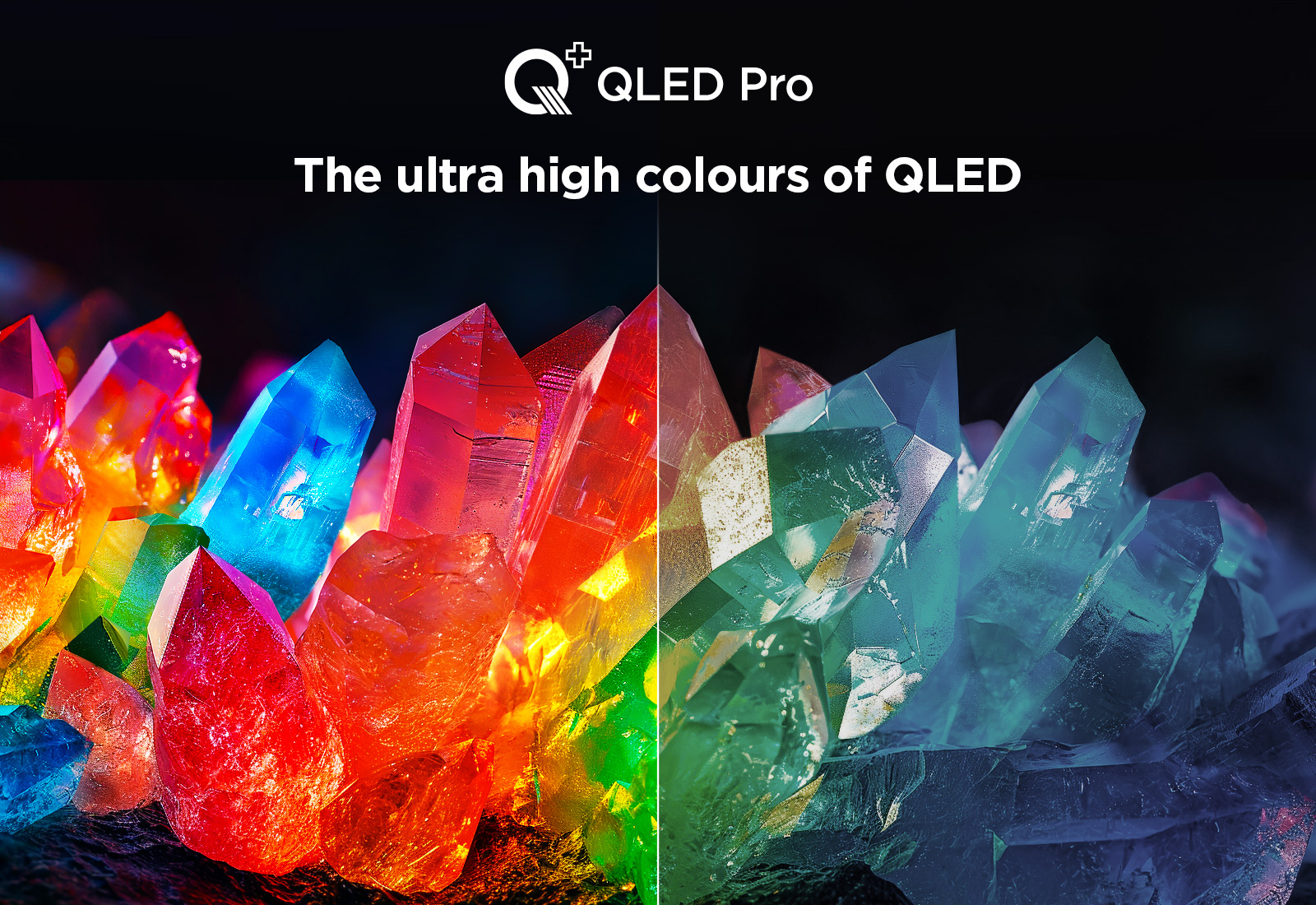
On paper this is the C8K’s strongest territory. TCL’s UK page for the 65C8K leads with three hardware bullets: “Precise Dimming Series Up to 3840 Zones”, an “HDR 4500 nits” badge and QLED quantum dot colour. It also lists a “CrystGlow WHVA Panel”, TCL’s wide-viewing-angle VA variant, an All-domain Halo Control system for managing backlight blooming, and a virtually ZeroBorder frame. Against that, the 65C855K’s spec sheet shows 1,344 local dimming zones, which was a class-leading count for an under-£1,300 television in 2024 but is less than half the C8K range’s headline figure.
The brightness picture deserves the same scrutiny. The only independently measured number in this comparison belongs to the older set: TechRadar’s C855 review recorded 2,919 nits peak on a 10% window in Standard mode, an enormous result that explains why the C855K handled bright-room HDR so confidently. The C8K’s “HDR 4500 nits” badge suggests TCL has pushed further still, and the trajectory across the 2026 TV line-ups we have tracked makes that entirely plausible, but a manufacturer badge is not a measurement. Until the 65-inch C8K is measured independently at retail firmware, the sensible reading is “brighter, by an amount to be confirmed”.
Even with that caution applied, more zones, a wide-angle panel variant and a dedicated halo-control system represent real generational movement rather than badge inflation. The C855K remains a seriously bright, seriously capable panel, and nothing about the C8K’s arrival makes it worse. But a straight hardware round has to go to the newer set. Round 1 goes to the C8K, because TCL’s published zone counts and panel upgrades clearly outrun the 2024 hardware even before brightness claims are settled.
Round 2: gaming, HDMI 2.1 and 144Hz
Here the comparison flips, because the C855K’s gaming spec is fully documented and the C8K’s is not. TCL’s UK page for the 65C855K spells everything out: two HDMI 2.1 ports with ALLM and VRR, two further HDMI 2.0b inputs, a native 144Hz panel, FreeSync Premium Pro certification and the Game Master Pro suite with its game bar and accelerator modes. TCL sensibly routes eARC through one of the 2.0b inputs, which leaves both full-bandwidth 2.1 sockets free for current consoles, so a PS5 and an Xbox Series X can stay connected without the soundbar claiming one of them. Anyone who watched this week’s Xbox Games Showcase and started budgeting for autumn releases should check that those two 2.1 inputs cover their console plans.
The 65C8K will almost certainly be a fine gaming television: its UK page lists 144Hz Motion Clarity Pro and the Game Master feature set, and it would be strange for TCL to step backwards on connectivity in 2026. But “almost certainly” is doing work in that sentence. In our checks of the UK product page, the port-level specification, including how many of the C8K’s HDMI inputs run at full 2.1 bandwidth, is not spelled out in the page’s headline specs, so a buyer with multiple current-generation consoles should verify the port map on the retailer listing or in store before paying. Console owners juggling a Series X with a Switch 2 library will know exactly why that detail is worth thirty seconds of checking.
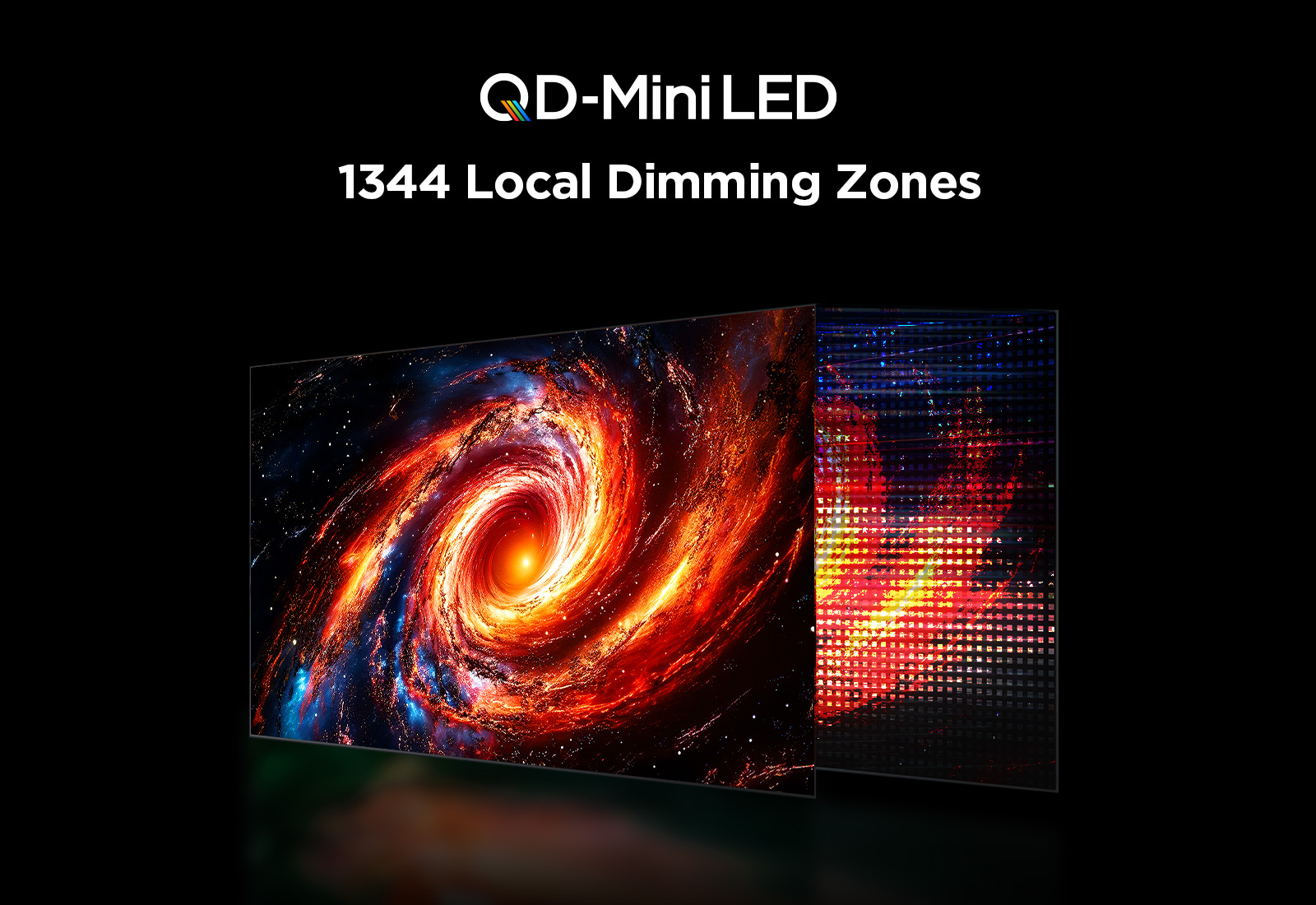
We score on what is verified, not what is probable. Round 2 goes to the C855K, because its two documented HDMI 2.1 ports, FreeSync Premium Pro badge and Game Master Pro suite make it the only set in this contest with a fully published, fully proven gaming specification.
Round 3: Onkyo sound against Bang & Olufsen
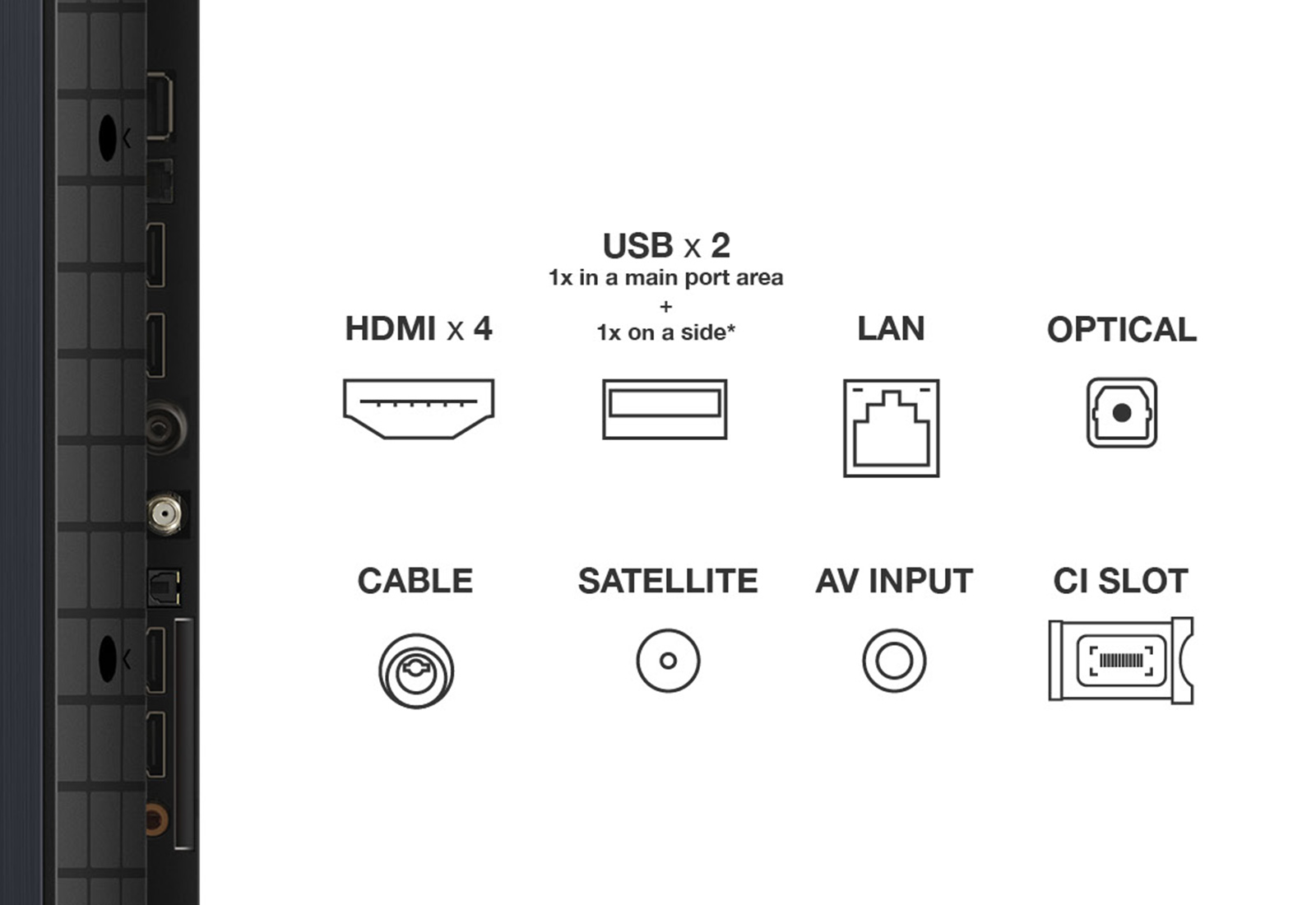
TCL’s audio partnerships tell you a lot about each set’s ambitions. The C855K carries an Onkyo-branded 2.1.2 system with Dolby Atmos, meaning a proper subwoofer channel and a pair of up-firing drivers for height effects. For a television of its era and price, that is an unusually complete arrangement, and it is one reason the set never felt like it was begging for an immediate soundbar purchase in the way most mid-range televisions do.
For the C8K generation, TCL has swapped partners and gone upmarket: the 65C8K’s UK page advertises “Audio by Bang & Olufsen”, complete with B&O’s Beosonic sound-shaping interface and what TCL describes as hi-end speaker hardware. We have not heard the two sets side by side and will not pretend otherwise, but a tuning partnership with Bang & Olufsen is a statement of intent, and the Beosonic control layer gives owners genuinely useful tonal adjustment rather than a list of opaque presets. It is the kind of upgrade you notice every single evening, not only on Atmos showpieces.
The usual caveat applies to both: any flat television’s acoustics are constrained by physics, and serious film fans will still graduate to dedicated speakers, with something like the Sonos Arc Ultra remaining the obvious step up for either set via eARC. But judged as built-in systems on the published specifications, the newer partnership wins. Round 3 goes to the C8K, because Bang & Olufsen tuning with the Beosonic interface outguns the C855K’s already respectable Onkyo 2.1.2 arrangement on ambition and adjustability.
Round 4: software, Google TV and processing
Both televisions run Google TV, so the day-to-day experience of finding something to watch is near identical: the same aggregated home screen, the same app coverage including all the UK catch-up services, Chromecast built in, and the same Google Assistant voice layer. If you have used a Google TV set, or even a recent streaming stick, neither set will surprise you, and that is a compliment. Platform parity means this round turns on what sits underneath the interface.
TCL Europe’s own C855K presentation, above, shows how the company positioned the 2024 set’s processing: a competent AiPQ picture engine doing sensible upscaling and HDR mapping without the algorithmic showboating of pricier rivals. The C8K moves to what TCL’s UK page calls the TSR AiPQ processor with an expanded set of AI picture functions, plus a low-reflection screen treatment that is as much a software-era feature as a hardware one, since it changes how aggressively the set needs to drive brightness in daylight. TCL also lists Miracast and Google Cast support, and an “Ai Art” mode for ambient display duty.
There is a quieter argument for the newer set here too. Platform updates and app support follow the hardware generation, and a television bought at the start of its retail life will simply sit closer to the front of TCL’s update queue for longer than one bought at the very end of clearance. Round 4 goes to the C8K, because identical Google TV foundations leave the newer TSR AiPQ processor, the low-reflection screen and a longer update runway as the only meaningful differences, and all three favour the newer set.
Round 5: TCL C855K vs C8K on price and availability
This is the round that decides the contest, and it barely needs a scorecard. As of 10 June 2026, we could not find a UK retailer that would actually sell us a 65C855K: Amazon’s listing is “Currently unavailable”, Appliances Direct says “no longer available”, and RGB Direct’s £899 listing is “Out of Stock”. A television you cannot buy does not have a price, it has a history. The honest framing is this: if you find a genuine boxed 65C855K at clearance somewhere under roughly £900, the old maths still works brilliantly, but you should treat any such sighting as a lucky find rather than a plan.
The C8K’s pricing tells the other half of the story. TCL’s UK page for the 65C8K is live with stockist links, and major retailers have settled UK pricing: Richer Sounds and Currys both list the 65C8K-UK at around £1,199 as of 10 June 2026, down from a £1,599 launch price. That softening is exactly how the C855K became a bargain in its own time, and it means the gap between a sub-£900 clearance C855K and a current C8K is roughly £300, not the open question it might first appear.
What we can say is that the C8K’s spec puts it in conversation with sets costing considerably more, the same dynamic that made our sub-£1,500 OLED round-up such a competitive read this spring. Round 5 goes to the C8K, by default but decisively, because the C855K is end of line in the UK and a comparison needs two products you can actually purchase.
Round 6: future-proofing and support
Buying the last unit of an end-of-line television is not reckless, but it does come with small print. Your statutory rights against the retailer are unaffected, and TCL’s standard warranty applies to clearance stock as it does to full-price stock. The practical differences are subtler: replacement panels and spares become scarcer as a model ages out, firmware attention shifts to current ranges, and if a fault emerges in year three you are more likely to be offered a refund or a different model than a like-for-like repair. None of that is a reason to refuse a genuine sub-£900 C855K; all of it is a reason not to pay near-launch money for one in mid-2026.
The C855K’s saving grace on longevity is that its core spec was built ahead of its time. A 144Hz panel with two HDMI 2.1 inputs and FreeSync Premium Pro covers everything current consoles can output and most of what gaming PCs will ask of a living-room screen for years yet, so the 2024 set is not facing functional obsolescence, merely commercial retirement. The C8K, for its part, is the current generation, which means years of firmware attention, accessory compatibility and panel spares availability stretch ahead of it rather than behind it.
There is no clever contrarian call to make here. Round 6 goes to the C8K, because a 2025 set near the start of its support life will always age more gracefully than a 2024 set at the end of its shelf life, however capable the older hardware remains.
Where to check stock in the UK
For the 65C855K, the situation as of our checks on 10 June 2026: Amazon UK’s listing reads “Currently unavailable” with no restock estimate; Appliances Direct marks the set “no longer available”, and the £879 figure lingering in its page data is stale rather than bookable; RGB Direct shows £899 but “Out of Stock”. If you are determined to hunt one, ring local independents and check eBay’s brand-new boxed listings, and hold a hard ceiling of about £900: above that, the clearance maths collapses against the newer set, and at launch-era prices it makes no sense at all.
For the 65C8K, start at TCL’s UK product page, which carries the official specification and links out to stockists; Currys and Amazon UK are the obvious first checks for live availability. On price, Richer Sounds and Currys both list the 65C8K-UK at around £1,199 as of 10 June 2026, down from a £1,599 launch, so that is the figure to benchmark against the older set’s clearance prices. For further context, the 65C855K’s spec page remains live, and What Hi-Fi?’s February 2025 review pegged the old set’s launch ladder at £1,299 for the 65-inch, £1,699 for the 75-inch, £2,299 for the 85-inch and £3,999 for the 98-inch, useful context for judging whether the C8K’s opening prices are aggressive or ambitious.
The TCL 65C8K wins this comparison four rounds to two, and wins the only round that ultimately matters: you can buy one. It carries the bigger zone-count claim, the brighter HDR badge, Bang & Olufsen audio and a fresher processor on a platform you already know, and it sits near the start of its support life rather than the end. The TCL 65C855K loses not because it got worse, but because it effectively left the market; its verified gaming spec and TechRadar-measured 2,919-nit brightness mean a genuine clearance unit under about £900 is still a terrific purchase for anyone lucky enough to find one, and gamers might even prefer its fully documented gaming board, with two HDMI 2.1 inputs alongside two HDMI 2.0b sockets.
Who should buy the C8K: anyone shopping for a 65-inch QD-Mini LED television today who wants current hardware with years of support ahead. Who should hunt the C855K: bargain-driven buyers who enjoy the chase and will walk away above £900. What would change our view: an independent measurement showing the 65C8K falling well short of its “HDR 4500 nits” badge, or confirmation that its HDMI board steps back from the C855K’s two full-bandwidth ports, either of which would narrow the generational gap considerably.
| What we like | What we’d watch |
|---|---|
| C8K’s verified spec-page upgrades: zones claim, CrystGlow WHVA panel, B&O audio | C8K street price still settling: around £1,199 now (Richer Sounds, Currys), down from a £1,599 launch |
| C855K clearance maths still works under about £900 if stock surfaces | C8K’s HDMI port map is not detailed on TCL’s UK page; verify before buying for consoles |
| Both run Google TV, so neither choice risks a weak smart platform | Stale C855K prices (the £879 ghost listing) tempting buyers toward dead stock |
Our score: 7/10 (TCL 65C855K)
Our score: 8/10 (TCL 65C8K)










Reader discussion
Leave a comment
Comments are moderated. Keep it useful, accurate, and on topic.