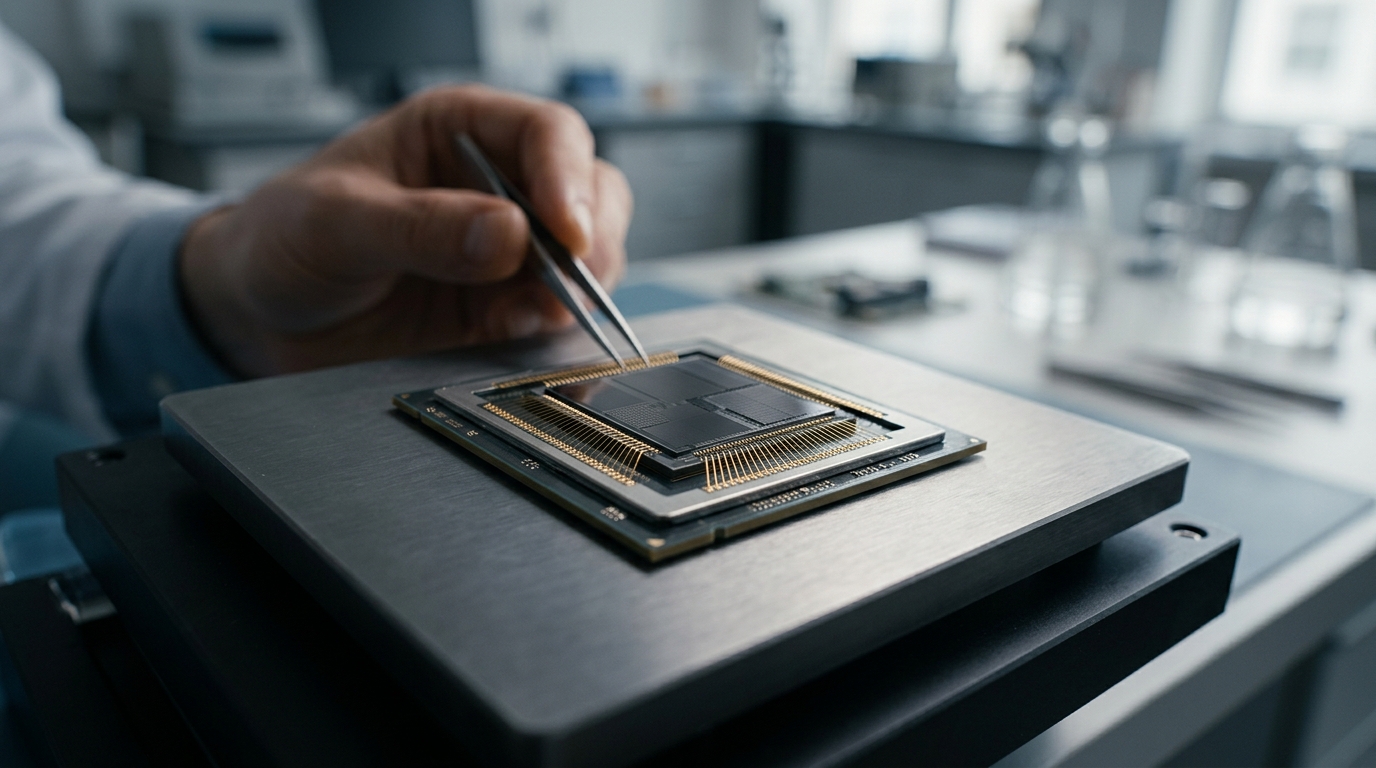
Arm has done something it has never done in its 35-year history: it has shipped its own chip, the Arm AGI CPU. Unveiled on 24 March 2026, it is an up-to-136-core data centre processor designed specifically for agentic AI inference workloads. Meta is the launch customer and co-developer, with Cerebras, Cloudflare, F5, OpenAI, Positron, Rebellions, SAP and SK Telecom also committed. Arm says the chip uses Neoverse V3 cores manufactured on TSMC’s 3nm process.
What Happened
- Why a chip licensing company is now making chips
- What this means for your phone
- The AI inference angle
- The bigger picture
The financial markets noticed. Arm’s stock jumped roughly 16 per cent on the day of the announcement after CEO Rene Haas said the AGI CPU alone would generate £12 (about $15) billion in annual revenue by 2031, with total annual Arm revenue reaching £20 (about $25) billion and earnings per share of £7 (about $9), CNBC reports. That is roughly six times Arm’s £3 (about $4) billion fiscal 2025 revenue.
Why a chip licensing company is now making chips
Arm’s business model has always been elegant: design processor architectures, licence them to companies like Apple, Qualcomm, Samsung, and MediaTek, and collect royalties on every chip sold. This approach made Arm’s designs ubiquitous, virtually every smartphone on earth runs on Arm-based silicon, without Arm ever competing with its own customers, as Ars Technica reports.
The AGI CPU changes that equation. By building its own data centre chip, Arm is now competing directly with companies that licence its architecture to build their own server processors: Amazon’s Graviton, Google’s Axion, Microsoft’s Cobalt, and Ampere’s Altra. The difference is that Arm designed the instruction set itself and has decades of optimisation knowledge that licensees cannot fully replicate.
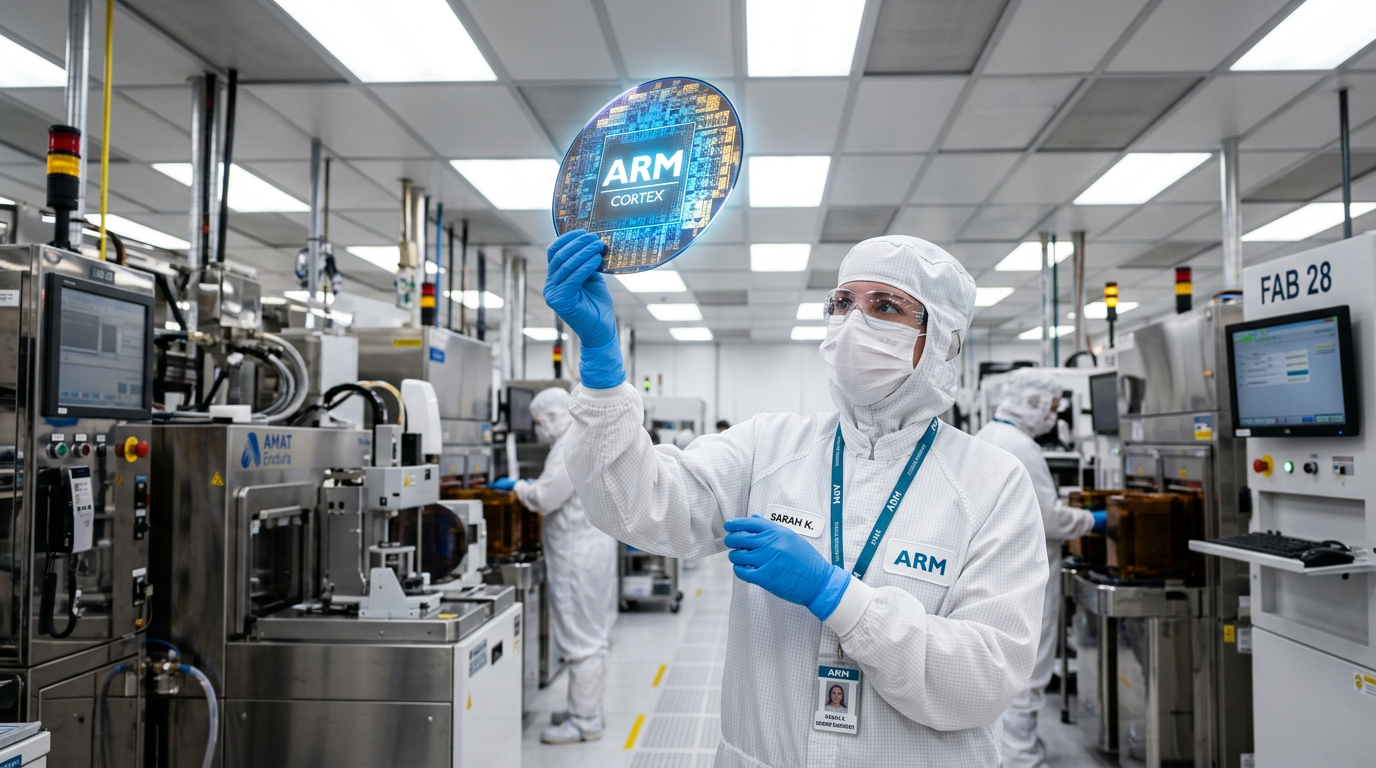
CEO Rene Haas framed the move as complementary rather than competitive, arguing that the AGI CPU serves AI inference workloads that existing data centre chips handle inefficiently. Whether Arm’s customers see it that way remains to be seen.
What this means for your phone
The AGI CPU is a data centre product, not a mobile chip. But the ripple effects for smartphones could be substantial. Arm now has a direct financial incentive to prioritise AI inference performance in its architecture, the same architecture that Apple, Qualcomm, and Samsung use as the foundation for their mobile processors.

If Arm’s own chip development pushes the company to make architectural improvements that benefit AI workloads, those improvements will eventually flow into the mobile designs that its licensees build. On-device AI, the technology driving features like real-time translation, computational photography and intelligent assistants on your phone, runs on the same fundamental Arm architecture.
There is also a competitive dynamic. If Apple or Qualcomm feel that Arm is now a competitor rather than a neutral platform provider, it could accelerate efforts to develop alternative architectures. Apple has already invested heavily in custom silicon, and RISC-V, an open-source alternative to Arm, has been gaining traction in certain markets. The fact that Arm ships its own silicon could paradoxically weaken its dominance in the architecture licensing business that made it dominant in the first place.
The AI inference angle
The AGI CPU is purpose-built for a specific job: running trained AI models efficiently. This is different from training (which Nvidia dominates with its GPUs) and from general-purpose computing. Inference is what happens when you ask ChatGPT a question, when your phone recognises a face in a photo, or when a car’s autopilot system processes camera feeds in real time.
Inference workloads are growing faster than any other computing category. Every AI assistant, every smart device, every automated system needs inference capability. Since Arm ships its first in-house design, the bet is that a chip optimised specifically for this workload, rather than repurposed from a general-purpose design, can deliver meaningfully better performance per watt. For more, see our editorials.
Arm Ships Its Own Silicon: The Bigger Picture
Arm’s move reflects a broader trend: the era of general-purpose computing is giving way to specialised silicon. Apple builds chips optimised for its software. Google builds TPUs for AI. Amazon builds Graviton for cloud workloads. Now Arm itself is joining the trend, leveraging its unique position as the architect of the world’s most widely used processor designs. For more, see our news coverage.
For consumers, the immediate impact is zero, the AGI CPU will sit in data centres, not in your pocket. But the long-term implications for how mobile chips are designed, how AI features work on your phone, and how the chip industry’s power dynamics evolve could be significant. When the company that designs the foundation of every smartphone processor decides to become a chip manufacturer, everyone in the ecosystem needs to pay attention.
For anyone following the Arm Ships story, the key takeaway is that the industry is changing faster than most consumers realise. Our Arm Ships analysis will continue as new developments emerge in 2026.
MMTW Editorial
Buyer action
Where to buy or check next
Use this as the final check before ordering a phone, changing network or trusting a headline monthly price.













Reader discussion
Leave a comment
Comments are moderated. Keep it useful, accurate, and on topic.