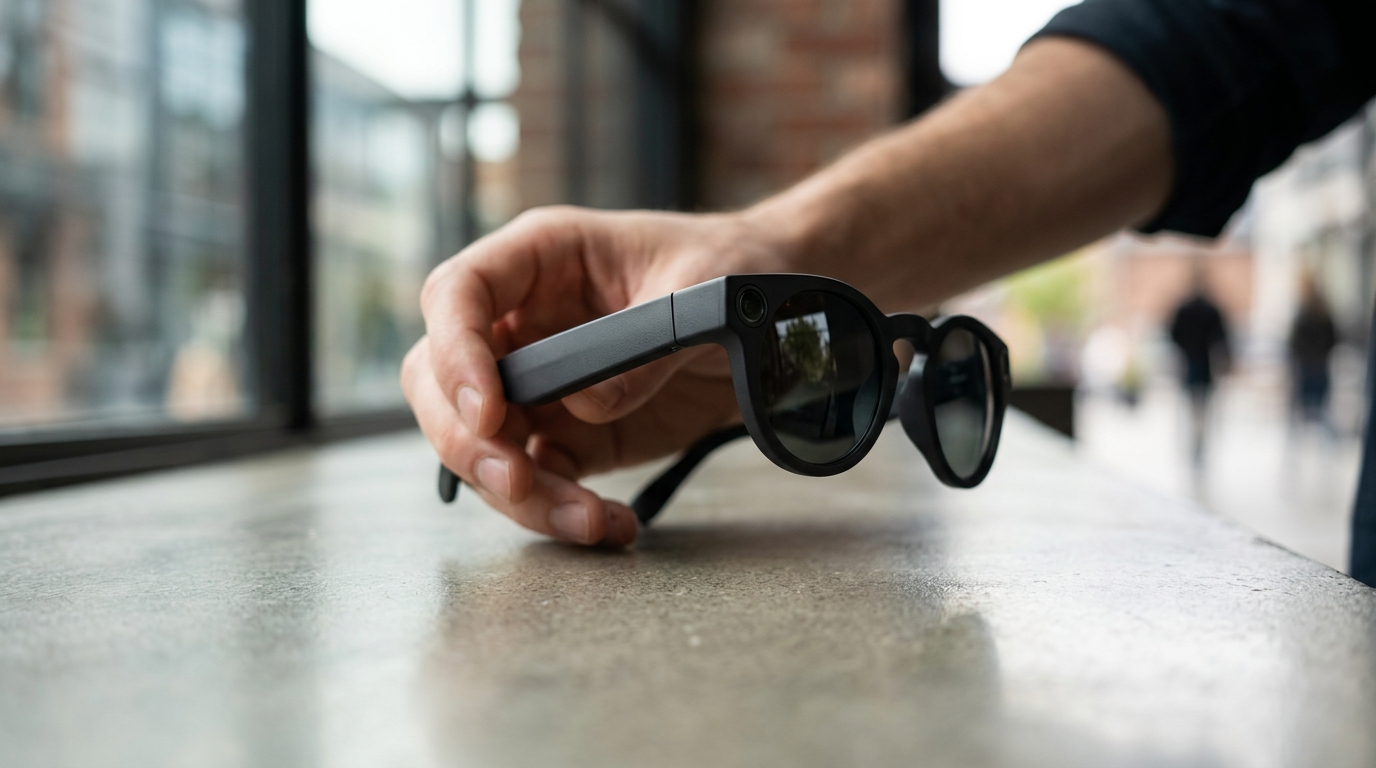
The Snap Qualcomm Specs partnership announced on 10 April is the first credible AR product strategy either company has put on the table in years. Where earlier Snap Spectacles and earlier Qualcomm reference designs felt like hardware boasts looking for a use case, Snap Qualcomm Specs finally pairs glasses-grade silicon with a software story consumers can actually picture buying, according to TechCrunch and Road to VR.
- Snap and Qualcomm announced a multi-year strategic agreement on 10 April 2026 to power future generations of Specs AR glasses with Qualcomm Snapdragon XR SoCs.
- Snap has carved Specs Inc. out as a wholly-owned subsidiary to focus on AR glasses, with a consumer launch tracked for later in 2026.
- Joint roadmap covers on-device AI, graphics and multi-user digital experiences, building on Snaps prior Spectacles developer hardware and Snap OS.
- Why it matters: Snap and Qualcomm now have a credible UK-relevant AR glasses platform that will compete directly with Meta Ray-Ban and Apple Vision.
Why this Specs update matters: what Snap Qualcomm Specs actually changes
Snap has been making smart glasses for years. Qualcomm has been powering most of the other headsets people have actually bought. The two companies collaborating does not, by itself, solve the field-of-view trade-offs or the battery anxiety that still dog standalone AR. What it does is make the roadmap credible. Under the new multi-year deal, future Specs generations will be built around Qualcomm’s Snapdragon XR system-on-chip platforms, paired with Snap’s own Lens creator base and developer tooling. That adds up to a platform owner, a silicon partner, an existing creator community and a developer story that is not just a DevKit press release.
That is what every other AR headset programme has been missing. Apple has the hardware credibility but almost nothing for creators. Meta has the creators but a gaming-first framing. Google is still experimenting. Snap and Qualcomm’s move is the first time a consumer AR strategy has had all four legs at once.

The creator story is the bet
Snap is not pretending that random enterprise apps will drive Specs adoption. The launch imagery shows creators, not surgeons. That is a correction worth noticing. AR has repeatedly overpromised in enterprise and underdelivered, while the actual mass behaviour of trying on a filter and sharing a clip has been the most successful AR use case on earth, hiding in plain sight on Snapchat.
By giving creators a first-class path to Specs, Snap is betting that the same economy that built Lenses can build a head-mounted content catalogue. Qualcomm’s contribution is making that catalogue run on a watch-sized battery without thermal-throttling into a slideshow.

For developers, the update finally has an answer
For years, building AR for glasses has been a platform gamble. You wrote for one headset and hoped it still existed in 18 months. Snap and Qualcomm are now offering something closer to a genuine developer contract: the runtime, the distribution, the on-device compute and a viable hardware pipeline are all described together. It is an opinionated stack, and opinionated stacks tend to attract actual developers faster than neutral ones.
| AR strategy comparison | Snap + Qualcomm Specs | Other headsets |
|---|---|---|
| Primary audience | Creators, then business | Enterprise demos |
| Content economy | Existing Lenses community | Fragmented app stores |
| Silicon roadmap | Qualcomm Snapdragon XR SoC | Reused phone silicon |
| Safety framing | Platform-level | Device-level only |

Safety being in the launch is the quiet signal
Every previous AR glasses launch has reserved safety for the small print. Snap explicitly making platform safety part of the Specs story, not an afterthought, is the detail regulators have been waiting for. It is also the detail that will keep Specs out of the ‘cool demo, banned in six months’ category that has claimed most of the last decade’s AR hardware.

Verdict
Specs, as of 10 April, is no longer a hardware curiosity. It is a platform pitch with a creator flywheel, a developer answer, a silicon partner and an explicit safety posture, and Snap has reaffirmed its 2026 consumer launch window. That is four more things than almost any other AR programme can claim on the same day. Whether the first generation of Specs glasses is the device that ships to millions of consumers matters less than the fact that Snap and Qualcomm have actually written a strategy for what comes after it.
Related reading on MTW
Buyer action
Where to buy or check next
Use this as the final check before ordering a phone, changing network or trusting a headline monthly price.











Reader discussion
Leave a comment
Comments are moderated. Keep it useful, accurate, and on topic.