
In the heated ChatGPT vs Claude vs Gemini showdown, the three leading AI assistants have all received major upgrades in early 2026: OpenAI launched GPT-5.4 on 5 March, Anthropic released the Claude 4.6 family (Opus, Sonnet and Haiku) in February, and Google pushed Gemini 3.1 Pro alongside Personal Intelligence to Gemini’s 750 million monthly active users. With each platform evolving rapidly, choosing the right AI assistant has never been more consequential, or more confusing. Here’s how they genuinely compare right now.
Chatgpt Vs Claude Vs Gemini: Contents
- Raw Intelligence: Which Model Is Smartest?
- Coding: Claude Code vs ChatGPT vs Gemini Code Assist
- Everyday Use: Writing, Research, and Conversation
- Privacy and Trust
- Pricing and Value
- The Verdict
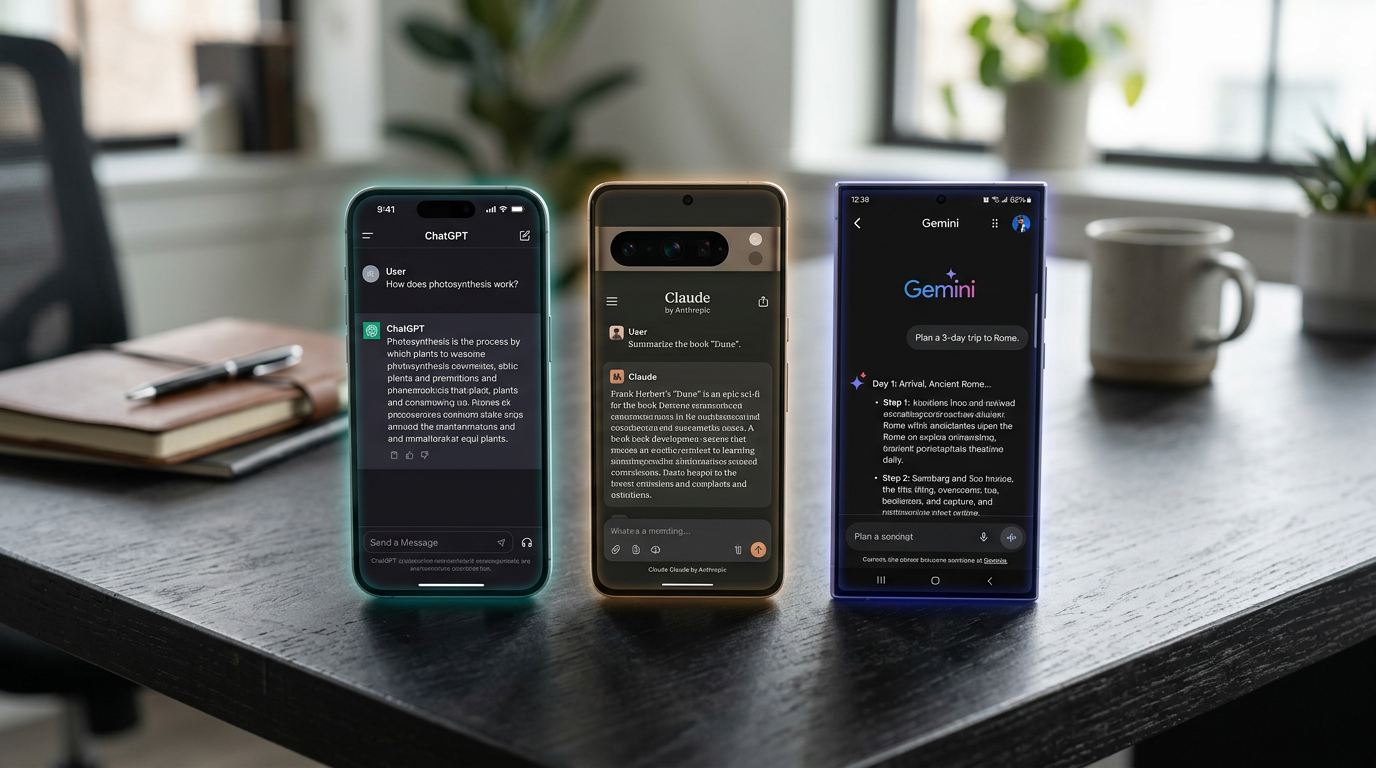
Raw Intelligence: Which Model Is Smartest?
All three platforms now offer models with roughly comparable benchmark performance, but the differences in practice are more meaningful than synthetic tests suggest, as OpenAI’s GPT-5.4 launch post confirms.
GPT-5.4 is OpenAI’s strongest showing yet. The standard version handles everyday tasks well, GPT-5.4 Thinking excels at multi-step reasoning problems, and GPT-5.4 Pro pushes performance further for professional applications. The million-token context window via the API is a genuine differentiator, though Anthropic has now matched it by offering 1M-token context in general availability across Opus 4.6 and Sonnet 4.6 at standard pricing, as Google’s own Gemini 3.1 Pro post shows.

Coding: Claude Code vs ChatGPT vs Gemini Code Assist
Winner: Claude Code for professional development workflows. ChatGPT for large-codebase analysis. Gemini for Google ecosystem projects.
Everyday Use: Writing, Research, and Conversation
For general-purpose use, drafting emails, researching topics, brainstorming ideas, summarising documents, the three platforms are closer than ever, but distinct personalities emerge, which is central to the ChatGPT vs Claude vs Gemini debate.
ChatGPT is the most conversational and polished. It handles casual interactions naturally, offers shopping recommendations with visual product cards, and integrates web search seamlessly. The addition of location sharing (optional) makes its local recommendations notably better. If you want an AI that feels like chatting with a knowledgeable friend, ChatGPT does this best.

Claude excels when accuracy and nuance matter. It’s less likely to hallucinate, more willing to express uncertainty, and produces writing that reads as genuinely thoughtful rather than generated. For professional writing, research synthesis, and tasks where getting it wrong has consequences, Claude is the safest choice.
Gemini’s advantage is integration. If you live in Google’s ecosystem, Gemini can pull context from your Gmail, Calendar, Drive, and Photos to give genuinely personalised responses. The new Personal Intelligence feature, now rolling out free to all US users, makes this even more powerful, as MacRumors reports. No other assistant can match this depth of personal context. The implications for ChatGPT vs Claude vs Gemini are significant.
Winner: Gemini for Google ecosystem users. Claude for accuracy-critical work. ChatGPT for casual, conversational use.
Privacy and Trust
This is an increasingly important differentiator as AI assistants gain access to more personal data. Anthropic has built its brand on safety and responsible AI, and Claude’s approach to data handling reflects this, the company is explicit about not training on user conversations by default and provides clear data controls.
OpenAI has improved its privacy stance but still faces ongoing scrutiny over training data practices and copyright issues. The company’s frequent product pivots (RIP Sora) also raise questions about long-term data stewardship.
Google presents a paradox. Gemini’s Personal Intelligence feature is powerful precisely because Google has so much of your data. Whether you view this as a feature or a concern depends entirely on your comfort level with Google’s data practices. The chat history import tool, which encourages you to upload your ChatGPT and Claude conversations, adds another layer to this question.
Winner: Claude for privacy-conscious users. Gemini for those already trusting Google with their data.
Pricing and Value
ChatGPT offers a free tier, Plus ($20, around £16/month), and Pro ($200, around £160/month). The free tier is generous enough for casual use, and Plus provides GPT-5.4 access for most users. Gemini is free with a Google account, with Advanced ($20, around £16/month) unlocking the full model and extended features. Claude offers a free tier, Pro ($20, around £16/month), Max 5x ($100, around £80/month) and Max 20x ($200, around £160/month), with Max tiers giving 5x or 20x Pro’s usage limits respectively, as Anthropic’s own help centre explains.
At the $20 (around £16)/month tier, all three offer excellent value. The differences become more pronounced at higher tiers, where ChatGPT Pro’s £160 (about $200)/month price point delivers the most raw capability, while Claude Max 20x offers the best coding tools. For more, see our AI coverage.

The Verdict
There is no single best AI assistant in early 2026, but there is a best one for you. Choose ChatGPT if you want the most polished, conversational experience with the largest enterprise context window. Choose Claude if accuracy, safety, and professional coding are your priorities. Choose Gemini if you live in Google’s ecosystem and want an AI that already knows your digital life. For more, see our comparisons.
The good news? With Google’s new import tool (rolling out globally, although not yet in the UK), switching between them has never been easier. Try all three for a week with their free tiers, then commit to the one that fits your workflow. In a market moving this fast, the best choice today might not be the best choice in six months, so stay flexible.
Final verdict
ChatGPT vs Claude vs Gemini 2026: we test GPT-5.4, Claude 4.6 and Gemini 3.1 Pro on coding, writing, research and UK daily use.
How we compare
Buyer action
Where to buy or check next
Use this as the final check before ordering a phone, changing network or trusting a headline monthly price.













Reader discussion
Leave a comment
Comments are moderated. Keep it useful, accurate, and on topic.