UPDATED · News · 10 Jun 2026 · Daniel Reid
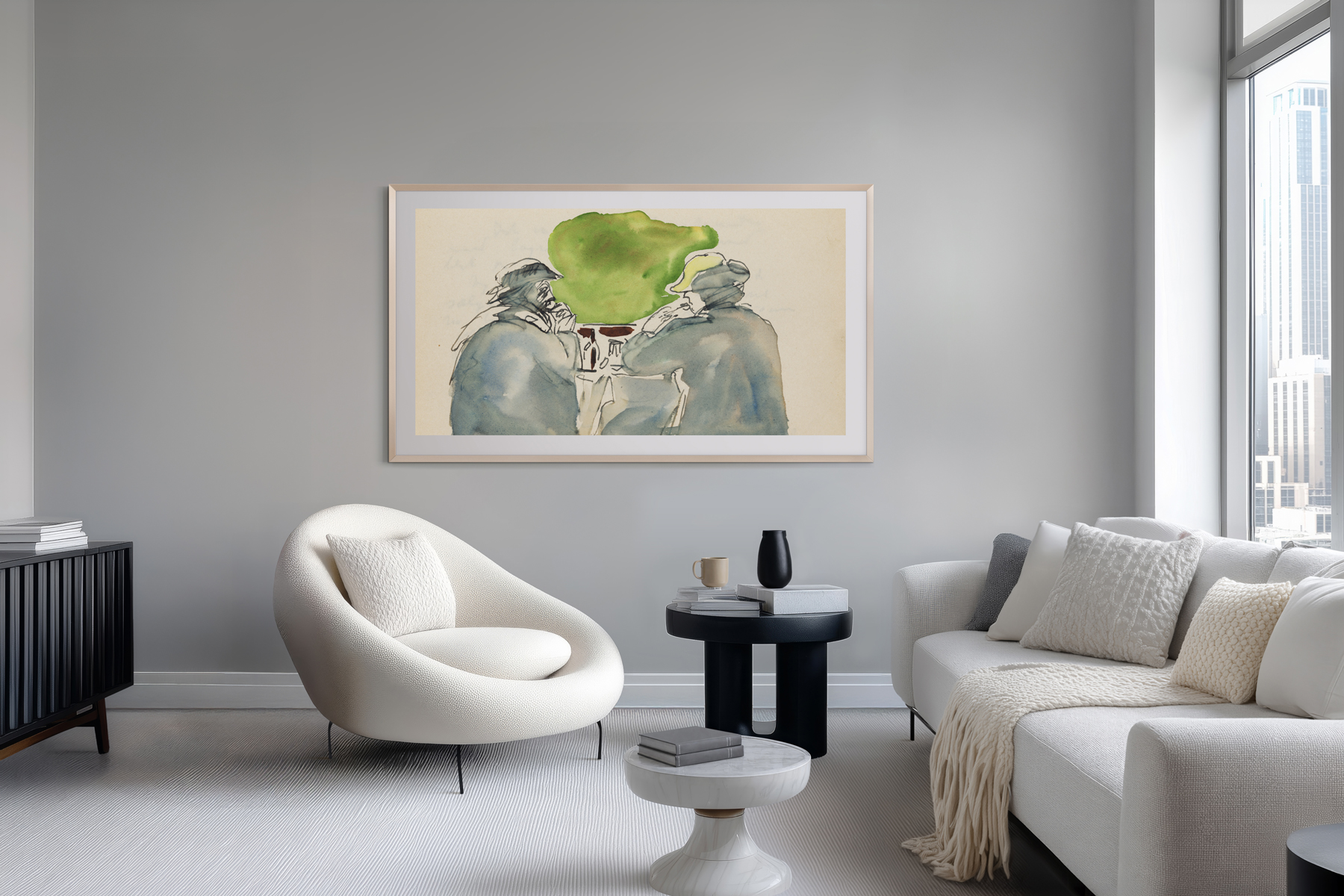
Samsung Art Store has added 37 Edvard Munch masterpieces, including “The Scream”, “The Dance of Life” and “Melancholy”, through a partnership with MUNCH, the Oslo museum that holds the world’s largest collection of the artist’s work, announced on Samsung’s UK newsroom on 9 June 2026. The headline is not the famous screaming figure, though. It is the handful of works in the deal that are physically too fragile to hang in the museum itself, paintings such as “Garden with Trees” and “Two People at Table” that Samsung says are too vulnerable for public display, even at the museum in Oslo.
For owners of The Frame, Samsung’s matte-screen lifestyle TV, this is the most interesting Art Store drop since the Moomins collection arrived in May. It also sharpens a question we keep coming back to at MobileTechWorld: is a rolling art subscription on a television actually worth paying for in the UK? Samsung’s own announcement puts the yearly figure at £39.99, so the maths is at least easy to run. Here is what the MUNCH deal contains, which TVs can show it, and where we land on the value question.
Key facts
- 37 Edvard Munch works join Samsung Art Store under a partnership with MUNCH in Oslo, announced on Samsung’s UK newsroom on 9 June 2026
- The collection includes “The Scream”, “The Dance of Life” and “Melancholy”, plus rarely seen archive works such as “Garden with Trees” and “Two People at Table”
- Samsung says the works went live worldwide on the Art Store from 1 June 2026, exclusively on its Art TV line-up
- The announcement’s small print lists the Art Store subscription at £39.99 per year, with a three-month free offer for new subscribers
- Compatible 2026 models include The Frame, The Frame Pro, Micro RGB, OLED, Neo QLED and Mini LED sets, per Samsung’s compatibility note
What Frame TV owners get from the MUNCH deal
According to Samsung’s UK newsroom announcement, the collaboration brings 37 digitised Munch works to the Art Store, the curated gallery service built into Samsung’s Art Mode TVs. Each piece, Samsung says, is “faithfully reproduced in high quality”, which on a Frame means a 4K rendering shown on a matte display deliberately tuned to look like paper or canvas rather than a glowing screen. The works went live worldwide on 1 June, so the collection is already browsable; the formal UK announcement followed on 9 June.
Samsung framed the deal as a cultural access story. “Samsung creates products that inspire people and help them express themselves through design and culture,” said Tommy Nilsson, TV and Audio Director at Samsung Nordics, in the announcement. “With Samsung Art Store, we make world-class art available to millions of people, and through this collaboration with MUNCH, we are bringing an important part of European artistic heritage into people’s homes.”
Strip away the press language and the practical offer is this: a Frame owner in the UK can now put a 1910 version of “The Scream” on their living room wall, legally and in museum-approved quality, for the price of a couple of coffees a month. That has been the Art Store pitch since the service launched, but the catalogue has historically leaned on crowd-pleasing scenery and licensed photography. A wholesale drop from a single major museum’s archive, including works the museum itself cannot exhibit, is a different proposition, and it is the strongest argument Samsung has yet made for the subscription.
Which paintings join the Samsung Art Store catalogue
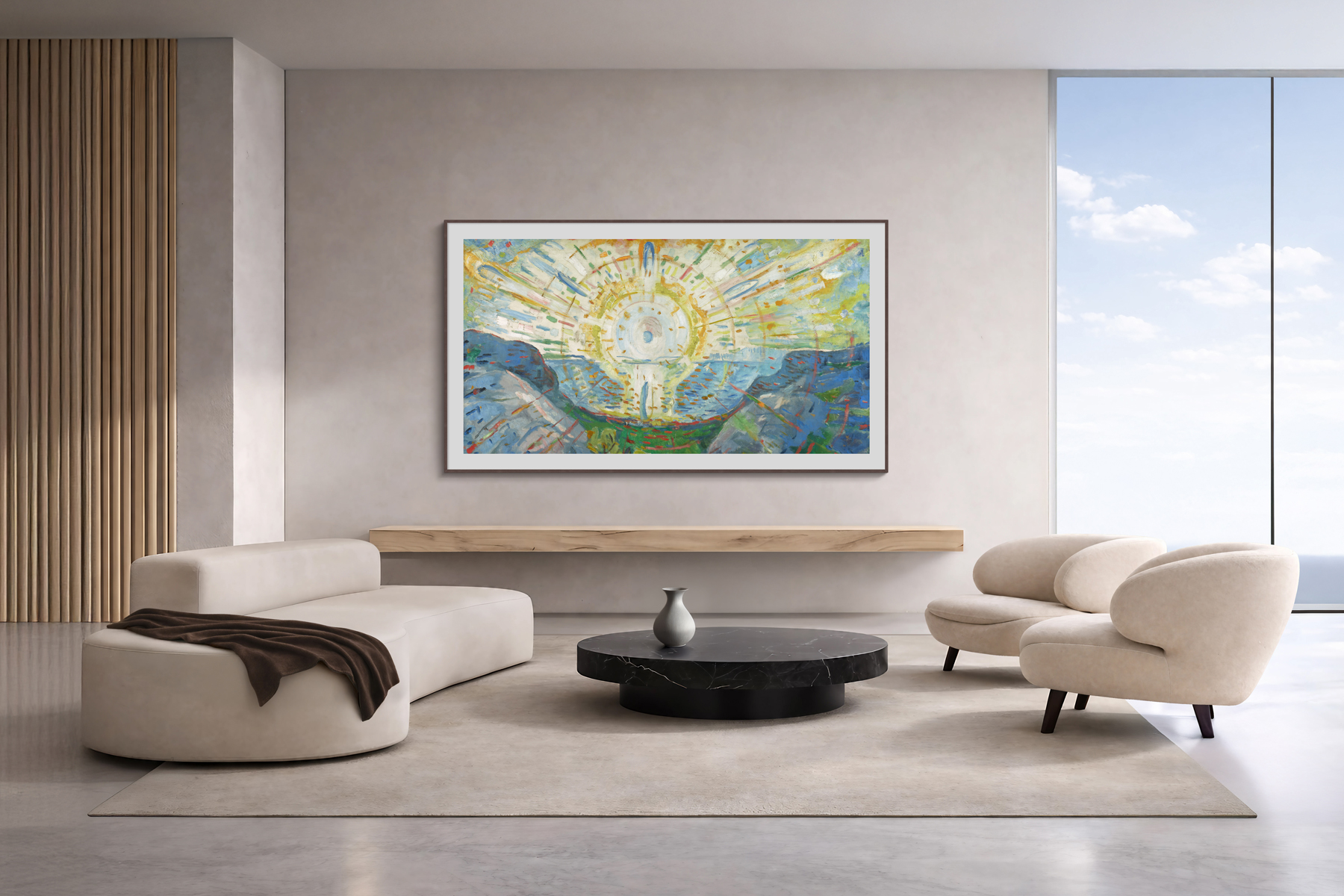
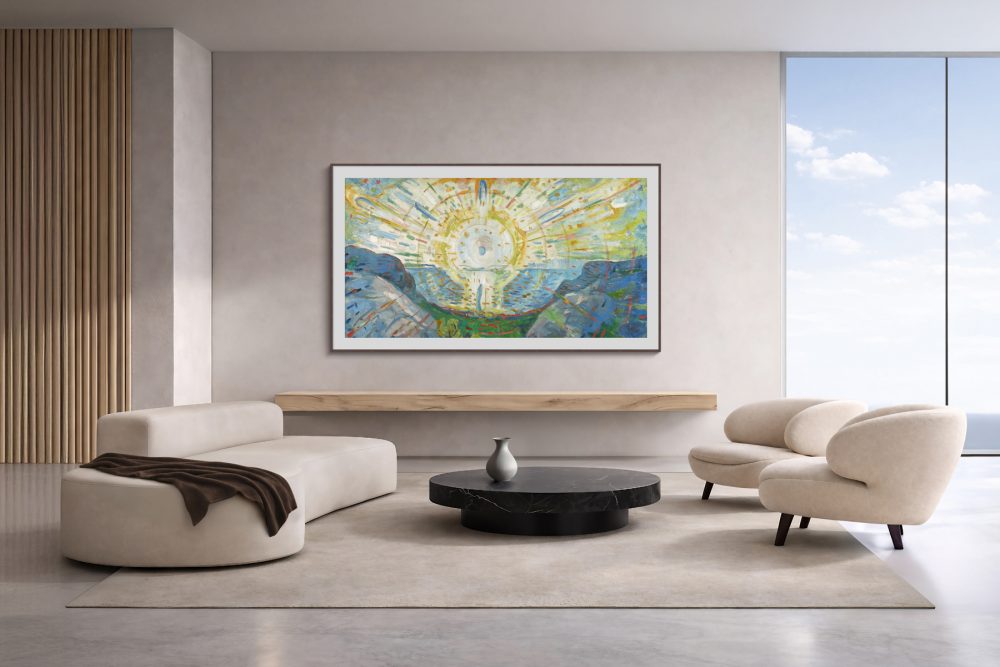
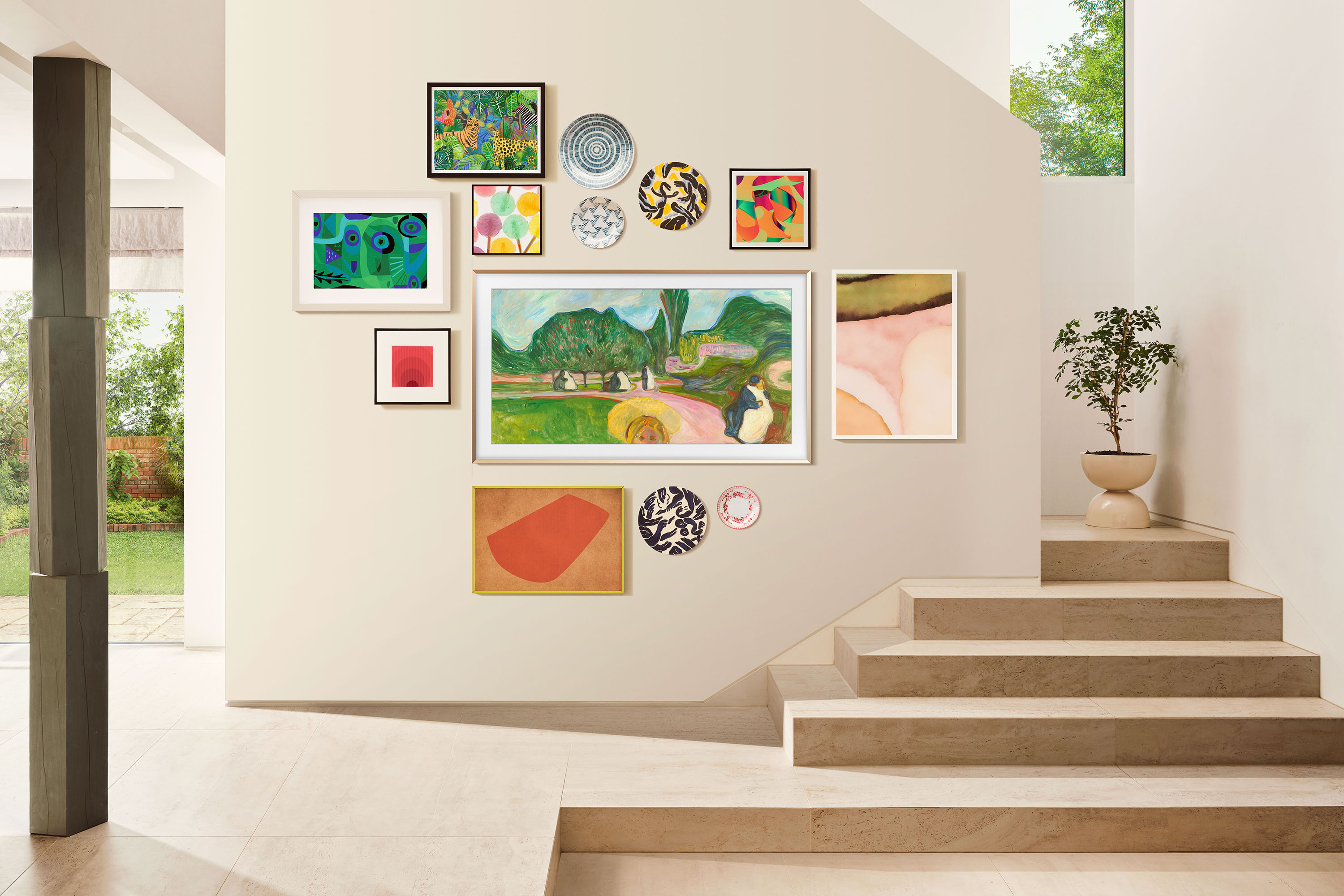
Samsung names a spine of greatest hits for the Samsung Art Store drop: “The Scream”, “The Dance of Life”, “Melancholy” and “The Sun”, the vast sunrise composition Munch returned to repeatedly, shown in Samsung’s press materials in its 1912 version. The newsroom imagery also shows “Kissing Couples in the Park” from the Linde Frieze of 1904 rendered on a Frame, which gives a flavour of how the less famous works will be presented in situ.
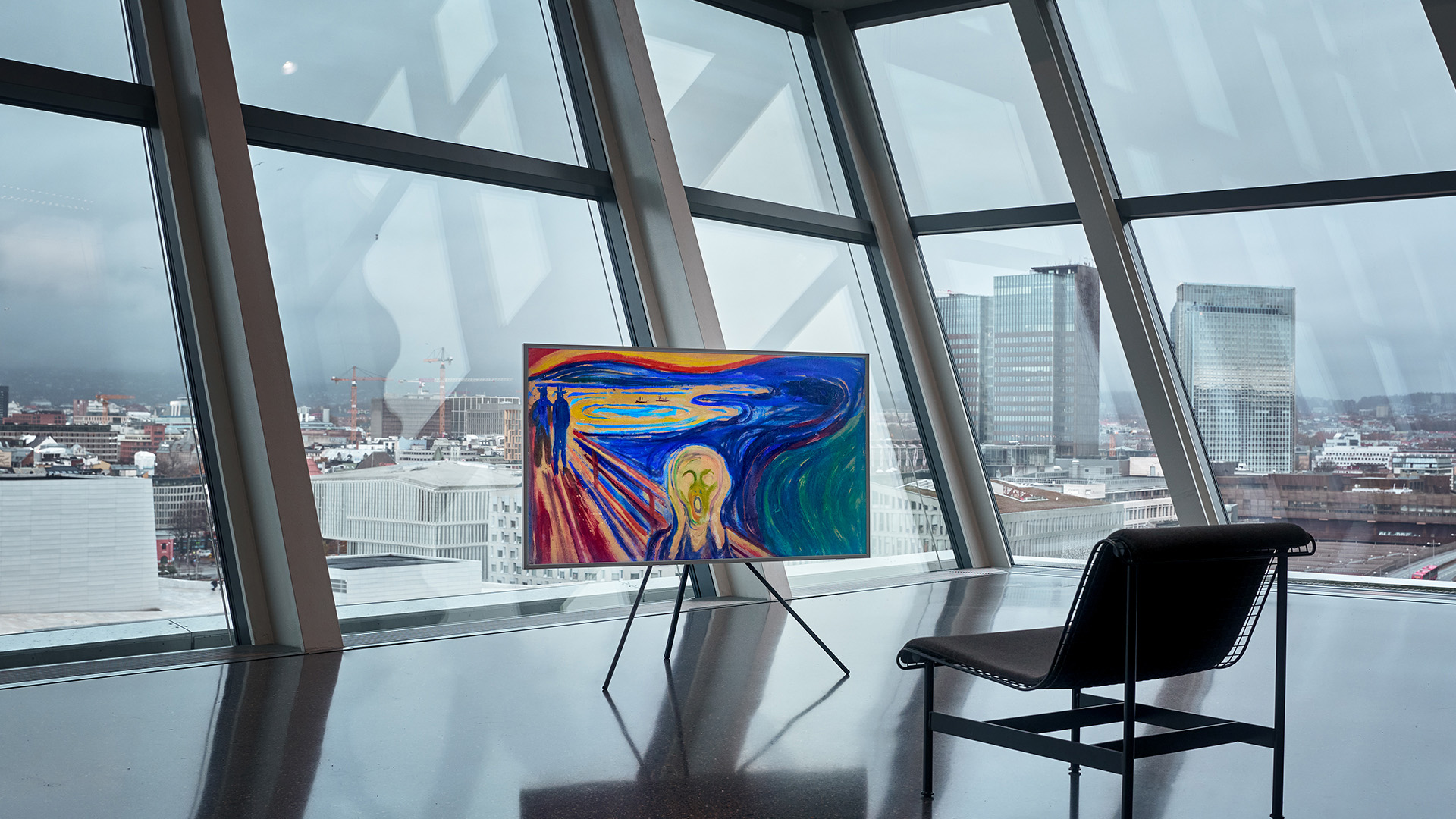
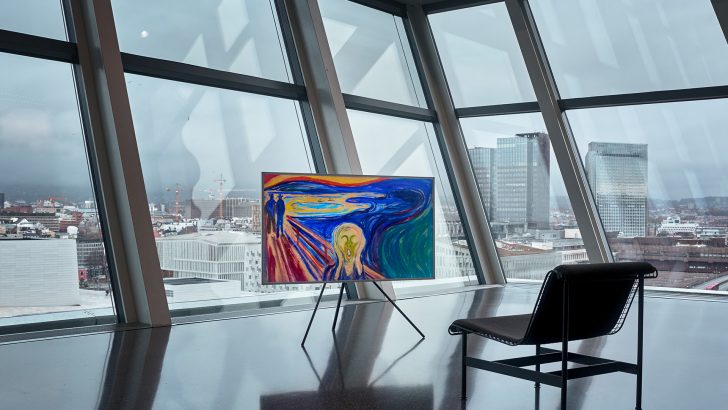
It is worth being precise about what “The Scream” means here, because there is no single canvas. Munch produced several versions across paint, pastel and lithograph between 1893 and 1910, and the institutions split custody: the National Museum of Norway holds the 1893 painting, while MUNCH holds later versions, including the 1910 tempera that was famously stolen from the old Munch Museum in 2004 and recovered two years later. Samsung’s press imagery shows the 1910 version on a Frame Pro, which is consistent with the partner being MUNCH rather than the National Museum. UK buyers expecting the 1893 image from every postcard rack should know they are getting the museum’s own, slightly rawer sibling.
The remaining count is filled out from the Oslo archive, and Samsung says the selection offers “a more intimate view” of the artist than the icons alone. For an artist as relentlessly reproduced as Munch, the obscure end of the catalogue is genuinely the more valuable end. Anyone can find “The Scream” on a tote bag; almost nobody outside a conservation lab has seen “Two People at Table” at full scale.
Why some of these works cannot hang in Oslo
The detail that elevates this beyond a routine licensing announcement is conservation. Samsung’s announcement states that several of the rare works “are part of a collection of treasures preserved in the museum’s archives, many of which must be kept in carefully controlled environments to protect them from further deterioration. Their condition makes them too vulnerable for public display, even at the museum in Oslo.”
Munch has a well-documented reputation as a conservator’s nightmare: he worked fast, experimented with thinned paints, and famously left canvases outdoors to weather. The result, as the museum’s archive practices confirm, is a body of work that degrades readily under light and humidity; MUNCH in Oslo holds the world’s largest collection of his art and manages exactly these storage constraints. A calibrated digital reproduction sidesteps all of that, which is why Tone Hansen, Director of MUNCH, leaned on access in her quoted remarks: “This collaboration is an exciting opportunity to share Edvard Munch’s art with audiences beyond the museum’s walls in Oslo. Through Samsung’s global reach and Art TV technology, we can make Munch’s work more accessible to people around the world, and we are incredibly honored to collaborate with Samsung on this meaningful initiative.”
There is a reasonable debate about whether a TV rendering of a painting is an experience of the painting at all, and we will not pretend a Frame in a Surrey semi replaces standing in front of the canvas in Oslo. But for works that no member of the public will ever stand in front of, the digital copy is not a substitute for the real experience; it is the only experience on offer. That is the strongest version of the Art Store argument, and Samsung is right to lead with it.
How much it costs in the UK, and the trial small print
The announcement’s footnotes carry the commercial detail. The Art Store subscription, required to access the full catalogue of more than 5,000 works, is listed at £39.99 per year, with a monthly option the same footnote prices at 3.99 (Samsung’s own small print omits the pound sign on the monthly figure, but the yearly price is stated as £39.99 unambiguously). New subscribers are eligible for three months free when signing up for a paid monthly or yearly plan, and the main body of the announcement separately promises current owners of compatible Samsung TVs in Europe who are new to the service “a complimentary 90-day subscription trial” with immediate access to the complete Munch collection.
Those two offers read like the same promotion described two ways, but the footnote is the stricter version: the three months free apply “only when signing up for a paid monthly or yearly subscription as a new subscriber”. In plain terms, you hand over payment details, you get three months at no charge, and the subscription continues at the paid rate unless you cancel. That is standard streaming-trial mechanics, and the same diary reminder you set for a Disney+ offer applies here.
Samsung’s own video for the 2026 Frame Pro, above, shows how the company wants the Art Experience pitched: the TV as gallery wall first, television second. Worth knowing before you commit: there is a free tier of sorts. Art Mode itself works without a subscription, and Samsung rotates a limited selection of free artworks, but the full catalogue, and with it the Munch collection, sits behind the paywall. Samsung also sells some Frame models with a bundled period of Art Store access in certain promotions, so check what your specific purchase includes before paying separately.
Which Samsung TVs support the Munch collection
The collection is exclusive to Samsung’s Art TV line-up, accessed through the Art Store. Samsung’s compatibility footnote is specific: compatible 2025 models include the Neo QLED 8K, Neo QLED 4K, The Frame, The Frame Pro, Q8F, Q7F and The Movingstyle, while compatible 2026 models include Micro RGB, OLED, Neo QLED, Mini LED, The Frame and The Frame Pro. Availability, Samsung cautions, “may vary by model, market and subscription status”, so a quick check in your own TV’s menus is the definitive test.
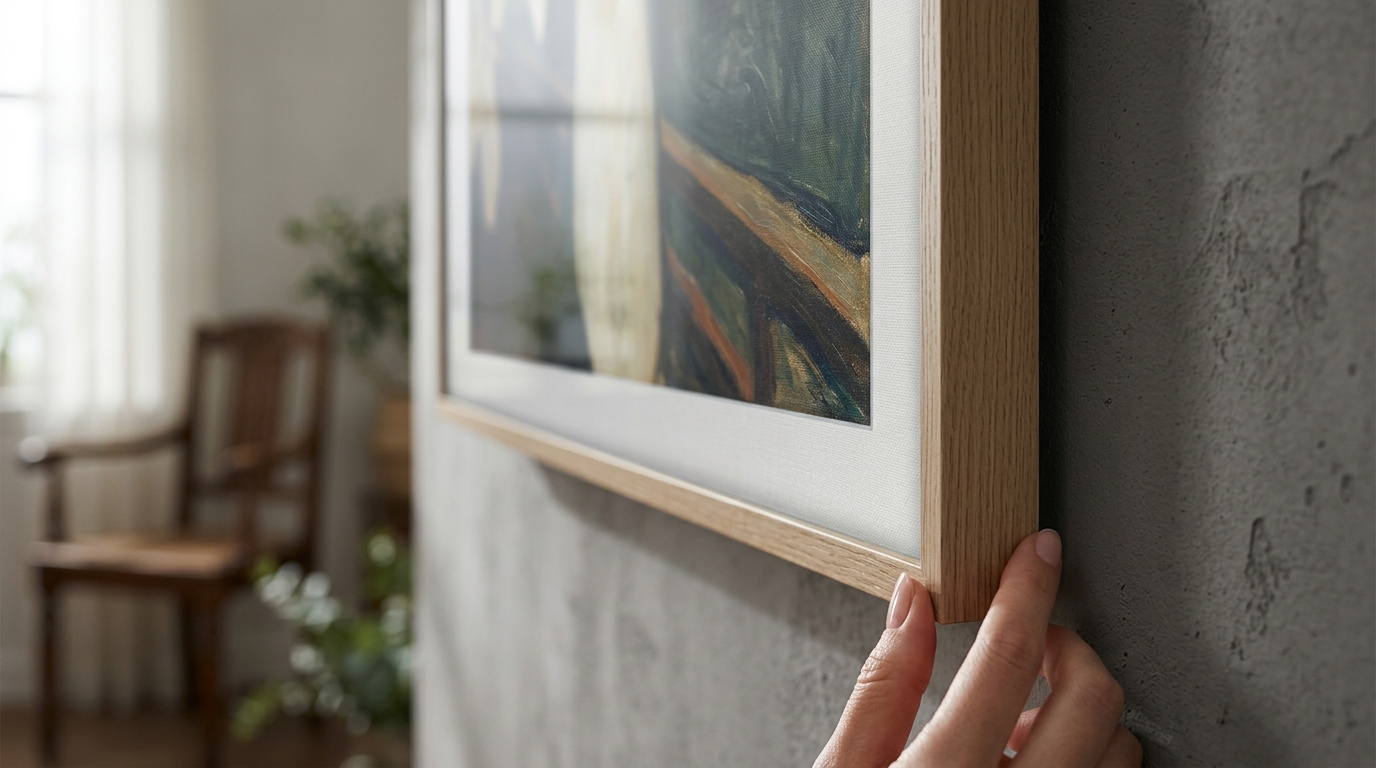
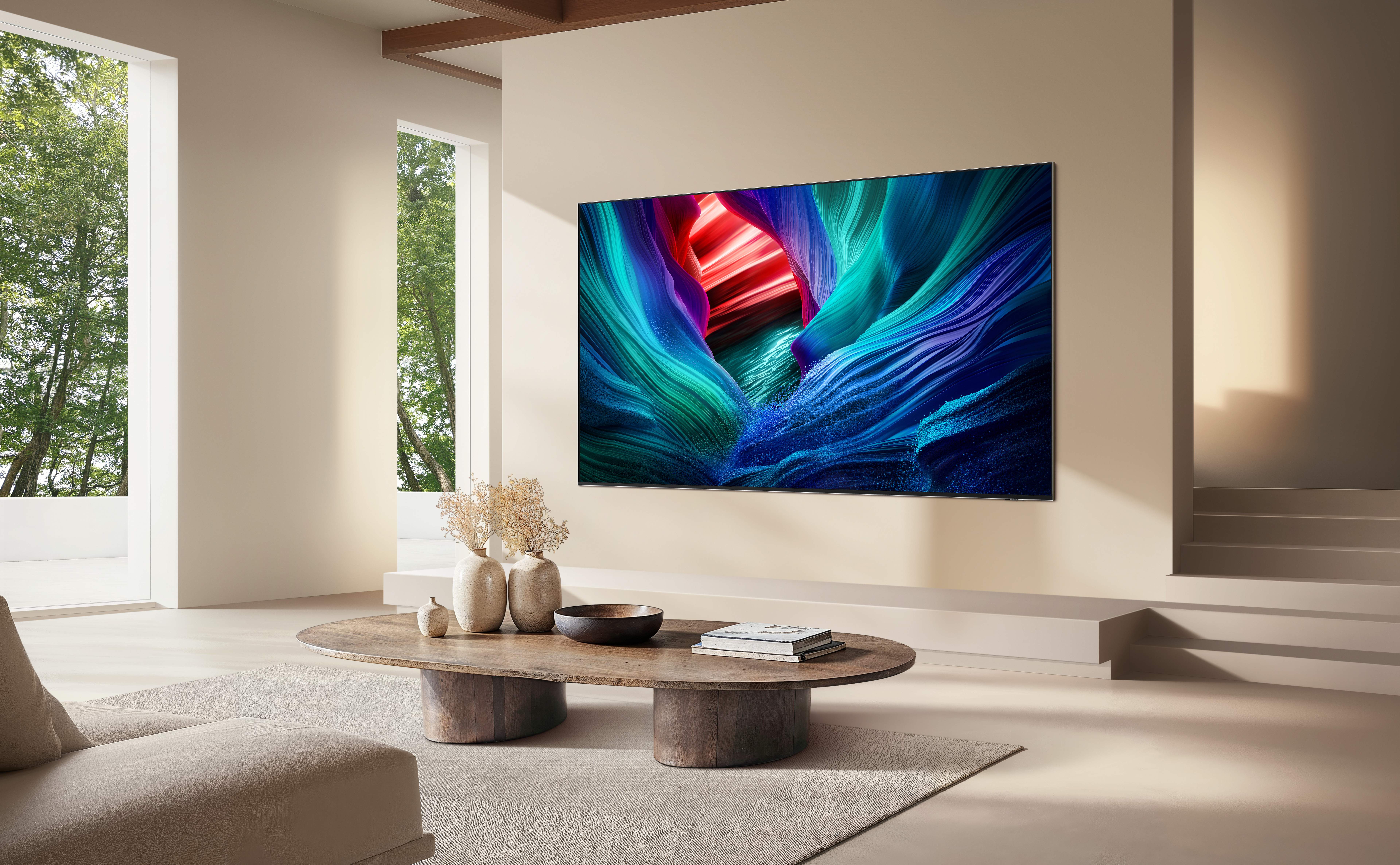
The notable shift is how far the Art Store has spread beyond The Frame. What began as that TV’s signature trick now runs across most of the premium range we covered in our Samsung 2026 TV line-up guide for UK buyers, including the flagship Micro RGB set we examined when its £1,599 UK headline price landed. That said, the Frame family is still the natural home for this content. Its matte, anti-reflective panel and customisable bezels exist precisely so a still image does not look like a screensaver, and Munch’s heavy, textural surfaces are exactly the sort of material that benefits.
If you are shopping for the hardware itself, The Frame is stocked in the UK by Samsung’s own online store, Currys and John Lewis across a wide spread of screen sizes. We have not verified current street prices for this piece, and Frame pricing moves frequently with promotions, so treat any number more than a week old as stale. For buyers weighing the wider market, our comparison of the best OLED TVs under £1,500 from LG, Samsung and Sony remains the right starting point if picture quality, rather than Art Mode, is the priority.
Do art subscriptions on a TV make sense?
Samsung has spent 2026 methodically turning its TVs into subscription surfaces, and the Art Store is the most polished version of that strategy. The Munch deal follows the pattern set a month earlier when Tove Jansson’s Moomins watercolours arrived on the Art Store in a global collaboration with Moomin Characters: a recognisable cultural property, a credible institutional partner, and imagery that flatters the matte panel. One drop a month of that calibre would make the £39.99 annual fee easy to defend.
The honest counterargument is that £39.99 a year buys a lot of culture in other forms, in a country where the national museums are free to walk into. A determined free-tier user can also get a long way: Art Mode displays your own photos at no cost, and respectable public-domain scans of Munch’s out-of-copyright works exist on museum websites, though dressing a 4K panel with a compressed web image rather than a calibrated reproduction tends to demonstrate exactly why Samsung charges for the good versions.
Where the subscription earns its keep is curation and rights. The Art Store’s catalogue of 5,000-plus works, which Samsung says draws on “leading museums, galleries, and artists”, now includes the deepest Munch archive in existence, colour-managed for the specific panel you own. Samsung is also clearly using the service to differentiate hardware that is otherwise converging, the same logic behind its Soccer Aid screen partnership and AI Soccer Mode push earlier this month, and behind the ecosystem lock-in we noted when asking whether the Galaxy S26 is worth it for UK buyers. You are not just buying pictures; you are buying Samsung a reason to keep investing in Art Mode on the set you already own.
Where to check before you pay
Five specific checks for UK readers, all current as of 10 June 2026:
- Your TV’s Art Store menu: open Art Mode on a compatible set and look for the Munch collection directly; Samsung’s announcement does not publish a step-by-step menu path, so the in-TV storefront is the definitive check for availability and the exact trial you are offered (last checked: 2026-06-10).
- Samsung’s Art Store page: the samsung.com/uk Art Store page carries the current compatibility list and promotional terms; UK subscription pricing was not displayed on the public page in our checks, but the newsroom announcement lists £39.99 per year (last checked: 2026-06-10).
- The trial’s renewal terms: the three months free require signing up to a paid plan as a new subscriber, so note the renewal date before you start it.
- Currys and John Lewis Frame listings: both stock The Frame across sizes; compare against Samsung’s own store, where trade-in and bundled Art Store promotions sometimes change the effective price.
- What your 2026 set already includes: if you bought from this year’s Samsung TV range at UK launch, check your purchase paperwork for any bundled Art Store term before paying separately.
| Key takeaway | Detail |
|---|---|
| Collection size | 37 Munch works, per Samsung’s 9 June 2026 UK announcement |
| Headline works | “The Scream” (1910 version), “The Dance of Life”, “Melancholy”, “The Sun” |
| Rarely seen works | “Garden with Trees”, “Two People at Table”, held in MUNCH’s archive |
| Availability | Worldwide on Samsung Art Store from 1 June 2026, Art TV line-up only |
| UK price | £39.99 per year listed in the announcement; 3 months free for new subscribers |
This is the best content argument the Art Store has made for itself, and our position is straightforward: if you already own a Samsung The Frame or The Frame Pro, take the three-month trial, set a renewal reminder, and judge the £39.99 renewal on whether Samsung sustains this cadence of museum partnerships. The Munch collection alone is worth a quarter of idle wall time, particularly the archive works you cannot see anywhere else, and the trial costs nothing if you manage it properly.
If you do not own a compatible set, the Munch drop is not, on its own, a reason to buy one. The Frame remains a design purchase first, and buyers who care mainly about picture quality still have better options at the price. And if you own a compatible Neo QLED or OLED rather than a Frame, the case is weaker still: art on a glossy panel in a bright British living room loses much of the gallery illusion. What would change our view is consistency. Two or three more archive-grade partnerships this year and the Art Store starts to look like the rare TV subscription that earns its renewal; if the catalogue drifts back to stock photography, cancel without guilt.
| What we like | What we’d watch |
|---|---|
| Genuinely rare archive works unavailable even in Oslo | Whether monthly museum-grade drops continue beyond Moomins and Munch |
| £39.99 yearly price with a three-month free trial for new subscribers | Trial auto-converts to a paid plan; renewal date discipline required |
| Broad 2025 and 2026 Art TV compatibility beyond The Frame | UK pricing buried in newsroom footnotes rather than the public store page |










Reader discussion
Leave a comment
Comments are moderated. Keep it useful, accurate, and on topic.