UPDATED · News · 5 Jun 2026 · James Pemberton
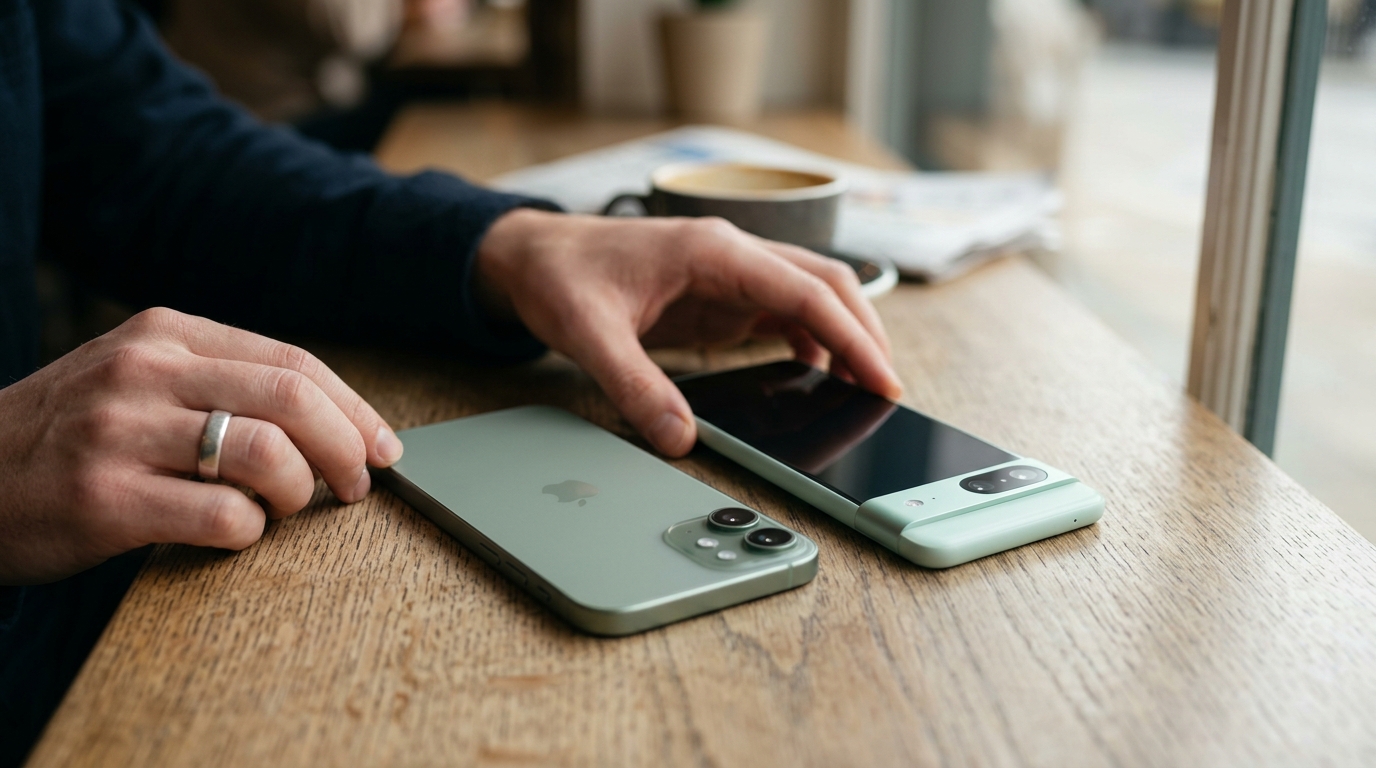
Anyone weighing up an iPhone 17e vs Pixel 10a decision in the UK this year is really choosing between the cheapest current iPhone and the cheapest current Pixel, and the two are not priced anywhere near each other. Apple’s iPhone 17e starts at £599 for 256GB, while Google’s Pixel 10a starts at £499 for 128GB on the Google Store UK. That £100 gap, and the very different things each phone does with your money, is the whole story here. This guide runs the two side by side, category by category, and names a winner in each.
- iPhone 17e: from £599 for 256GB, A19 chip, 6.1-inch Super Retina XDR OLED, single 48MP Fusion camera, iOS 26.
- Pixel 10a: from £499 for 128GB, Tensor G4, 6.3-inch Actua OLED at 120Hz, 48MP plus 13MP ultrawide, seven years of updates.
- Price gap: the Pixel undercuts the iPhone by £100 at the entry tier, but the iPhone doubles base storage to 256GB.
- Updates: Apple offers no published guarantee but typically six to eight years of iOS; Google commits to seven years of OS, security and Pixel Drops.
Price and UK availability
The money is where these two separate most clearly. Google lists the Pixel 10a from £499 for 128GB on its UK store, with trade-in credit and finance available, while Apple’s iPhone 17e opens at £599 but gives you 256GB as standard. So the headline £100 saving on the Pixel narrows once you account for storage: a 256GB Pixel 10a, where stocked, closes much of the gap. Apple also offers the 17e at £24.95 per month over 24 months on its own finance, which is how many UK buyers will actually pay for it.
Availability is broad for both. The iPhone 17e sells through Apple, the major networks and the usual UK retailers, and we covered its launch in our look at whether the iPhone 17e is worth buying. The Pixel 10a is on the Google Store, EE, VodafoneThree and partner retailers, and we set out its case in our Pixel 10a value breakdown. If outright price is the only thing that matters, the Pixel wins on the sticker; if you want maximum storage for your first payment, the iPhone is closer than it looks.
Winner: Pixel 10a. It is the cheaper phone to get through the door at £499, and that £100 saving is real money for a buyer at this end of the market.
Design and build
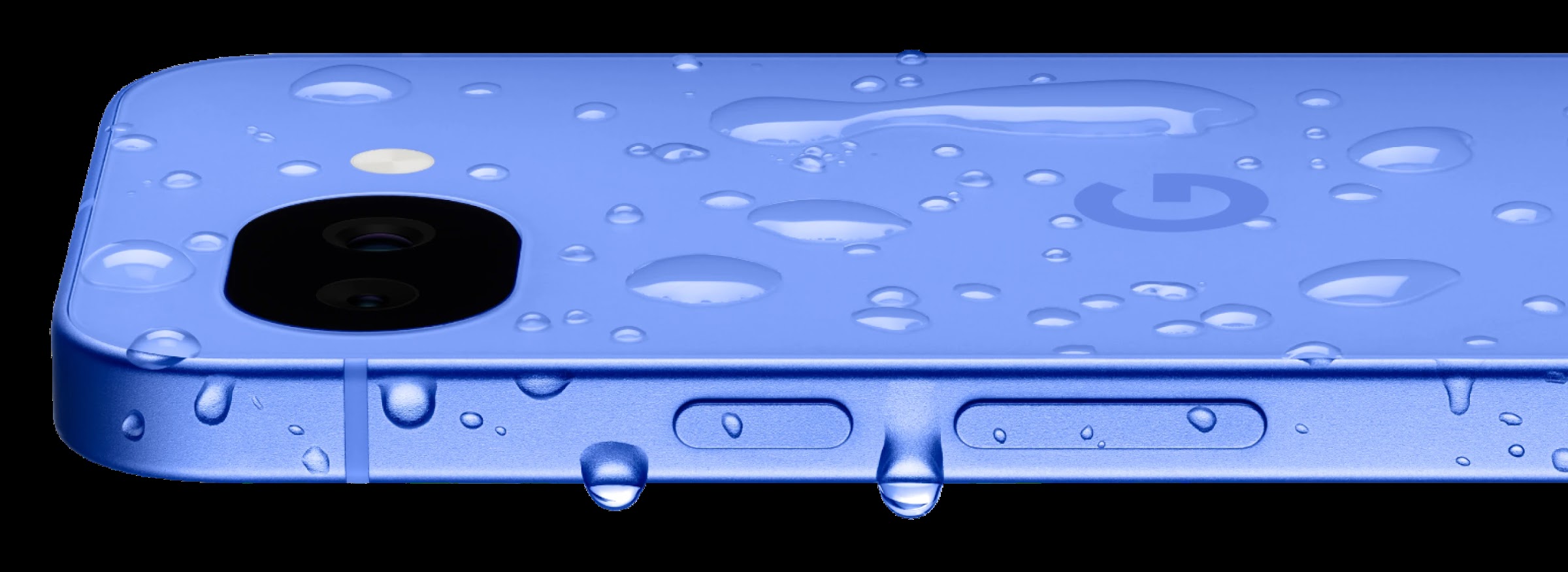
Both phones use an aluminium frame, though the iPhone 17e finishes with a glass back while the Pixel 10a uses a composite back panel, and both carry a rating that means a splash or a drop in the sink is not a disaster. The iPhone 17e has an aerospace-grade aluminium chassis and a Ceramic Shield 2 front that Apple rates at three times the scratch resistance of the previous generation. The Pixel 10a pairs a satin-finish recycled aluminium frame with a Corning Gorilla Glass 7i front and an IP68 rating for dust and water, the durability shot above being Google’s own way of making the point.
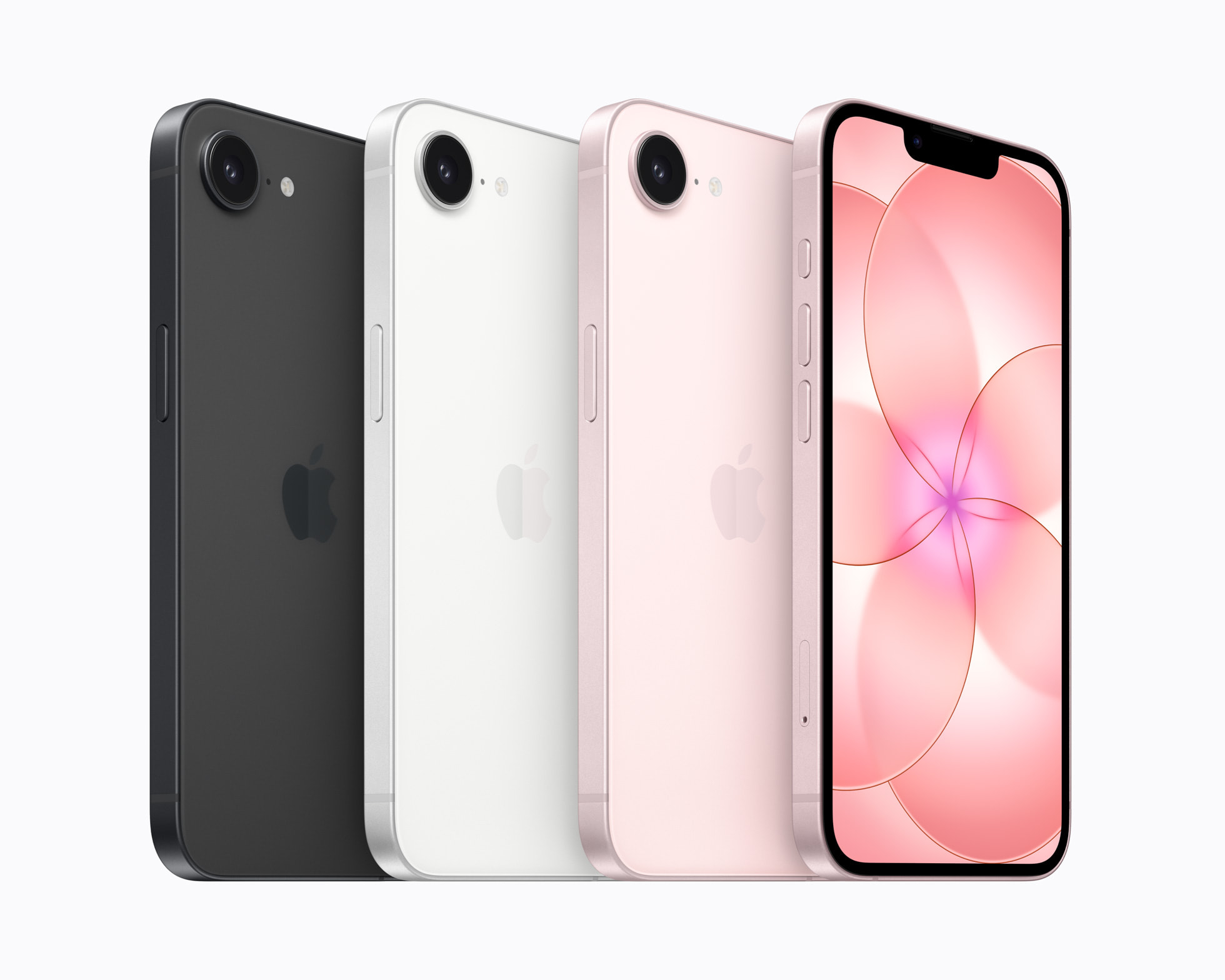
Colour is where personality creeps in. Apple keeps the 17e restrained with black, white and soft pink. Google goes brighter, offering Lavender, Berry, Fog and Obsidian, which gives the Pixel more visual range out of the box. In the hand the iPhone is the more compact device thanks to its smaller screen, and the Pixel feels a touch larger and flatter. Neither is a fingerprint magnet, and both skip the headphone jack, so wireless earbuds are assumed. The ecosystem split shows up early here too, a theme we explored in our piece on the best iPhone alternative in the UK for 2026.
Winner: Draw. Build quality and water resistance are close enough that this comes down to whether you prefer Apple’s muted palette or Google’s brighter colours.
Display
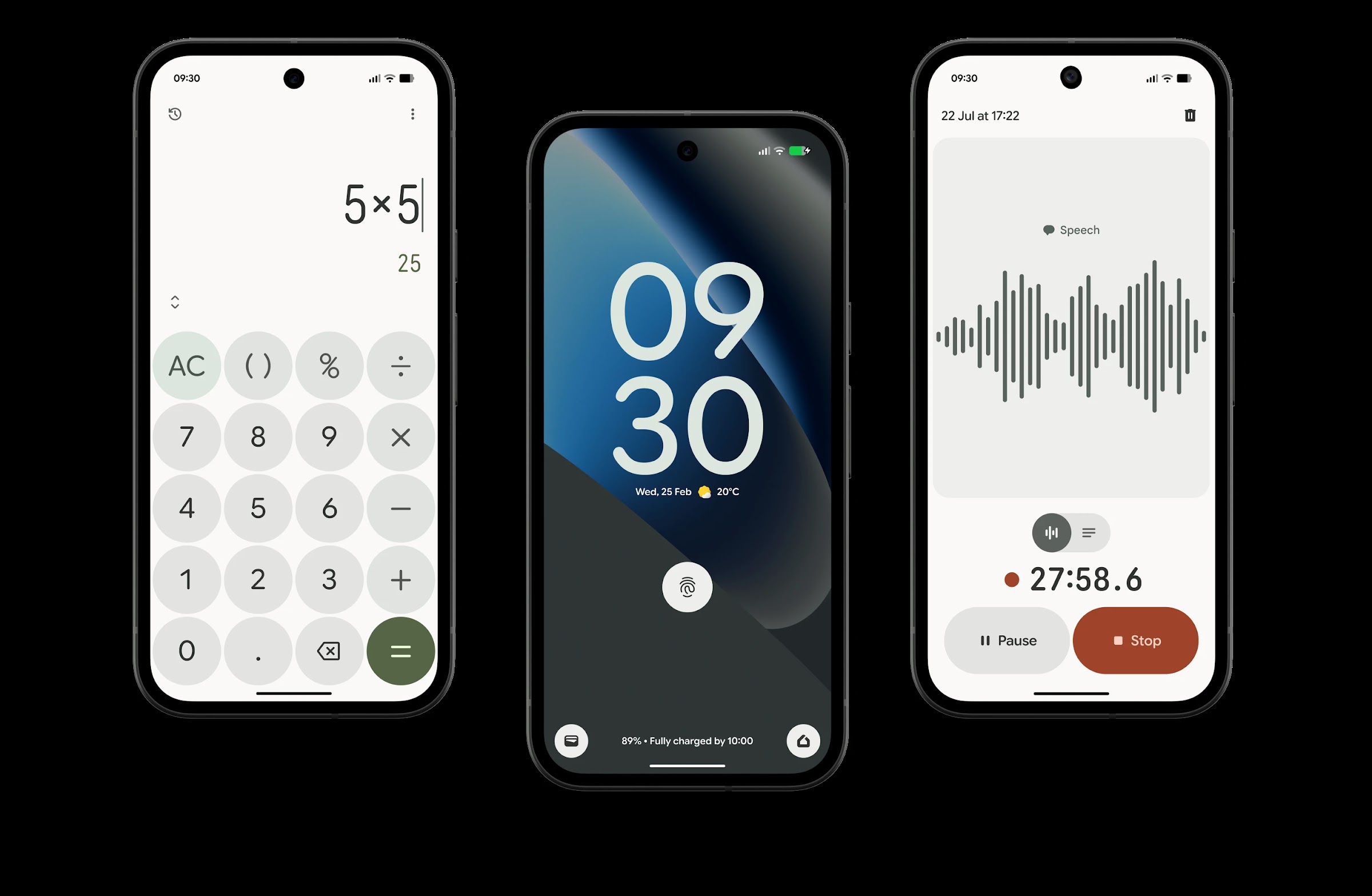
This is the Pixel’s clearest hardware advantage. The Pixel 10a has a 6.3-inch Actua OLED that runs at a 120Hz refresh rate and is rated at up to 3,000 nits peak brightness, so scrolling is smoother and the screen holds up better in direct summer sun. The iPhone 17e counters with a 6.1-inch Super Retina XDR OLED rated up to 1,200 nits peak HDR brightness and a seven-layer anti-reflective coating to cut glare, but it sticks to a 60Hz refresh rate.
For most everyday tasks both panels look excellent, with deep blacks and accurate colour. The difference you will actually feel is the refresh rate: anyone moving from a 120Hz Android phone to the 60Hz iPhone tends to notice it, while most iPhone upgraders coming off an older model will not miss what they never had. On peak brightness the Pixel pulls ahead on paper, which matters if you spend a lot of time outdoors. We made a similar point about high refresh rates mattering more than raw specs in our mid-range Android buying guide.
Winner: Pixel 10a. A 120Hz refresh rate and a much higher peak brightness give the cheaper phone the better screen on paper and in bright daylight.
Performance and silicon
Here the iPhone hits back. The 17e runs Apple’s latest-generation A19 chip with a four-core GPU, the same silicon family that powers the standard iPhone 17, which makes it one of the fastest phones you can buy near £599. The Pixel 10a uses Google’s Tensor G4, which is last-generation Pixel silicon rather than the newer G5 in the flagship Pixel 10, and it is built for AI features and efficient everyday use more than for raw benchmark wins.
In practice the Tensor G4 is perfectly smooth for messaging, browsing, social apps and photography, and the gap only opens up under sustained heavy load such as long gaming sessions or demanding video edits. If you play graphically intense games or keep phones for many years and want headroom, the A19 is the stronger long-term bet. We unpicked exactly this trade-off in our comparison of the Pixel 10 Pro and iPhone 17 Pro, and the pattern holds one tier down. Buyers focused on the most demanding titles should also see our roundup of the best gaming phones in the UK for 2026.
Winner: iPhone 17e. The A19 is a current flagship-class chip, and against the last-generation Tensor G4 it wins on raw performance and longevity.

Cameras
The camera systems are built around different priorities. The iPhone 17e has a single 48MP Fusion rear camera that shoots at 24MP by default and offers a 2x optical-quality telephoto crop plus 4K video at 60fps in Dolby Vision. The Pixel 10a fits two rear lenses: a 48MP main and a 13MP ultrawide, so it can pull back for wide group shots and broad scenery that the single-lens iPhone simply cannot frame.
On stills, Google’s computational processing remains a strength, and the ultrawide is a genuine flexibility win at this price. Apple’s single lens is sharp and its video pipeline is the better of the two, with steadier footage and the Dolby Vision pipeline that creators lean on. Neither phone has a long optical zoom, so both rely on digital crops past their native reach. If you mostly shoot photos and want versatility, the Pixel’s second lens counts; if video is your priority, the iPhone is the safer choice.
Winner: Pixel 10a. The added ultrawide and Google’s stills processing give it more day-to-day photographic range, though the iPhone takes video.
Battery and charging
Both phones comfortably last a full day for typical use. Apple quotes up to 26 hours of video playback for the iPhone 17e and charges to about 50 percent in 30 minutes with a 20W or higher adapter, plus 15W wireless via MagSafe and Qi2. Google rates the Pixel 10a at more than 30 hours of normal use, stretching far higher with its Extreme Battery Saver mode, and tops up at up to 30W wired.
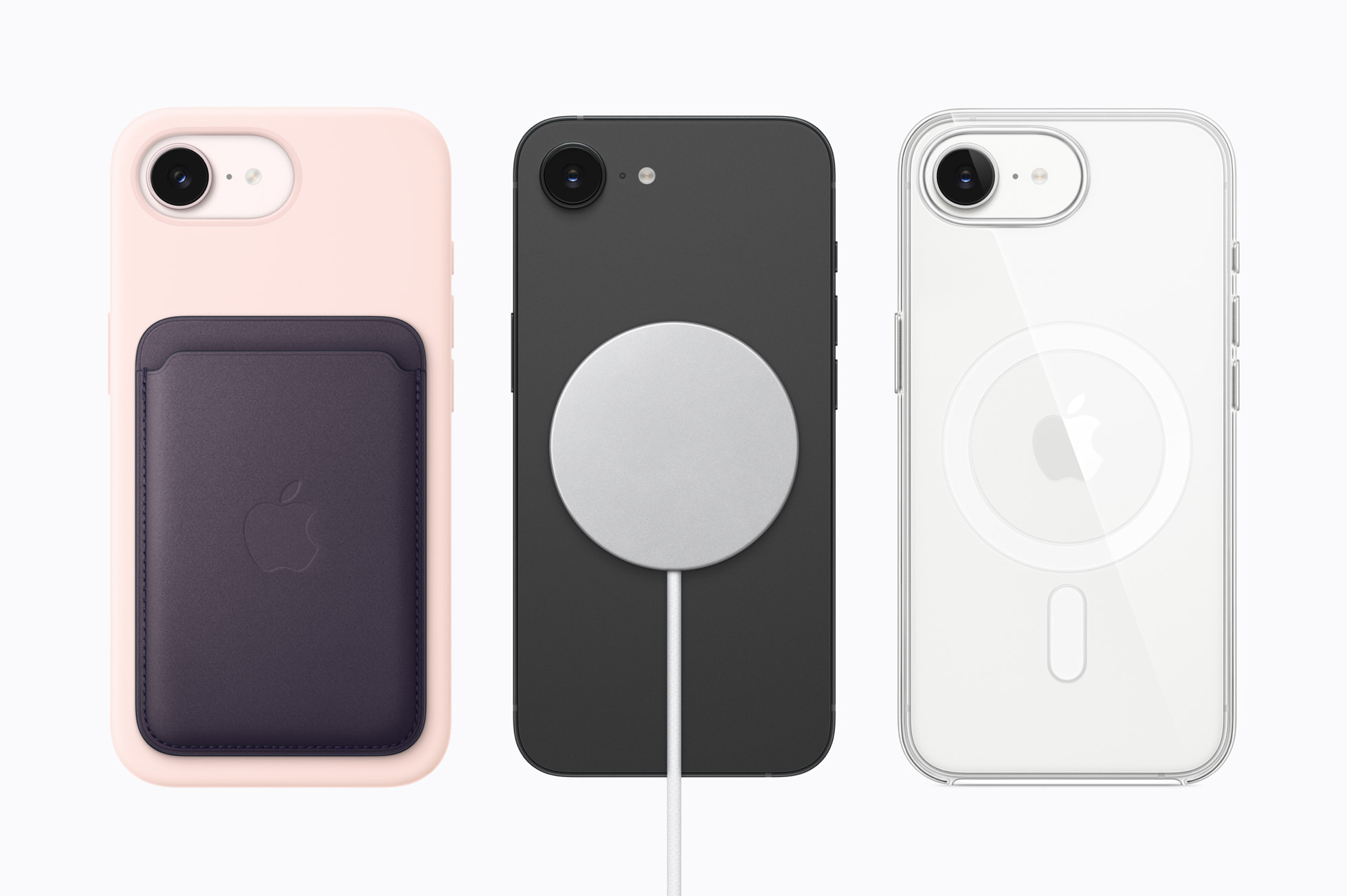
Neither ships with a charger in the box, so factor a compatible USB-C plug into your budget if you do not already own one. The Pixel’s longer quoted endurance and slightly faster wired top-up give it a small edge for heavy days, while the iPhone’s MagSafe magnets unlock a tidy accessory range, from stands to wallets, that Qi2 on the Pixel can partly match. For most people the difference between an all-day iPhone and an all-day Pixel will be marginal in real use.
Winner: Pixel 10a. Longer quoted endurance and a faster wired charge nudge it ahead, with the iPhone clawing back ground on its MagSafe accessory ecosystem.
Software and updates
This is the decision that outlasts the phone. The iPhone 17e runs iOS 26 with Apple Intelligence, and while Apple publishes no fixed figure, its track record points to around six to eight years of major updates. The Pixel 10a ships with the cleanest version of Android and Google’s on-device Gemini features, and Google commits to seven years of OS, security and Pixel Drop updates from launch. Spread across that span, the Pixel’s £499 works out at roughly £71 a year of guaranteed support.
Stretched over seven guaranteed years of updates, the Pixel 10a costs roughly £71 a year of support, a written guarantee Apple’s unpublished update window does not match.
The ecosystem lock-in cuts both ways. iOS keeps you inside iMessage, FaceTime, AirDrop and a deep accessory and trade-in network, which is sticky if your family already runs iPhones. Android gives you more customisation, default-app freedom and tighter Google service integration. Messaging now matters less as a dividing line thanks to encrypted RCS, which we covered in our explainer on what Android and iPhone get from RCS encryption. Buyers leaning Android should also weigh our wider view on whether the budget Pixel is worth buying.
Winner: Pixel 10a. Seven years of guaranteed updates is a firm promise Apple does not publish, and that certainty is a strong argument at this price.
iPhone 17e vs Pixel 10a: specifications compared
| Spec | iPhone 17e (£599) | Pixel 10a (£499) |
|---|---|---|
| Chip | A19 | Tensor G4 |
| Display | 6.1in Super Retina XDR, 60Hz, up to 1,200 nits | 6.3in Actua OLED, 120Hz, up to 3,000 nits |
| Rear cameras | Single 48MP Fusion, 2x telephoto crop | 48MP main plus 13MP ultrawide |
| Video | 4K 60fps Dolby Vision | 4K |
| Charging | Up to 20W wired, 15W MagSafe | Up to 30W wired |
| Base storage | 256GB | 128GB |
| Updates | Around 6 to 8 years iOS (no fixed promise) | 7 years OS, security and Pixel Drops |
| Durability | Ceramic Shield 2, aluminium | IP68, Gorilla Glass 7i |
| Colours | Black, white, soft pink | Lavender, Berry, Fog, Obsidian |
If you have no ecosystem loyalty and want the most phone for the least money, we would buy the Pixel 10a. At £499 it gives you a brighter 120Hz screen, a second camera, longer battery claims and seven years of guaranteed updates, which is the lowest cost-per-year on offer here. It is the phone we would point most UK buyers towards on value alone. The Tensor G4 is its one real compromise, and only heavy gamers will feel it.
Buy the iPhone 17e instead if you are already inside Apple’s world, want the faster A19 chip, prefer its steadier 4K video, or value the 256GB of base storage that softens the £100 premium. Check three things before you commit: whether your family and accessories are tied to one platform, how long you actually keep a phone, and whether you shoot more video or more wide-angle photos. What would flip our pick is a discounted iPhone 17e bundle or a network deal that erases the price gap, at which point Apple’s chip and storage advantage starts to look like the better long-term hold.
Frequently asked questions
Is the Pixel 10a cheaper than the iPhone 17e in the UK?
Which phone gets software updates for longer?
Does the iPhone 17e have a better camera than the Pixel 10a?
Is the Tensor G4 fast enough in 2026?
Do either of these phones come with a charger?
Can you switch from iPhone to Pixel easily?
Which should most UK buyers choose?
Related reading on MTW
Buyer action
Where to buy or check next
Use this as the final check before ordering a phone, changing network or trusting a headline monthly price.










Reader discussion
Leave a comment
Comments are moderated. Keep it useful, accurate, and on topic.