
Wind is every drone pilot’s invisible nemesis. To fly a drone safely, you need to know that a calm morning can turn gusty without warning, and what looked like perfect flying conditions from your kitchen window can become a white-knuckle battle at altitude. Understanding wind, how to read it, how your drone handles it, and when to call it a day, is one of the most important skills a pilot can develop. Here is everything you need to know about flying safely when the air starts moving.
Getting Started
- Understanding Wind Speed: The Beaufort Scale
- How Wind Affects Your Drone
- Practical Flying Techniques
- Checking Wind Forecasts Before You Fly
- When to Ground Your Drone
- Build Your Confidence Gradually
Understanding Wind Speed: The Beaufort Scale
The Beaufort scale is a practical way to estimate wind speed without instruments. For drone pilots, the key thresholds are:
Force 0-3 (0-12 mph / 0-19 km/h): Ideal flying conditions. Light breezes that most drones handle without any noticeable impact on performance or footage quality. This is where you want to be, especially as a beginner.
Force 4 (13-18 mph / 20-28 km/h): Moderate winds. Consumer drones like the DJI Mini 4 Pro and DJI Air 3 can handle this range, but you will notice the aircraft working harder to maintain position. Battery consumption increases, and footage may show subtle vibrations.
Force 5 (19-24 mph / 29-38 km/h): Strong winds. Only fly if your drone is rated for these speeds and you are an experienced pilot. The DJI Mini 4 Pro is rated for a maximum wind resistance of around 24 mph (10.7 m/s), and DJI’s heavier Mavic-class drones are rated similarly. Flying near the limit is not recommended.
Force 6+ (25+ mph / 39+ km/h): Do not fly. No consumer drone is designed for these conditions, and even if yours technically stays airborne, you risk losing control, crashing, or being unable to return home.
How Wind Affects Your Drone
Wind does not just push your drone sideways. It affects every aspect of flight in ways that catch pilots off guard.
Battery life: This is the big one. When your drone fights a headwind, its motors spin faster and draw more current. A 30-minute battery can become an 18-minute battery in strong wind. The danger is insidious, because you fly out with the wind at your back, feeling confident, then turn around and discover you are crawling home against a headwind with the battery draining fast. Always plan your flight so that the outbound leg faces into the wind.
Camera stability: Modern gimbals are remarkable, but they have limits. In gusty conditions, the gimbal works overtime to compensate for sudden movements, and this can introduce micro-vibrations into footage. Wide-angle shots mask this better than telephoto shots, so adjust your composition accordingly.
Return-to-home reliability: If the wind speed exceeds your drone’s maximum velocity, it physically cannot fly home. The DJI Mini 4 Pro maxes out at about 36 mph (16 m/s) in Sport mode, so if a gust hits 35 mph at altitude, your drone is barely making progress. Always know your drone’s top speed and ensure it comfortably exceeds the wind speed.
Practical Flying Techniques
Experience teaches you habits that make windy flights safer. Here are the techniques that matter most.
Mind the turbulence layer: Buildings, trees and cliffs create turbulence that can pitch your drone violently. Tall structures push air upward into a standing wave that can flip a lightweight drone instantly. Fly higher in urban environments to get above the turbulence layer, or avoid built-up areas entirely on windy days.
Reduce altitude before landing: Wind speed increases with altitude. Conditions at 120 metres can be dramatically worse than at ground level. If your drone is struggling at height, descend gradually and you may find calmer air below. Land at a lower altitude than usual if needed.
Checking Wind Forecasts Before You Fly
Reliable wind forecasting is the difference between a safe flight and a nasty surprise. Three apps are worth installing.
UAV Forecast is the gold standard app for drone pilots. It combines wind speed at multiple altitudes, GPS satellite availability, KP index (magnetic interference), and no-fly zone data into a single, easy-to-read interface. Check it before every flight.
Windy.com provides detailed wind maps with altitude layers. You can see exactly what conditions look like at 100 metres in your planned flying location, and the animated visualisation makes gusts and changing conditions obvious.
For longer-term planning, the Met Office and BBC Weather apps provide hourly wind forecasts that are useful for scheduling flights a day or two ahead. If you are planning a drone shoot for a creative project, checking forecasts early gives you the flexibility to pick the calmest window.
When to Ground Your Drone
There are three scenarios where keeping the drone in the case is the correct call, regardless of how good the footage might have been.
Gusts are significantly stronger than sustained winds. A forecast of 15 mph sustained with 28 mph gusts is more dangerous than a steady 20 mph. Gusts are unpredictable and can overwhelm your drone’s stabilisation systems.
You are flying near water, cliffs, or areas where a crash means losing the drone entirely. Wind near coastal cliffs is notoriously unpredictable, with updrafts and downdrafts that change in seconds.
Your drone is a sub-250g model. Lightweight drones like the DJI Mini series are disproportionately affected by wind because of their low mass. They are wonderful in calm conditions, but they become difficult to control far sooner than heavier aircraft.
Learn to Fly a Drone Safely by Building Confidence Gradually
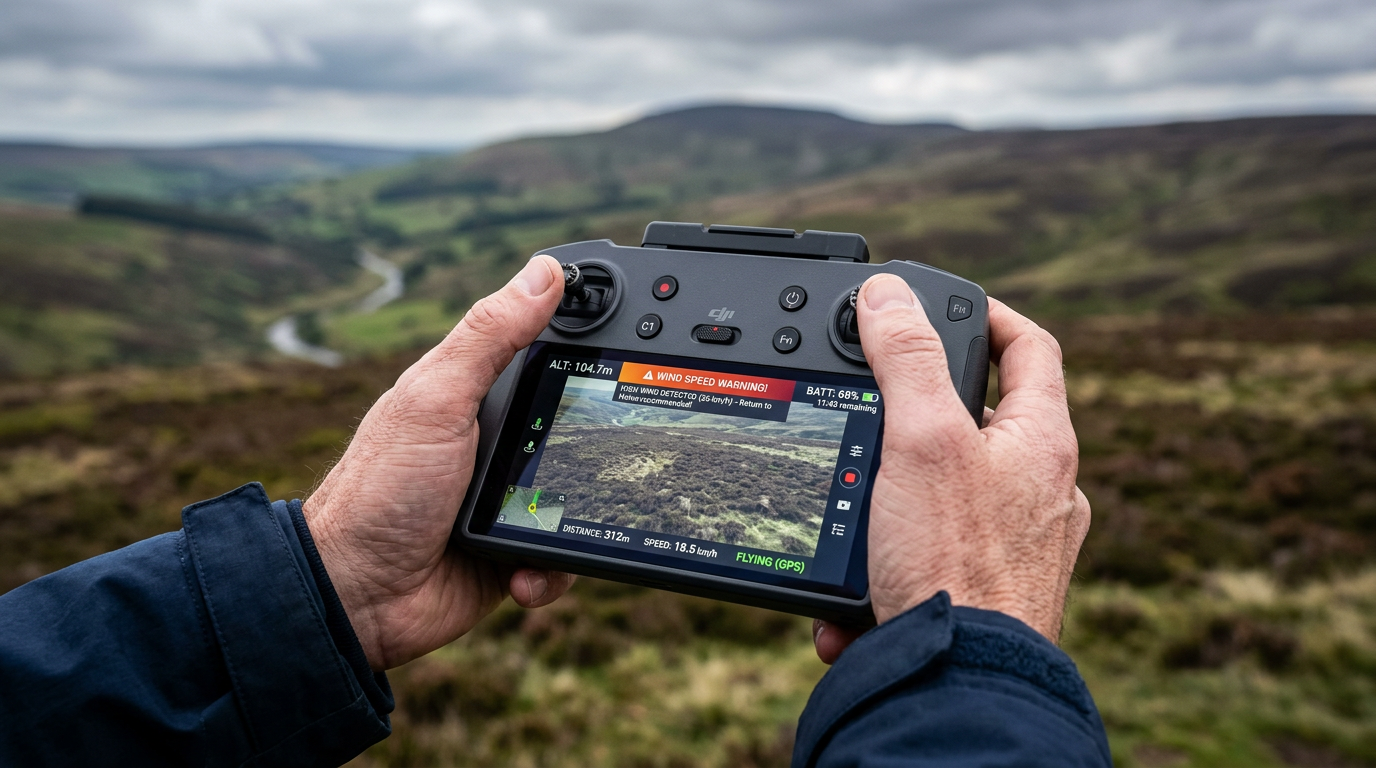
The best way to learn your drone’s wind limits is to push them gradually. Start flying in light breezes, noting how the aircraft responds. Move to moderate winds as your confidence grows. Pay attention to the wind speed warnings your drone’s app provides; DJI Fly displays real-time wind speed and will warn you when conditions are marginal.
Over time, you will develop an instinct for when conditions are manageable and when they are not. That instinct, combined with good forecasting tools and conservative battery management, is what it truly means to fly a drone safely and will keep your drone in the air and out of trouble for years to come.
Buyer action
Where to buy or check next
Use this as the final check before ordering a phone, changing network or trusting a headline monthly price.








Reader discussion
Leave a comment
Comments are moderated. Keep it useful, accurate, and on topic.