Your photos deserve a proper home. Whether you have thousands of holiday snaps, family portraits, or years of phone photography, choosing the right cloud storage service like Google Photos iCloud can make the difference between finding any photo in seconds and losing precious memories in a disorganised mess. Google Photos, iCloud, and Amazon Photos are the three biggest players — and each has distinct strengths depending on your phone, your budget, and how you use your photos.
Google Photos: Contents
- Free Storage: What You Get for Nothing
- Paid Plans: Price Per Gigabyte
- Photo Editing Tools
- AI Search and Organisation
- Cross-Platform Access
- Sharing and Family Features
- Which Should You Choose?
Free Storage: What You Get for Nothing
Google Photos gives you 15GB of free storage shared across Gmail, Google Drive, and Photos. For most people, this fills up within a year or two of regular phone photography. Google no longer offers unlimited “high quality” storage — that ended in 2021 — so every photo and video counts against your quota.
iCloud provides just 5GB for free, which is shared across device backups, documents, and photos. This is barely enough for a few hundred photos, and Apple has been criticised for years for not increasing this paltry allowance. In practice, almost every iPhone user needs a paid iCloud plan, a development closely tied to Google Photos iCloud.
Amazon Photos offers the most generous free tier — unlimited full-resolution photo storage for Amazon Prime members at no additional cost. Videos are limited to 5GB on the free tier, but if you primarily take photos, this is an extraordinary deal considering Prime membership costs £8.99/month and includes delivery, Prime Video, and more.
Paid Plans: Price Per Gigabyte
Google One plans start at £1.99/month for 100GB, £2.99/month for 200GB, and £7.99/month for 2TB. The 2TB plan includes Gemini Advanced AI features, VPN access, and the ability to share storage with up to five family members.
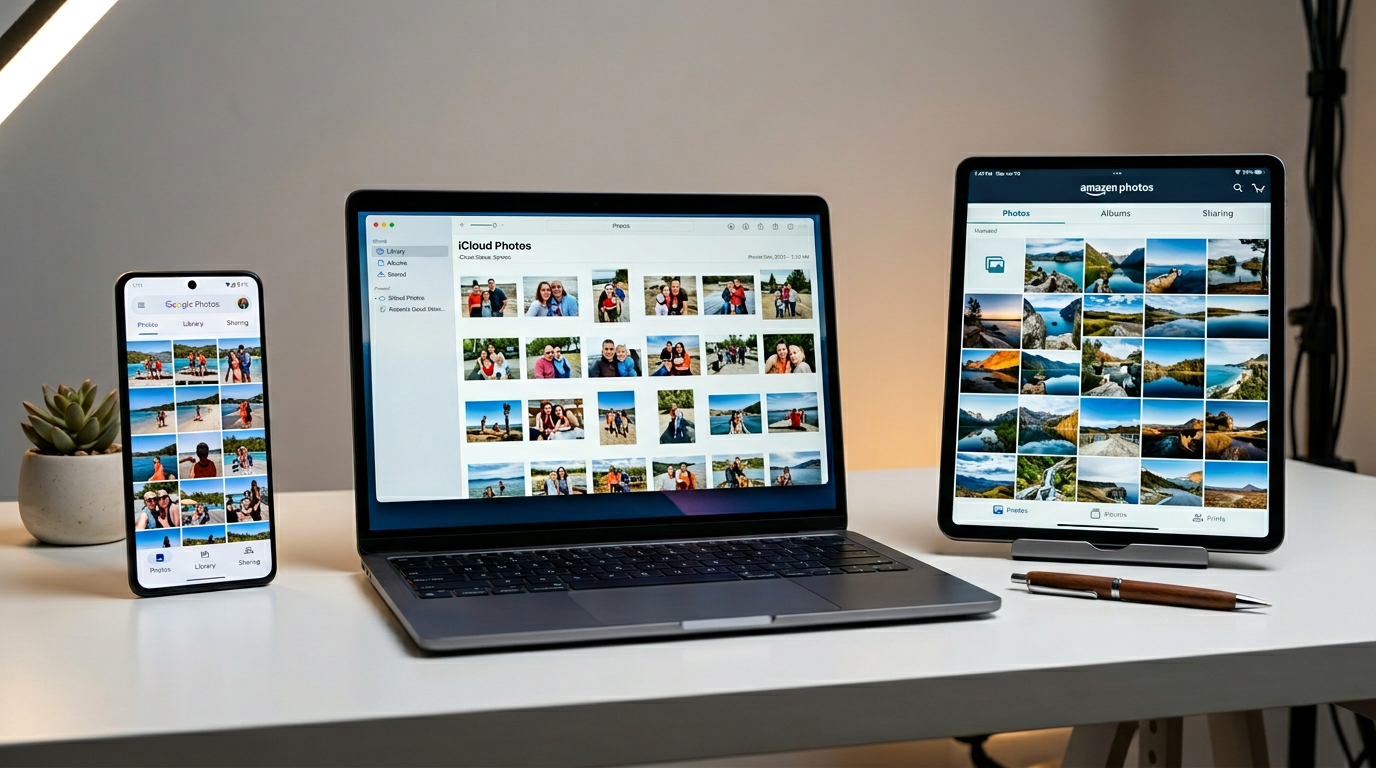
iCloud+ pricing is £0.99/month for 50GB, £2.99/month for 200GB, £8.99/month for 2TB, £21.99/month for 6TB, and £32.99/month for 12TB. The 200GB and higher plans include family sharing, iCloud Private Relay, Hide My Email, and HomeKit Secure Video support.
Amazon Photos unlimited full-resolution photo storage is included with Prime. For additional video and file storage, Amazon Drive plans start at £1.99/month for 100GB. However, Amazon has been scaling back its standalone Drive service, so the primary value is in the Prime-included photo storage.
For pure photo storage value, Amazon Photos with Prime is unbeatable. For a mixed-use cloud service (photos, documents, backups), Google One and iCloud+ are more versatile.
Photo Editing Tools
Google Photos leads here by a considerable margin. Its built-in editor offers cropping, filters, adjustments, and AI-powered features like Magic Eraser (which removes unwanted objects from photos), Photo Unblur, and generative AI editing. Many of these features are available for free, with some premium tools reserved for Google One subscribers.

iCloud itself does not offer editing — you edit photos in the Apple Photos app, which provides a capable set of adjustment tools, filters, and the Clean Up feature (Apple’s equivalent to Magic Eraser). The editing experience on iPhone and Mac is excellent, but it is tied entirely to Apple devices.
Amazon Photos offers basic editing tools — cropping, filters, and simple adjustments — but nothing approaching the sophistication of Google or Apple. If editing matters to you, Amazon is the weakest option.
AI Search and Organisation
This is where Google Photos truly excels. Its AI-powered search lets you find photos by describing what is in them — “dog on beach,” “birthday cake,” “red car” — with remarkable accuracy. It automatically creates albums, highlights, and memories, and its face recognition groups photos of the same person across years of uploads.
Amazon Photos offers basic search by date, location, and recognised faces, but its AI capabilities are limited compared to both Google and Apple. Organisation is functional but not intelligent.
Cross-Platform Access
Google Photos works everywhere — Android, iOS, web, Windows, Mac, Chromebooks. This universal access is its biggest advantage for people who switch between devices or platforms. Your photos are always accessible regardless of what phone or computer you are using.
iCloud is deeply integrated into Apple devices but has limited functionality on Android and Windows. The iCloud web interface has improved, and there is an iCloud for Windows app, but the experience is best within the Apple ecosystem. If you ever switch from iPhone to Android, migrating out of iCloud is more cumbersome than it should be.
Amazon Photos has apps for iOS, Android, web, and desktop. Cross-platform access is good, though the apps are not as polished as Google’s or Apple’s.
Sharing and Family Features
All three services offer family sharing. Google One’s family plan lets up to five members share storage. iCloud+ Family Sharing works with up to five family members on 200GB+ plans. Amazon Photos allows family vault sharing with up to five people through Prime.
Google Photos’ shared albums and partner sharing (which automatically shares photos of specific people with a partner) are the most thoughtful implementation. Apple’s Shared Photo Library in iCloud is also excellent, particularly for families who are all on iPhones. For more on making the most of your phone’s software, see our roundup of the best password managers in 2026.

Which Should You Choose?
iPhone users who stay in the Apple ecosystem: iCloud+ is the path of least resistance. Deep integration with iOS, seamless backups, and excellent privacy make it the natural choice. The 200GB plan at £2.99/month covers most individuals.
Android users or cross-platform households: Google Photos is the clear winner. The best AI search, excellent editing tools, and universal access make it the most versatile option. The 200GB Google One plan at £2.99/month is the sweet spot.
Amazon Prime members who primarily take photos: Amazon Photos is free with your existing Prime subscription and offers unlimited full-resolution storage. It is worth using as a backup even if you use another service as your primary. For more app recommendations, check out our guide to the best EV charging apps for another look at how the right app can make your life easier.
Final verdict
Google Photos vs iCloud vs Amazon Photos compared — free storage, paid plans, editing tools, AI search, cross-platform access, and sharing features to find the best cloud photo service.
How we compare
Buyer action
Where to buy or check next
Use this as the final check before ordering a phone, changing network or trusting a headline monthly price.











Reader discussion
Leave a comment
Comments are moderated. Keep it useful, accurate, and on topic.