UPDATED · News · 1 May 2026 · Daniel Reid
Apple Hearing Study findings released on 1 May 2026 turn AirPods Pro from a nice-to-have into a public-health argument. 9to5Mac reported the headline numbers, and the University of Michigan School of Public Health published the underlying analysis. Across 160,000 consented participants, 16% of those who tested as clinically normal still rated their own hearing as fair or poor.
- Apple Hearing Study findings published 1 May 2026 in partnership with the University of Michigan School of Public Health.
- Study population: 160,000+ consented US participants – one of the largest hearing studies ever run, per UM SPH.
- Among ~85,000 participants with clinically normal hearing (4PTA <=25 dB per WHO), 16% rated their own hearing as fair or poor.
- Among 57,183 participants with hearing tests and 30+ days of walking-speed data, worse hearing was strongly linked to slower walking – especially in adults aged 60+.
Why the Apple Hearing Study findings matter for AirPods buyers
Apple Hearing Study findings are easy to ignore as a corporate research dump. They should not be. The numbers reframe AirPods Pro from a music product into a public-health product: 16% of people whose hearing tests come back clinically normal still feel they cannot hear properly in real life, especially in background noise. That is a gap between measured hearing and lived experience, and it is precisely the gap that Apple’s Hearing Test, Hearing Aid and Hearing Protection features sit in.
The second Apple Hearing Study findings result is the one that matters for UK readers more broadly. Worse hearing is linked to slower walking, with the strongest signal in adults aged 60 and over. That is not a marketing claim; it is a 57,183-person analysis built on passive iPhone walking-speed sensors and 4PTA hearing scores. We have written before about how consumer medical wearables are crossing the line into infrastructure, and the Apple Hearing Study findings are now sitting on that same line for hearing.
Apple Hearing Study findings: what the numbers actually say
The Apple Hearing Study findings are built around a metric called 4PTA – the four-frequency pure-tone average. 4PTA is the same number audiologists have used for decades to grade hearing loss; the World Health Organisation defines normal as 25 dB or below. What the Apple Hearing Study findings show is that 4PTA on its own undercounts perceived difficulty. The 16% of clinically normal participants who still self-rate as fair or poor are mostly reporting trouble with concentration during conversations and trouble understanding speech in background noise – both of which 4PTA can miss.
| Apple Hearing Study findings cohort | Result | MTW read |
|---|---|---|
| ~85,000 clinically normal (4PTA <=25 dB) | 16% self-rate hearing as fair/poor | The argument for a free at-home Hearing Test gets harder to dismiss. |
| 57,183 with hearing + walking data | Worse hearing = slower walking, especially 60+ | Hearing becomes a mobility issue, not just a sound issue. |
| Whole study: 160,000+ consented | One of the largest hearing studies ever | The dataset is now big enough to defend in peer review. |
The walking-speed finding is the one that will keep being cited. The Apple Hearing Study findings link 4PTA scores to passive iPhone-measured walking speed, which sidesteps every awkward bias of self-reported mobility data. The cohort is large enough and the methodology transparent enough that the link survives the scrutiny. The hypothesis Apple and Michigan are pushing is that hearing loss removes environmental sound cues – footsteps, traffic, voices – and that older adults compensate with slower, more cautious gait. The Apple Hearing Study findings do not prove causation, but the correlation is strong enough to take seriously.
How the Apple Hearing Study findings change the AirPods value pitch
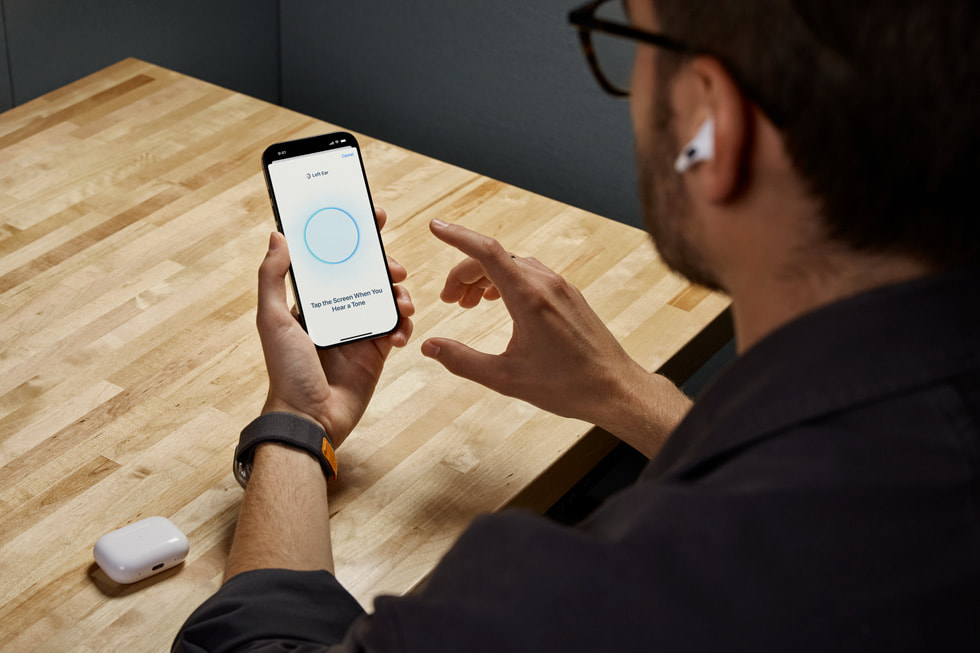
Apple has been selling AirPods Pro 2 as a hearing-health device since the FDA cleared the Hearing Aid feature in late 2024. The Apple Hearing Study findings put real evidence behind that pitch. If you live with the kind of mild hearing-perception gap the 16% cohort describes – struggling at restaurants, concentrating hard to follow conversations with multiple speakers – the Apple Hearing Study findings argue you should take the AirPods Pro at-home test rather than wait for an audiology referral. The Hearing Test is free, takes about five minutes, and the results sync to the Health app.
For UK buyers, two things are worth knowing. First, the Apple Hearing Study itself ran on US consented participants. The 4PTA distribution may look similar in the UK, but the Apple Hearing Study findings are a US-derived signal. Second, the AirPods Pro Hearing Aid feature is available in the UK, regulated under MHRA rather than FDA rules. Apple has been clear it is intended for perceived mild to moderate hearing loss, not severe loss. If you are evaluating AirPods Pro purely as audio kit, our best wireless earbuds under £150 UK 2026 guide still applies. If you are evaluating them as a hearing-health tool, the Apple Hearing Study findings shift the equation.
What UK readers should actually do with the Apple Hearing Study findings
The honest practical advice from the Apple Hearing Study findings is straightforward. If you already own AirPods Pro 2 or AirPods Pro 3, run the Hearing Test in iOS at home in a quiet room. It costs nothing, takes five minutes, and the result lives in the Health app on your device. If you do not own AirPods Pro and you are over 50, the Apple Hearing Study findings make a defensible argument for trying a pair specifically for the Hearing Aid and Hearing Protection features rather than the music. If you are buying AirPods for someone in their 60s or 70s, take the Apple Hearing Study findings as the reason to do it. We compared AirPods Pro against other premium earbuds in the AirPods Max 2 review; the hearing-health functionality is exclusive to the Pro line.
The bigger picture is that consumer hearing health is now a credible category, not a marketing line. The Apple Hearing Study findings, combined with the FDA Hearing Aid clearance and the size of the dataset, are the strongest argument any consumer wearable has made for medical-tier utility. Cala kIQ Plus is making a similar pitch for tremor; Apple Watch keeps pushing on cardiac rhythm; AirPods Pro is now the entrant on hearing. The Apple Hearing Study findings are the moment the hearing-health version of that pitch became hard to argue with. UK buyers should treat them as evidence, not advertising.
MTW verdict
Apple Hearing Study findings turn AirPods Pro into the most defensible health-wearable case study of 2026. If you are over 50, run the Hearing Test – it is free, takes five minutes and the data is yours. If you are buying earbuds for a parent or grandparent, the Apple Hearing Study findings are a stronger reason than any spec sheet. Treat the 16% figure as the answer to anyone who says “but my hearing is fine”.
Buyer action
Where to buy or check next
Use this as the final check before ordering a phone, changing network or trusting a headline monthly price.




Reader discussion
Leave a comment
Comments are moderated. Keep it useful, accurate, and on topic.