UPDATED · News · 27 Mar 2026 · Claire Bennett
Apple announced in March 2026 that it is adding four new companies to its American Manufacturing Program, Bosch, Cirrus Logic, TDK, and Qnity Electronics, with Apple chip manufacturing set to benefit from the move. The partnerships represent $400 million (around £320 million) in spending through 2030 and form part of Apple’s broader $600 billion (around £480 billion), four-year commitment to domestic manufacturing in the United States.
What Happened
- The Four New Manufacturing Partners
- What This Means for Product Prices
- The Bigger Picture for US Tech Manufacturing
- What Comes Next
The move signals a significant shift in how Apple sources critical components for its devices. While the company has long assembled products overseas, these partnerships bring actual component manufacturing, semiconductors, sensors, and advanced materials, to American facilities, as Apple Newsroom confirms.
The Four New Manufacturing Partners
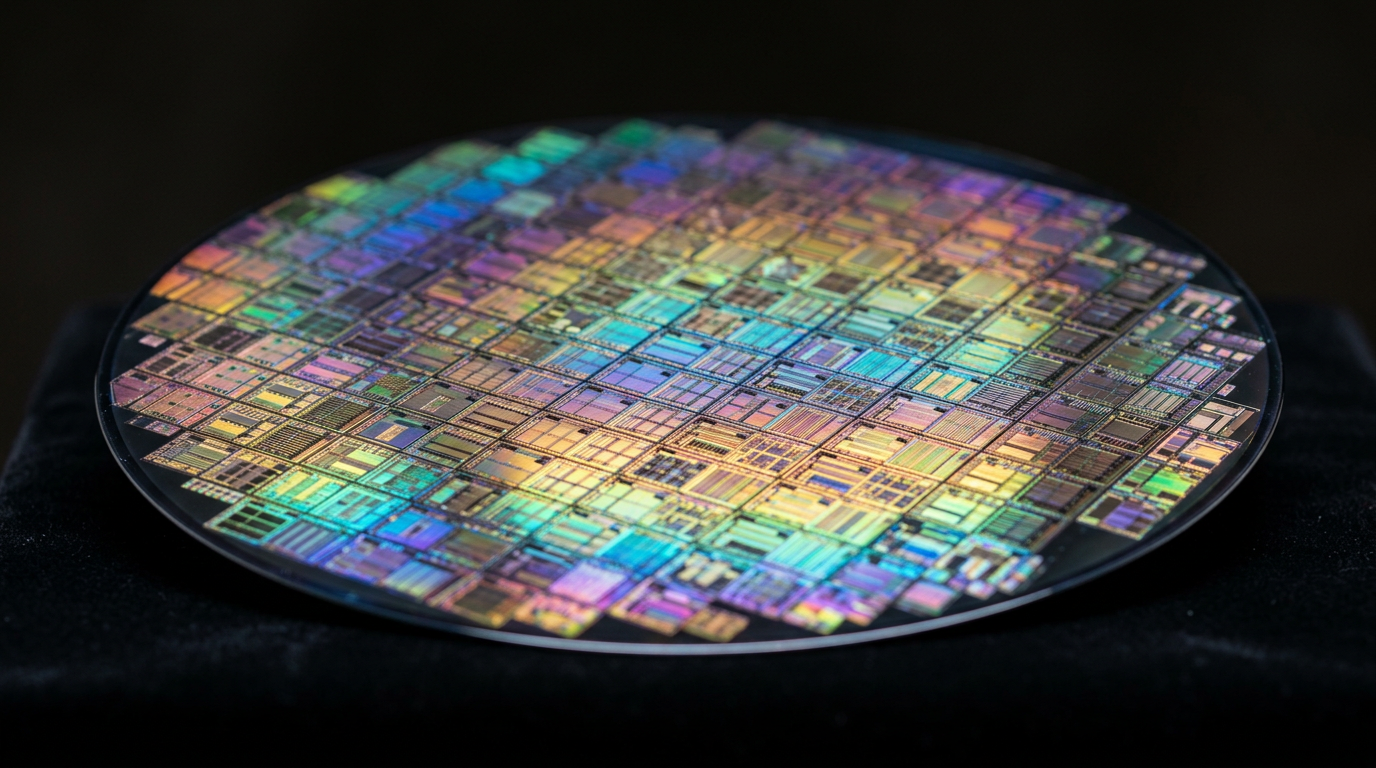
Each partnership targets a different part of Apple’s component supply chain. TDK will manufacture tunnel magnetoresistance (TMR) sensors for Apple in the United States for the first time, used in features such as iPhone camera stabilisation. Cirrus Logic is teaming with GlobalFoundries at the Malta, New York fab to develop mixed-signal semiconductors, including chips that support Face ID. Bosch will work with Apple and TSMC at the Camas, Washington fab on sensing integrated circuits for Crash Detection and Activity tracking, and Qnity Electronics plus HD MicroSystems will supply advanced materials for semiconductor packaging, as 9to5Mac details.
What This Means for Product Prices
The obvious question is whether domestic manufacturing will increase product costs. Manufacturing in the US is more expensive than in China, Vietnam, or India. Apple has historically absorbed supply chain cost increases rather than passing them to consumers, but that has limits.
The component-level focus of these partnerships helps manage costs. Sensors, integrated circuits, and semiconductor materials represent a fraction of total device cost. Apple is not proposing to assemble iPhones in the US, it is moving specific, high-value components to domestic production while keeping final assembly in lower-cost regions. That is a more sustainable approach than full reshoring.

Apple Chip Manufacturing: The Bigger Picture for US Tech
Apple’s announcement sits alongside similar moves from other tech companies. TSMC’s Arizona fab is now operational, Intel has expanded domestic chip production, and Samsung is building a semiconductor facility in Texas, as CNBC reports. Apple chip manufacturing is part of a cumulative reshoring of critical tech manufacturing that has been concentrated in East Asia for decades.
For consumers, the impact will be invisible in the short term. Your iPhone will not feel different because a TMR sensor was made in the United States rather than Shenzhen. But over time, a more distributed supply chain reduces the risk of the kind of component shortages that plagued the industry during the pandemic. For more, see our editorials.
What Comes Next
Apple’s American Manufacturing Program now includes dozens of suppliers across the country. The $600 billion (around £480 billion) commitment runs through 2030, which means more announcements like this are coming, according to MacRumors. The question is whether Apple chip manufacturing ambitions will eventually extend to moving final assembly of any major product to the US, or whether component manufacturing is as far as domestic production will go. For now, the four new partnerships represent a tangible step toward a more balanced global supply chain.
What Apple’s $400 million (around £320 million) US chip manufacturing commitment actually buys
Apple committing $400 million (around £320 million) to US chip manufacturing sounds like a rounding error against the company’s annual capex, and in some sense it is. The interesting figure is not the dollars but the wafer volume the deal underwrites at TSMC’s Arizona fab. By prepaying for a guaranteed slice of N3 and N2 production on US soil, Apple is effectively buying insurance against the exact geopolitical scenario every silicon analyst has been modelling for five years.
For the broader US chip manufacturing build-out, the Apple commitment matters because it gives the Arizona fab a marquee customer that is contractually obligated to take volume rather than a memorandum-of-understanding promise. That is the difference between a fab that runs at break-even and one that hits the utilisation rates needed to justify the next phase of expansion.
Buyers should not expect this to change anything about the iPhone they purchase next year, those chips will still be made in Taiwan. The first product line to ship with US-made silicon is more likely to be the Apple Watch, where volumes are smaller and the architectural complexity is lower. Treat the $400 million (around £320 million) as a deposit on a longer-term shift, not a same-year supply chain change.
Buyer action
Where to buy or check next
Use this as the final check before ordering a phone, changing network or trusting a headline monthly price.













Reader discussion
Leave a comment
Comments are moderated. Keep it useful, accurate, and on topic.