
The AMD Ryzen AI Max 400 series is the May 2026 chip launch that quietly resets the AI laptop question for UK power users. AMD announced the Gorgon Halo refresh on 20 May 2026 with up to 192GB of LPDDR5X-8533 unified memory and 160GB of GPU-addressable VRAM in a single mobile package, claiming the world’s first x86 client SoC that can run a 300-billion-parameter FP4 LLM locally. That is a bigger memory pool than any current MacBook Pro M5 Max can deliver, and it is the genuine reason this is the chip to wait for.
- AMD Ryzen AI Max+ PRO 495, Max PRO 490 and Max PRO 485 announced 20 May 2026; codename Gorgon Halo, built on Zen 5 plus RDNA 3.5.
- Up to 192GB LPDDR5X-8533 unified memory, up to 160GB allocatable as VRAM, 273GB/s memory bandwidth.
- Flagship Max+ PRO 495: 16 Zen 5 cores, 5.2GHz boost, 64MB L3, 40-CU Radeon 8065S, 55 TOPS NPU, 45-120W configurable TDP.
- ASUS, HP and Lenovo confirmed as launch OEMs; systems target Q3 2026.
- Apple’s MacBook Pro M5 Max tops out at 128GB unified memory; Apple has not announced a 192GB Apple Silicon laptop.
Why AMD Ryzen AI Max 400 actually matters
Local LLMs lived in the cloud for three years for one boring reason: the model weights did not fit in a laptop. The 70-billion-parameter open-source models that mid-2025 brought to the desktop need roughly 40GB of VRAM at FP4 quantisation; the 300-billion-parameter class needs 150GB-plus. Apple has been the only place to actually do this on a laptop because Apple Silicon’s unified-memory architecture lets the GPU allocate everything the CPU can address. The MacBook Pro M5 Max caps out at 128GB. The AMD Ryzen AI Max 400 goes to 192GB. That is a real, measurable AI capability gap, and it is in AMD’s favour for the first time since unified memory became the laptop AI story.
The headline number is 192GB but the more useful one for actual workloads is 160GB allocatable as VRAM. That is the bucket the GPU and NPU can read directly without going across PCIe, and it is what determines whether a model that says “300B parameters” can be loaded at all. With a 1.45TB/s effective bandwidth across the SoC and 273GB/s on the memory bus, the Max+ PRO 495 is the first x86 chip that can credibly host the Llama 3, Qwen 3 and DeepSeek 600B-class models that have been hovering above consumer hardware all year. Compare that with our take on x86’s slow death in 2026 – this is the one segment where the x86 laptop is suddenly alive again.
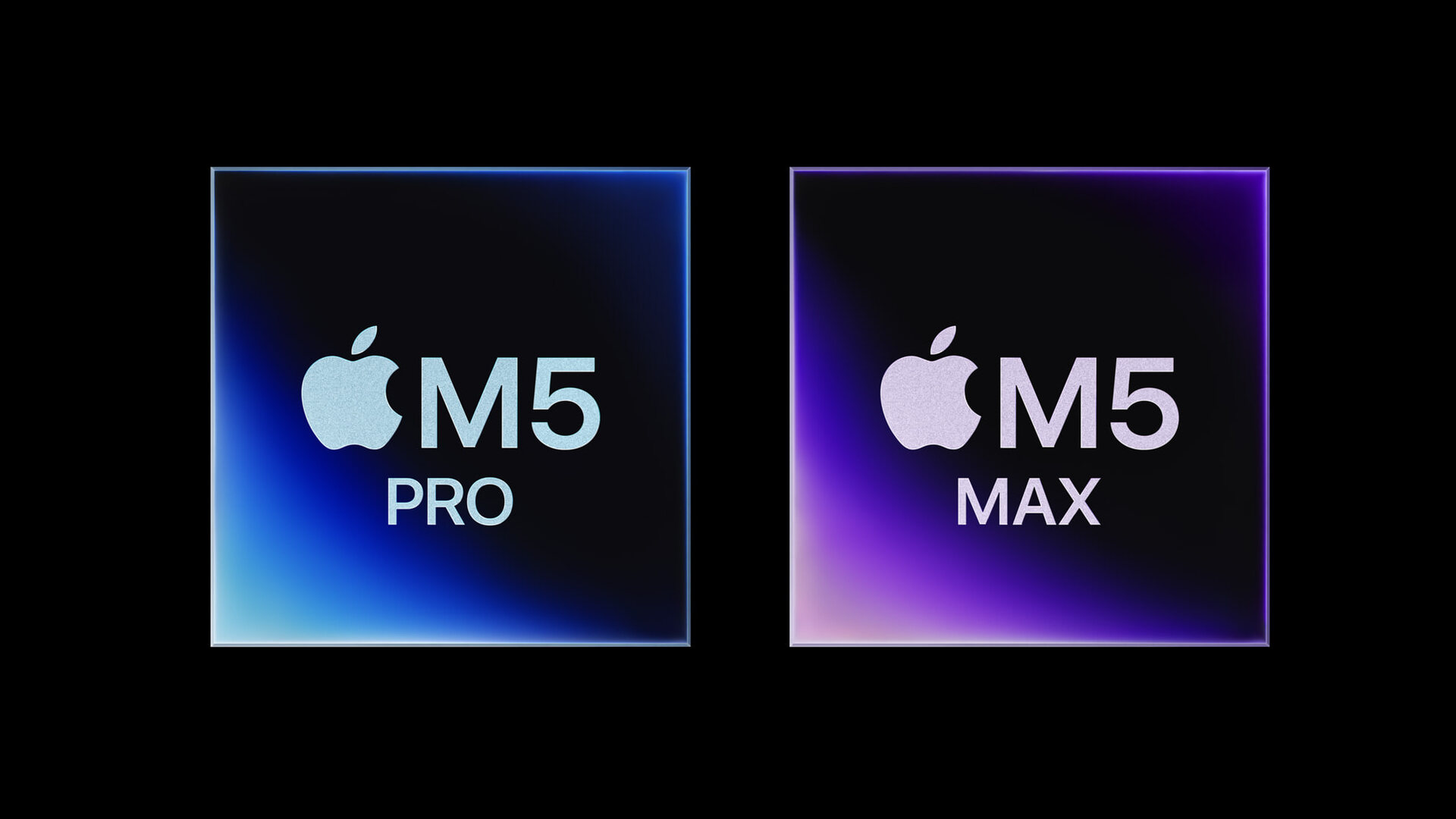
AMD Ryzen AI Max 400 vs Apple M5 Pro and M5 Max
This is the comparison that matters. Apple’s M5 Pro and M5 Max in the new MacBook Pro deliver up to 4x faster LLM prompt processing than M4 Pro and M4 Max and 8x faster AI image generation than the original M1 generation. Apple now publishes 307GB/s for the M5 Pro and 614GB/s for the M5 Max – both higher than the Ryzen AI Max+ PRO 495’s 273GB/s, which honestly matters for sustained workloads. But memory ceiling is a hard wall: 128GB on the M5 Max top configuration, no more available at any UK price. The Ryzen AI Max+ PRO 495 takes that ceiling to 192GB and quietly removes Apple’s marquee local-LLM capacity advantage even as Apple still wins on bandwidth.
Apple still has a software lead. LM Studio, Ollama and Draw Things are all optimised against Apple Silicon’s Metal stack first. Hugging Face transformer pipelines that target Linux x86 with ROCm or CUDA are not as plug-and-play, even when the silicon underneath is fast. That gap is shrinking month by month: ROCm 7 ships native client support for Strix Halo and the new Gorgon Halo silicon, and the LM Studio team has confirmed Windows and Linux builds with first-class AMD acceleration. The software disadvantage is real but it is also a one-year problem, not a three-year one.
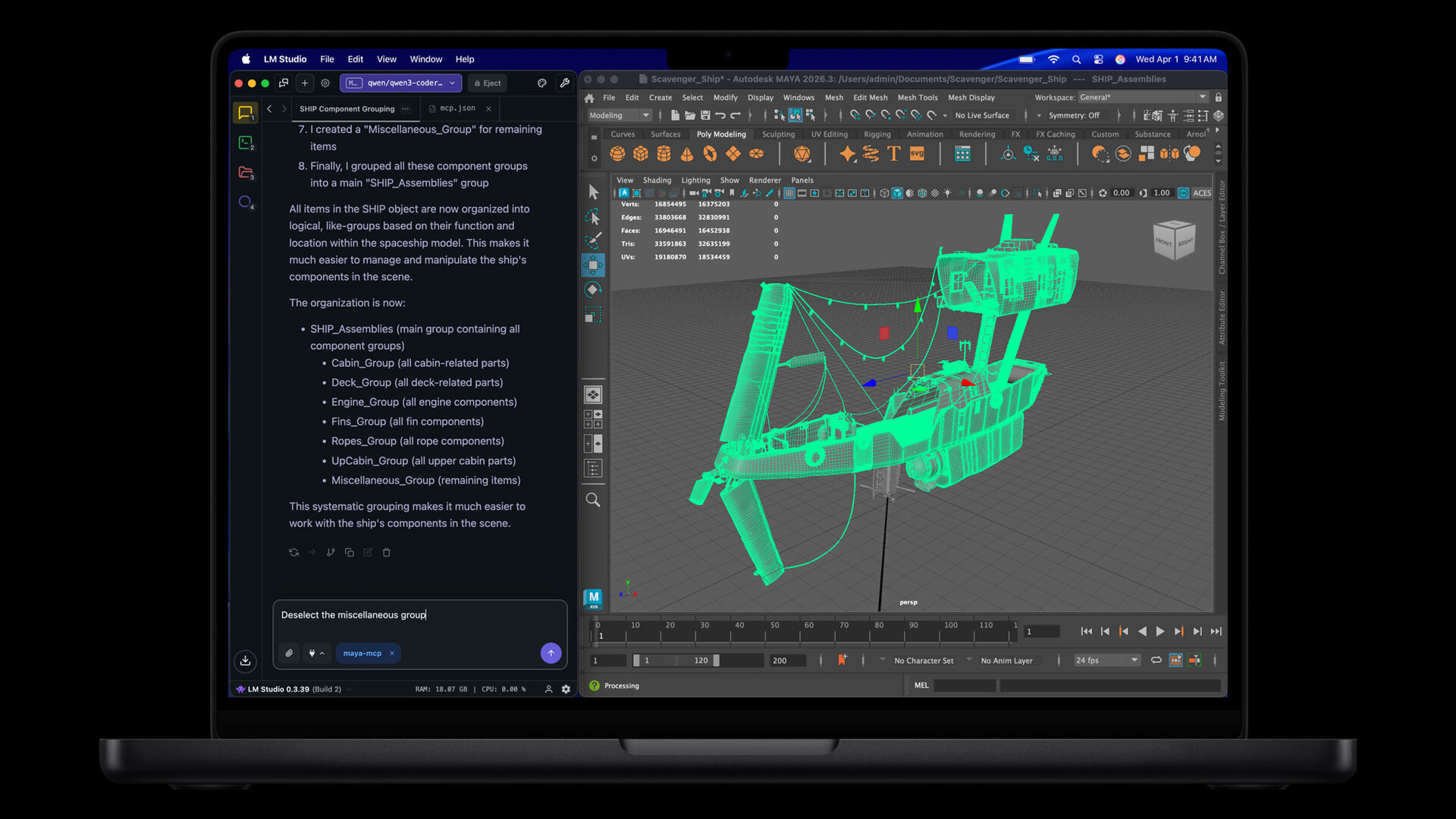
AMD Ryzen AI Max 400 vs the AI laptop field
| Chip | Max unified memory | Memory bandwidth | NPU TOPS | MTW read |
|---|---|---|---|---|
| AMD Ryzen AI Max+ PRO 495 | 192GB LPDDR5X-8533 | 273GB/s | 55 TOPS | The new local-LLM capacity ceiling; the only x86 laptop chip that fits 300B FP4 models. |
| Apple M5 Max | 128GB | 614GB/s | ~38 TOPS (16-core Neural Engine est.) | Best software stack today; over 2x AMD’s bandwidth but capped at 128GB. |
| Apple M5 Pro | 64GB | 307GB/s | Same Neural Engine, narrower memory | Mainstream creative laptop, not the AI specialist tier. |
| Qualcomm Snapdragon X2 Elite | 64GB LPDDR5X-9523 | ~152GB/s standard, 228GB/s Elite Extreme | 80 TOPS | Best for Copilot+ daily use; way below the AI specialist memory tier. |
| Intel Panther Lake | Up to 96GB LPDDR5 / 128GB DDR5 | Below Apple/AMD | ~50 TOPS | Still on shelves through 2026 but no answer to the 192GB story. |
The Qualcomm Snapdragon X2 Elite line leads on raw NPU TOPS at 80, but its 64GB memory ceiling makes it a Copilot+ daily-driver chip, not the same product. Intel Panther Lake is even further off the pace; Intel’s roadmap does not have a 192GB-tier unified memory laptop until Nova Lake at the earliest. That makes AMD the only meaningful alternative to Apple Silicon at the top of the AI laptop market in 2026 when capacity is the bottleneck rather than bandwidth.
What UK buyers should actually do about AMD Ryzen AI Max 400
Three concrete recommendations for UK buyers. If you do not run local LLMs and your AI workflow is “open Cursor and let it call Claude or GPT in the cloud”, buy a MacBook Pro M5 Pro now and stop reading; you will not notice the 192GB ceiling. If you specifically need 70B-plus local models for compliance, latency or air-gap reasons, wait for the Lenovo Legion 7a Gen 11 with Ryzen AI Max+ at the Q3 2026 launch window and price it against a maxed-out MacBook Pro M5 Max – our M5 buyer’s guide sets the Apple side of that decision. The £2,000-3,500 Strix Halo Lenovo will beat the £4,500-plus M5 Max for pure local AI memory headroom by a meaningful margin.
If your AI work is mostly inference of off-the-shelf models on remote infrastructure – the actual job most UK developers have – neither the Ryzen AI Max 400 nor an M5 Max is required, and a Copilot+ Snapdragon machine costs hundreds less. The Ryzen AI Max 400 is the answer to a real but narrow question: how do you run 300-billion-parameter open-source models on a single laptop. For that one job, AMD is now the leader; for everything else, the order of the AI PC field has not changed.

MTW verdict
The AMD Ryzen AI Max 400 192GB ceiling is the first time the x86 laptop has out-specced Apple Silicon on a number that actually matters for AI. UK power users who run local LLMs should plan to buy a Strix Halo Lenovo, ASUS or HP in Q3 2026 rather than a maxed M5 Max today. Everyone else – the 95% of buyers who do not actually run local LLMs – should ignore the 192GB headline and pick the laptop with the better screen, keyboard and battery life. That is still a MacBook Pro for most people.
MMTW Editorial
Buyer action
Where to buy or check next
Use this as the final check before ordering a phone, changing network or trusting a headline monthly price.







Reader discussion
Leave a comment
Comments are moderated. Keep it useful, accurate, and on topic.