Asus ROG Phone 9 Pro: does a 185Hz gaming phone justify £1,099?
There is a figure on the Asus ROG Phone 9 Pro’s spec sheet that no other flagship in a UK carrier shop will print next to its name: 185Hz. Not 120, not the 144 the marketing teams like to round up to — 185. That single number tells you everything about who this phone is for, and, just as usefully, who it isn’t for. Working from Asus’s own published specification and GSMArena’s detailed 2026 review, I want to do the unglamorous thing and judge this £1,099 machine on the numbers, in pounds, for a British buyer — because the ROG line has always been easier to admire than to actually recommend.
The price is the argument, before anything else
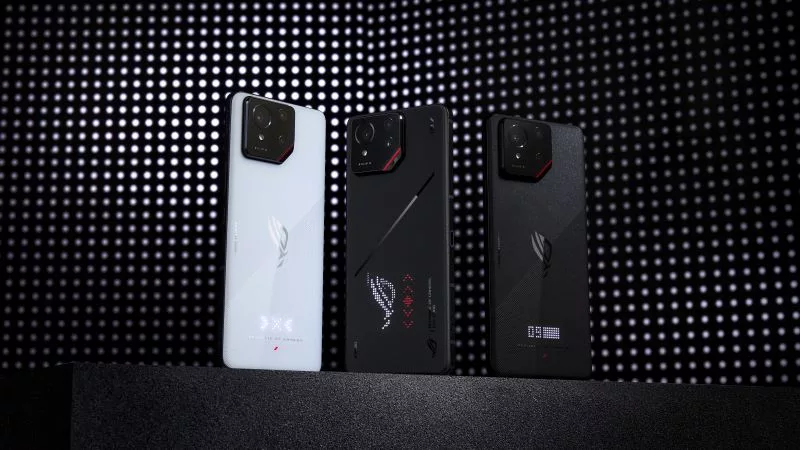
Let’s put the money on the table first, because it frames the whole verdict. The ROG Phone 9 Pro I’m talking about — 16GB of RAM, 512GB of storage — lands at £1,099 in the UK. Step up to the ROG Phone 9 Pro Edition, and you’re paying £1,299 for 24GB of RAM, a full terabyte of storage and the AeroActive Cooler X Pro clip-on fan in the box.
That’s Galaxy S-Ultra territory. It’s iPhone Pro Max territory. And it’s the crux of the entire pitch: Asus is asking you to spend the same money a Samsung or an Apple would take, but to spend it on a phone whose priorities are stubbornly, unfashionably narrow. You are paying flagship money for gaming-first engineering, and whether that’s brilliant value or a category error depends entirely on how you actually hold your phone at 9pm on a Tuesday.
It’s worth being clear-eyed about what the £200 jump to the Pro Edition actually buys, too, because on paper it reads like a lot. Doubling the RAM to 24GB and the storage to 1TB is the headline, but the quieter part of that £1,299 is the AeroActive Cooler X Pro included in the box — a clip-on fan that, on a phone built around sustained performance, is the accessory most likely to earn its keep during a long session. For most UK buyers that’s still £200 of over-provisioning they’ll never lean on; for a small, committed slice of them it’s the only version worth considering. Knowing which camp you’re in before you check out is the difference between a smart buy and a vanity one.
Image: Asus
The display, and that refresh-rate ladder
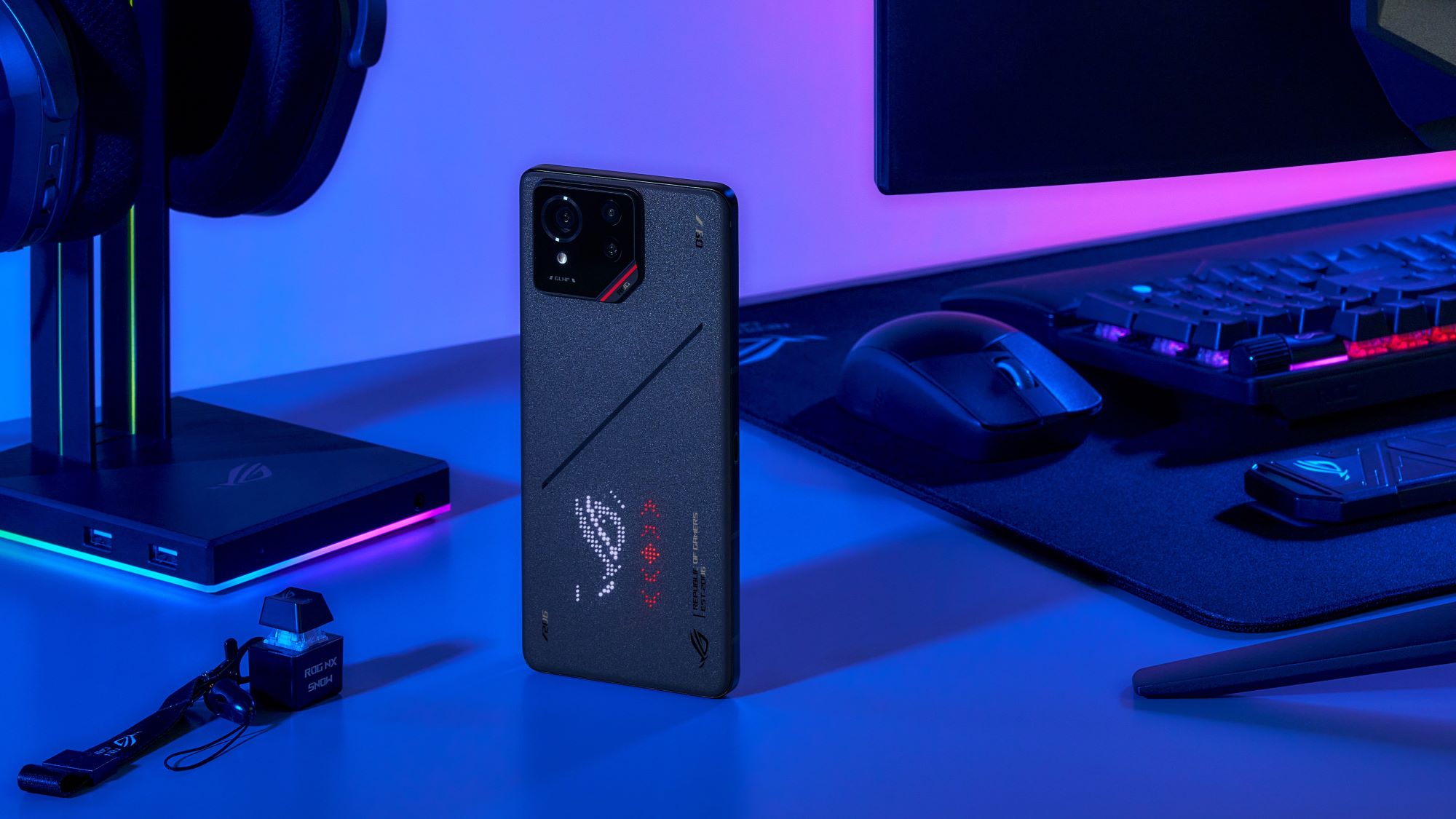
The screen is a 6.78-inch Full HD+ AMOLED, and here is where the specification gets genuinely interesting rather than merely large. Asus quotes variable refresh rates of 1–120Hz for everyday use, 165Hz, and a headline 185Hz reserved for the games that can feed it. Most flagships now do the sensible 1–120Hz dance — dropping to 1Hz on a static always-on screen to save charge, climbing to 120 for scrolling. Asus does that too, then keeps climbing.
Is 185Hz a real-world advantage or a bragging-rights number? Honestly, a bit of both. The pool of mobile titles that render at those frame rates is small, and Full HD+ rather than a QHD panel is a deliberate choice — you cannot push those frame rates and drive a sharper resolution without the battery and the thermals paying for it. I’d call it the correct compromise for the phone’s mission. If your benchmark for a £1,099 screen is the last word in pixel density for reading and photos, an S-Ultra will out-sparkle it. If your benchmark is motion clarity in a shooter, nothing at this price is trying as hard.
Asus is asking you to spend the same money a Samsung or an Apple would take, but to spend it on a phone whose priorities are stubbornly, unfashionably narrow.
Image: Asus
Silicon, memory and the boring stuff that decides longevity
Under the glass sits Qualcomm’s Snapdragon 8 Elite, paired with 16GB or 24GB of LPDDR5X RAM and 512GB or 1TB of UFS 4.0 storage depending on which tier you buy. This is the same top-shelf platform the other 2026 flagships are built on, so you are not compromising on the fundamentals — you’re getting the fastest Android silicon of the moment, and Asus has the cooling headroom to keep it running hot for longer than a slimmer rival can.
Two numbers there matter more than the gaming crowd usually admits. The first is that 512GB starting storage — generous, and the right call for anyone installing the kind of 100GB-plus mobile games this phone exists to run. The second is the RAM: 16GB is already luxurious, and 24GB on the Pro Edition is frankly more than a phone needs today, but it’s the sort of over-provisioning that keeps a device feeling quick three or four years down the line. That matters when you’re spending four figures.
It’s IP68 rated and shipped on Android 15 at launch — and that pairing is worth a pause. IP68 on a gaming phone with an exposed cooling design is a genuine engineering flex; it means the water resistance you’d expect from a mainstream flagship hasn’t been traded away for the fans and the RGB. What I’d want to see from Asus, and can’t read off a spec sheet, is the length of its software-support promise, because that’s the one area where Samsung and Google have pulled decisively ahead. On raw hardware terms this sits alongside anything from Asus’s wider 2026 line — the same relentless-performance philosophy that runs through the ROG Zephyrus G16 laptop — but a phone lives or dies on how long the updates keep coming.
Image: Asus
The battery is where it stops feeling like a gimmick
This, for me, is the section that turns the ROG Phone 9 Pro from a curiosity into a serious purchase. It carries a 5,800 mAh battery — comfortably larger than the cells in the mainstream flagships it’s priced against — and it charges over a wire at 65W, reaching 76% in half an hour and a full 100% in 47 minutes using the charger Asus actually includes in the box.
Read those two figures together and you get the whole point of a gaming phone as a daily driver: a big enough tank to survive a long session, and a fast enough top-up that a 20-minute charge before you head out is a full evening sorted. The included charger is not a small thing either, at a moment when Apple and Samsung will happily sell you a four-figure phone and leave the brick out of the box entirely.
I’d add one note of temperance, because I’ve made the case elsewhere that fast charging and long-term battery health pull in opposite directions. Sixty-five watts is punchy but not reckless — it’s well short of the 100W-plus arms race some rivals are running — and that comparative restraint is quietly one of the more sensible decisions on the whole spec sheet. A 5,800 mAh cell that’s charged briskly rather than violently is a cell that should still hold a decent evening two years from now.
Image: Asus
Where I’d draw the line
Here’s my position, and I’m not going to hedge it. At £1,099 the ROG Phone 9 Pro is not the flagship most people should buy, and Asus would tell you the same — it makes no attempt to out-camera an iPhone or out-polish a Galaxy, and if a beautiful photo library and years of guaranteed updates top your list, your £1,099 belongs elsewhere. But it is the flagship a specific person should buy without a second thought: the buyer who plays properly, wants the 185Hz panel, the 5,800 mAh battery and the 512GB of storage as tools rather than trophies, and refuses to compromise the performance to shave off a millimetre of thickness.
For that buyer, this is one of the few four-figure phones that spends every pound on the thing they actually care about — and the same numbers-first honesty I applied to the Garmin Venu 4 lands Asus in a good place here. The £1,299 Pro Edition, with its 24GB of RAM and bundled cooler, is the one I’d leave on the shelf unless you’re a competitive player who’ll genuinely use the fan; for everyone else in this niche, the £1,099 model is the phone. Narrow, unapologetic, and — for the right hands — worth every penny.
We use cookies to make this site work, measure how it is used, and (with your consent) personalise advertising. Strictly necessary cookies always run. Analytics and advertising cookies run only if you accept. See our Cookie Policy and Privacy Policy.
Mobile Tech World is a trading name of Greyline Technologies Limited. Registered in England & Wales, company no. 16673047. Registered office: 71-75 Shelton Street, London WC2H 9JQ.
















Reader discussion
Leave a comment
Comments are moderated. Keep it useful, accurate, and on topic.