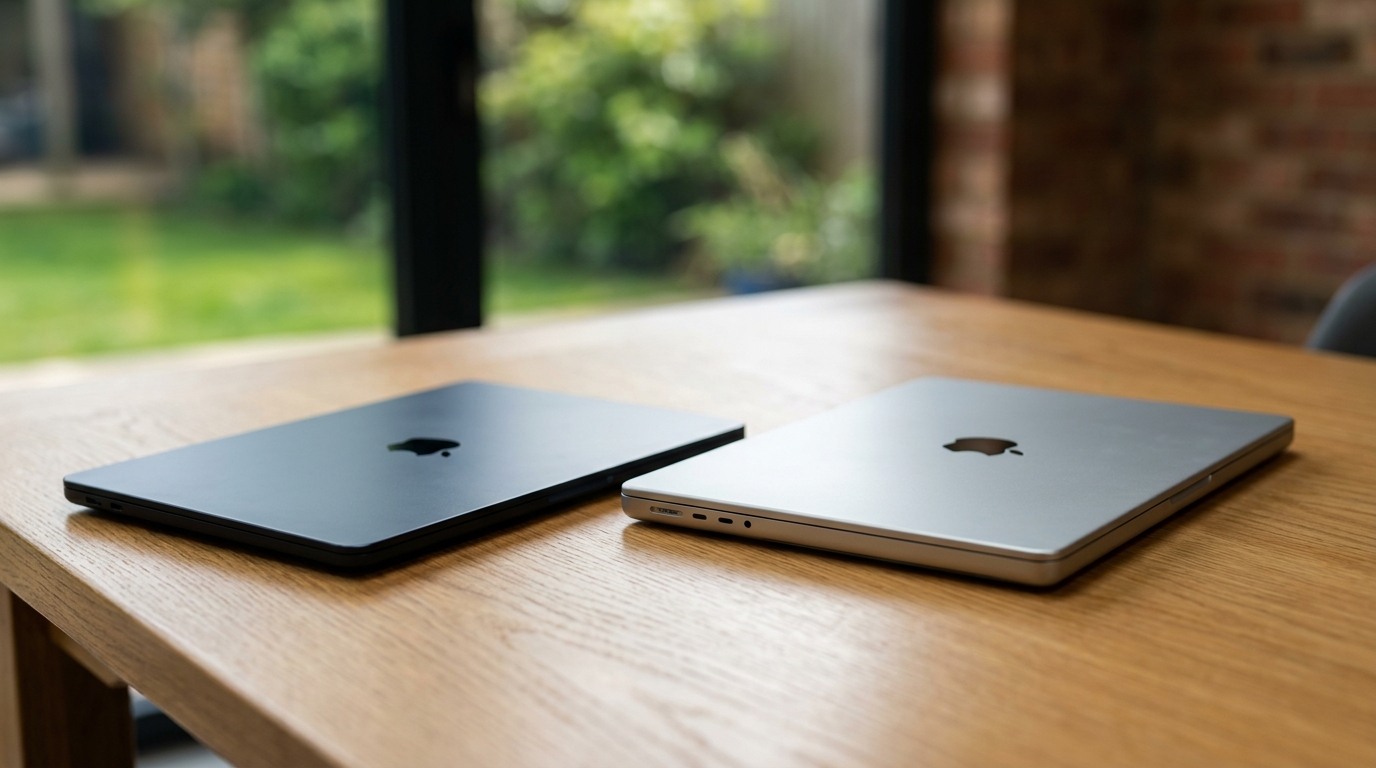
The MacBook Air M5 vs Pro question is the one every UK laptop buyer with around a grand to spend is asking in 2026, because Apple put the same M5 generation in a £1,099 fanless slab and a £1,699 workstation. Apple launched the MacBook Air with M5 alongside a new 14-inch MacBook Pro with M5, and the gap between them is no longer about raw chip generation.
- MacBook Air M5: from £1,099 (13-inch) / £1,299 (15-inch), 512GB, up to 18 hours, fanless.
- 14-inch MacBook Pro M5: from £1,699, 1TB standard, up to 24 hours, Liquid Retina XDR with ProMotion.
- Both ship with the M5 chip and were available from 11 March 2026.
- The real divide is display, ports and sustained performance – not the processor name.
MacBook Air M5 vs Pro: price is the first verdict
The MacBook Air with M5 starts at £1,099 for the 13-inch and £1,299 for the 15-inch, both with 512GB of storage. The 14-inch MacBook Pro with the standard M5 starts at £1,699 with 1TB. That is a £600 gap to the cheapest Pro, and for a lot of buyers the conversation could end there: the Air is the same M5 family for substantially less money. If you want the wider field of sub-£1,000 options first, our best laptop under £700 in the UK 2026 guide is the better starting point.
Price alone does not settle it, though, because Apple has stopped using the chip as the dividing line. The split is now physical: cooling, screen and ports. That is a more honest segmentation than the old “buy the Pro for the faster chip” pitch we picked apart in our Apple silicon analysis.
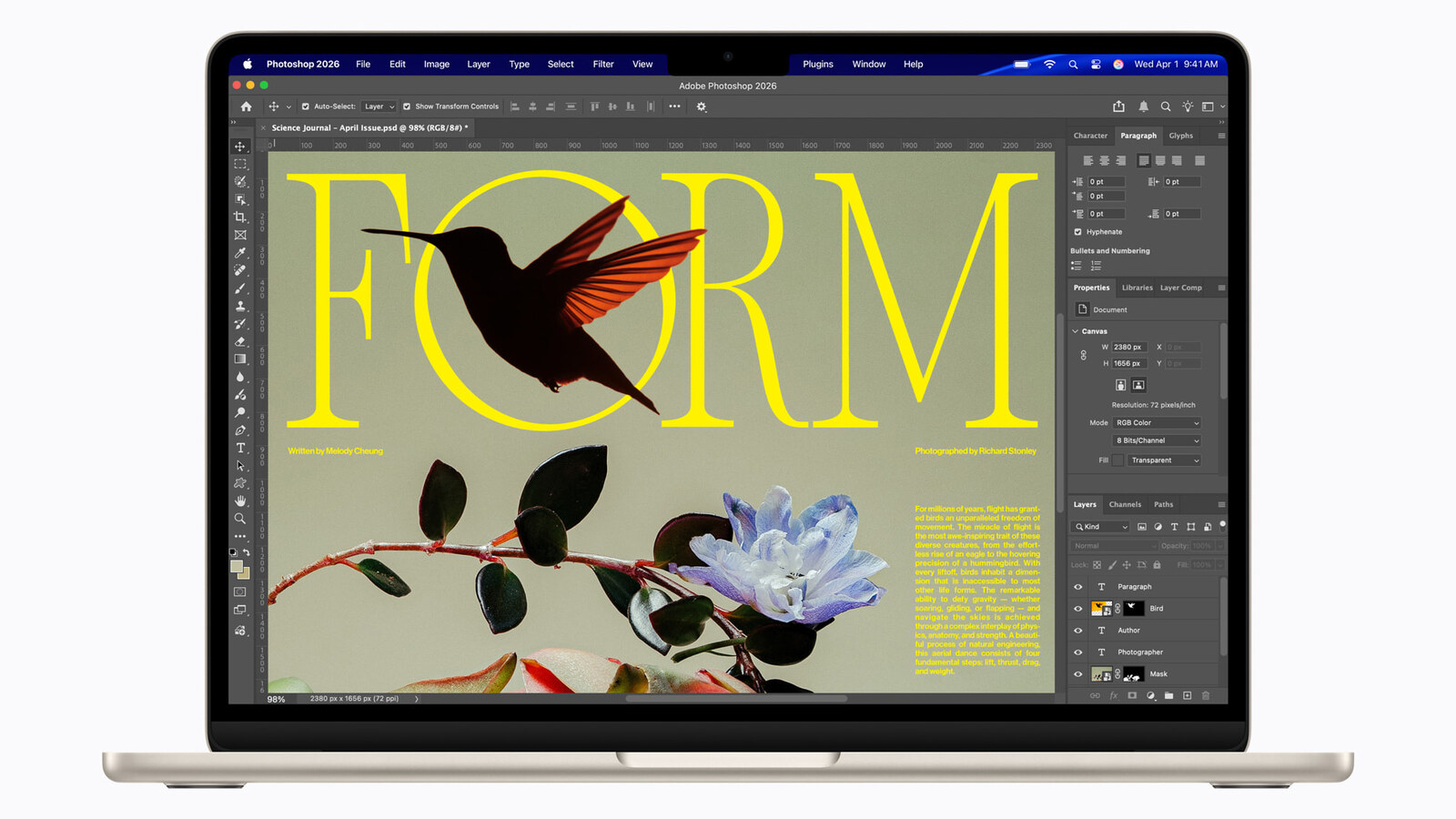
It helps to be specific about what the M5 brings, because it is the same headline silicon in both machines. Apple pairs it with an up-to-10-core GPU that now has a Neural Accelerator in every core, plus faster SSD storage, which is exactly the combination that matters for on-device AI and creative apps rather than spreadsheets. In other words, the thing people most often “buy a Pro” for – local AI workloads and creative acceleration – is already present in the Air. The Pro does not give you a different M5; it gives you the room to run it flat out for longer.
Where the MacBook Air M5 wins
The Air’s case is portability and silence. It is fanless, so it never makes a sound no matter the workload, and Apple quotes up to 18 hours of battery. It comes in sky blue, midnight, starlight and silver, and at 13.6 or 15.3 inches it is the machine you actually carry every day. For email, web, writing, photo edits, code and the kind of mixed workload most people run, the M5 Air does not feel like the cheaper option – it feels like enough. The 15-inch in particular is the most laptop you can buy for £1,299 without stepping outside Apple’s ecosystem.

There is a sub-decision inside the Air itself: 13.6-inch at £1,099 or 15.3-inch at £1,299. The internals are the same M5, so this is purely a screen-and-weight call, not a performance one. The £200 buys roughly a quarter more usable screen, which genuinely helps with side-by-side documents, timelines and code panes; it does not buy more speed. If you commute with the laptop daily, take the 13-inch; if it mostly lives on a desk and you want one screen to do everything, the 15-inch is the better £1,299 than any Pro upsell.
Where the MacBook Pro M5 earns its £600
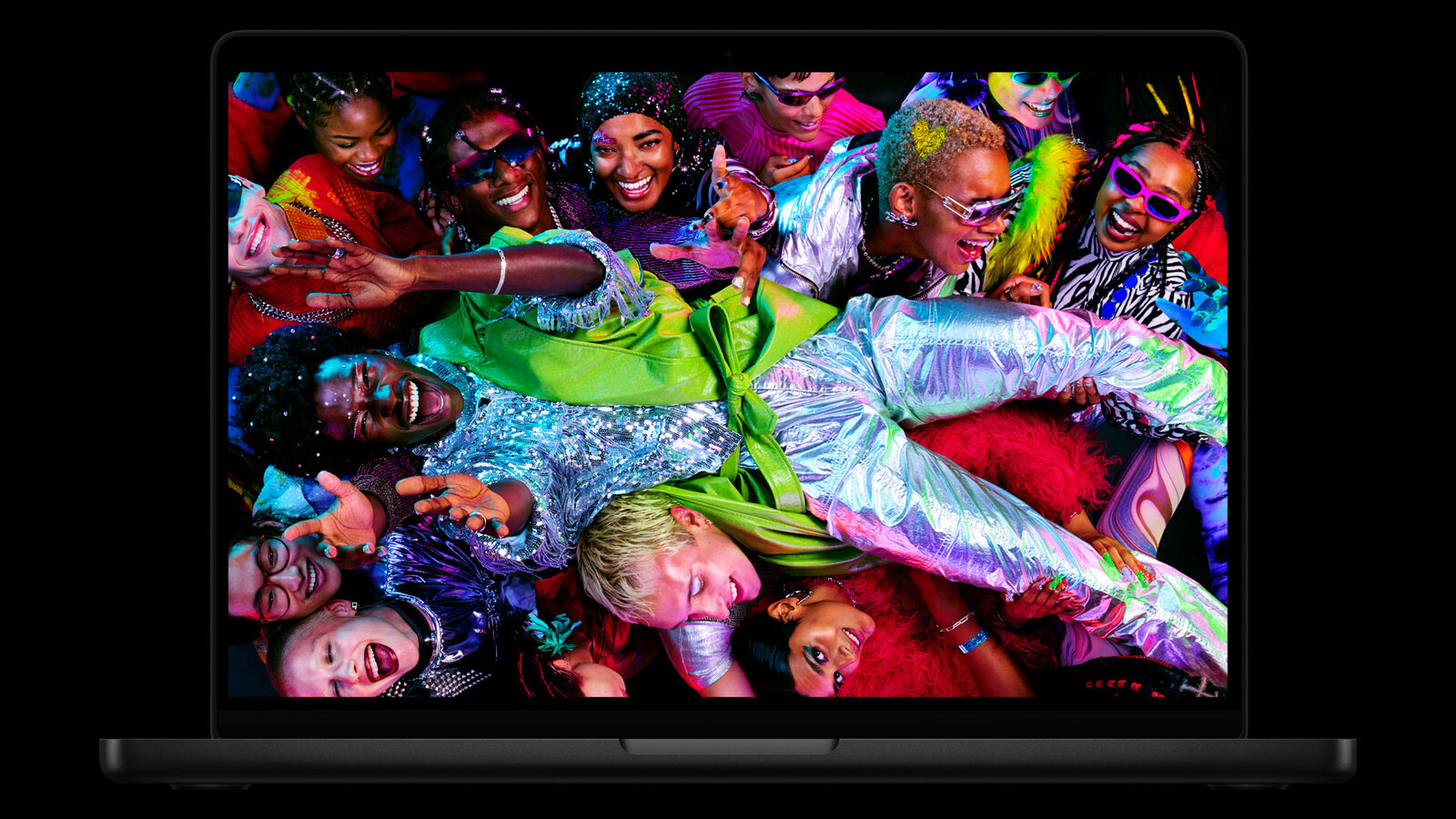
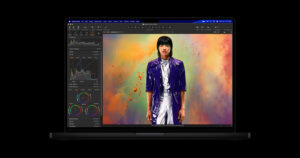
The Pro is not about a faster badge; it is about sustained work. Its Liquid Retina XDR display runs ProMotion at 120Hz and hits brightness levels the Air’s 500-nit Liquid Retina panel cannot, which matters for colour-critical photo, video and design work. Apple quotes up to 24 hours of battery, six more than the Air. Crucially, the Pro is actively cooled, so it holds peak performance through long exports and compiles instead of easing off the way a fanless chassis must. It also starts at 1TB rather than 512GB.
Then there are ports. The Air gives you MagSafe 3, two Thunderbolt 4 ports and a headphone jack. The 14-inch Pro adds a third Thunderbolt 4 port, full-size HDMI and an SDXC card slot – the difference between carrying dongles and not. For a photographer or editor that single SD slot can justify the price on its own.
MacBook Air M5 vs Pro: the specs side by side
| Spec | MacBook Air M5 | 14-inch MacBook Pro M5 |
|---|---|---|
| UK price from | £1,099 (13″) / £1,299 (15″) | £1,699 |
| Storage (base) | 512GB | 1TB |
| Display | Liquid Retina, 500 nits | Liquid Retina XDR, ProMotion 120Hz |
| Battery (Apple claim) | Up to 18 hours | Up to 24 hours |
| Cooling | Fanless | Active cooling |
| Ports | MagSafe, 2x Thunderbolt 4 | 3x Thunderbolt 4, HDMI, SDXC |
What UK buyers should buy
For the overwhelming majority, the MacBook Air M5 is the correct purchase and the £600 is better left in your pocket. Unless you are regularly running long renders, grading footage on a colour-accurate screen, or living off an SD card and HDMI output, the Pro’s advantages are ones you will admire rather than use. The Air is the same M5 era, lighter, silent and hundreds of pounds cheaper. Buyers torn between Apple desktops should also read our Mac mini vs Mac Studio comparison, and anyone still weighing the software side should see our Apple Intelligence delay audit.
Buy the 14-inch MacBook Pro M5 only if your work pays for it: photo and video professionals, developers running heavy sustained loads, and anyone who needs the XDR display or the ports daily. Everyone else should buy the Air, take the 15-inch if the screen matters, and spend the difference on storage or a holiday.

MTW verdict
MacBook Air M5 vs Pro has a clear winner for most people: the MacBook Air M5. It is the same chip generation, fanless and £600 cheaper. The 14-inch MacBook Pro M5 is the right call only for creators and power users who genuinely need the XDR display, the extra ports and sustained performance.
Final verdict
MacBook Air M5 vs Pro M5 compared for UK buyers: prices, display, ports, battery and cooling – plus the laptop most people should actually buy in 2026.
How we compare
Buyer action
Where to buy or check next
Use this as the final check before ordering a phone, changing network or trusting a headline monthly price.






Reader discussion
Leave a comment
Comments are moderated. Keep it useful, accurate, and on topic.