UPDATED · News · 3 May 2026 · Claire Bennett
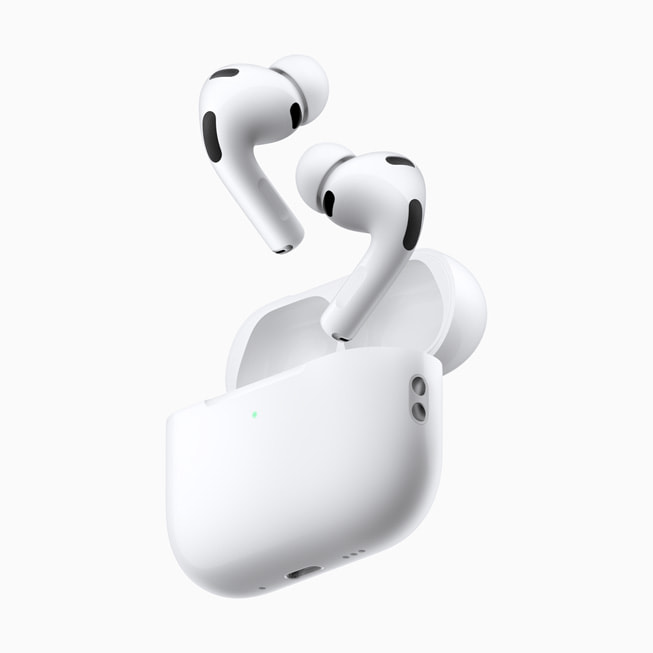
AirPods Pro 3 hearing aid use is the May 2026 question UK readers keep asking after the Apple Hearing Study findings landed, and the answer is more nuanced than the marketing implies. Apple’s Hearing Health page positions AirPods Pro 3 as a clinical-grade hearing-aid option for mild to moderate loss; this MTW buying-guide editorial separates what AirPods Pro 3 can and cannot replace in 2026, and exactly when a UK reader should still book an audiologist.
- AirPods Pro 3 hearing aid feature is cleared for mild-to-moderate hearing loss only, both by Apple’s own product page and the regulatory clearances filed since 2024.
- AirPods Pro 3 retail at £249 in the UK, against private hearing aids that typically run £1,200-£3,500 a pair.
- The NHS still issues prescription hearing aids free of charge after a GP referral; over-the-counter AirPods Pro 3 are not a 1:1 substitute for those.
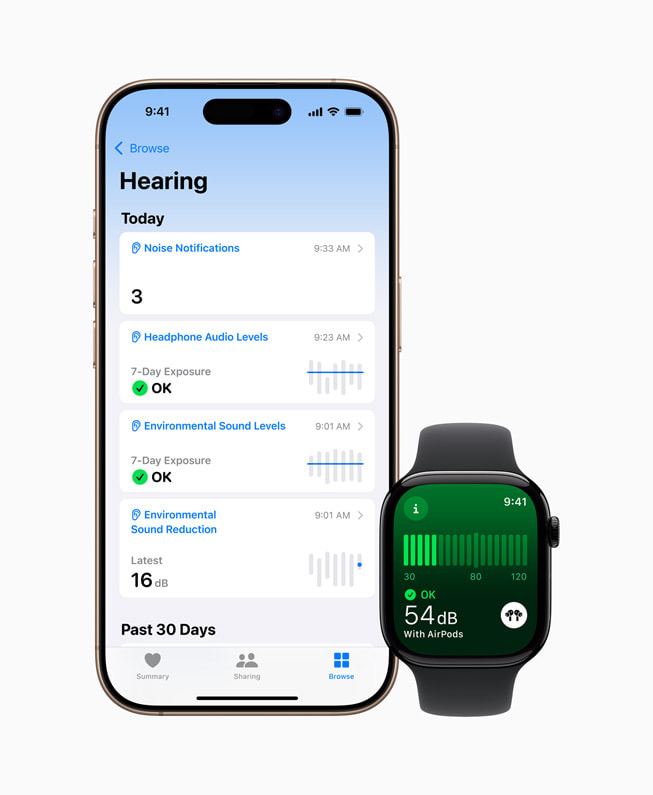
- The 5-minute Hearing Test runs locally on iPhone with AirPods Pro 2 or 3 and produces an audiogram you can share with a clinician.
- RNID’s 2024 figures put 18 million UK adults living with deafness, hearing loss or tinnitus, while only around 2 million currently wear hearing aids.
AirPods Pro 3 hearing aid mode: what it actually does
The AirPods Pro 3 hearing aid feature is not a marketing slogan with software lipstick. It uses the iPhone Hearing Test audiogram to set frequency-specific gain that compensates for measured loss, applies it across conversation, media and FaceTime, and runs continuously while the AirPods are in your ears. The H2 chip handles the real-time processing locally; nothing is uploaded. For mild to moderate loss – clinically a 4-frequency pure tone average between 26 and 60 dB – that is genuinely useful, and the UK clearance lets you use the feature without a prescription.
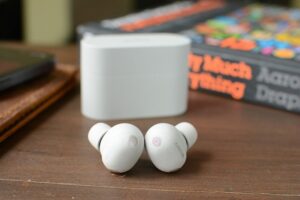
The catch is comfort and form factor. AirPods Pro 3 are in-ear earbuds, not over-day hearing aids. Battery life lands around six to seven hours of active listening with hearing aid mode on, which is fine for a meeting and a commute but not for a 12-hour day at work. A NHS-issued behind-the-ear hearing aid runs days on a single battery and is designed to disappear into your hair. AirPods Pro 3 announce themselves on your head. For people who only need hearing assistance some of the time – phone calls, conferences, restaurants – that trade-off is fine; for someone who needs continuous correction every waking hour, it is not. The AirPods 4 vs AirPods Pro 3 comparison covers the broader hardware split.
When AirPods Pro 3 hearing aid mode replaces a real hearing aid
The honest answer is: when the alternative is doing nothing. RNID’s 2024 prevalence work puts 18 million UK adults living with deafness, hearing loss or tinnitus, with current hearing aid use at roughly 2 million. That leaves a vast cohort who never crossed the GP threshold. Reasons vary – stigma, time, the perceived hassle of an NHS audiology referral – and the result is years of measurable cognitive load. For that audience, AirPods Pro 3 hearing aid mode is the lowest-friction first step. You already have an iPhone; you already plan to buy earbuds; the £249 is going to come out of the audio budget rather than the medical one. That is a public-health win even if the device is not as capable as a fitted hearing aid.
The other genuine fit is part-time assistance. Anyone with mild high-frequency loss – the most common pattern in adults aged 45 and over – typically does not need correction at home or while exercising. They need it in restaurants, in meetings, on calls. AirPods Pro 3 hearing aid mode is configured for exactly that, and the Apple Conversation Boost / Live Listen tooling on top means you can also use the iPhone as a remote microphone across a noisy table. That is a workflow no NHS prescription aid currently offers in the same compact package. Pair that with the best wireless earbuds under £150 UK guide and the gap is even clearer at the AirPods Pro 3 price.
AirPods Pro 3 hearing aid vs NHS vs private: the UK comparison
| Option | UK price | MTW read |
|---|---|---|
| NHS-prescribed hearing aids | Free after GP referral and audiology assessment | Still the right answer for moderate-to-severe loss. Audiology waits vary by trust; budget several weeks to months from referral to fitting. |
| AirPods Pro 3 hearing aid mode | £249 one-off (and you also get earbuds) | Best for mild-to-moderate, part-time use. No prescription required. |
| Private behind-the-ear hearing aids (Specsavers, Boots Hearingcare, Amplifon) | £1,200-£3,500 a pair | Fitted by audiologist, multi-day battery, designed for all-day wear. Worth it for severe loss or active users. |
| Over-the-counter hearing aids (non-Apple) | Typically a few hundred pounds a pair | Category exists post-FDA OTC rule changes in 2023; UK availability still limited. |
| “Do nothing” | £0 upfront | The Apple Hearing Study correlates worse hearing with slower gait in over-60s – this is the most expensive choice over a decade. |

When AirPods Pro 3 hearing aid mode is the wrong answer
Three groups should book an audiologist instead of buying AirPods Pro 3. First: anyone whose Hearing Test in the iPhone Health app returns a pure tone average above 60 dB. That is the upper bound of the AirPods clearance, and beyond it the device under-corrects regardless of how loud you push the gain. Second: anyone whose hearing loss is asymmetric – one ear materially worse than the other. AirPods Pro 3 can be balanced left-right but cannot replicate the fitting work an audiologist does for one-sided loss. Third: anyone with sudden hearing loss or tinnitus that has emerged in weeks rather than years. Those are clinical presentations; book a GP, not an AirPods Pro 3 box.
Beyond clinical edge cases, the hardware itself imposes limits. AirPods Pro 3 share the iPhone’s Bluetooth pool, so handing off between two iPhones, an iPad and a Mac during a working day is occasionally messy. A dedicated hearing aid is paired once and forgotten. AirPods Pro 3 also fall out under heavy exertion in a way fitted aids do not. The MTW read: if you are a clinician’s case, AirPods Pro 3 hearing aid mode is a stop-gap that should not delay your audiology appointment by even one week. Use them in the meantime, not instead.
For everyone else – the broad middle of UK adults with the kind of mild loss the Apple Hearing Study just put numbers on – AirPods Pro 3 are the easiest hearing intervention the consumer-electronics industry has ever produced. The Hearing Test gives you data; the Hearing Aid mode acts on it; the Loud Sound Reduction feature helps you avoid making things worse at gigs and on construction sites. Pair this with our AirPods Pro 3 vs Galaxy Buds 4 Pro comparison if you also care about Android compatibility, and with the best wireless earbuds for running 2026 guide for active use cases.
MTW verdict
The AirPods Pro 3 hearing aid feature is the right first answer for mild-to-moderate UK hearing loss and the wrong only answer for moderate-to-severe loss. If your Hearing Test audiogram lands inside the 26-60 dB range and you only need help part of the day, buy them; if it does not, book an audiologist and treat the AirPods as a bridge until the appointment.
Buyer action
Where to buy or check next
Use this as the final check before ordering a phone, changing network or trusting a headline monthly price.





Reader discussion
Leave a comment
Comments are moderated. Keep it useful, accurate, and on topic.