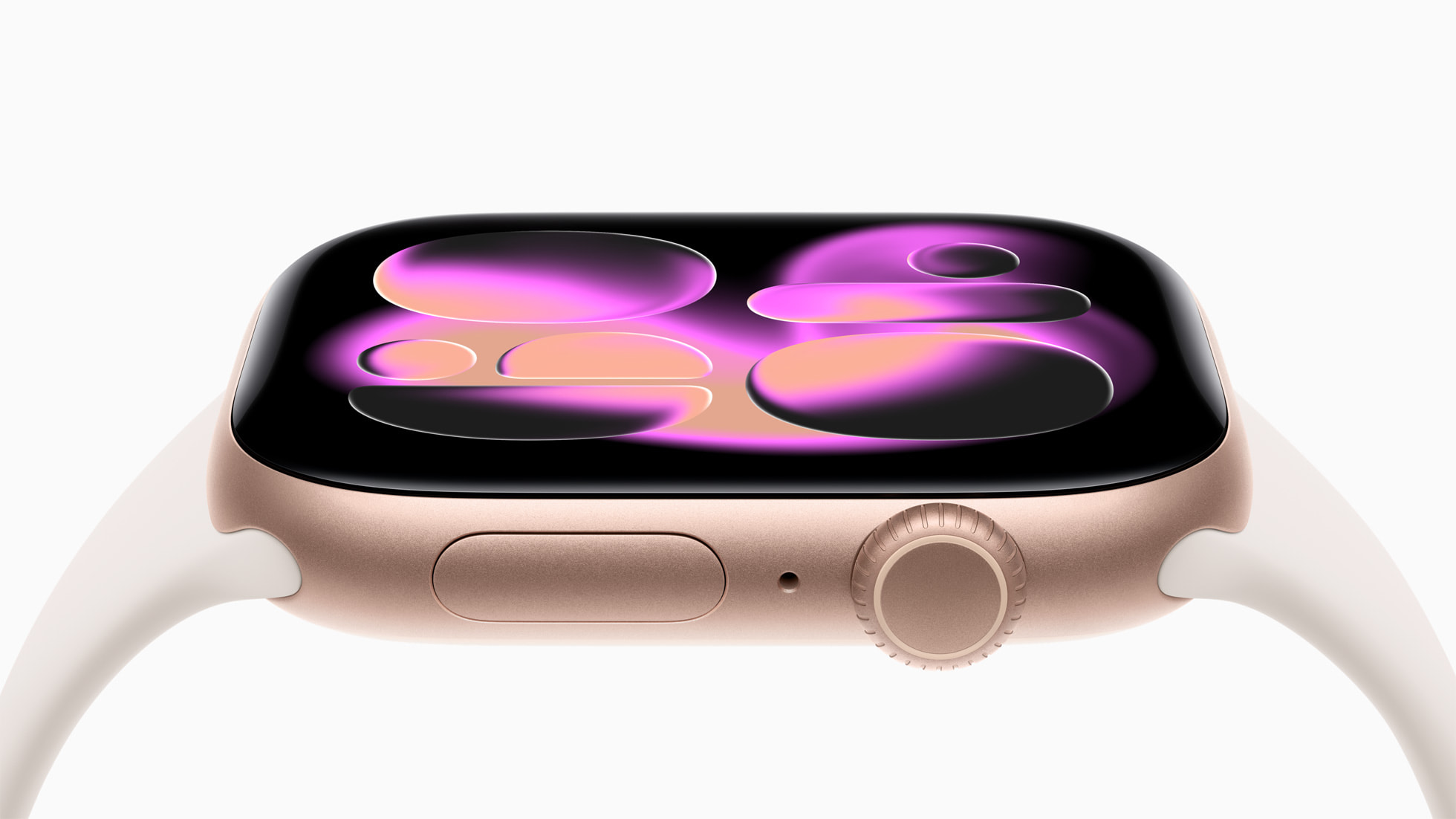
The Galaxy Watch 8 vs Apple Watch Series 11 question looks like a straight smartwatch shoot-out, but for UK buyers it is really a phone decision in disguise: the Apple Watch Series 11 pairs only with an iPhone, while Samsung’s watch needs an Android phone, and ideally a Galaxy one, before it shows its full hand. Get the platform right and either watch is excellent; get it wrong and you have bought a beautiful gadget that keeps half its features locked. This head-to-head walks through price, design, screen, health, battery and software, names a winner in each round, and ends with a clear verdict by buyer type.
- Galaxy Watch 8 starts at £319 (40mm Bluetooth); 44mm is £349; the Classic 46mm starts at £449. LTE adds £50.
- Apple Watch Series 11 starts at £369 in the UK (GPS aluminium); titanium and cellular cost more.
- Platform lock: Series 11 needs an iPhone 11 or later on iOS 26; Galaxy Watch 8 needs an Android phone, with the most features on a Samsung Galaxy.
- Both quote up to 24 hours of battery; both run their newest software (watchOS 26 versus Wear OS 6 with Gemini and One UI 8 Watch).
Galaxy Watch 8 vs Apple Watch: price and UK availability
On sticker price, Samsung undercuts Apple at the entry point. The Galaxy Watch 8 40mm Bluetooth starts at £319, the 44mm at £349, and the dressier Galaxy Watch 8 Classic 46mm at £449, with LTE versions adding £50 across the board, as we set out in our Galaxy Watch 8 UK price breakdown. The Apple Watch Series 11 starts at £369 for the GPS aluminium model on Apple’s UK store, with titanium and cellular pushing the figure higher. So the cheapest way onto each platform is a £319 Galaxy versus a £369 Apple Watch, a real gap but not a chasm.
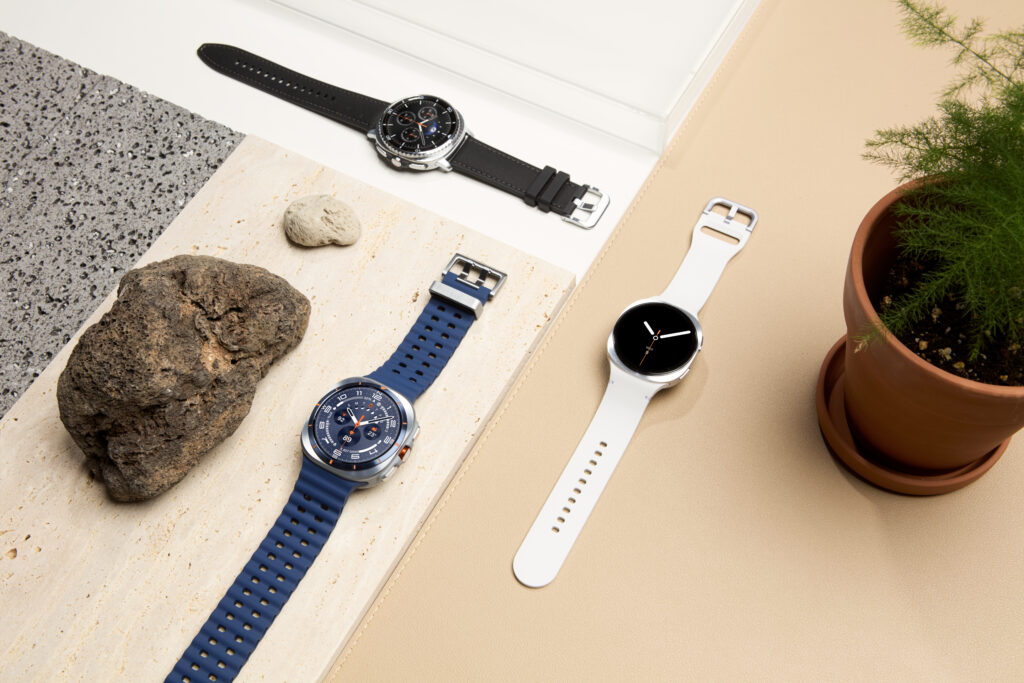
Availability is straightforward for both. You can buy the Galaxy Watch 8 from Samsung UK, Currys and John Lewis, and the Series 11 from Apple, Currys and John Lewis, so retailer choice and trade-in offers, rather than stock, decide where you order. If you are weighing the wider Samsung wearable family first, our Apple Watch against Galaxy Watch 8 guide and the broader Pixel Watch 4 pricing rundown are useful companions for Android shoppers comparing every Wear OS option.
Round winner: Galaxy Watch 8. A £319 starting price and a cheaper route to a large 44mm screen give Samsung the value edge, though the gap narrows once you add cellular to either side.
Design and sizes for every wrist
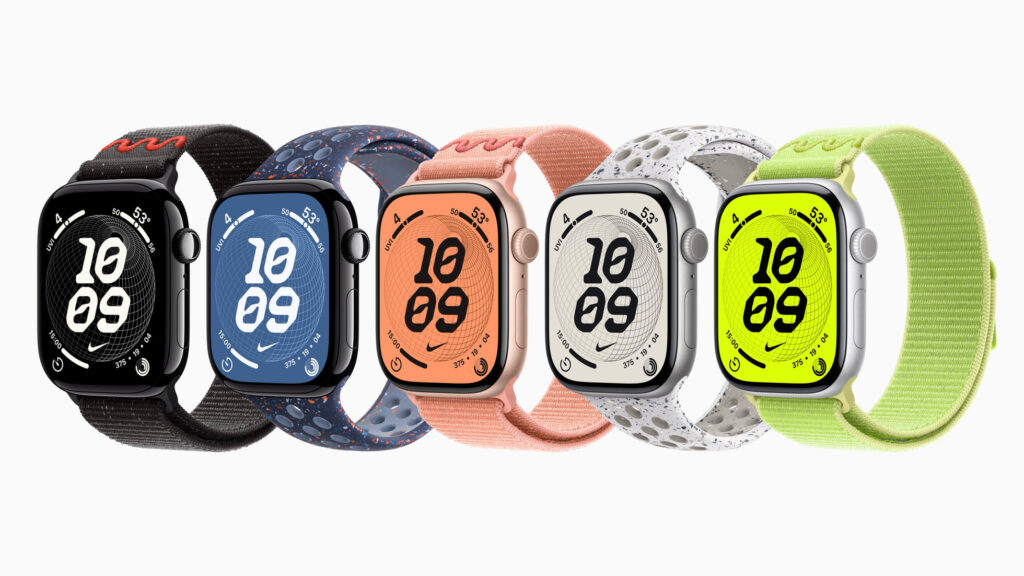
Samsung redrew the Galaxy Watch 8 around the cushion shape it borrowed from the Galaxy Watch Ultra, giving a squircle case that sits flatter and, Samsung says, runs 11 percent thinner than before. You get 40mm and 44mm sizes in the standard model, plus a 46mm Classic that brings back the rotating physical bezel many fans missed. Apple sticks with its familiar rounded rectangle in 42mm and 46mm cases, and the Series 11 is its thinnest, most comfortable Apple Watch yet according to Apple’s launch materials.

Materials split the two. The Galaxy Watch 8 uses armour aluminium, while the Classic steps up to stainless steel with that mechanical bezel. Apple offers aluminium with Ion-X glass or polished titanium with a sapphire crystal front, so the priciest Series 11 feels noticeably more jewel-like on the wrist. Strap ecosystems are huge on both sides, so if you like switching looks often, pick the design language you will still enjoy in two years.
Round winner: tie. The Classic’s rotating bezel is a genuine joy and Samsung offers more case shapes, but Apple’s titanium finish and tighter fit are hard to fault. Choose on taste, not merit.
Display and build quality on the wrist
Both screens are superb, and both are easy to read in British summer glare. Samsung quotes a peak brightness of 3,000 nits for the Galaxy Watch 8 panel, up to 50 percent brighter than the previous generation, which helps when you glance at pace data mid-run. Apple’s Always-On Retina LTPO3 OLED on the Series 11 reaches up to 2,000 nits, still bright enough for outdoor use, with the wide-angle trick that keeps the face legible when your arm is down by your side.
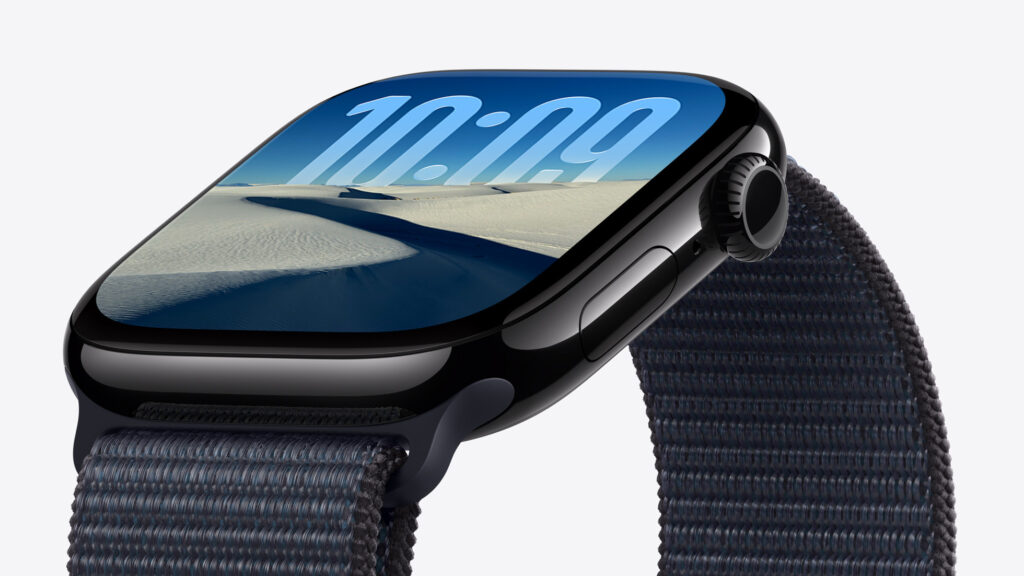
Durability is a closer call than the spec sheets suggest. Apple hardened the Series 11 cover glass to be twice as scratch-resistant on the aluminium models, and the titanium versions use sapphire. Samsung pairs sapphire crystal with its tougher cases too, so both shrug off everyday knocks. For swimmers and gym users, water resistance and dust ratings are comparable, and the choice rarely comes down to ruggedness unless you are eyeing an Ultra-class watch, which we covered in the Apple Watch Ultra 3 against Garmin Fenix 8 Pro piece.
Round winner: Galaxy Watch 8. A higher 3,000-nit peak gives Samsung the brighter panel on paper, and that headroom is genuinely useful for outdoor sport, even if Apple’s display quality is otherwise a match.
Health and fitness tracking that actually helps
This is where the two diverge most. The Galaxy Watch 8 leans into Samsung’s BioActive sensor stack with sleep coaching, a running coach that builds plans from 5K to half-marathon, and newer metrics such as antioxidant and vascular load readings. Apple counters with a sleep score, a redesigned Workout Buddy powered by Apple Intelligence, and headline hypertension notifications that watch for chronic high blood pressure over rolling 30-day windows. Both now push beyond step counts into longer-term health signals.
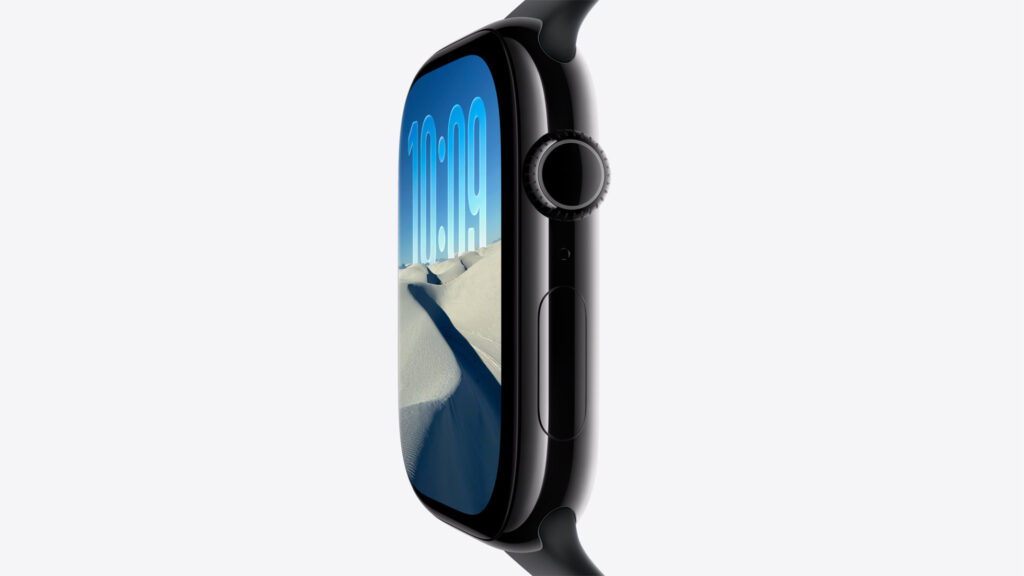
Accuracy and the surrounding app matter as much as the sensor list. Apple’s Health app and the Fitness rings remain the most polished way to see trends over months, while Samsung Health has improved sharply and ties neatly into Galaxy phones. UK readers should note that some health features arrive on a regulator’s timetable, a pattern we have seen with Samsung’s own rollouts in pieces such as fainting detection coming to Galaxy Watch and Apple’s staged updates in the watchOS heart-rate update. Check that the specific feature you want is live in Britain before you buy on the strength of it.
Round winner: tie. Apple’s hypertension notifications and sleep score are compelling, Samsung’s running coach and richer body metrics are equally so. The better watch here is the one paired to the phone whose health app you will actually open.
Battery life across a normal week
On the headline number this round is a draw, since both makers quote up to 24 hours of typical use. In practice the Galaxy Watch 8 tends to stretch a little further with the always-on display dimmed and sleep tracking running overnight, helped by Samsung’s larger batteries in the bigger cases. Apple’s Series 11 hits the same 24-hour claim and adds a useful low-power mode that can push towards 38 hours when you need it.

Charging speed tips the balance for forgetful owners. Apple says 15 minutes on the charger buys up to eight hours of Series 11 use, which is enough to top up while you shower before a night of sleep tracking. Samsung’s fast charging is competitive too, so neither watch leaves you stranded if you build a quick top-up into your routine. Anyone moving from an older model that needed nightly babysitting will find both a relief, much as buyers found when stepping up from budget bands in our Fitbit Air against Apple Watch SE comparison.
Round winner: Galaxy Watch 8. Same 24-hour claim, but Samsung’s bigger cells and slightly more frugal real-world behaviour give it the narrow edge for two-day comfort.
Software, apps and phone pairing decide the rest
Here is the point the spec sheets hide. The Apple Watch Series 11 runs watchOS 26 and only works with an iPhone 11 or later on iOS 26, so an Android owner cannot use it at all. The Galaxy Watch 8 runs Wear OS 6 with One UI 8 Watch and is the first smartwatch to ship with Google’s Gemini assistant, but it needs an Android phone, and several features, including some health tools, work best or only on a Samsung Galaxy. Your phone, in other words, often picks the watch for you.
App breadth still favours Apple’s watch for third-party support, but Wear OS has closed much of the gap, and Gemini on the wrist is a real draw for anyone already living in Google’s apps. If you switch platforms often, factor in that your watch will not follow you across a phone change, a friction we flagged in our iPhone 17 Pro Max against Galaxy S25 Ultra winner. Buy the watch that matches the phone you intend to keep.
Round winner: depends on your phone. On an iPhone the Series 11 wins by default; on a Galaxy the Watch 8 does. There is no neutral answer to this round, which is rather the point.
Specs compared side by side
| Feature | Galaxy Watch 8 | Apple Watch Series 11 |
|---|---|---|
| UK starting price | £319 (40mm BT) | £369 (GPS aluminium) |
| Sizes | 40mm, 44mm, 46mm Classic | 42mm, 46mm |
| Display peak brightness | Up to 3,000 nits | Up to 2,000 nits |
| Battery (typical) | Up to 24 hours | Up to 24 hours (38h low power) |
| Software | Wear OS 6, One UI 8 Watch, Gemini | watchOS 26 |
| Phone needed | Android (best on Samsung Galaxy) | iPhone 11 or later, iOS 26 |
| Standout health tool | Running coach, vascular load | Hypertension notifications, sleep score |
Pick the watch that matches the phone you plan to keep, because neither one follows you across a platform switch.
Our verdict on which watch to buy
For most UK buyers the decision is made before you compare a single spec: own an iPhone and the Apple Watch Series 11 is the watch, own a Galaxy or another Android phone and the Galaxy Watch 8 is yours. That is not a cop-out, it is the single most important fact in this whole comparison. Where you do have a free choice, Samsung wins on entry price, screen brightness and battery comfort, while Apple wins on app breadth, health polish and the premium feel of its titanium models. We would tell a value-led Android buyer to take the £319 Galaxy Watch 8 40mm, a fashion-led one to stretch to the Classic, and any iPhone owner to buy the Series 11 without hesitation. The thing that flips it is a planned phone switch: if you might jump platforms within a year, wait until your next phone is settled, because the wrong watch becomes dead weight the day you change sides.
Frequently asked questions
Can I use a Galaxy Watch 8 with an iPhone?
Does the Apple Watch Series 11 work with Android?
Which has the better battery life?
Is the Galaxy Watch 8 Classic worth the extra over the standard model?
How much is the Apple Watch Series 11 in the UK?
Do both watches do sleep and heart-health tracking?
Which should I buy if I might switch phone platforms soon?
Related reading on MTW
Buyer action
Where to buy or check next
Use this as the final check before ordering a phone, changing network or trusting a headline monthly price.









Reader discussion
Leave a comment
Comments are moderated. Keep it useful, accurate, and on topic.