News · 17 Feb 2011 · MTW Editorial Team

As you have probably already noticed I was at Mobile World Congress this week so I had the opportunity to play around with some of the latest and most powerful handsets ever created. This year was obviously dominated by Google’s Android platform which took center stage at the convention with essentially every OEMs demonstrating or unveiling products running the immensely successful OS. What does it have to do with Windows Phone 7 hardware ? Well if there’s one thing that really garbed my attention it is the fact that not a single Android device I played with was as snappy and smooth as the Samsung Omnia 7 device I had in my pocket (or any iPhone model). Yes some of the devices on display were running non finalized software and probably hardware too but this has already been the case with retail devices like the Galaxy S and Desire HD which feature more powerful hardware than all the currently released WP7 devices.
I will repeat what I have been saying for a while: Android is the new Windows Mobile. OEMs want to differentiate their the products and one of the best way to do this is to use the latest and greatest chipsets, screen technology or other fancy hardware components. But as an end user, why should I care about the newest Exynos 4210, TI OMAP 4430, Tegra 2 if it can’t provide me with the same user experience as the now nearly 3 years old QSD8250 found in my Windows Phone 7 device? Similar to the old Windows Mobile days; OEMs are using Android’s “openness” as a test bed for their new CPUs and chipsets and are pumping out devices with crazy hardware specifications to show themselves in the press and sell device purely based on check list features: Dual-Core CPU ? Check. XX Mpix camera ? Check. 3D Cameras? Check. Huge Screen? Check etc. The issue here is that device manufacturers are more interested in time to market so optimizing the software to work with the hardware is just an afterthought. It’s not Google’s job to code the driver for the Samsung Exynos or for TI’s OMAP4. Google doesn’t even want to get the browser to use GPU acceleration for smoother scrolling and panning so the device manufacturers shouldn’t even count on the big G to give them any kind meaningful help in this department (Samsung has apparently implemented GPU acceleration to the browser in some unreleased Galaxy S firmware builds).
HTC has apparently learned the lesson a long time ago and has instead decided to milk the same SoC for while and instead just improve it’s Sense software layer every time it releases a new batch of devices. The end user is in both cases being presented with less than optimal solutions / offerings: On one hand you have new hardware that goes totally unused (Samsung, LG) and on the other you are buying exactly the same hardware but with an updated software layer (HTC).
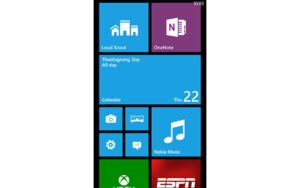
Now let’s go back to Windows Phone 7 for minute. Take a Google Nexus One/ HTC Desire and compare it to the similarly speced WP7 devices. Which one is the snappiest and offers the smoothest UX? Same for the HTC HD2 running WM6.5 compared to the same device running Windows Phone 7. Microsoft has several big advantage with WP7 compared to Android. First, the have enforced strict HW guidelines and are currently only supporting Qualcomm’s Snapdragon SoCs and their Adreno GPUs. Secondly the Adreno GPUs are closely related to the Xenos GPU found in the Xbox360 so the company was already quite a bit familiar with architecture. Thirdly they control the APIs (Direct3D Mobile through DXGI and probably Direct2D for IE9 Mobile) unlike Android which relies on OpenGL ES and the drivers developed by the chipset manufacturers. The Windows Phone 7 ecosystem is like a console ecosystem with one set of drivers and APIs all controlled and certified by Microsoft while Android is more like a PC ecosystem filled with tons of different hardware configurations, driver versions controlled by nobody (Qualcomm even told me that OEMs don’t really bother including the latest drivers in the devices just because they are more concerned by the shipping date of the handset than with the end user experience. For example, as of right now the SE Xperia Play is the Android handset that has the latest Adreno 205 drivers).
Who would have thought that Microsoft would be able to easily port IE9 (which requires a DX10 GPU on the desktop) to Windows Phone 7 which only runs on a relatively old Adreno 200 GPU (DX9 capable) ins such a short time? Now take a look at the current state of the Webkit on Android: Yes it’s blazing fast at loading web pages on those super powerful handsets but after that the UX is simply anticlimactic because of the lack of HW acceleration. This is supposed to be fixed in Honeycomb on the tablets right? But where’s the smartphone version? From what I have seen at MWC the touch responsiveness of the Android 3.0 tablets varies greatly from one device maker to another. So once again Google’s lack of control of the hardware and drivers is going to hurt the end user.
This is not to say that Windows Phone 7 should be stuck with the current QSD8250. New high-end WP7 devices are going to be announced later this year because technology evolves at a rapid pace and Microsoft will obviously want to support higher resolution screens and video formats (and yes they are working on new Chassis but the Nokia partnership which was decided only last Thursday changed some of the plans), more graphically intensive 3D games and applications but the point here is that they are in no rush to do this because they can squeeze a lot more out of the first generation Snapdragon SoC than what is possible with Android. Everything I just said so far also applies to Apple’s iPhone which is quite similar to Windows Phone 7 and I personally think that there’s no need for Apple to switch to a dual-core SoC for the upcoming iPhone 5 given that the A4 is still powerful enough for 99% of the tasks (but if they do then you can be sure that they will have the software to take advantage of it). Android is obviously a really great OS that I enjoy using it on a daily basis thanks to all the features it supports but Google should really stop the madness and take over control of what should or shouldn’t be done on the platform. OEMs are loving it right now because they are free to do whatever they see fit but I really think that it will hurt the platform in the long run when people start to realise that they paying for hardware that most of the time isn’t used all or just paying for a software update (HTC..).
What Windows Phone 7 is in desperate need of is software updates filled with differentiating features and thrid-party access to more APIs so they developers can create more exciting and advanced applications.
This is obviously just my opinion so feel free to leave a comment below.
Buyer action
Where to buy or check next
Use this as the final check before ordering a phone, changing network or trusting a headline monthly price.