
The Sonos Amp Multi is the company’s first professional-grade, multi-channel streaming amplifier built specifically for custom installers, and its arrival changes the calculus for any UK homeowner planning serious multi-room or outdoor audio. Announced on 27 January 2026, it packs eight amplified outputs into a single rack-friendly box, scales to drive up to 24 Sonos Architectural speakers, and is sold only through Sonos installation partners rather than on a shop shelf. For most readers it will never appear in a basket on the Sonos website, yet it could quietly underpin the audio in a kitchen extension, a garden, or a whole new-build, so it is worth understanding exactly what it is and what it is not.
- Announced by Sonos on 27 January 2026 as a professional-grade, multi-channel streaming amplifier built with and for custom integrators (Sonos Newsroom, 27 January 2026).
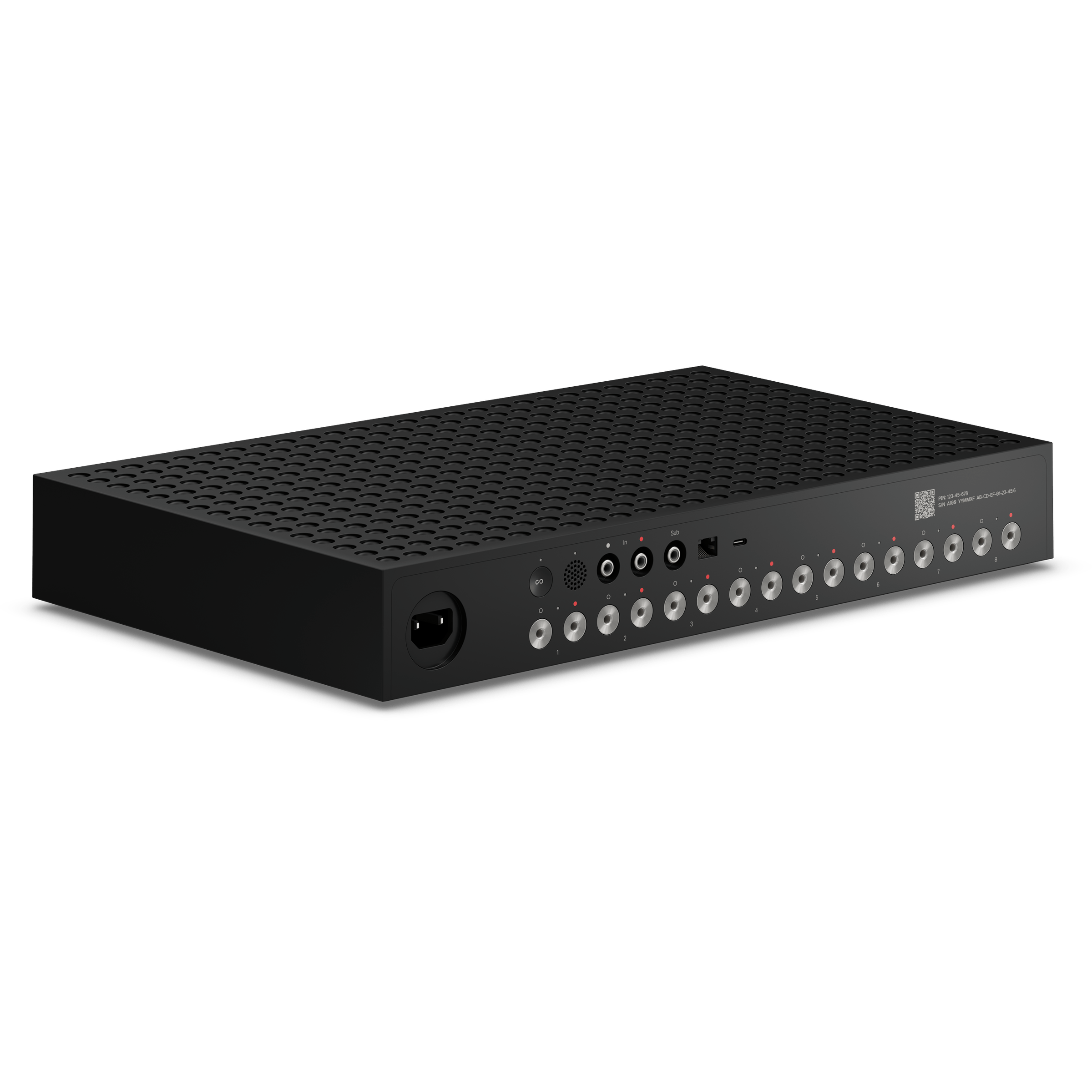
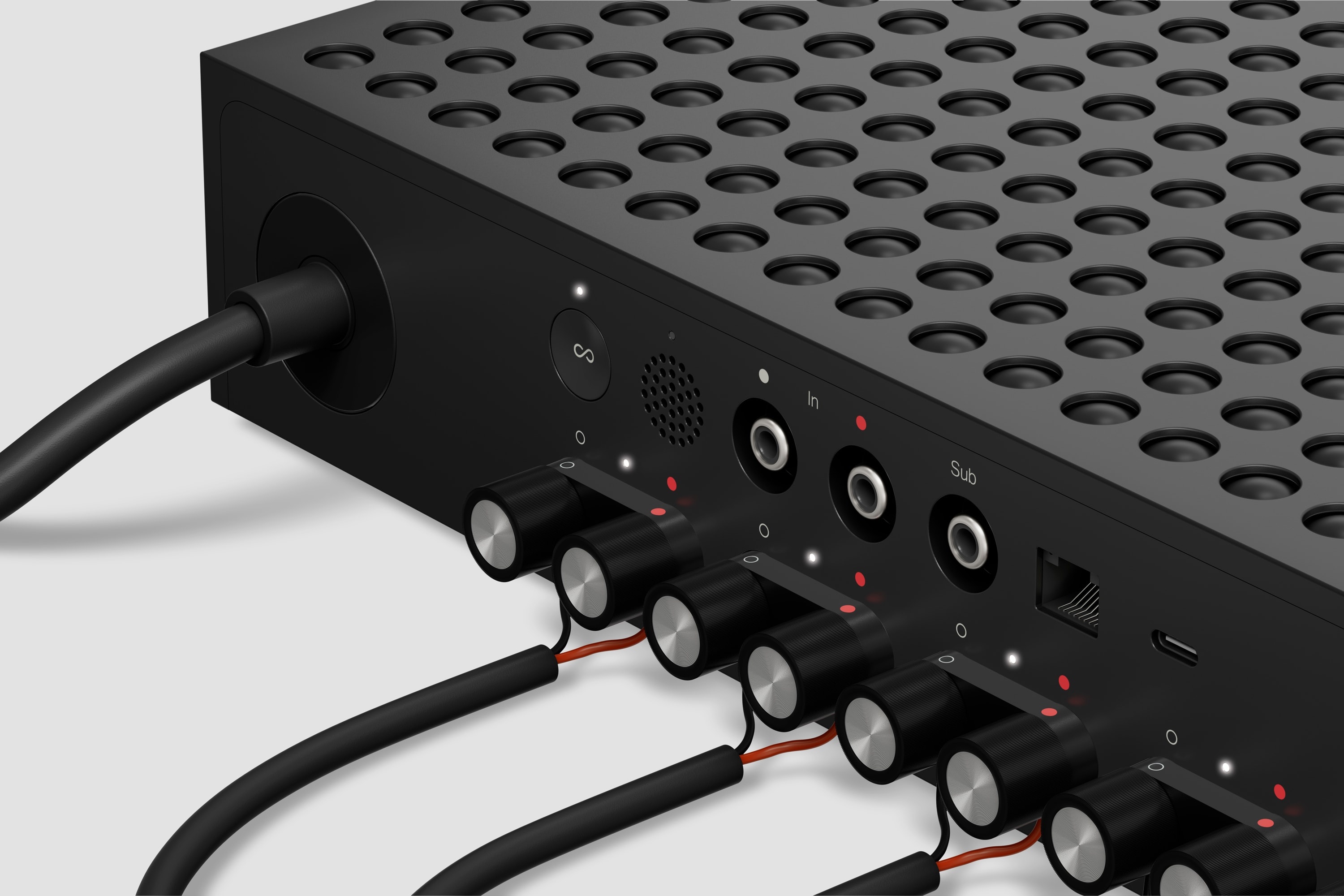
- Eight amplified outputs at 125W each (8 ohms), configurable across up to four independent zones, driving up to 24 Sonos Architectural speakers (three per output).
- Uses efficient GaN power architecture with Class-D post-filter feedback (PFFB), in a fanless 1.5U chassis (a 2U rack mount is sold separately).
- Sold exclusively through Sonos installation partners and the custom integration channel, not direct to consumers.
- Pricing has not been announced; the existing two-channel Sonos Amp remains GBP 699 in the UK and stays the route for smaller jobs.
What the Sonos Amp Multi actually is
At heart this is a streaming amplifier, but one engineered for scale rather than for a single living room. Where the familiar two-channel Sonos Amp powers one stereo pair, the new unit delivers eight amplified outputs of 125W each into 8 ohms, which Sonos says can be carved up across as many as four independent zones from one box. That means a single chassis can feed, for example, a kitchen, a patio, a hallway and a bathroom, each playing different music, all managed inside the same Sonos app the rest of the system already uses. According to the official Sonos newsroom announcement of 27 January 2026, it was developed in collaboration with the integrators who install these systems for a living.
The numbers are what set it apart. A single unit can drive up to 24 Sonos Architectural speakers, working out at three speakers per output, and for bigger projects installers simply add more units and the system scales accordingly. That is a different proposition from buying a stack of standard amps, because the zones, power and control are consolidated rather than spread across a shelf of separate boxes. If you have followed our coverage of how Sonos has matured its lineup, from the Sonos Arc Ultra soundbar to the wider Sonos Play range, this is the same ecosystem stretched to cover an entire property.
Inside the hardware: GaN power and a fanless chassis
The engineering choices matter because they decide where this amplifier can live. Sonos has paired a highly efficient gallium nitride (GaN) power architecture with Class-D post-filter feedback (PFFB), a combination it says delivers clean, controlled sound with improved thermal performance. The practical upshot is silent, convection-cooled operation with no fans at all, which is exactly what you want in a hushed media cupboard or an open-plan space where a whirring cooling fan would be intrusive. For an installer, fanless running also means fewer moving parts to fail over a system’s lifetime.

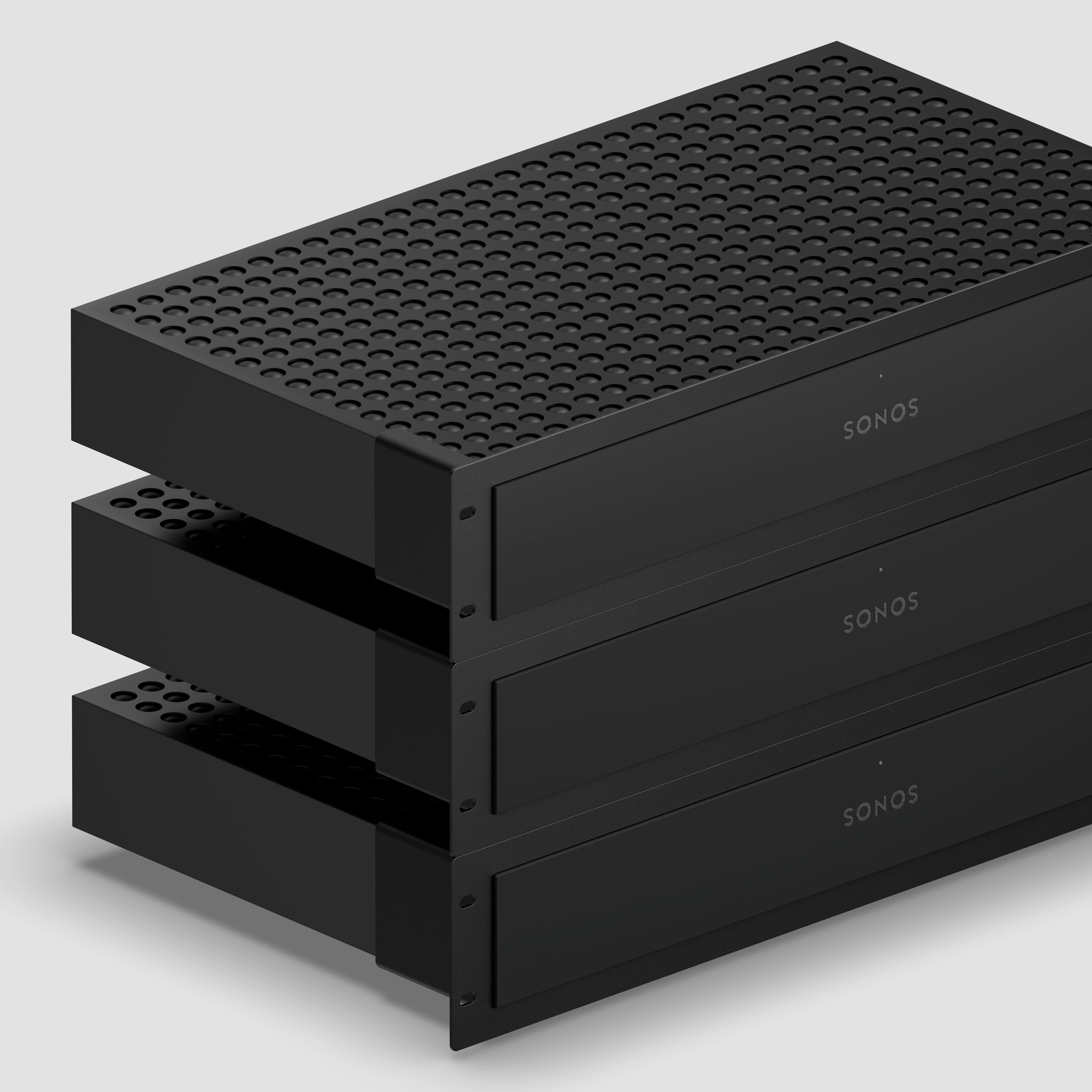
Physically, the unit uses a compact 1.5U chassis, with a dedicated 2U rack mount sold separately for standard equipment racks. Sonos has designed it with a flat-back layout, recessed connectors and deliberate ventilation spacing so it sits neatly in a rack alongside other kit. The table below summarises the core specification as published by Sonos, and shows at a glance why this is a different class of product from the familiar single-room amp.
| Specification | Sonos Amp Multi |
|---|---|
| Amplified outputs | 8 x 125W (8 ohms) |
| Independent zones per unit | Up to 4 |
| Architectural speakers per unit | Up to 24 (3 per output) |
| Power architecture | GaN with Class-D post-filter feedback (PFFB) |
| Cooling | Fanless, convection-cooled |
| Chassis | 1.5U (separate 2U rack mount available) |
| Sales channel | Sonos installation partners only |
ProTune, DSP and the installer’s calibration toolkit
The software side is where this amplifier earns its professional billing. The headline tool is ProTune, which gives the installer a 10-band parametric equaliser per output, plus gain, width control and a delay offset for each output. That granularity lets a fitter compensate for the acoustics of a tiled bathroom, the openness of a garden, or the dead spots in a vaulted lounge, tuning each zone so it sounds right in the room it serves rather than applying one blanket setting. There are also Optimize Sonos Speakers DSP profiles, so the amplifier knows how to get the best from Sonos’s own architectural speakers without manual guesswork.
Setup has been streamlined too. Rather than typing in PINs to identify each unit in a rack full of identical black boxes, the Sonos app can trigger a unique audible chirp from a given amplifier so the installer can pick it out by ear. It also integrates with third-party control systems, which matters because high-end UK installs are frequently run from a single Control4, Crestron or similar interface that the homeowner actually touches. This is a world away from the plug-and-play simplicity of a standalone Sonos speaker, and it is deliberately so.
The official Sonos video above walks through the eight-channel design, the 125W-per-output power and the GaN technology at the amplifier’s core. It is a useful primer on why Sonos has positioned this as a tool for professionals: the flexibility to reassign zones and outputs without rewiring is exactly the sort of feature that an integrator values when a homeowner changes their mind about a room six months after the cabling has gone in. That adaptability is the whole pitch, and it is built into the hardware rather than bolted on afterwards.
Why this is a pro installer product, not a retail buy
This is the single most important thing to understand: you cannot simply buy an Amp Multi the way you would buy a soundbar. Sonos has been explicit that it is sold exclusively through its installation partners and the custom integration channel, and not as a direct-to-consumer retail product. There is no advertised retail price because the product is quoted as part of an installation, and pricing has not been publicly announced. We will say that plainly rather than guess: there is no UK price to report yet, and anyone quoting a figure is speculating. For context, the standard two-channel Sonos Amp that most people already know sells for GBP 699 in the UK and remains the right tool for a single zone.
That channel-only approach is by design. An eight-output, four-zone amplifier driving two dozen ceiling speakers is not something most people fit themselves, and the calibration tools assume professional knowledge. Sonos frames the product as one for complex residential installs in evolving, open-plan or mixed-use homes, where the ability to reassign zones and outputs without rewiring protects the homeowner’s investment as the way they use a space changes. If your needs are simpler, our look at whether a Sonos Play speaker is worth it and our Sonos Arc Ultra review cover the consumer side of the range you can actually buy off the shelf.
The UK angle: Habitech, integrators and what it means at home
For British buyers, the route to this product runs through the custom-install trade rather than the high street. Sonos’s UK distributor Habitech ran a hands-on London training event for integrators on 3 and 4 March 2026, held at Material Source in Farringdon, with Sonos’s Stephen Rhead and Zanis Mantarikis on hand to brief installers, as reported by trade titles including Hiddenwires and Installation. The signal there is clear: Sonos is investing in getting UK fitters comfortable with the platform ahead of wider availability through installation partners later in 2026.
So what does this mean for a homeowner planning a project? If you are wiring a new extension, a garden room or a whole renovation and you want music in many rooms managed as one system, the Amp Multi gives your integrator a tidy, scalable backbone, and it is worth asking them about it directly. If, on the other hand, you simply want to add Sonos to one or two rooms, a couple of standard Sonos Amps or all-in-one speakers will do the job at a known price and without an installer. It also sits within a broader smart-home picture, and our guide to the Matter 1.4 rollout for UK smart homes is a useful companion if you are thinking about how audio fits alongside lighting, heating and the rest.
In the words of Sonos
Sonos Amp is the most widely used two-channel streaming amplifier in residential installation because it’s powerful, dependable, and intuitive. Amp Multi takes that same philosophy and applies it to larger systems.
Tom Conrad, CEO of Sonos (Sonos Newsroom, 27 January 2026)
That framing is telling. Sonos is not reinventing what its amplifiers do; it is taking the qualities that made the two-channel Amp a fixture of the installation trade and stretching them across a whole property. The bet is that integrators who already trust the smaller Amp will reach for the Multi when a project outgrows a stereo pair, and that homeowners will get a cleaner, more flexible system as a result. Whether that bet pays off in the UK will depend on pricing, which we still do not know, and on how readily fitters adopt it through Habitech and the wider partner network.
Where to buy or check next in the UK
Because this is a custom-integration product, the first port of call is a Sonos installation partner rather than a retailer. If you already work with a smart-home or AV integrator, ask whether they are set up with Habitech and trained on the Amp Multi, since the March 2026 London sessions suggest UK fitters are being brought up to speed. If you do not have an installer, the Sonos professional and installed-solutions pages list the partner route, and a reputable integrator will scope the speakers, zones and control system around your home before quoting. Expect the conversation to be project-based, with the amplifier priced as part of a wider installation rather than as a single line item.

If your needs are simpler, you do not need to wait or to involve a fitter at all. The two-channel Sonos Amp is widely available at GBP 699 from Sonos and UK retailers, and Sonos’s all-in-one speakers cover most single-room and casual multi-room setups. Before you commit, it is worth weighing audio against the rest of your smart-home plans, and our pieces on the Sonos Arc Ultra, the Sonos Play range and the Matter 1.4 smart-home update will help you decide where your money is best spent.
Our view is that the Amp Multi is one of the most quietly significant Sonos products in years, even though almost no one will buy it directly. It is a serious piece of professional kit: eight outputs, four zones, GaN power, fanless running and a genuinely useful calibration toolkit in ProTune, all wrapped in a rack-ready chassis that integrators will appreciate. For the right project, a whole-home renovation, a multi-zone new-build or an outdoor and indoor system that needs to behave as one, it is a cleaner and more scalable answer than a shelf of standard amps. The big caveat is that we still do not have a UK price, and we will not invent one; that, plus how quickly UK installers adopt it through Habitech, will decide its real-world impact. If you are planning ambitious multi-room audio, mention it to your integrator now. If you just want Sonos in a room or two, the standard Amp at GBP 699 and the all-in-one speakers remain the sensible, off-the-shelf choice, and nothing about the Multi changes that.














Reader discussion
Leave a comment
Comments are moderated. Keep it useful, accurate, and on topic.